
Gear Reviews
Review – Gator Cases TSA/ATA Hardshell Case

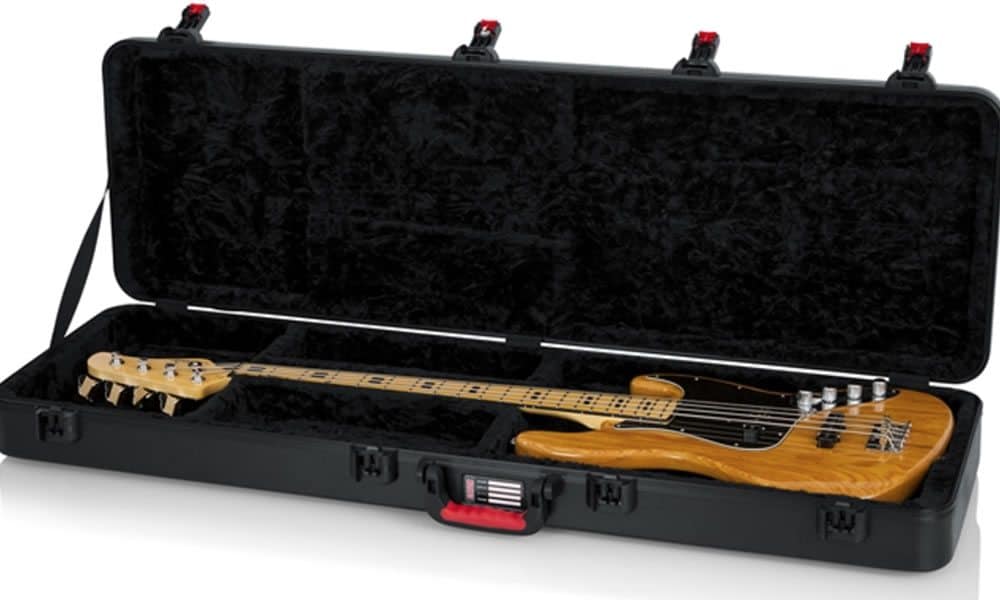
A review of the Gator Cases TSA/ATA Hardshell Case for bass guitars
Somewhere up there with picking up professional cat bathing, political discussions during Thanksgiving, and cleaning gutters in the fall, flying with an instrument is a tidal wave of stress and annoyance for the vast majority of musicians that nothing compares to. We have all seen the horror stories on social media of players arriving at their destination with a bass or guitar that looked like it got ran over by a car. The ensuing sadness, frustration, and grief understandable by any who have ever loved an instrument like a family member. So what is a musician to do?
Without spending thousands on a custom case that is a Sherman tank that weighs more than the instrument and will cost you hundreds to check due to weight issues….
In comes the Gator GTSA-GTRBASS TSA ATA Molded Bass Guitar Case, retailing at $149.99
Here are the stats:
- ATA Molded Military Grade Polyethylene Outer-Shell
- TSA Approved Locking Center Latch Ideal for Air Travel
- Universal Fit EPS Protective Foam Interior Nest
- Thick Black Plush Interior
- Extended Reach Protective Neck Cradle
- Ergo-grip Injection Molded Handle
- Surface Mounted Impact Diversion Latch Housing & Red Release Trigger
- Black Powder Coated Hardware and Continuous Valance
Interior Dimensions
- Body Length: 21.20 “
- Body Height: 2.60 “
- Lower Bout Width: 13.63 “
- Middle Bout Width: 13.63 “
- Upper Bout Width: 13.63 “
- Overall Length: 47.60 “
Exterior Dimensions
- Exterior Length: 49.25 “
- Exterior Width: 17.00 “
- Exterior Height: 5.38 “
- Exterior Weight: 16.00 pounds
Review:
Every product that I review here at Bass Musician Magazine that I receive for testing undergoes real world professional conditions and stress. So a flight case review would not be complete without an actual flight, as well as a tour. I received the case in October of 2016 and promptly went on a 9,000 mile 3 week US headlining tour with Felix Martin. I kept my J Ferro Denair Multi-Scale in it and prayed for the best.

So… how did it do?
Surprisingly, amazing for a $150 case, or a case of any price for that matter. Not only did the case handle the extra long 35.5 inch scale with ease, but it kept that bass scratch free the entire tour and on the way home from Los Angeles to Boston, MA.

The entire flight, my heart was in my throat hoping that the bass would be ok, only to find just a tiny scratch on the case, with the bass completely unscathed and even not too cold, even after a 6 hour cargo ride and 9000 miles on the road. Almost a month of constant road wear and abuse, and barely even a scratch on the case.

If I wanted to sell it now used, I could still ask close to retail price even after all of that and another 3 months at home in and out of cars for rehearsals in the New England winter.
Pros:
- The grip: 90% of hardshell cases, even great ones are harsh and start to cut into your palm. The Gators grip was designed by someone who finally understood this long held flaw in hard shell case design and designed a grip that is my favorite to date on a hardshell case.

- Durability: The outer shell does a hell of a job on the road and survived with barely any scratches or blemishes even after some serious ass-kicking
- Adaptability: I snuggly fit a 35.5 inch scale fanned fret bass, a 35″ scale 6 string bass and a 34″ scale 4 string p-bass into the case without any size issues. I was also able to fit 2 cables, a strap, an overdrive pedal, a 9-volt adapter as well as a Speakon cable into the case along with the bass with no issue fighting to close it
- THE LOCKS: “You know what really grinds my gears?” Those little metal flippy locks on 90% of all hard shell cases. They suck and need to die. THE GATOR ONES KICK ASS!!! First off, all of them can be quickly opened and clipped shut using your feet even. No longer will you have a latch open and have to reopen the case to re-do the lock. So much #winning just for the locks alone.

Cons:
For $149.99 there are NONE. Now, would you want to risk a $50,000 vintage 50’s p-bass in it on a shitty airline? Maybe not, but you shouldn’t be doing either of those things in any case in my opinion hahaha.
Summary:
For the price, it is more durable and protective than a ton of “boutique” and much higher priced cases. I felt safe checking my bass with it and I honestly think for its price range it’s a huge steal. Def snag one if you need to fly with a bass but are on a budget.
10/10 in its price range.
Purchase the Gator GTSA-GTRBASS TSA ATA Molded Bass Guitar Case


Disclaimer: This bass was kindly provided by Hartwood Guitars for the purpose of this review. However, this does not influence our opinions or the content of our reviews. We strive to provide honest, unbiased, and accurate assessments to ensure that our readers receive truthful and helpful information.
A Fresh Take on the Affordable Bass Market
The budget bass category is crowded with familiar designs, many of which follow well-established templates. While there is certainly value in classic instruments, it is always refreshing to see a manufacturer take a different approach. Hartwood’s Satellite Bass does exactly that, offering players an affordable instrument with its own visual identity and a feature set that goes beyond expectations for its price point.
At first glance, the Satellite immediately stands apart. Rather than borrowing heavily from traditional Precision or Jazz Bass designs, Hartwood has created an instrument with a distinctive retro-inspired aesthetic that feels both unique and purposeful. More importantly, the design choices are supported by thoughtful construction and surprisingly refined playability.
Construction and Playability
One of the standout features of the Satellite is its roasted maple neck. Roasted maple has become increasingly common in recent years, but its implementation here is particularly successful. The neck feels smooth and comfortable from the moment you pick it up, with a naturally broken-in feel that many players associate with instruments costing significantly more.
The satin finish contributes to a fast, effortless playing experience, while the neck itself feels stable and substantial. Another welcome addition is the wheel-style truss rod adjustment located at the base of the neck. This practical feature makes setup adjustments quick and convenient, allowing players to make neck relief changes without removing components or reaching awkwardly into the headstock area.
The laurel fingerboard complements the roasted maple nicely, creating an attractive visual contrast while maintaining a comfortable playing surface. Fretwork throughout the neck is impressive, with clean fret ends, consistent leveling, and no noticeable sharp edges. Attention to detail in this area contributes significantly to the overall quality feel of the instrument.
Body and Hardware
The Satellite features a basswood body that strikes a good balance between weight and resonance. The instrument feels solid without becoming cumbersome during extended playing sessions, and overall balance is excellent whether seated or standing.
Fit and finish throughout the instrument exceed what many players might expect at this price level. The neck pocket is tight and well executed, hardware alignment is consistent, and assembly quality is commendable.
Several hardware appointments add to the premium feel. The alloy control knobs, secured with set screws, provide a more substantial feel than the lightweight plastic alternatives commonly found on entry-level instruments. Small details such as these contribute positively to the player’s overall experience and make future modifications straightforward should owners choose to personalize the instrument.
Electronics performance was equally reassuring during testing. Controls operated smoothly, and the instrument remained free of unwanted noise, grounding issues, or intermittent signal problems.
Tone and Performance
The Satellite employs a split-coil pickup configuration that departs slightly from traditional Precision Bass positioning. This subtle change results in a voice that retains warmth and fullness while offering a more pronounced midrange character.
The tonal profile sits comfortably in a mix, providing clarity and definition without excessive low-end bloom. Players looking for a classic Precision-style sound may notice the difference immediately, but the Satellite benefits from having its own sonic identity rather than attempting a direct recreation of a familiar design.
In practical performance situations, the bass responds well across a variety of playing styles. Fingerstyle passages maintain articulation, while more aggressive techniques bring out a focused midrange presence that helps notes remain distinct within ensemble settings.
Even the factory-installed strings performed better than expected, delivering a usable tone straight out of the box and allowing the instrument’s natural voice to come through clearly.
Areas for Improvement
The primary area where the Satellite reveals its budget-friendly origins is in the tuning machines. While functional, tuning stability was not quite on the same level as the rest of the instrument’s components.
This is by no means a deal-breaker, and replacement tuners are readily available should players wish to upgrade. Given the strength of the instrument’s overall foundation, improving this single component could further elevate the playing experience.
The Hartwood Satellite succeeds by offering something increasingly rare in the affordable bass market: originality.
Rather than relying solely on familiar formulas, Hartwood has created an instrument with its own visual and sonic character while maintaining a strong focus on playability and value.
Its excellent roasted maple neck, impressive fretwork, thoughtful design features, and distinctive tonal personality make it a compelling option for beginners and experienced players alike. While there are a few areas where cost-conscious compromises are evident, most notably the tuners, the fundamentals of the instrument are remarkably strong.
What makes the Satellite particularly appealing is that the areas that matter most to the playing experience have been executed exceptionally well. The neck feels great, the construction is solid, and the electronics perform reliably. For players who enjoy customizing their instruments, the Satellite also offers plenty of room for future upgrades, but it stands as a capable and enjoyable bass in its stock form.
For bassists seeking an affordable instrument that offers something beyond the usual collection of familiar designs, the Hartwood Satellite is well worth a closer look.
Available online at Gear4Music.com
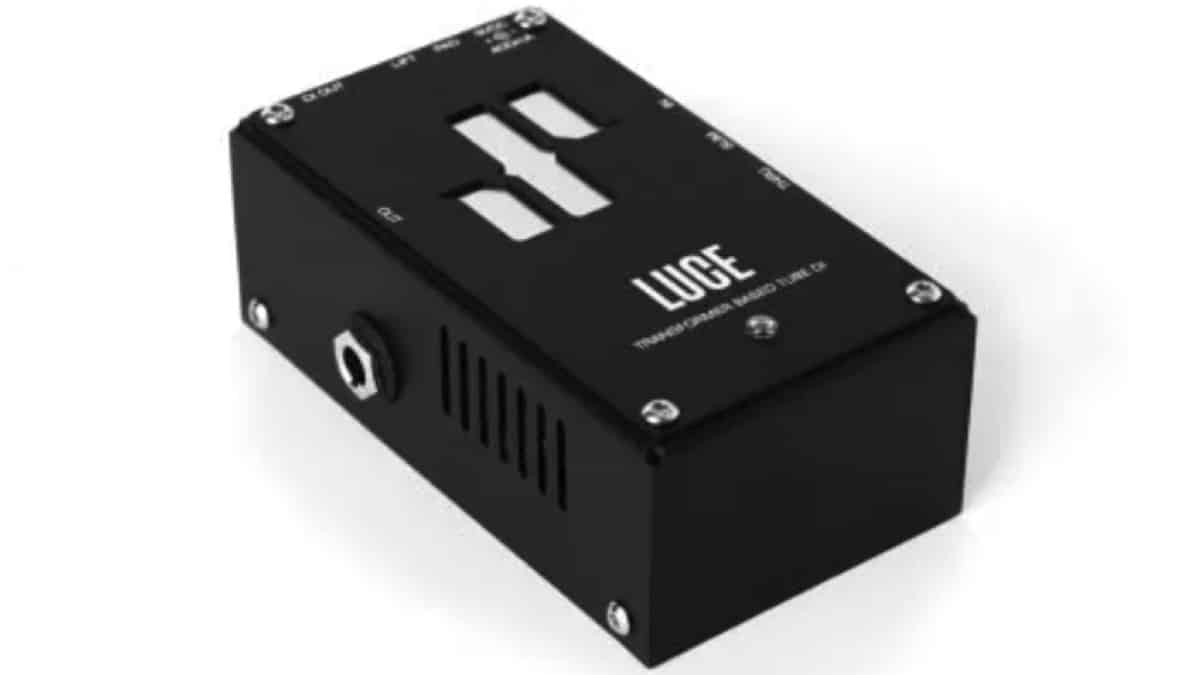
Disclaimer: This pedal was kindly provided by Jad Freer for the purpose of this review. However, this does not influence our opinions or the content of our reviews. We strive to provide honest, unbiased, and accurate assessments to ensure that our readers receive truthful and helpful information.
Jad Freer Audio first caught the attention of the bass world with the highly acclaimed Capo DI, a feature-rich preamp that quickly became a favorite among modern bass players and content creators, including bass players like Chris Chaney or Tim Lefebvre. The Capo earned its reputation through flexibility, deep tone shaping, and studio-grade performance packed into a pedalboard-friendly format.
The new LUCE DI, however, takes a very different approach.
Where the Capo is about control and versatility, the LUCE is about refinement. There are no EQ sections, drive channels, or extensive controls here. Instead, Jad Freer focused on creating a high-end, studio-quality DI designed to enhance your bass tone without fundamentally changing it.
As the company describes it:
“Luce — light in Italian — is a studio-quality, transformer-based tube DI (Direct Injection) box: a unity gain (1:1) tube preamplifier and active summing unit.”
That may sound technical at first, but the philosophy behind the LUCE is actually quite simple: preserve the integrity of the instrument while adding the subtle warmth, depth, and dimensionality associated with premium analog studio gear.
Classic Studio Design in a Compact Format
At the core of the LUCE is a carefully selected ECC88/6922 tube paired with an OEP/Carnhill transformer, components inspired by the same design traditions found in legendary British recording consoles.
For bass players, this translates into a tone that feels naturally polished rather than heavily processed. The low end becomes slightly tighter and more authoritative, the highs smoother, and the overall signal takes on a subtle sense of depth that is difficult to describe until you experience it firsthand.
Importantly, the LUCE does not impose a strong tonal signature of its own. It is not a distortion pedal, amp simulator, or aggressive tone shaper. Instead, it enhances what is already there.
Players who already have a sound they love will likely appreciate the LUCE the most, as it acts more like a studio-quality finishing stage than a traditional bass preamp.
On Stage and in the Studio
Although the LUCE comes in pedal format, its personality feels deeply rooted in studio workflow.
Live, it provides an exceptionally clean and mix-ready DI signal, helping bass sit naturally in the front-of-house mix with minimal corrective EQ. Notes feel defined, low frequencies remain controlled, and the overall signal has a polished quality that sound engineers will immediately appreciate.
In the studio, however, the LUCE truly shines.
The combination of tube harmonics and transformer coloration gives direct bass tracks a sense of analog richness and musicality before any plugins or additional processing are added. The result is a DI tone that already feels closer to a finished record.
This makes the LUCE especially appealing for session players, producers, and bassists working in home recording environments who want a professional-grade front end without carrying around a full rack of studio equipment.
The Jad Freer LUCE is not designed to impress through flashy controls or dramatic tonal transformations. In fact, its greatest strength is restraint.
Rather than reshaping your sound, it refines it.
For players seeking a pedal that delivers studio-quality warmth, clarity, and feel while preserving the natural voice of their instrument, the LUCE offers a sophisticated and deeply musical solution. It may be compact enough for a pedalboard, but its mindset is unmistakably studio-oriented.
For more information, visit online at jadfreeraudio.com/
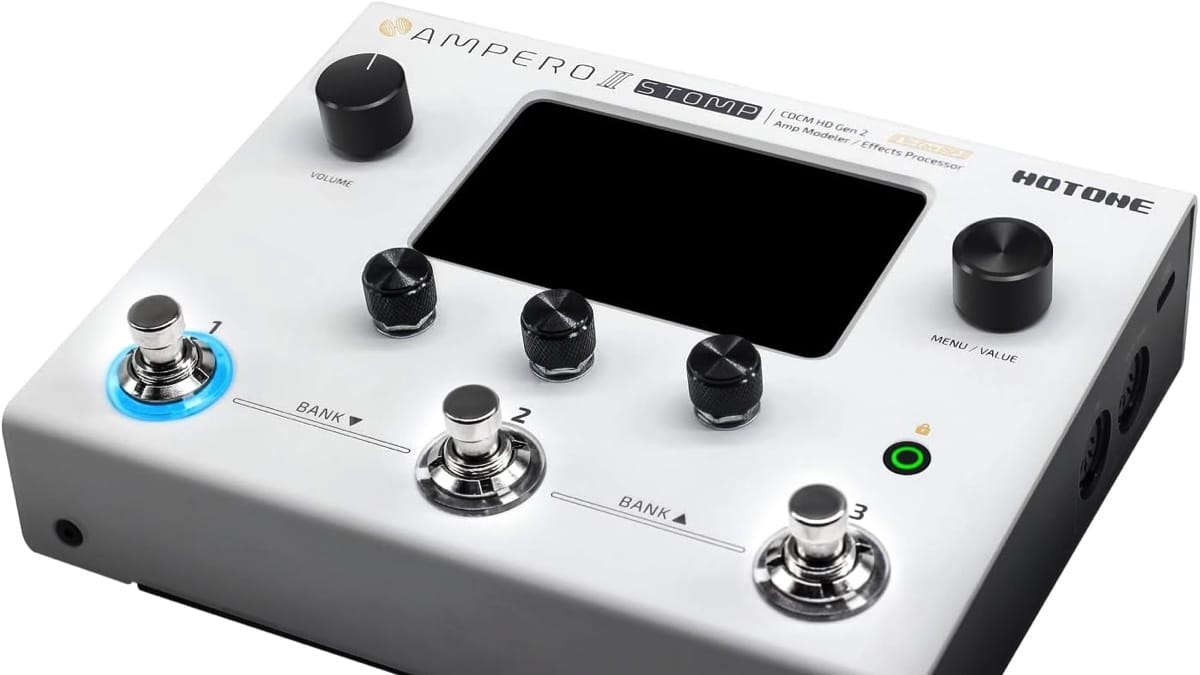
Disclaimer:This pedal was kindly provided by Hotone for the purpose of this review. However, this does not influence our opinions or the content of our reviews. We strive to provide honest, unbiased, and accurate assessments to ensure that our readers receive truthful and helpful information.
Compact Design, Serious Bass Capability
The Hotone Ampero II Stomp sits in an interesting space for bass players. It is compact enough to replace a pedalboard, powerful enough to function as a full DI rig, and flexible enough to cover everything from clean studio tones to aggressive modern drive setups. While it is often marketed primarily toward guitar players, it actually reveals a surprising amount of depth when approached from a bass workflow perspective. For modern bassists balancing live performance, silent stages, recording sessions, and fly-date practicality, the Ampero II Stomp feels increasingly relevant.
At its core, the unit is built around Hotone’s CDCM HD and F.I.R.E. modeling engine, offering amp modeling, cabinet simulation, extensive effects, IR loading, and flexible routing in a compact stompbox format. You get over 80 amp models, a large effects library, stereo operation, parallel routing, MIDI support, USB audio interface functionality, and up to 12 simultaneous effect blocks. For a device this small, the feature set is substantial and immediately practical in real-world bass applications.
Routing Flexibility Built for Modern Bass Rigs
What makes the Ampero II Stomp particularly compelling for bass players is its routing flexibility. Parallel signal paths allow you to preserve low-end clarity while introducing distortion, compression, modulation, or saturation on a separate chain, a critical feature for contemporary bass tones. This makes it easy to create clean/dirty blends, bi-amped textures, wet/dry ambient rigs, or heavily processed atmospheric sounds without sacrificing punch and articulation.
Players working in progressive metal, worship, fusion, or modern pop contexts will especially appreciate how naturally the unit adapts to layered and dynamic signal chains. The touchscreen interface also deserves more credit than it often receives. In practice, editing feels faster and more immediate than many menu-heavy modelers in the same price range. Dragging blocks, adjusting routing, and building presets become intuitive after only a short learning curve.
That matters because bass rigs often require more nuanced signal management than guitar setups, particularly when preserving transient response and low-frequency integrity. The visual workflow encourages experimentation instead of slowing it down.
Amp Models and IR Performance
The amp models themselves are solid and musically usable, with the Ampeg-inspired options standing out as the most immediately convincing for bass. Vintage-style tube warmth, modern clean headroom, and slightly driven SVT-style grit are all accessible with minimal tweaking.
However, the unit noticeably improves when paired with high-quality third-party impulse responses. Good bass IRs add depth, air, and realism that elevate the direct tones from “good digital modeler” territory into something that sits naturally in a live mix or recorded production. This is particularly noticeable in in-ear monitor environments where cabinet realism becomes more exposed.
Compression performance is another underrated aspect of the unit. Bass players rely heavily on compression not only for sustain, but also for consistency and dynamic control. The Ampero II Stomp offers enough flexibility to cover subtle leveling, punchy slap compression, and more aggressive limiting for modern rock and metal applications. Combined with EQ blocks and parallel routing, it becomes possible to sculpt highly polished, mix-ready tones directly inside the unit without relying heavily on external processing.
Effects and Sound Design Possibilities
Effects quality is generally strong, especially in the modulation and ambient categories. Delays, reverbs, and chorus effects sound spacious and musical, making the unit particularly effective for cinematic bass textures, post-rock soundscapes, and worship-style ambient playing.
Octave and synth-style effects are also surprisingly usable when dialed in carefully, adding further versatility for experimental players. Drive and distortion models are slightly more inconsistent, with some patches requiring additional EQ shaping to maintain low-end authority. Fortunately, the routing options make it relatively easy to compensate by blending unaffected low frequencies back into the signal.
Live Performance and Recording Workflow
In live situations, the Ampero II Stomp performs convincingly as a direct-to-FOH solution, backup rig, or complete ampless touring setup. Balanced outputs, stereo capability, MIDI implementation, and compact dimensions make it practical for professional stage environments where portability matters.
For touring bassists or session players carrying multiple instruments and limited luggage, the ability to fit an entire rig into a backpack-sized footprint is a significant advantage. The onboard footswitches are responsive and functional, though players requiring extensive real-time scene switching or expression control may still prefer adding an external MIDI controller.
As a recording interface, the unit continues to impress. USB audio support allows direct tracking, reamping, and mobile production workflows without additional hardware. Latency performance is stable enough for home studio use, and the ability to move seamlessly between practice, songwriting, demo recording, and professional tracking adds to the unit’s overall value.
For content creators and remote session musicians, the all-in-one workflow is particularly appealing.
Limitations and Final Verdict
There are still limitations. The bass-specific ecosystem surrounding the platform is smaller than what players may find with systems from Line 6 or Fractal Audio Systems, and some factory presets clearly lean toward guitar-oriented use cases. Certain effects also reveal DSP limitations when running highly demanding patches involving dual amps, pitch shifting, and extensive ambient processing simultaneously.
While the processing power is more than adequate for most practical scenarios, power users may eventually encounter those ceilings.
Even so, the overall value proposition remains impressive. The Ampero II Stomp succeeds because it balances portability, flexibility, and sound quality exceptionally well for its size and price range. It may not have the ecosystem depth or market dominance of larger competitors, but it consistently delivers professional-level results in compact form.
For bass players building modern direct rigs, simplifying touring setups, or entering the world of ampless performance without sacrificing tonal control, the Hotone Ampero II Stomp stands out as one of the more underrated and genuinely capable compact modelers currently available.
Available online at Amazon.com
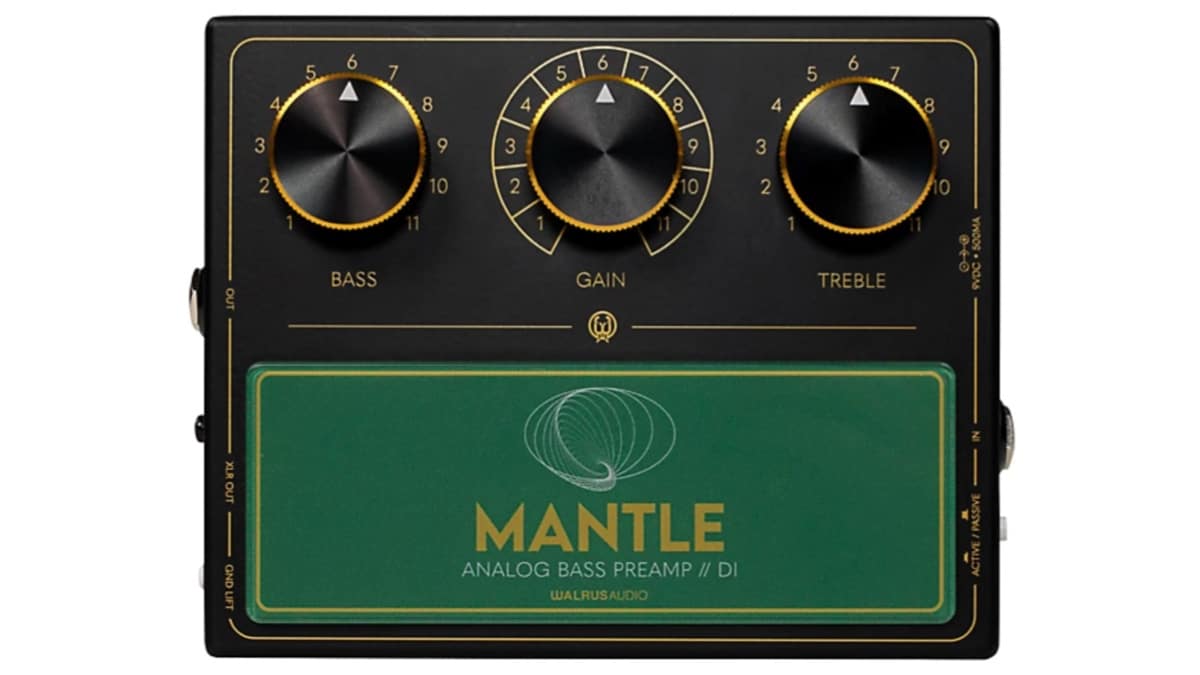
Disclaimer: This pedal was kindly provided by Walrus Audio for the purpose of this review. However, this does not influence our opinions or the content of our reviews. We strive to provide honest, unbiased, and accurate assessments to ensure that our readers receive truthful and helpful information.
There’s no shortage of bass gear promising to elevate your tone. From budget-friendly surprises to high-priced disappointments, the market has never been more crowded, or more inconsistent. Every so often, though, something arrives that challenges expectations rather than simply trying to meet them.
The Mantle is one of those pieces.
Developed with a clear, almost stubborn sense of purpose, this pedal doesn’t attempt to be everything. Instead, it focuses on doing one job exceptionally well: delivering a studio-quality front end for bass players who care deeply about their core tone.
A Studio Concept on the Floor
Rather than following the typical pedal blueprint, stacking features, adding effects, and maximizing flexibility, the Mantle takes its cues from the recording world. Its design reflects the kind of signal conditioning usually reserved for high-end studio environments, where tone is shaped at the earliest possible stage.
The architecture blends influences from classic preamp designs. There’s a sense of weight and density reminiscent of vintage input stages, paired with the articulation and forward presence associated with punchier output circuits. The result is not a nostalgic recreation, but a hybrid approach that feels intentional and modern.
A key part of this identity comes from the inclusion of transformer-based stages. This is unusual in pedal format, and it plays a significant role in how the Mantle responds. The low end feels more grounded, the midrange gains subtle complexity, and the overall signal carries a depth that’s often missing from purely solid-state designs.
Equally important is the available headroom. Internally operating at a higher voltage than its external power supply suggests, the Mantle maintains clarity even when fed by high-output instruments. Active basses, in particular, benefit from this, retaining their dynamics without unwanted compression or breakup.
Control Without Clutter
At a glance, the control layout might seem restrained, especially considering the price point. But this isn’t a limitation so much as a deliberate design choice.
The gain control doesn’t behave like a typical drive circuit. Instead of pushing the signal into distortion, it adjusts how the internal stages are engaged. As it increases, the tone becomes denser and more harmonically rich, but without crossing into obvious saturation. It’s a subtle shift, yet one that becomes increasingly apparent in a mix.
The EQ section follows a similarly focused philosophy. Rather than continuous knobs, it uses stepped controls with fixed increments. This approach favors precision and repeatability over experimentation. Each position feels considered, making it easy to dial in a sound and return to it later without guesswork.
More importantly, the EQ is voiced to enhance rather than reshape. Low-end adjustments add authority or tighten the response without overwhelming the signal, while the high-frequency control introduces clarity or smoothness depending on the direction. It’s less about correction and more about refinement.
Additional features, like selectable input sensitivity and a balanced output with ground lift out the package, ensuring compatibility across a wide range of setups.
Tone at the Source
What sets the Mantle apart is not just how it sounds, but where it operates in the signal chain. Instead of relying on downstream gear to define the final tone, it encourages players to establish that character right from the start.
This approach becomes particularly noticeable when using the direct output. Many DI signals can feel somewhat flat or disconnected, especially in recording scenarios. Here, there’s a noticeable sense of dimension and cohesion, closer to what you might expect from a well-mic’d amplifier.
By the time the signal reaches the mixing stage, much of the tonal work is already done.
Real-World Applications
In practice, the Mantle adapts easily to different roles, depending on the player’s needs.
For some, it will function as an always-on foundation, essentially becoming part of the instrument’s voice. In live environments, the consistency of its direct output offers a reliable alternative to unpredictable backline setups, giving front-of-house engineers a polished signal every time.
In the studio, it can streamline the recording process by reducing the need for additional processing. The captured tone already carries weight, clarity, and balance, allowing it to sit naturally in a mix with minimal intervention.
It also fits neatly into modern performance contexts, including silent stages and in-ear monitoring systems, where the direct signal defines the entire listening experience.
Not for Everyone… and That’s the Point
The Mantle’s strengths are rooted in its focus. It excels at delivering a refined, high-quality bass tone with minimal fuss. However, that same focus means it won’t appeal to players looking for extensive tonal shaping, onboard effects, or aggressive character.
There’s no distortion circuit, no compression, and no deep EQ sculpting. It doesn’t aim to replace a full pedalboard; it assumes you already have one, or that you don’t need one.
Cost is another factor that can’t be ignored. Positioned firmly in premium territory, it invites comparison not with standard pedals, but with dedicated preamps and studio-grade DI solutions.
A Different Way of Thinking
The Mantle ultimately asks bassists to rethink their approach. Instead of treating tone as something to be fixed later, it places that responsibility and opportunity right at the beginning of the chain.
It doesn’t dramatically alter your sound. What it does is make your existing tone feel more complete: fuller, clearer, and more deliberate.
For players willing to embrace that philosophy, it offers a compelling alternative to traditional setups, one that brings studio sensibilities directly to the pedalboard without compromise.
Available online at Amazon.com
Gear Reviews
Review: Neural DSP Darkglass Ultimate… From Signature Tone to Full Production Ecosystem


For years, the Darkglass name has been closely tied to the evolution of modern bass tone. From tight, aggressive drive to articulate low-end clarity, its sonic fingerprint has become a staple across heavy, progressive, and even crossover genres. With the release of Darkglass Ultimate, Neural DSP takes that familiar identity and pushes it far beyond amp simulation, delivering something that feels less like a plugin and more like a complete bass production environment.
This isn’t just an update. It’s a shift in scope.
Expanding a Proven Foundation
When Neural DSP first introduced the Darkglass plugin line in 2018, the goal was straightforward: capture the essence of the brand’s most iconic pedals in a digital format. The Darkglass B7K Ultra bass preamp pedal and Darkglass Vintage Ultra bass preamp pedal formed the backbone of that effort, offering two distinct but complementary tonal philosophies.
Darkglass Ultimate retains those core voices, but places them inside a much broader framework.
The B7K side still delivers its signature precision… tight low end, defined attack, and an aggressive edge that cuts cleanly through dense arrangements. In contrast, the Vintage circuit leans toward a more rounded, harmonically rich response, evoking the feel of classic tube amplification without becoming overly soft or indistinct.
More importantly, these tones don’t feel like endpoints. They act as foundations, strong, mix-ready starting points that encourage further shaping rather than requiring corrective work.
Beyond Amp Simulation
Where Darkglass Ultimate separates itself from earlier iterations is in how much ground it covers. Instead of focusing solely on preamp and cabinet emulation, it builds a complete signal chain designed to take a bass part from initial idea to final production, without leaving the plugin.
The pre-effects section is comprehensive, including compression, envelope-based filtering, octave layering, and fuzz. These aren’t treated as add-ons; they’re integrated into the signal path in a way that feels intentional and musical, encouraging experimentation from the very first note.
Post-effects expand that palette further. Modulation and delay are implemented with a level of quality that invites actual use rather than occasional novelty. In particular, the delay stands out, not just as a functional tool, but as a genuinely inspiring one. It adds space and movement without overwhelming the fundamental tone, making it surprisingly effective even in contexts where bass delay might typically feel excessive.
Cabinets, EQ, and Precision Control
The cabinet section introduces modeled Darkglass enclosures, including the DG210C (2×10) and DG810ES (8×10). Combined with adjustable microphone placement, this allows for detailed tonal shaping at the final stage of the signal chain.
Supporting this is a robust EQ architecture. Between the onboard controls inherited from the original pedal designs and a dedicated 9-band graphic EQ, there’s significant flexibility available. Subtle corrections, surgical adjustments, or more dramatic tonal shifts are all within reach, depending on the needs of the track.
This level of control makes it possible to move quickly from raw tone to mix-ready sound, often without relying on additional processing.
Presets That Go Beyond Genre
Preset libraries can often feel like filler, but that’s not the case here. Contributions from players such as Adam “Nolly” Getgood and Alex Webster highlight the plugin’s strengths in heavier styles, offering polished, aggressive tones that sit naturally in a mix.
At the same time, the in-house presets from Neural DSP broaden the scope considerably. There are synth-inspired textures, ambient layers, funk-driven tones, and deliberately extreme fuzz patches that push the plugin into more experimental territory.
The result is a tool that resists being boxed into a single genre. While its roots are clearly in modern rock and metal, its capabilities extend well beyond that space.
Workflow and Usability
One of the most compelling aspects of Darkglass Ultimate is how efficiently it integrates into a working environment. Built-in utilities, such as a tuner, metronome, and transpose function, may seem like small additions, but they contribute to a smoother, more self-contained workflow.
In practice, the plugin performs reliably and responds quickly. Recording sessions feel fluid, and tones translate well into a mix with minimal additional processing. That immediacy is a major advantage, particularly for players working in home or project studio settings where speed and simplicity matter.
From Studio to Stage
Although clearly designed with recording in mind, Darkglass Ultimate also opens the door to live applications. With the addition of a MIDI controller, it can function as a highly adaptable performance rig, offering real-time control over effects, presets, and signal routing.
For players comfortable incorporating a laptop into their setup, this creates a powerful alternative to traditional hardware-based rigs, especially when portability and flexibility are priorities.
A Logical Evolution
Darkglass Ultimate doesn’t abandon what made earlier versions successful; it builds on it. The core tones remain intact, but they’re now part of a much larger system designed to support the entire creative process.
Rather than thinking of it as a plugin that emulates a pedal, it makes more sense to view it as a production tool centered around a specific tonal identity. One that starts with the recognizable Darkglass sound, but doesn’t stop there.
For bassists who want a streamlined path from idea to finished track, and the flexibility to explore along the way, it represents a significant step forward in how software can support both tone and workflow.
Visit online at neuraldsp.com/