Cover
Bassist and Composer Gary Willis: Bass Musician Magazine August/September 2007


Interview with Bassist Gary Willis –

Bassist and composer Gary Willis is one of the most respected names in the bass community. His innovative approach both compositionally as well as a player keeps him at the forefront of progressive music. His CD’s are a must listen to anyone looking to challenge their ear, as well as their musical outlook. Now residing in Spain, Gary talks about his latest CD’s, and shares some insight to his approach as a player and writer, and where things are heading.
Jake: One of the things I enjoy about your CD’s is I can always expect the unexpected from you, and after listening to Actual Fiction, you definitely did not let me down. Could you tell me about your approach to putting these tracks together?
Willis: It was the kind of thing where there wasn’t a record company involved, and I wasn’t in a position to do a traditional CD where you write some music, hire some musicians, hire a studio, go in and perform, and you’ve got that music that day with that performance. That was out of the question because there wasn’t a record company interested at the time.
So I’ve had the good fortune of working with Kirk Covington. He’s a real flexible musician, and so I flew him over and had him record on electronic drums. That gave the starting point for some of the tunes. So instead of doing traditional song forms, I took a more experimental approach, and I was more or less working on the final product the whole time as a result. There was a lot of trail and error, try this, try that, and it got even more experimental as we proceeded.
Jake: Did you add all your sounds, voices, etc after all the tracks were down?
Interview Photo Credits: Ferenc Sztraka
Willis: Smells Like A Party is a tune that generated those things, along with me and Kirk playing together. I had Mean Streak written before, but I really had no concept how it should sound, or what style it should be, so after spending time with Gomez on that track, we finally came up with version on the CD. It’s much heavier than I originally planned.
On Tio Loco, we came up with this feel, then I wrote a tune, and that was with Kirk.Based On A True Story was adapted to go on the CD. Eye Candy was based on a take from Kirk that I sped up to a different tempo, and then completed the track. Say Never I just did myself. I did PodCast myself, and imported and edited some of Gomez’s playing to complete that track. Kirk played on Cartoon Fetish, and that was one of the first tunes I worked on, and it went through a lot of revisions until I found what was going to be the focus.
Jake: After listening to Actual Fiction, and quite honestly most of your other works, I’m curious as to what goes thru your head, if anything, when your developing and creating new groove lines that I can always tell are distinctly yours.
Willis: Actually, coming up with groove lines on the bass is the easy thing for me, because it’s just instincts and creativity. That part is definitely easy. Coming up with the other elements, the drums, the percussion soundscape, these things are much more difficult.
What goes through my head is that there are certain things I want to say on the instrument, and I try to find a way to present it, or more importantly, justify it. You can’t just take off and go soloing; you have to create a context for that stuff to exist. It’s a lot of trial and error, and a lot of times it’s a lot of error. You have to try different things to find out what works, or doesn’t work, and that’s on all kinds of levels– working on editing drums, creating drum tracks and sounds so it doesn’t just sound like a loop, finding the right density, or finding the right harmony for the melody to keep focused.
Jake: Improvisation has always been a stronghold for you on your recordings. Do you spend any time at all at this point investigating new ideas as far as improv goes.
Willis: Not really. It’s more like different gigs, different situations will cause me to play different things, and it was the same for the CD. That was one of the reasons I had Kirk come over to get started. I wasn’t even sure if it was going to be a project. We tried some things to see if they would work and point me in a direction, and once the direction took hold, we got started.
On the other hand, Slaughterhouse 3 was a really good example of just pure improvisation. We set up and recorded for an afternoon, then came back and did a few hours in the morning, a few more hours in the afternoon, and that was it. We did 20 something tunes and then picked some out. Nothing was written, nothing was discussed, it was just….boom. With no charts you keep focusing on the direction no matter what, and Kirk and I tried to focus on “jamming” compositionally.
We actually had to go back and insert some solos for Llibert, which is unheard of for a sax player. When a sax player hears a groove, and the rhythm section does something unusual, usually they’re just soloing all over the place, but Llibert is always looking for melodies, and for a direction on what he can do compositionally.
Jake: How did this trio come about?
Willis: It kind of happened when I flew Kirk over for the first time to get some work done on Actual Fiction. I booked a couple of nights at a local jazz club as a trio and we went in there and jammed, and it was wow, we really should do something about this, so actuallySlaughterhouse 3 kind of interrupted the work I was doing on Actual Fiction. So we got Kirk back that summer and got into the studio.
Jake: Any plans for that trio?
Willis: Yeah, we’re trying to tour with it and we’ll see what happens. October and November are what we’re looking at right now.
Jake: I don’t know if I’ll put this in the article, but I kind of see Slaughterhouse 3 as the ‘anti-Christ’ to smooth jazz.
Willis: No, no–definitely put that in. Do me a favor and please put that in. Although I doubt the smooth-jazz world would consider us that much of a threat. I mean, it’s so easy – like making fun of Dan Quayle or George Bush. One of the best takes on it I found here: www.theonion.com/content/opinion/no_one_sets_out_to_be_a_smooth
Jake: Beyond your books, which are a great reference source, and I know it’s hard to narrow this down, but could you recommend some avenues of exploration for improv for up and coming players that you feel are worth considering?
Willis: One thing that I’ve always rejected is the whole thing about scales and modes and their relationships to chords. As a player, if you feel that’s being shoved down your throat, it’s okay by me to reject it. What communicates to me are ideas.
The thing to explore is, well, in the traditional way that improvisation is taught, your own instincts for what should be a response to an idea are kind of shoved to the bottom of the list. You know, you think about putting your hand there, you think about this scale, you get your hand in place, and by then the chord has moved on, the form has moved on, and do you even have any idea what the last thing you played was?
So what communicates are ideas, and I compare an idea to a character in a movie. A movie is only as good as the development of the characters. When you’ve been around music your whole life, you don’t have to study what your instincts and responses are, all you have to do is listen to it, and react to it. So leave some space, play an idea, and your instincts, your ear should tell you what to play next, and as you learn to listen to that, and get that into your playing, you’ll improve, and the next thing you’ll do is start editing your instincts to be more clear, to get more contrast, to get more development. Everybody that’s been around music their whole life has this ability to improvise and react to ideas, and if you don’t react to your own ideas, then the audience is not going to react, and you’ve lost them.
Jake: It seems to be able to communicate that way when you are playing, there would have to be “some” kind of foundation involved, an understanding of the board to a point, and harmony to a point, which brings us back to scales and modes again, and having that understanding so you can release that and go. Have I misconstrued this?
Willis: Well, you don’t have to know the whole fingerboard, the names of the notes and all that stuff necessarily. Those labels, if they consume your consciousness and your thinking about them, or thinking about getting your hand in the right place, or you think about the scale and the names of the notes, the odds are what you’ve just played is going to be forgotten, and you can’t react to it.
I don’t think you need all this background data to start with. You can jump right in and start getting a handle on what your ear wants to hear, and if your looking at the fingerboard and you find the correct answer, then the fingerboard reinforces itself. When I’m playing well, all I’m doing is hearing the next idea the way I want to respond to it and I’ll see that on the fingerboard or sometimes I’ll see the idea, or hear it as a player. Those two things stay at the top of my… my feeble brain. And if it’s working well, those are the only two things to consider, and nothing else gets in the way.
Jake: Kind of related to what we’re talking about, I remember learning from you, I believe from your video awhile back, the concept that you’re just a 1/2 step away from handling any chord that may follow. What I love about your solos, and distinguishes you from other players to the point that I could pick you out in a blindfold test, is how you connect your ideas chord change to chord change. So my question is, is that 1/2 step away philosophy part of this process we’ve been discussing to connect phrases more musically?
Willis: That’s kind of it. The concept that I’ve got for harmony involves pretty much your hand–your four fingers, and the stretch to either side of the fret. You’ve got all the harmony you need, the chord tones, etc., right under your hand. So if you know what happens in a key under your hand, and that key changes, then you’re not going to have to move very far to keep an idea going.
It kind of goes back to what I was saying—to me, the idea is the most important thing, and you never want anything to interrupt that. So if a chord changes, or a key changes, you don’t want those things to stop your ideas from being completed, or being developed. This approach to harmony makes it much less intimidating, because there are only two hand positions across the board to get a look, a visual of what the harmony is under your hand. This helps completing ideas to be much more fluid.
Jake: So I’m curious, switching gears here, do you feel now that you’re living in Spain, and have radically changed your environment, that this move has had an impact on you artistically in any way?
Willis: I think artistically, mainly it’s enabled me to have the time to do a project like this. The last few years in New Mexico I really wasn’t that much of a musician. I was a web designer, a part time private eye, I couldn’t really invest in doing this kind of thing because of the amount of time it needed. Santa Fe is a great place to live, but I couldn’t be a musician there. That’s the main thing of being here, having the time to put together a project like this, and having the time to explore different sounds and some ways of working things. Now I have the time to do them. I’m also a couple of days a week at a conservatory, and I’ll occasionally go out and do some clinics or some tours here and there.
Jake: When you’re doing a clinic, is there something in particular you more or less try to convey to the audience, or do you just keep it open and spontaneous.
Willis: I don’t prepare anything; it’s pretty much open. When it comes to dealing with students, what I try to do is help them teach themselves. Nobody has to do it my way, although I have good reasons for doing it the way I do, and it works for me.
The main thing is to do the work and do the investigation, do the self-observation enough so that you learn about how you do things, and what you do well, so you can become your own teacher. I never had a bass teacher. I had guitar teachers and improvisation classes, stuff like that. So I’m kind of qualified to talk about whatever it is that I’m talking about to get from point A to point B.
Jake: So a young promising player comes to you for some guidance on getting his career started… With the music business being in the state that it’s in at this point, what might you tell him?
Willis: The game has definitely changed. When I was coming up, the whole idea behind bands and players was that if you attach yourself to a well known player and become a sideman, that was the way to get exposure for yourself and what you were interested in doing. And that’s more difficult to do now because of the way the industry has changed.
This is something I’ve always tried to get across to people, is that it’s a ‘do it yourself world’ out there. It’s very, very slim odds that you’re going to walk into a musical situation that’s going to provide you with an outlet to express exactly what you want to express. The more you learn what it takes to get the kind of music you want to do, that means production, writing music, arranging music, learning about venues and management, booking bands and learning how to organize what it takes to get performances happening, to make videos, to get things on the web, to promote yourself, the more you realize there’s a whole lot more to this than just learning your instrument.
The record companies are pretty much a dying industry, but one good thing the record companies provided when they were in control is that they did filter out a lot of mediocre stuff from getting out on the market, and now there’s pretty much no filter. I suppose it’s more democratic, but it makes it more difficult for everybody involved as well because you’re competing with anybody that has a computer and a CD burner.
Jake: So what’s coming up that your looking forward to?
Willis: Slaughterhouse 3 is going to play at this big festival in Budapest next month, and we’re hoping to tour in the fall and next spring. I might start a new project. It will probably include more musicians this time, just to make it easier on myself, and I’m looking forward to getting back on my mountain bike this summer.
Jake: Thanks Gary.
Willis: Thank you.


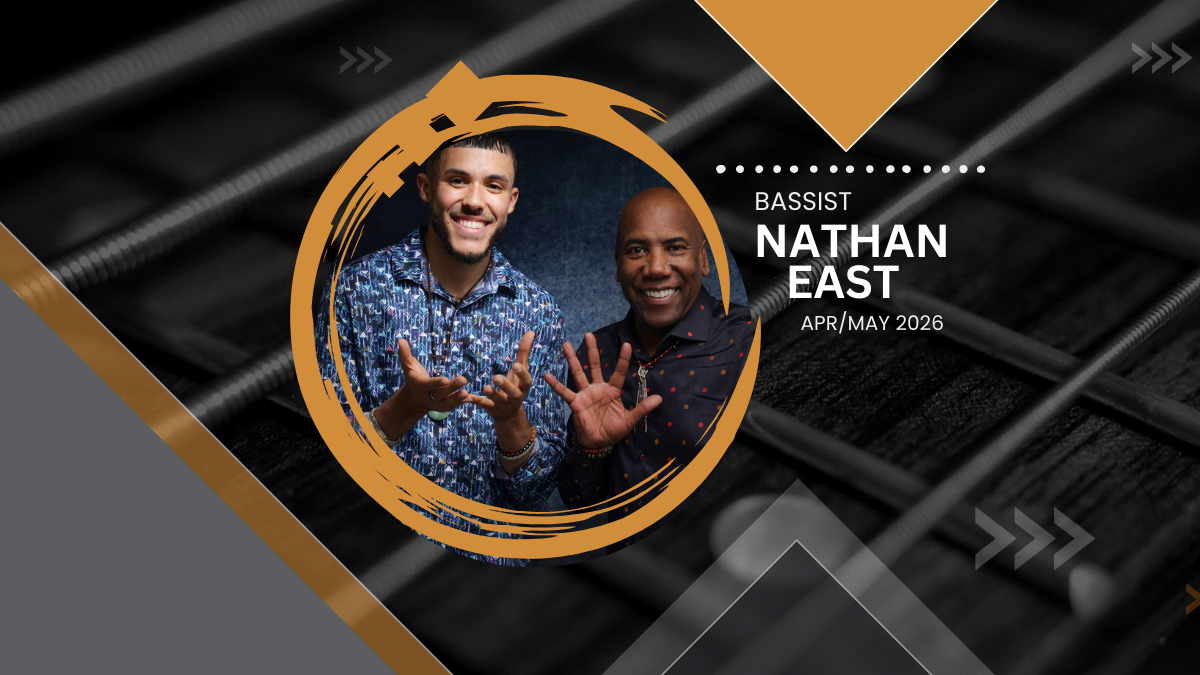
For decades, we’ve had the privilege of following the remarkable career of Nathan East, listening closely to his albums, tracking his milestones with Yamaha Instruments, and watching his evolving partnership with Laney Amplification with great interest. Along the way, we’ve talked gear, tone, and technique, while hearing his unmistakable musical “voice” woven into the work of more iconic artists than we could possibly list.

Today, we’re thrilled to reconnect with this true giant of the bass world following the release of a very special new album, Father Son, produced by Nathan alongside his son, Noah East. It’s a deeply personal project that showcases not only extraordinary musicianship but also a powerful family bond.
Join us as we dive into the making of this outstanding record, explore the new Laney Nathan East Signature Bass Preamp, and look ahead to what the future holds for one of music’s most respected and influential bassists.
Here is the one and only… Mr. Nathan East.
Photos, John Abbott @johnabbottphoto
Featured Videos:
Visit Online:
www.NathanEast.com
FB, IG, X, & YouTube @NathanEast
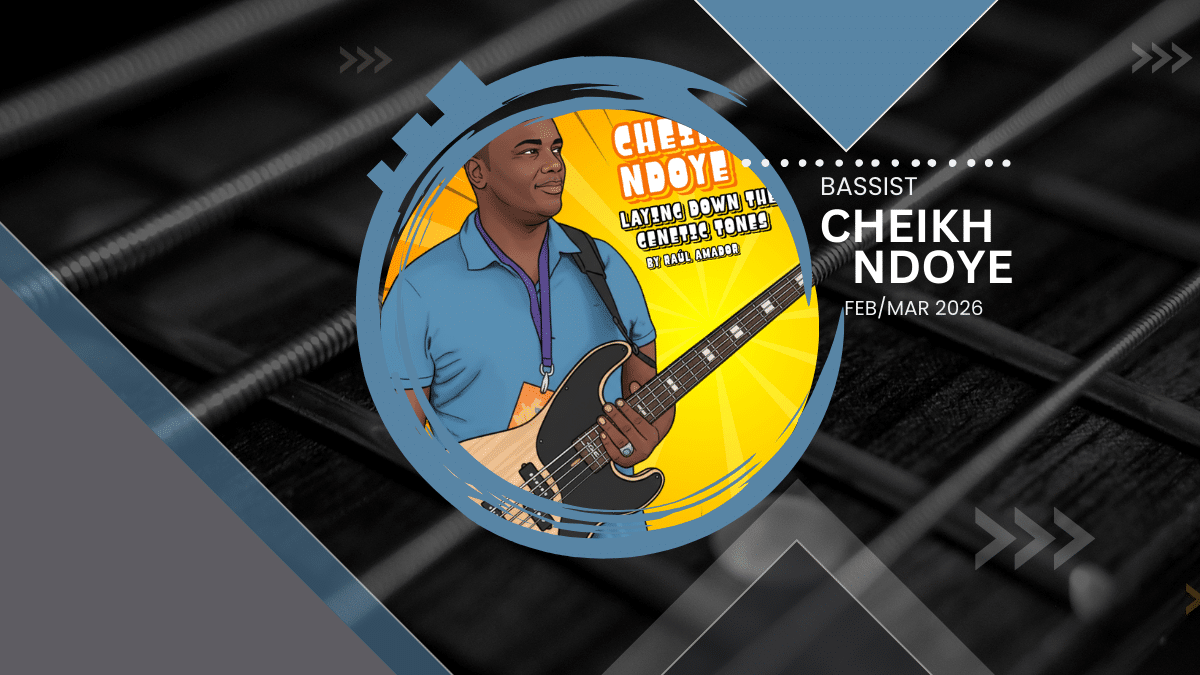
For nearly seventeen years, we’ve followed the ever-evolving journey of bassist Cheikh Ndoye, watching with admiration as his musical vision continues to deepen and expand. Each project has revealed a restless curiosity and a commitment to sound that resists easy categorization.

When we last spoke in 2018, Ndoye was already hinting at new directions, and he hasn’t slowed down since.
In the years that followed, he’s been quietly and intensely at work, culminating in a new album, Genetic Tones, a project that captures both his roots and his forward-looking approach to music.
I recently had the great pleasure of listening to several rough tracks from the album, and, as always, I was both impressed and genuinely excited by what I heard. Genetic Tones feels like a bold and thoughtful statement, rich in texture and intention. Join me as Cheikh shares insights into the making of this upcoming release and reflects on the ways his musical language has continued to transform over the years.
Photo Credits: Courtesy of Cheikh Ndoye and Courtesy of Aguilar Amplification
Featured Videos:
Visit Online:
IG @thegenetictones
tiktok.com/@cheikh.ndoye.the

This month, we have a real treat for all you metal fans out there! Joining us is none other than Pär Sundström, the powerhouse bassist and co-founding member of Sabaton, a band many consider to be the #1 global power metal act in the world.

Pär isn’t just the man behind those thunderous bass lines; he’s also one of the main lyricists and the band’s manager, helping to shape Sabaton’s unmistakable sound and unstoppable rise.
Hailing from Sweden, Sabaton has been conquering stages and hearts around the world for over twenty-five years, delivering their signature blend of history, heroism, and heavy metal might. And now, with the release of their brand-new album ‘Legends,’ the band is gearing up for a tour that promises to be absolutely spectacular.
We’re diving into all the details, from the making of Legends, to the evolution of Sabaton’s epic sound, to what lies ahead for this legendary band.
So, without further ado, let’s welcome the man himself… Pär Sundström!”
Photos: Jens De Vos (cover & interview photos), Ben Alexis (interview photos)
Featured Videos:
Templars”
“Hordes of Khan”
“The Duelist”
“Lightning at the Gates”
“Crossing The Rubicon”
(Featuring singer Jonny Hawkins and guitarist Mark Vollelunga of NOTHING MORE)
Visit Online:

I’m sure many of you will remember that I had the pleasure of chatting with Lettuce bassist Erick “Maverick” Coomes just last year, where we covered a ton of great material. (If you missed it, you can check out that interview here>>>bassmusicianmagazine.com.)

Now, with Lettuce on the verge of releasing their brand-new album Cook, I thought it was the perfect time to catch up with Erick and see what’s been cooking… pun definitely intended!
In this conversation, we dive into the new album and the videos that accompany it, explore Lettuce’s exciting collaboration with Aquila Cellars on their signature wines, and get a glimpse into what’s next for the band.
So sit back and enjoy… here’s Erick “Maverick” Coomes!
Cover Photo, Alex Varsa | Other Photos: HIllary Clinton, and Sam Silkworth
Featured Videos:
Visit Online:

Back in June 2024, I had the chance to chat with Finger Eleven bassist Sean Anderson about the band’s Greatest Hits album release, and let’s just say, it was a walk down some seriously nostalgic memory lanes! (Check out that interview here.)

Fast forward to now, and the guys have been anything but idle.
On November 7, 2025, Finger Eleven will drop their first studio album in nearly a decade, Last Night on Earth, and fans are already buzzing. With such huge news, I couldn’t resist catching up with Sean again to get the inside scoop on this long-awaited release.
Join me as Sean shares all the details behind the new album… from the creative spark that reignited their sound to how he’s dialing in his tone these days, plus what’s next on the horizon for Finger Eleven.
Let’s dive in… here’s Sean Anderson!
Photo: Courtesy of Photographer, Jasmin Sewell IG @concertsbyjasmin
Featured Videos
Follow Online
www.FingerEleven.com
IG @ finger_eleven
FB @ FingerEleven

Nathan East, Echoes of a Lineage – April/May 2026 Issue

Gear Review: Italia Leather Straps

New Album: Oteil Burbridge & Lamar Williams, The Offering

Interview With Bassist Tom Doyle

Interview With Bassist Alex Blake

Feb 16 Edition – This Week’s Top 10 Basses on Instagram
Feb 23 Edition – This Week’s Top 10 Basses on Instagram
Mar 2 Edition – This Week’s Top 10 Basses on Instagram
Mar 9 Edition – This Week’s Top 10 Basses on Instagram