
Reader Submissions
Your Opinion – Tips on Buying a First Bass for a Junior High Student

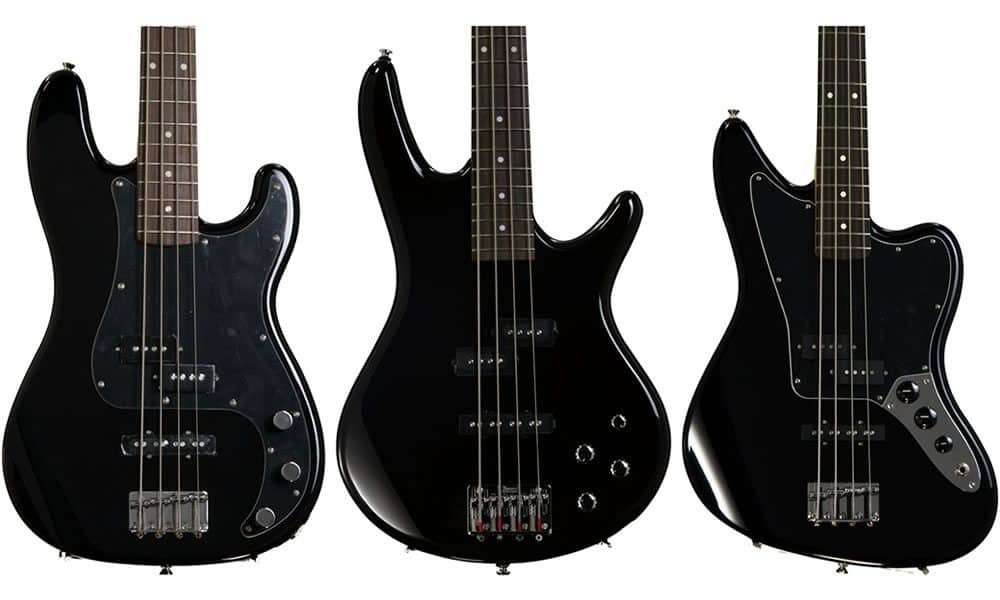

This month on Facebook, readers weighed in with tips on buying a first bass for a junior high student. Feel free to join the conversation!
Click to Find out what readers recommended, and to join the conversation.


By Guest Contributor, Carole Crosslin, a freelance writer and music junkie based in North Carolina. She lives vicariously through those who are in the business.
Photos courtesy of Todd Ashburn
They say grief does not change you, it reveals you. And in the case of Todd Ashburn, a Nashville-based session and touring bassist, the loss of his father at 22 fueled his career.
It was December 1988 when Ashburn learned that his father, Clint, was diagnosed with an aggressive brain tumor. He immediately packed up and left the University of North Carolina-Wilmington for home in Winston-Salem to support his father through the journey to come. The fight was hard, gritty, and raw, but the two never gave up on each other. And as Ashburn was losing his father, who passed away at 49, he was finding himself in music.
“Dad was always my champion, encouraging and supporting me in everything I wanted to do,” said Ashburn sentimentally. “When music sparked my interest as a kid, it was my Dad who lit the fire. And as I found solace in my bass during Dad’s illness, he recognized something that I had yet to see – I was a musician.”

Brother, Dad, Mom, and Todd
Whether for his Dad, for himself, or both, Ashburn allowed other pursuits to fall by the wayside as he channeled the visceral emotion of losing his father into building a career as a bass musician. It all got real after he moved to Charlotte, N.C.
Ashburn and a friend – along with two other musicians – formed Candy Pig. With funk metal at its core, the band blended in heavy metal, primal punk, and hip hop into a sound that was uniquely theirs. And it highlighted Ashburn’s high-energy, slap-and-pop bass. Just listen to the intro to “Smile” and the power of “Under the Fan,” and you’ll get his frenetic, yet controlled, style.
“Candy Pig was a full-on energy explosion, which I loved,” Ashburn said. “And we had the great fortune of playing venues from clubs to stadiums, opening for Korn, Alice in Chains, Pearl Jam and other popular bands of the day. The experience was mind-blowing – from the music to learning how to be a touring musician. You know … what to do and, more importantly, what not to do.”
Candy Pig quickly became ingrained in the Charlotte and Southeastern music scene. So it was no surprise the band was asked to be part of a compilation CD, produced by mega alternative rock station WEND and distributed to major record labels as “the best of the best” the city had to offer.
While recording the song, “Slump Vibe,” Ashburn met Dave Harris, a multi-Grammy-nominated producer and mastering engineer, who was running Reflection Sound Studios with Tracey Schroeder.
“I’ve always had tremendous respect for Todd – he’s not just a great bass player, he’s a well-rounded musician,” Harris said. “Todd walks a very fine line between playing an adept technical bass and infusing just the right amount of emotion. I heard it in the anger and angst of the Candy Pig song we worked on together.”
Candy Pig disbanded after nine years, but a connection made during that time led to the next chapter in Ashburn’s career. Country music star Jimmy Wayne was a Candy Pig fan, band drummer Chuck Craig’s good friend, and he often hung out with the guys backstage. Wayne was so impressed that he asked Craig and Ashburn to join his band in Nashville.
Ashburn took him up on the offer.
While in Music City, both Ashburn and Buddy Hyatt, of Toto fame, were in the legendary Tracking Room studio, each working on their own demos. Hyatt heard Ashburn’s demo and that was the beginning of a powerful artistic alliance, not to mention a deep friendship.
In fact, it was Hyatt’s younger brother, Jimmy, who bestowed his nickname – “Toddzilla” – because of his larger-than-life presence and monstrously thumping basslines. Ashburn shrugs the compliment off with his signature humility, however, noting that Jimmy himself is an incredible talent on the “low end.”
Ashburn went on to play with Toto, Taylor Dayne, and Steppenwolf, among others. Danny Johnson, guitarist with Steppenwolf, Alice Cooper, and Rod Stewart, said: “We work in the studio and perform a lot with Todd. He always fits right in, able to switch from rock to blues to soul to funk in the blink of an eye. He’s a kick-ass musician.”
Thirty-five years later, Ashburn is an internationally known and sought-after touring and studio musician and a Spector bass guitar-endorsed artist. Billy Cox, bassist for Jimi Hendrix and longtime session musician, tips his hat to Ashburn.
“Todd is a great friend of mine and a wonderful bass player,” Cox said. “As a matter of fact, when I get a session call that I can’t play, I send Todd – and they are always incredibly happy I did. Todd is part of an extremely gifted group of musicians here in Nashville.”

In the end, the very emotion that could have destroyed Ashburn’s soul lit his path and ignited his future.
And to this day, Ashburn is absolutely positive that his father continues to support and cheer him on.
View Video
Bass Edu
Premiere! Bass Playthrough With Foetal Juice’s Bassist Lewis Bridges – From the Album, Grotesque

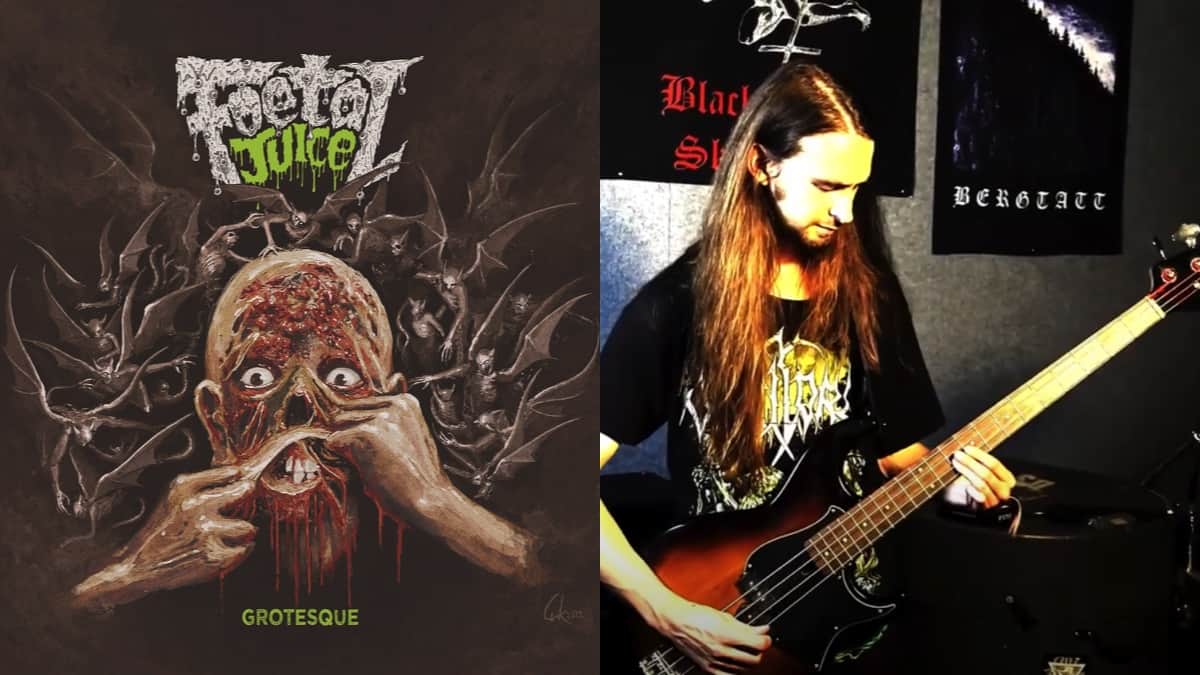
Premiere! Bass Playthrough With Foetal Juice’s Bassist Lewis Bridges – From the Album, Grotesque
Bassist Lewis Bridges Shares…
“Gruesome’s sparse intro marks a stark contrast from the intensity of the rest of the album. The original intention was to keep the bass simple but colourful, however as I worked on it, the lines grew more expressive and the more striking flourishes began to emerge. The intensity builds into a harmonic minor passage that takes us into the drop — a signature death grind cacophony. This is where Foetal Juice thrives. You’re getting a full-on right-hand barrage to in the face to take you into a groove-laden mulch-fest.
I owe my throbbing bass tone to the Darkglass Alpha Omega pedal borrowed from our sound engineer, Chris Fielding (ex-Conan), mixed with the clarity of the tried and true Ampeg SVT CL.
As mentioned earlier, colourful basslines are important, especially in a one-guitar band. Chucking some funny intervals and odd flourishes here and there brings life into the brutality. There’s no point sounding brutal if it’s not gonna be fucking evil too!
Recording this playthrough was hard work. This was not the fault of James Goodwin (Necronautical), who was kindly filming and is ace to work with, but because in true Foetal fashion, we had stinking hangovers — and that jam room was hot!”
Follow Online
FB @FoetalJuice
TW @FoetalJuice
IG @foetaljuice
Youtube: @Foetaljuice
Spotify
Foetaljuice.bandcamp.com
By Guest Writer Todd Denick
I was eleven, a little over five feet, and nearly 80 pounds when I struggled to play a 1970 Sunburst Fender Precision a friend leant my dad for many, many years (returning the bass is another story).
My hands were small, the bass felt as though it outweighed a full-grown elephant. I persevered. I grew as a bass player, and of course, grew physically as well. I could handle the bass and grew into a good bass player.
I never thought I would ever have to struggle to play bass again. Maybe, I considered, when I was older, maybe struggling with a little arthritis from playing bass too much, or just slowing down as I aged. In 2019, I was proven wrong, and once again faced a major struggle when it came to playing bass when I not only faced a battle of playing music but faced a life-threatening battle with Sepsis.
Sepsis is the body’s extreme reaction to an infection. One of every five deaths worldwide are contributed to Sepsis and can kill a healthy person within 24 hours. One can contract Sepsis from a cut that becomes infected, a slight accident during a surgery, splinters, etc. Me? I contracted Sepsis after having an allergic reaction to a very common pain medication used in Germany where I live, Metamizole or Novalgine.
I spent eight weeks in a medically induced coma while the medical team worked to save my life. I spent another three weeks in bed as I worked with therapists to regain my strength so that I could walk, talk, swallow, and move my body again.
Painful months of therapy passed while I learned to walk. Desperation set in as I waited months to be able to eat and drink again. Nerve damage from the medication used to keep me in a medically induced coma threatened my ability to walk normally; threatened my ability to eat and drink; and threatened my ability to return to the bass player I was before Sepsis.
I had the desire to return. Before my illness I played bass in two bands:
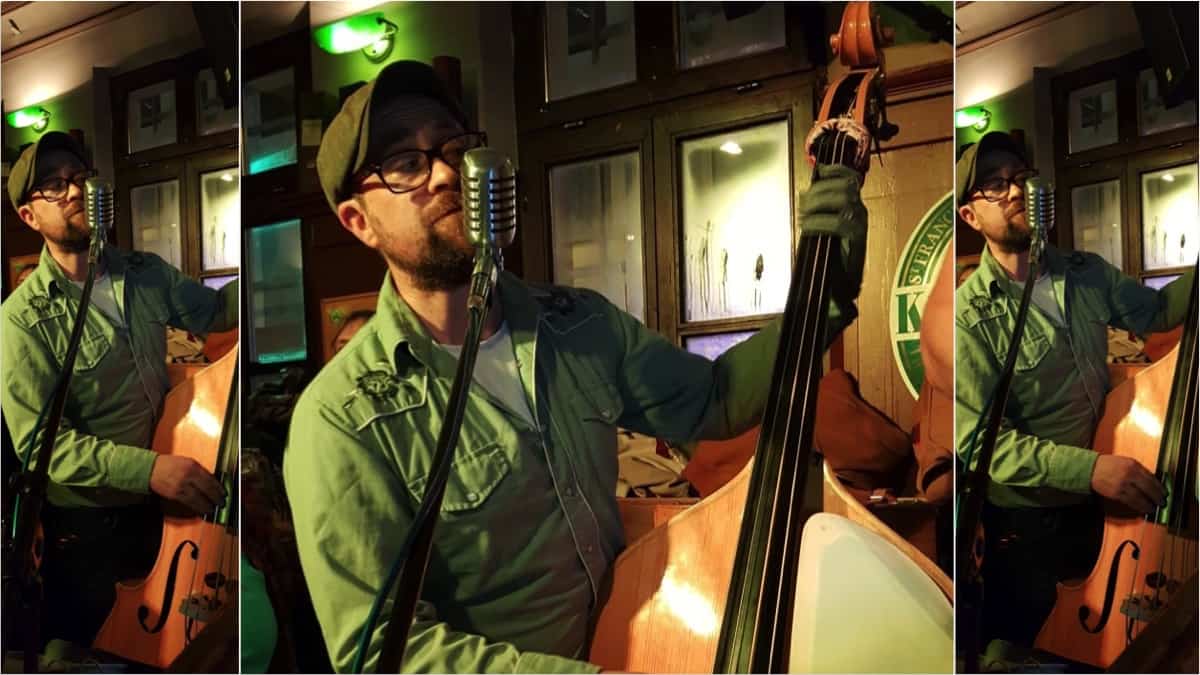
The Elephant Circus, an indie band where I played electric bass, and Paddy’s Last Order, an Irish Folk septet where I played the upright bass. The Elephant Circus replaced me – they had shows booked and had to! – and I will be forever grateful that Paddy’s saved my role in the band.
Patients have a lot of free time. As I progressed with walking and talking, I had the desire to retrain my fingers. Polyneuropathy had set in from the medications and Sepsis, and I struggled with my fine motor skills. The way I knew that I could bring back those fine skills was through playing music.
I couldn’t house a bass in my hospital room, or navigate it with all of the tubes running in and out of my body. I hopped on line and ordered a Guitalele. My wife brought it to my bedside and she even remembered to bring a tuner!
When my roommate had therapy, or he slept, I would play the Guitalele, slowly regaining some strength and dexterity. I would play the first three notes of a G scale before having to set the instrument aside. Every little effort exhausted me. That exhaustion led to great doubt. That great doubt reminded me of being manhandled by the 1970 Precision. I don’t know if I recognized that I had been in the same spot thirty years prior, but I knew that if I wanted to play music again, I would need to fight through the formation of aching fingers and rebuilding the callouses I lost white hospitalized.
Nearly four months after being hospitalized, I returned home. My instruments hadn’t moved.
They were available, asking to be played. I saddled up to my upright. I played three notes, my fingers fighting to find the right notes having lost a lot of my muscle memory. Those three notes exhausted me. That was enough for the day.
The following days when I picked up one of my basses, I was able to play a little longer. Thirty seconds turned into a minute; a minute to play along with a 2:30 minute song; a song turned into a set; that set turned into four hour long sets.
With suggestions from my dad, I put together a playlist I called, “Bass Practice” and included songs like “Down in the Tube Station at Midnight” by The Jam, “We’ve Gotta Get out of this Place” by The Animals, “Tomorrow” by Morrissey, “I Wanna be Adored” by The Stone Roses, and the holy grail of bass lines, The Who’s “The Real Me”.
Frustration set in quickly and often as I relearned how to play bass, intent on becoming the bass player I was before Sepsis.
The realization struck me that I needed to do something; something to progress, something to become physically and mentally healthy. It took a while to accept, but I realized that setting a 50% goal for myself was the most reasonable approach. If I wanted to play a song, I knew that I would have to progress to be able to play through the song; but, if I set myself a 50% goal, I knew that I could play along with the song and feel an immediate sense of accomplishment.
I applied the same theory to eating and walking. I applied the same theory to writing (my other passion) and that 50% goal turned into a book detailing my experience with Sepsis. In January of 2022, my first book, IT WILL COME: Alaskan Adventures Pale in Comparison to Surviving Sepsis, was published by LALO Publishing.
I am not fully recovered. I don’t know if I ever will be. But, I am still writing and publishing, and I am playing four set evenings with Paddy’s Last Order.
It exhausts me and I do need days to recover after playing a gig, and even though the frustration is still there, still upset that I may not be the same caliber bass player that I once was, I need to remind myself that I’ve fought and won two contested battles with the bass guitar and there is no way that I am quitting.
Sepsis is common, but not commonly diagnosed. Why? Well, it often indicates fault in a professional’s medical practice. Be aware. Ask if it could be Sepsis. If you have any of the symptoms, seek medical attention. Tell the practitioner that you think it could be Sepsis.
You could save your life or the life of a loved one:
S-lurred speech or confusion
E-xtreme shivering or muscle pain
P-assing no urine (in a day)
S-evere breathlessness
I-t feels like you’re going to die
S-kin mottled or discoloured
(from the UK Sepsis Trust, www.sepsis.org)
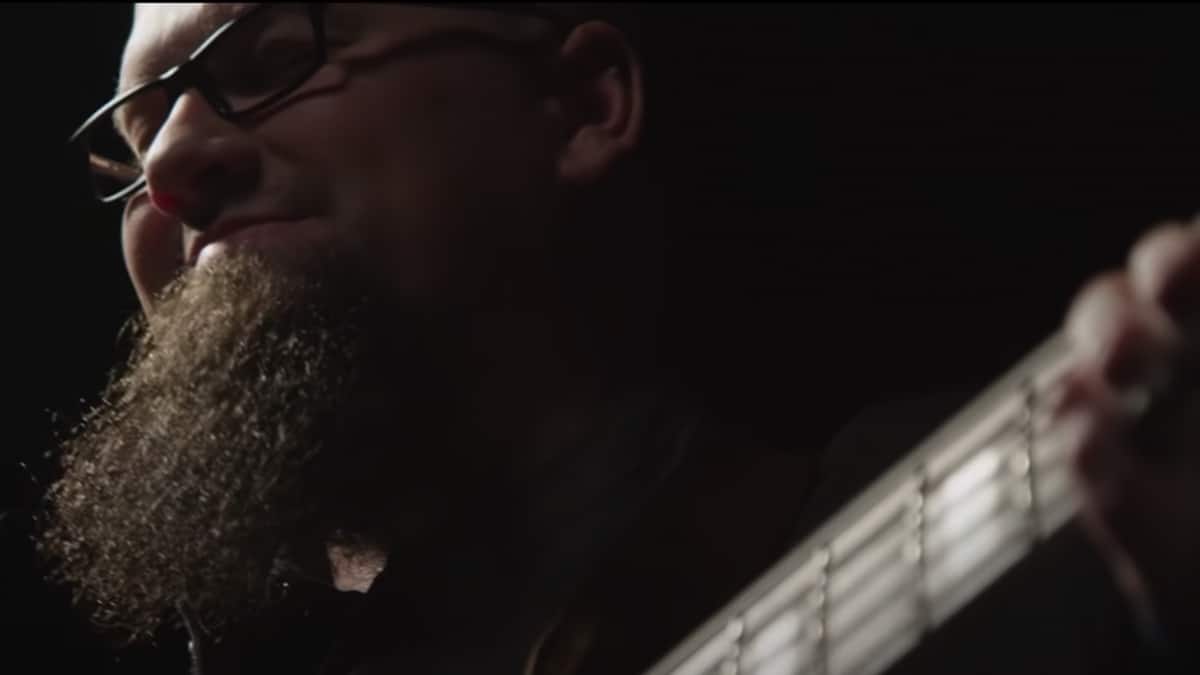
Reader Robert Burd shares a personal memory of Jay Weaver, the bass player for Big Daddy Weave.
Featured video… in my opinion, this is Jay’s best bassline, My Story, which is on the Beautiful Offerings album.
Jay Weaver was such an awesome bass player and is still an inspiration to me and I am sure many other bass players. He passed away on January 4th, 2022 at the age of 42.
His brother and fellow band member Mike Weaver announced the news on social media.
A few years ago when I was living in Rapid City, South Dakota, Big Daddy Weave came through with Plumb and We Are Messengers. I was in the 4th row, facing Jay’s side of the stage. At this time, he was in his motorized wheelchair due to having amputations as a result of some medical conditions.
During the show, as usual, the band breaks into moments of worship and prayer with the crowd. There was a gentleman in the seat and row in front of me that was really moved by what was going on and had an obvious emotional reaction. In the middle of the song and moment, I saw Jay looking at this man. He then motioned to his roadie who came over to Jay and took his bass, which was a 5-string Fender.
Jay then noticed he could get down to the crowd via a ramp on that side of the stage.
He used his wheelchair and came down the ramp and right to the row of this gentleman in front of me. The man looked up as by this time he had been crouched over. Jay opened his arms and the man collapsed into Jay and it seemed like an eternity, but Jay and this man were in serious prayer and communication. I was absolutely overwhelmed with emotion watching all this, as I had been going through some serious struggles myself. They hugged and Jay went right back up the ramp, got his bass from the roadie, got back into his position on stage, and picked up into the song and worship that had been going on.
After the show, I said hello to the man in front of me and just smiled as did he.
Jay was a wonderful person and I have seen many tributes from other musicians who knew him. I was privileged to have seen him play quite a few times as BDW came to Rapid City a lot. My last encounter was when they came to play the Hills Alive festival and I watched Jay come off the bus in his wheelchair via the special access. He had his wife and kids and the little one was in his lap; you could tell he was such a proud father and husband. I could have gone over and talked about bass gear and so on, but I did not want to interrupt his family time.
Here’s a link to a beautiful tribute done a few months ago at an awards show.
And now, Michael Bloodgood recently passed away.
He too was an incredible bass player and singer for decades in the band Bloodgood. (Note: The editor of Bass Musician was scheduled to speak with Michael one week prior to him having a massive stroke, from which he never recovered.)
I just hope there can be some sort of recognition for these amazing bass players and people.
In fact, there are some great bass players in the Christian music scene. One example is JR Collins of Crowder. I am a huge fan, plus he also raps and is the musical director of the band. My hope is that this genre of music and awesome talent is not excluded from the public eye. I am a Christian and I play bass at my church but I also play in a metal band and also a 3-piece rock band writing originals.
R.I.P. Jay Weaver
Sincerely…
Robert Burd
Bass Edu
The Ultimate Guide to Performing Onstage – A School of Rock Article Written by Katie Farmer

Article reposted courtesy of School of Rock
The Ultimate Guide to Performing Onstage…
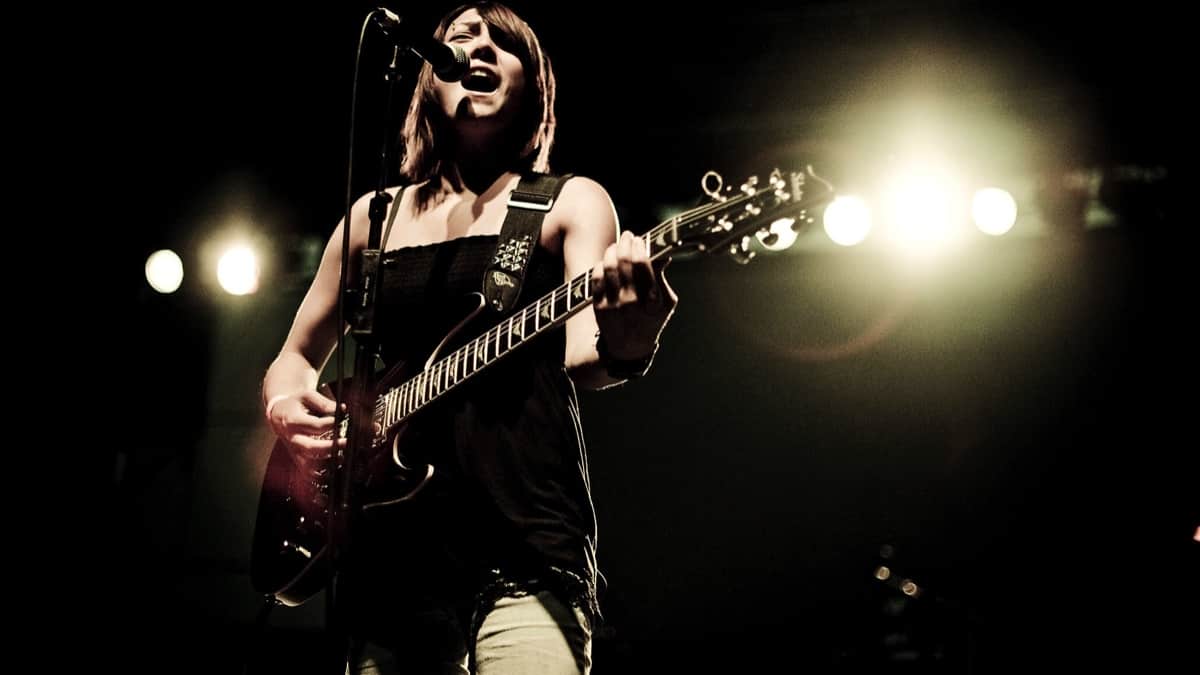
Remember the first time you went to a concert and thought, “I want to do that”? Or maybe the show inspired you to practice and write more, or to form a band or pick up an instrument for the first time.
Think about some of the most memorable concerts you ever attended. Which bands would you pay almost any amount of money to see? Now think, what is it about those bands or shows that really stood out to you? What would you like to take from that and add to your own performances? What is the power of stage presence? How can it affect the quality of a show and the audience’s experience? Why is it beneficial to assess your performance?
In this article we will discuss all of those questions and define what good stage presence and a good performance is by looking at examples of some of the greatest performances of all time. Also, we’ll discuss strategies, tips and tricks that you can start working on today.
So, what is a good stage performance? A good stage performance is when you and your band feel comfortable enough to have fun on stage, and connect with your audience. And of course, being able to play the material, but that goes without saying.
WHAT IS A GOOD STAGE PERFORMANCE?
Queen’s Live Aid performance in 1985 is considered one of the greatest live performances of all time and “can now officially be claimed as the world’s favorite live performance” according to ticketsourse.com, with “136,901,330 total YouTube views, 4,812,000 annual YouTube searches, and 1,427,500 annual Google searches.” (The World’s Greatest Live Performances by Andrew Stuckey)
SO, WHAT MADE IT SO GREAT? FIND OUT HERE

Interview With Bassist Ellen Alaverdyan and Guitarist Hovak Alaverdyan

Gear News: Fender Honors James Jamerson with a 1962 Precision Bass

Artist Update With The Revivalists’ Bassist George Gekas

Maestro Ron Carter, Sharing the Spirit – June/July 2026 Issue

New Music: Danielle Nicole, Tug Of War

Right Hand Technique Strategies with Dr. Randy Kertz

May 4 Edition – This Week’s Top 10 Basses on Instagram
May 11 Edition – This Week’s Top 10 Basses on Instagram
May 18 Edition – This Week’s Top 10 Basses on Instagram