
Bass Player Health
Lumbar Support and Back Health for Bass Players

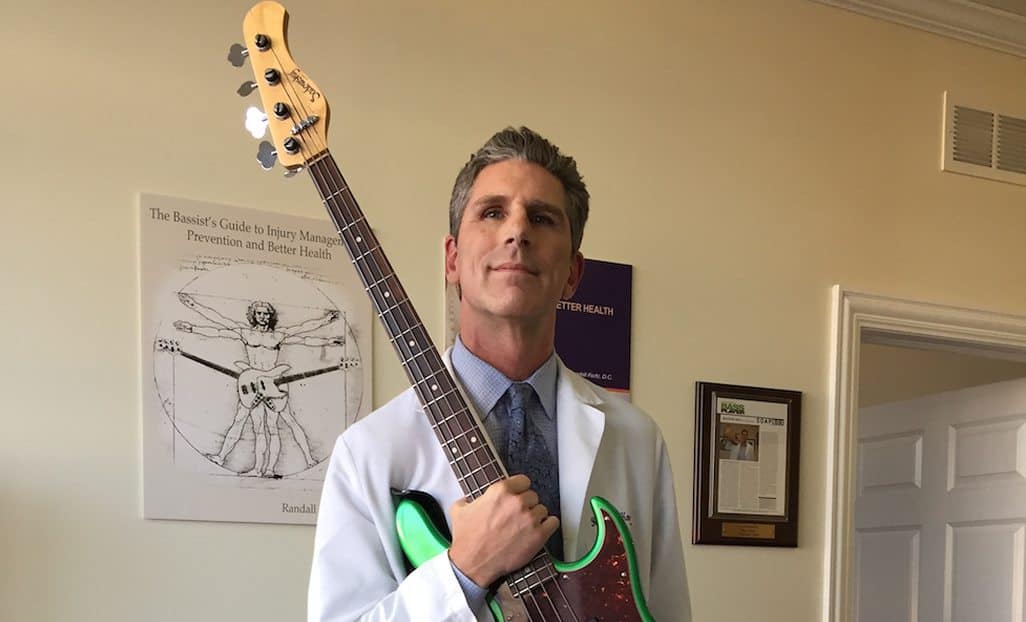
This month we discuss lumbar support and back health for bass players…
Dr. Randall Kertz is the author of The Bassist’s Complete Guide to Injury Management, Prevention and Better Health. Click here to get your copy today!


This month, we discuss right-hand techniques to minimize injury while playing bass.
Dr. Randall Kertz is the author of The Bassist’s Complete Guide to Injury Management, Prevention and Better Health. Click here to get your copy today!

View More Bass Health Articles

By Daniel Barrera, M.Ed., C.A.R.T., LPC A
Licensed Professional Counselor Associate in Texas, helping musicians and creatives thrive.
Relationships can be wonderful. They can also be a complete nightmare. Most of the time when we talk about relationships, we’re talking about other people. Romantic partners. Friends. Family members. Co-workers, Bandmates, etc.
Of course, musicians understand this idea better than most. Anyone who has spent years with an instrument knows that people don’t just play music. Over time, they develop a relationship with it. But over the years, I’ve started to notice something interesting. Human beings form relationships with all sorts of things…not just people.
That realization really hit home for me during a counseling session several years ago. At the time, I had been working with a client who came into counseling with the usual emotional aches and pains that bring people through a therapist’s door. Their intake paperwork mentioned depression, anxiety, grief…the kinds of struggles that many of us wrestle with at different points in life.
Over the course of several sessions, things began to improve. The client became more hopeful and confident. Life didn’t feel quite as heavy as it had when we first started meeting. One afternoon, I was reviewing their initial intake paperwork to make sure we had covered everything they had originally wanted to address.
That’s when I noticed something we hadn’t really talked about yet.
Buried among the other concerns was a short note saying they wanted to quit smoking. Now, anyone who has ever tried to quit smoking knows that it’s rarely as simple as just deciding to stop. People mean it when they say they want to quit. But then stress shows up, old habits creep back in, and suddenly they’re lighting another cigarette while wondering how they ended up right back where they started.
At our next session, I mentioned the note from their intake form. The moment I brought up smoking, the look on the client’s face told me I had just stepped onto sensitive ground. In my work, I’ve seen people in some very vulnerable moments, but this reaction made me pause for a second. For a moment, I wondered if I had just opened a door they weren’t ready to walk through. Thankfully, they didn’t get up and leave.
After taking a moment to gather themselves, the client admitted that smoking had been a serious struggle in their life. So, I did what therapists often do in moments like that. I let the silence sit there for a bit. Sometimes silence gives people just enough room to decide whether they want to keep the door closed…or start opening it.
After a few moments, I simply said, “Tell me more.”
I could see the client’s facial expressions change and the subtle shifts in their voice as certain memories surfaced. Some moments sounded lighter. Others carried more weight. At one point, I found myself saying something almost instinctively, “It’s all related,” and in many ways it was.
As the conversation continued, the client started describing the culture surrounding smoking. They talked about cigarettes, lighters, the rituals that came with it, and the strange mix of feelings they had about quitting. They recounted times they had quit for several months, only to find themselves starting up again, much to their shame. They even spoke about the unique differences between cigarettes and vaping, and why they preferred one over the other, even while knowing both were harmful. I was fascinated, but I also found myself feeling sad as they shared the suffering they had experienced as a smoker. My client was now in their late twenties, and the rapid approach of their 30th birthday felt significant to them.
Then I asked them to go back to the beginning. Not the moment when smoking became a problem. But the moment when it started. Or maybe more accurately…the moment when they first discovered cigarettes. The client paused for a moment. They then said, “Well, I first met cigarettes when I was eight years old.” That caught my attention immediately. I remember noticing and making a mental note when they used that word.
“Met.”
That word stayed with me.
At first, it caught me by surprise. Then curiosity kicked in. A moment later, I found myself quietly smiling because the idea was so obvious once I heard it framed that way. It was one of those strange moments where a lightbulb turns on and you realize what it’s illuminating had been there all along, hiding in plain sight. As I kept listening, what I realized in that moment was that I wasn’t simply hearing the story of a “bad habit”. I was hearing the story of a relationship…and every relationship has a beginning.
And that’s where we’ll pick up the story next time.
After The Last Note
Music and creativity have always had a way of opening doors to perspectives or parts of life we did not even realize were closed. If a song, piece of music, performance, or experience has ever made you pause, reflect, question something, or see your life or personal or band relationships more clearly, I would love to hear about it.
I am always open to reader questions, topic ideas, or even specific songs you would like to see explored from a mental health perspective, especially where music, creativity, and everyday life intersect. You can send your thoughts, experiences, or questions to: Letsconnect@nlsccc.com
About the Author
Daniel Barrera, M.Ed., C.A.R.T., LPC Associate, is a licensed professional counselor associate in Texas who also spent many years immersed in the creative world as a bass player, graphic designer, copywriter, and voice-over artist. His counseling work lives at the intersection of creativity and mental health, informed by lived experience on both sides of the stage.
Since 2012, he has worked with musicians, artists, writers, and other creatives to help them navigate the emotional realities that often accompany a creative life. His writing reflects a deep respect for the artistic process and the inner struggles that shape it.
Learn more at www.nlsccc.com

By Daniel Barrera, M.Ed., C.A.R.T., LPC A
Licensed Professional Counselor and Life Coach helping musicians and creatives thrive.
Most of us are taught to be kind to others. Be patient. Be understanding. Give people the benefit of the doubt. And many of us are actually pretty good at this. We show up for friends when they’re struggling. We soften our tone when someone makes a mistake. We can usually see stress, context, or pain when it comes to other people.
But when the focus turns inward, something shifts.
The kindness fades.
The patience disappears.
Understanding turns into harsh self-criticism.
It often seems that we speak to ourselves in ways we would never speak to someone we love, respect and care about.
Why is that?
A mistake becomes proof that we are “failures” or that we don’t measure up.
A hard day becomes evidence that something is wrong with us or that “it’s not meant to be.”
Struggling feels like weakness instead of something human that we all go through.
Somewhere along the way, many of us learned that being hard on ourselves was necessary. That harsh self-criticism keeps us motivated. That kindness will “spoil us.” That if we ease up, we will fall behind, lose discipline, stop growing, or…become lazy.
Considering how much we suffer under those ideas, perhaps they deserve a closer look.
It is important to make a clear distinction here. There is a difference between accountability and cruelty. Accountability does not mean avoiding responsibility. It does not mean pretending everything is fine when it isn’t. It is not about glossing over mistakes or being lenient when we have clearly missed the mark. Accountability allows us to be honest and specific. It says, “Something didn’t go the way I wanted. What can I learn from this? What needs to change?”
Cruelty, on the other hand, seeks to punish rather than correct. It demands humiliation as payment for our shortcomings. It attacks who we are, not what we did. It leaves us feeling ashamed, unworthy, and small.
Accountability says, “I made a mistake.”
Cruelty says, “I am the mistake!”
Cruelty does not help us grow. It seeks to break us down so that we will “learn!” Many of us recognize that voice. It echoes deep within the cold dungeon of our inner world, insisting that pain is necessary, that we deserve the beating, and that only suffering will make us better. It leaves us on the floor, egos bruised, bloodied, and deflated, believing that harshness is the price of growth.
We learned alright, but…at what cost?
We would not wish that on others. So why do we accept it for ourselves?
Balanced accountability keeps us human and connected to ourselves and others.
Cruelty strips that humanity away and diminishes our confidence and ability to connect. When we have a grounded sense of accountability, we can respond to ourselves with the same steadiness and compassion we offer others. Think about how you treat someone you respect and love when they mess up. You don’t ignore the mistake, but you don’t define them by it either.
You allow room for learning, context, correction, and growth.
Now consider this question.
Do I offer myself that same consideration, kindness, and grace?
For many people, the honest answer is no. Instead, we expect ourselves to be stronger, faster, more confident, and more put together than anyone else. We keep moving the goalposts and then punish ourselves for not reaching them. Over time, the tone of that inner dialogue matters profoundly.
How we talk to ourselves affects how safe and worthy we feel in our own skin. It influences how we handle stress, personal and professional relationships, anger, and disappointment. Our resilience is shaped by that internal tone. When we are harsh with ourselves, it becomes harder to rebound from mistakes. When accountability is honest and humane, we are more likely to stay on our feet and recover without everything collapsing inside.
Harsh self-talk often shows up as exhaustion,irritability, or a quiet, persistent sense of never being enough. Being kind to yourself usually starts with something much smaller than people expect.
It starts with noticing.
Noticing how quickly you turn on yourself.
Noticing the harsh words you use internally.
Noticing when your inner voice sounds more like criticism, judgment, or punishment than support.
Noticing does not mean fixing everything right away. It does not mean forcing positive thoughts or letting yourself off the hook. It simply means becoming aware of how you are treating yourself in moments of struggle. Awareness creates space. And in that space, choice becomes possible. The choice to change how we speak to ourselves, and ultimately how we think and feel about ourselves.
A helpful place to begin is this simple reflection.
Would I speak this way to someone I love, respect, and care about?
If the answer is no, it does not mean you are failing or incapable of change. It means you are human. And it means there is room to practice something different.
Not perfection.
Not constant positivity.
Just a little more fairness.
Speaking to ourselves with self-respect, self-liking, and self-compassion can ground us more deeply than harshness ever could. From that grounded steadiness, healthy resilience emerges and a confident authenticity tends to follow.
What’s not to love about that?
After The Last Note
Music and creativity have always had a way of opening doors to perspectives or parts of life we did not even realize were closed. If a song, piece of music, performance, or experience has ever made you pause, reflect, question something, or see your life or personal or band relationships more clearly, I would love to hear about it.
I am always open to reader questions, topic ideas, or even specific songs you would like to see explored from a mental health perspective, especially where music, creativity, and everyday life intersect. You can send your thoughts, experiences, or questions to: Letsconnect@nlsccc.com
About the Author
Daniel Barrera, M.Ed., C.A.R.T., LPC Associate, is a licensed professional counselor in Texas who also spent years immersed in the creative world as a bass player, graphic designer, copywriter, and voice-over artist. His counseling work lives at the intersection of creativity and mental health, informed by lived experience on both sides of the stage.
Since 2012, he has worked with musicians, artists, writers, and other creatives to help them navigate the emotional realities that often accompany a creative life. His writing reflects a deep respect for the artistic process and the inner struggles that shape it.
Learn more at www.nlsccc.com
Bass Player Health
Listening Past the Hook: What ‘Escape (The Piña Colada Song)’ Still Has to Teach Us


There are songs you hear your whole life, and then there are songs you finally listen to.
That distinction hit me one lazy Sunday afternoon. My wife and I had finished our household chores and settled into that quiet pocket of the day when the light softens and time slows down. ‘Yacht Rock Radio’ on Sirius XM played in the background. Ice clinked in our glasses. Then an old song from 1979, ‘Escape (The Piña Colada Song)’ by Rupert Holmes drifted through the room.
I’ve heard that song countless times. Smooth melody. Easy groove. Catchy chorus. I don’t know if it was what I was drinking or being really relaxed or what, but this time, instead of letting it fade into the background, I listened to the lyrics. Suddenly, the song became new again and I found myself listening a little closer.
If you haven’t heard the song before, the story goes like this: a man is lying next to his partner, feeling tired of their relationship, “like a worn-out recording of a favorite song.” While she sleeps, he reads a personal ad that says:
“If you like piña coladas and getting caught in the rain, if you’re not into yoga, if you have half a brain. If you like making love at midnight in the dunes of the cape, then I’m the love that you’ve looked for. Write to me and escape.”
Something about that ad awakens something deep within him. He decides to”take out a personal ad” and writes back. He plans to meet the mystery woman at a bar called O’Malley’s, secretly hoping for something new and exciting. Then, of course, comes the twist, when he finally meets her, and it turns out to be his partner.
“I knew her smile in an instant, I knew the curve of her face…It was my own lovely lady, and she said, ‘Oh, it’s you.”
The line, “Oh, it’s you”, always makes me laugh. You can almost hear the mix of shock, sarcasm, and maybe even relief in her voice. That’s also the moment my “therapeutic spidey sense” kicked in, and I started to imagine the deeper machinations in this couple’s relationship.
The Real Lesson Hidden in the Lyrics
That final moment in the song, when they recognize each other, is fascinating to me because of what doesn’t happen next. There’s no raging, shaming, public blowup, or moral lecturing. Instead, there’s laughter…maybe even curiosity. What fascinated me isn’t the “near-affair”, it’s that in that instant, they both realize something powerful: they still want the same things. They’ve just forgotten how to tell each other. I’ve seen that exact moment play out with many couples I have worked with.
As musicians, we understand how that happens. We fall in love with a person, instrument, a band, a sound. Over time, repetition dulls the edge. Routines replace curiosity. We stop listening deeply. What once felt alive becomes familiar noise. Relationships work the same way.
Sometimes, after years of drifting apart, people rediscover who they used to be together, the playful, curious versions of themselves that got buried under the monotony of bills, routines, and exhaustion. They forgot why they connected with each other and stopped being curious to the point they became bored and disinterested in each other.
Thankfully, there is a way out of that rut…but, that kind of reconnection takes courage. It starts with a question that’s both scary and freeing:
“How did we get here?”
That question can lead to honest conversations, forgiveness, and sometimes a rediscovery of mental, emotional, and physical intimacy that’s even deeper than before…if couples are open to it. Some couples find it hard to move past the initial accusations and the self-righteous indignation that often follows. Sadly, many don’t make it past this stage and eventually “divorce”, both literally and figuratively.
But if they can survive that storm, if they choose to preserve what’s left and try to repair their bond, the real work of forgiveness and reconciliation can begin. In the couples I’ve seen move through that tumultuous phase, something remarkable happens. They start to rediscover what first drew them together. That’s the gateway and then, if they go deeper, their focus shifts to reconnecting and rebuilding a playful intimacy, the kind that invites vulnerability and draws them closer once again.
As this “rediscovery” begins to happen, the groove comes back, and a familiar but fresh rhythm starts to pulsate through every fiber of their being…as it used to.
Why This Song Still Resonates
I think ‘Escape (The Piña Colada Song)’ endures because it captures something timeless. It’s funny, yes, but it’s also real. It’s about the longing we all have to be seen, heard, and to feel alive in our romantic relationships. Sometimes, the spark we’re searching for isn’t out there with someone new. It’s probably lying right beside us, but we’ve just stopped being curious and, most importantly, paying attention.
Closing Invitation
Music has always had a way of opening doors to perspectives or aspects of life we didn’t even realize were closed. If a song has ever made you pause, reflect, or question something about your own life or relationships, I’d love to hear about it.
I’m always open to reader questions, topics, or even songs you’d like to see explored from a mental health perspective, especially as they intersect with music, creativity, and the realities of everyday life. You can send in your experiences or questions to: Letsconnect@nlsccc.com.
About the Author
Daniel Barrera, M.Ed., C.A.R.T., LPC Associate, is a licensed professional counselor and life coach in Texas. He is the founder of New Leaf Services counseling agency. Since 2012, he has been dedicated to helping musicians, artists, writers, and other creative individuals navigate the unique challenges they face as people and performers. His goal is simple: to help creatives thrive personally and professionally so they can continue sharing their art with the world.
You can visit his website at: www.nlsccc.com

Reflections on the Influences Who Shaped Your Music and Your Life…
There is something powerful about this time of year. As the seasons shift and the year-end holidays approach, many of us may start reflecting on our lives. Perhaps our thoughts might go toward the people who helped shape us. Not just as musicians, but as human beings.
Every player has a story about someone who saw something in them before they could see it in themselves. Maybe it was a band director who stayed after school to help you understand a tricky rhythm. Maybe it was a family member who worked overtime to buy you your first bass. Maybe it was a friend who encouraged you to play that first nerve-wracking gig.
We do not become who we are alone. We become who we are because people invested in us, supported us, believed in us, or challenged us to be better. Their kindness, guidance, or example has shaped how we think, how we work, and how we carry ourselves in the world. We stand on those foundations whether we realize it or not.
Musicians often talk about tone, technique, and gear. Yet behind all those things is something more basic and more human. Someone taught us what it means to strive, to practice, to show up, and to keep reaching for something higher. Some did this intentionally. Others did it without even knowing they were doing anything special.
As we mature, we begin to see their influence more clearly. The teacher who pushed you to tune your ear. The older musicians who let you sit in even though you were still learning. The mentor who told you the truth when it was uncomfortable but necessary. These people shaped not only our musicianship but our character. Their imprint lives on in the way we approach our craft and our lives.
Their example became a catalyst for our own inner drive. It gave us a template for the kind of legacy we want to leave behind. The old saying is true. If we have achieved anything, it is because we stand on the shoulders of giants. When we look closely at what others have done for us, it becomes clear that everything we have become was influenced by people who gave us a boost up.
So, with all that in mind, this season invites a simple question. Can we take everything that has been poured into us and use it to encourage others and seek improvement in our lives and playing? Can we use the inspiration we have received to create more goodness, more connection, and more harmony in the communities we touch and within ourselves?
Imagine what our world would look like if we made a deliberate effort to express gratitude and generosity. Think of the effect it would have on our bandmates, collaborators, friends, partners, coworkers, and even the strangers we cross paths with. Creativity thrives in environments where encouragement is shared freely. As musicians, we are already wired to express what lives inside us. Gratitude is simply another form of expression.
This might be a good time to reach out to someone who made a difference in your life. It could be a former teacher, a long-lost mentor, a relative, or a friend who helped you in ways you did not fully appreciate at the time. You might write a short letter, send an email, or make a call to say something like, “I wanted to acknowledge the kindness you showed me back then. You made a difference in my life, and I am a better person and musician for it.” How would you feel receiving a message of appreciation like that?
There is another layer worth reflecting on. Even the difficult people and painful situations in our past have taught us something. They may have shown us what we do not want for our lives. They may have, inadvertently, pushed us toward healthier boundaries, self-healing, and a deeper understanding of ourselves. Not that what they did is to be excused or letting them off the hook. But it is worth noting that pain can teach in its own way. It sharpens our awareness. It clarifies what matters. It gives us wisdom and resilience that we can carry forward in our emotional gig bag.
Let me be clear. We do not need to contact those who have harmed us. What we can do is internally acknowledge what we learned from those situations and place those lessons in our emotional gig bag for when we need them. I will have more to say about this in future pieces.
Like a musical score, every person and every experience plays a part in shaping us into the musical piece that is us. Some lift us. Some challenge us. Some wound us. Some inspire us. Taken together, they contribute to who we are and who we are becoming. When we understand this, we can use all of it as fuel for growth and to spread our music into the world.
For right now, during this year-end holiday season, let this be an invitation to look at our journey with honesty, gratitude, and most importantly, self-compassion as we take time to thank the people who helped us rise. To learn from the moments that hurt. To keep becoming more grounded, more aware, and more generous human beings.
When we consider everything being discussed in this piece, it becomes clear that we are not self-made. We have made choices that shaped our lives, but those choices were influenced by others for better or worse. None of us learned, played, or grew in isolation. Even if we practiced alone in our bedrooms, basements, or garages, someone contributed to the environment and encouragement that helped us grow. We are the product of countless people’s hands, voices, lessons, and moments. When we recognize that truth, we can become better musicians and better neighbors on this shared planet.
So, as we reflect during this holiday season, can we consider the possibility of taking everything we have received from the people who came through our lives and pour some of it back into the world?
Perhaps that may be the real gift we can offer to ourselves and others while we are here on planet Earth.
About the Author
Daniel Barrera, M.Ed., C.A.R.T., LPC Associate, is a licensed professional counselor and life coach in Texas. He is the founder of New Leaf Services counseling agency. Since 2012, he has been dedicated to helping musicians, artists, writers, and other creative individuals navigate the unique challenges they face as people and performers. His goal is simple: to help creatives thrive personally and professionally so they can continue sharing their art with the world.
You can visit his website at: www.nlsccc.com

Right Hand Technique Strategies with Dr. Randy Kertz

New Music: Golden Flower, Are You Even Awake?

Interview With Bassist Adam Russell

Interview With Bassist Tim Neilsen

Gear News: Fender Unveils Highly Anticipated Vintera III Series
Right Hand Technique Strategies with Dr. Randy Kertz

Mar 30 Edition – This Week’s Top 10 Basses on Instagram
April 6 Edition – This Week’s Top 10 Basses on Instagram
April 13 Edition – This Week’s Top 10 Basses on Instagram