
Features
Billy The Kid: Tapping Into Sheehan’s Eternal Youth!

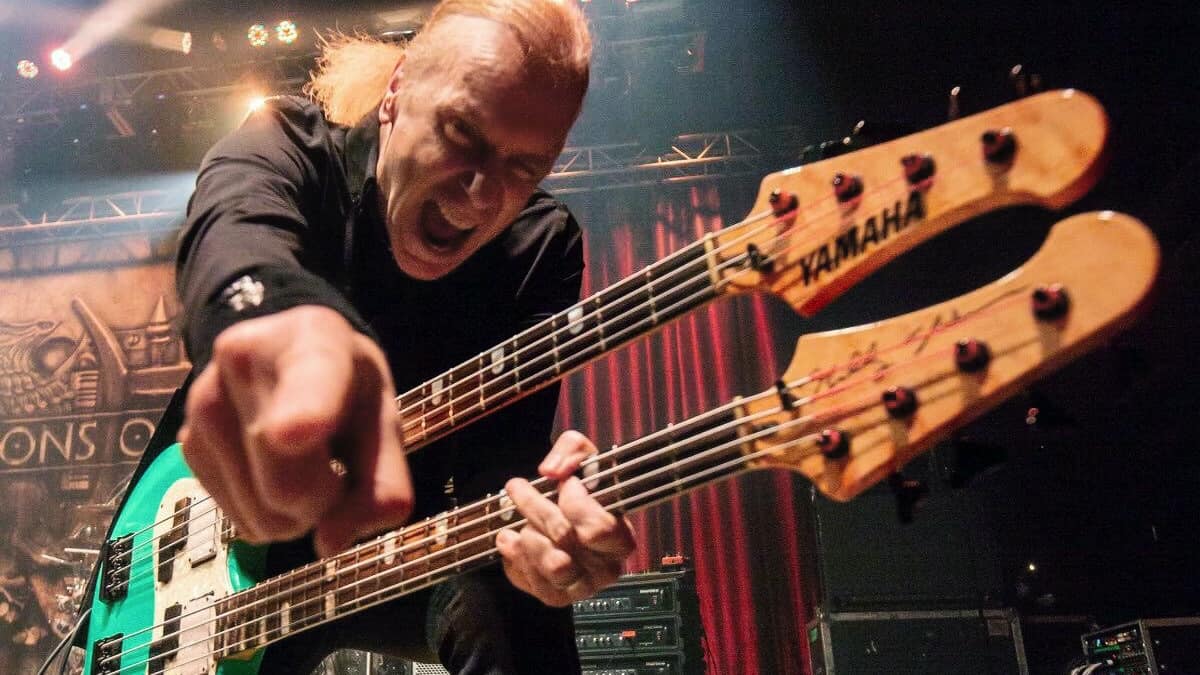
By David C. Gross & Tom Semioli
BS: Billy Sheehan
DCG: David C. Gross
TS: Tom Semioli
“When you find one door, open it up! It leads to another world…”
William Roland Sheehan needs no introduction to bassists, nor hard rock aficionados – however such perfunctory salutations are required for the uninitiated.
A virtuoso (tap, shred, effects maestro – you name it) who plies his craft in genres loosely termed as metal, prog-rock, and heavy-prog, Sheehan is actually a musical polymath. Though he’s most commonly associated with the numerous high-profile voltage enhanced ensembles he’s been an integral part of – namely Sons of Apollo, Talas, Winery Dogs, David Lee Roth, Mr. Big, Greg Howe, Niacin, and Tony MacAlpine to cite a very few – Billy digs everything from classical to jazz to synth-pop to electronic to flamenco to Tuvan throat singing – and then some. All of which is reflected in his work on stage and in the studio – which incidentally, has been going strong for six decades and counting.
With age comes wisdom. We caught Billy in the midst of Mr. Big’s farewell sojourn with his signature Yamaha Attitude bass in his lap. Note that while we were setting up the Zoom connection – Billy was working scales and warming up despite the reality that there was no show scheduled that evening! Sheehan explains why said collective is taking its final bow. Not to worry, the Buffalo-born bassist has much more work to do. In fact, you could say that Billy’s just getting started.
TS: Someone once sang “I hope I die before I get old…” Yet when we take a look around us at a few of your peers and heroes such as Tony Levin and Ron Carter just to name two– they’re going stronger than ever. Reflect on the young Billy Sheehan and the 21st Century Billy Sheehan. What’s changed? What is the same?
BS: As you grow you become more focused. I don’t want to say that I’m more mature, because that has other implications!
As a musician – and I think this is true with all artists – we maintain our 16-year-old sensibilities for life! It’s healthy to maintain a youthful exuberance. I’m thankful that I still have it. Somehow that was built into me.
I’m still excited about getting up in the morning and working on my bass playing every day. I’ll be driving in my car and a musical idea will suddenly hit me and I have to get home to pick up my instrument.
Perhaps it’s because we can devote more time to things at this point in our lives. Hopefully, we’re not running around trying to get our lives together and we have more stability. That can lead to a new personal Renaissance for the over 50s players. It’s a great time to be alive at my age.
DCG: Do you think the snow in Buffalo helped you develop into a virtuoso player?
BS: Absolutely! (laughter) I remember the Blizzard of ’77! I couldn’t leave my house. The snow was up to my chest. I think we went something like 60 to 90 days with the temperature not getting above freezing. I had my little apartment, my little bass, my little heater – so what else could I do?
I learned the Brandenburg Concertos on bass…well, not all of it, just chunks here and there. However, the adversity you get from your environment can be an advantage, like it was for me – I was isolated. I was on my own with no interruptions. Back then I was free – no kids, no girlfriend. I froze but I think it paid off!
DCG: There is one bass tip you gave me – not personally, it was in an interview – regarding strap length. The advice was to simply grab a piece of leather, sit down the way you practice, put the leather on you, stand up, and that is the optimum position for your bass!
BS: Of all the fancy stuff I’ve tried to show people I’ve received more response from the strap length than anything else.
But it’s really important. I’m sitting here with my bass practicing. When I stand up to play live, I need it to be in the same place. You need to maintain the angles of your hands, fingers, and arms. If you get up to play and the bass is lower nothing seems to work.
DCG: That’s because you’re not using the muscles you’ve developed during practice. However you do want to look cool on stage, and the low-slung bass is the ultimate rock star aesthetic.
BS: Right, which is why we should invent a strap with a button on it to instantly lower and raise the bass! (laughter)
Note: Billy proceeds to model different bass lengths – chest level for progressive rock, and under his chin for what Sheehan terms as ‘the jazz bowtie.”
TS: You came to prominence in a decade known as the 1980s which to my ears was a golden era for bassists. Our instrument was able to adapt to the new technologies. The improvements in recording and pro audio allowed bass notes to be heard rather than a low rumble lost somewhere in the mix.
BS: It was a great decade. There is a constant evolution going on. It goes from artist to artist. One artist hears somebody – let’s say Oscar Peterson hears Art Tatum – and suddenly we have this amazing confluence of both styles together. I learned from many of the players that came before me – it’s a long list – everybody imaginable – and some not. Consequently, I stood on their shoulders.
Today there are people who are standing on my shoulders! There is a whole generation of players who are doing what we thought was impossible – or couldn’t even imagine. And that’s a great thing. We see that happen in all the arts.
In music, more than anything, we notice a significant ascension in skills. Some other art forms go off into abstractions whereas in music, there is a real technical, definable and quantifiable ability to play a string of notes in time, in tune, and righteously. That has gone way, way up to me.
I have a huge collection of music. I often focus on one particular brand of music – for example: garage rock from the 1960s. There is rarely a bass in tune! Not even close – sometimes a half step off! Why nobody noticed it, I’ll never know!
As we progressed, it got much better – more in tune, in time.
My first concert was Jimi Hendrix. I went to see him play and I got up close and took a few photos. That was as close as I ever got to him. Now on YouTube – you can see his fingerprints as he’s playing. You can see the iris in his eyes. You can watch and learn everything. I think that is a great advantage to a new generation of players.
They are fortunate in ways that we never were in that there are amazing documents of the musicians that came before them. So now the shoulders are even wider to stand on! Before that the best we could do, as you guys know, is listen to a record and go ‘I think it’s this (Billy renders imaginary riff)! I’m not sure…’ We find out later that we were either right on the money or somewhere in between.
TS: However, ‘getting it wrong’ sometimes develops your individual style. Even if I couldn’t get John Entwistle’s line perfectly, I came up with something else that is unique to me.
BS: Very true! You had to improvise and try to figure out how they did it. As a result, we have the ability to play stylistically. And the mechanics can be wildly across the spectrum of innovation.
I traveled to Japan years ago to participate in a huge bass clinic. There were 3000 people in the auditorium and about 10 players on stage. One bassist played this complicated piece that I had recorded. And he did it exactly, but his technique was nowhere near the way I played it. It was amazing and it taught me a lot. He took a left turn and still landed in the right place. Awesome!
As you both know, there are a million factors that go into this. There are many paths to express yourself, and to be the way you want to be.
TS: Growing up in the ’60s, ’70s, ’80s – we heard pop music on the radio with such extraordinary players as James Jamerson, Chuck Rainey, Louis Johnson, to name a few. Aside from metal, alternative, country, and funk – there hasn’t been a bass on hit tunes – even with such contemporary R&B artists such as Rhianna, Cardi B, and Beyonce – how do we get our instrument back into the mainstream?
BS: I think it is cyclical. That sub-sonic, sub-harmonic pre-programmed thing – you know where they pump the bass line, or make a midi-file of it – is very popular now. And sonically – it is bassier! It’s more precise, and right on.
That is the style that people’s ears are used to right now. They are also acclimated to auto-tune vocals. When they hear a natural vocal, which 99% of the time is not in perfect pitch, it throws them! Nowadays every note lands perfectly on that ProTools grid. The vocals are tuned to perfection, there is not a slightly flat or slightly sharp note to be found.
I think the pendulum will swing back at some point. People are going to want to hear more humanity. They gravitate to something slightly out of time or out of tune which gives the music authenticity. Like taking a breath – we all do not inhale and exhale at the same rate. Our hearts do not beat at the same rate! I believe that there is an analogy there for music as well.
At present, we are in the perfection stage. There is beauty to that too. I don’t put it down. There’s not much about music that I do not like. Millions of love this type of music, and I acknowledge it. Who am I to say? There are a lot of cool things to think about. Especially in electronic music that was coming out in the 80s and 90s – artists such as Prodigy, Fat Boy Slim.
DCG: Yes, it was very experimental.
BS: I loved that right away. There was a Stacey Q song ‘Love of Hearts’ with the coolest synth bass part. I remember sitting down and my challenge to myself was to work that out on a bass guitar. I tried to play it as rock solid as the programmed track. Sometimes it’s good to go with ‘man vs. machine!’ and try to match up to that studio perfection. And that goes for any musician, not just a bass player. You have to push yourself in different directions. When you find one door, open it up! It leads to another world…
DCG: The older we get the more we appreciate things, and even in new music -which may not speak to us per se – there is something to be learned. For example, Justin Timberlake commented that he commences the songwriting process with beats as opposed to traditional chord changes and melodies – which is how our generation hears music.
BS: This is true. And when I was young, I remember the older generation saying ‘What is this Jimi Hendrix stuff you’re listening to, it’s not music!’
And now I see a lot of young folks at our shows – especially Winery Dogs and Sons of Apollo – so there is somewhat of a generational hand-off going on today.
My mom was big into the standard singers of her era; Frank Sinatra, Tony Bennett, Mel Torme, Ella Fitzgerald, Bobby Darin, and similar artists. I am big into Sinatra!
DCG: What is your favorite Sinatra record?
BS: That would be Live at The Sands! Of course!
DCG: Mine is Frank Sinatra Sings for Only The Lonely.
BS: That’s a good one! Live at The Sands is a compilation of five shows. It is a collection of the best parts of five nights…
DCG: Quincy Jones did the arrangements!
BS: Right! I found recordings of all the other shows! That’s the nature of my collection. I always search out the impossible. I also have the rehearsals for Jimi’s Band of Gypsys before they ever performed. It’s amazing to hear different versions of those songs.
Getting back to your comment on the components of music from this generation to the previous ones– I think it’s harder to go from the standard verse-chorus-bridge to a flat beat and vocalizations without any real pitch. That is a big jump.
Yesterday I was discussing the chord changes in Beatles songs with a colleague of mine. For me, the greatest song ever written is The Beatles ‘If I Fell.’ How elaborate they were. I remember learning Everly Brothers songs on guitar and then the Beatles came out and it changed everything. I recall thinking ‘How does this even work?’ That was a jump back then, now what is happening is an even bigger jump because there were still harmonic relations between new and older music.
But that does not mean that the new way of doing things for some artists cannot be crossed over. Again, I appreciated a lot of new stuff. The computer-generated stuff, I’m not crazy about it because many of my friends are musicians and I like to hear them playing instead of programming. Yet there is a real beauty to electronic music.
I was way into Wendy Carlos (composer/recording artist who was a 1960s electronic music pioneer and worked with Robert Moog, inventor of the Moog Synthesizer) back in the day. There was a great record by Mark Hankinson entitled The Unusual Classical Synthesizer (1972). I love the work of Japanese synthesist (Isao) Tomita – he wasn’t doing rhythmic Bach and Beethoven – he was doing Debussy on synthesizer which was mind-blowing to me. His record of Debussy Snowflakes Are Dancing (1974) – is full of lilting, emotional pads and colors. Just incredible.
I’m also a big fan of world music – though that is a title that is too often misused. Bulgarian choir music intrigues me.
DCG: How about the Tuvan throat singers…
BS: Oh yeah, that is not human! Unbelievable. And they’re all in a room singing… I am also a huge fan of Indian music especially violinist L. Shankar whom Frank Zappa referred to as the best musician he ever knew.
And it’s all available now…
TS: You bring up the topic of streaming music – and a question to all the artists David and I speak with. Given the nature of the platform, which is song-oriented, is the album format still relevant today?
BS: To some of us, the format is still relevant. When I’m on tour we sell lots of vinyl. The 1985 Talas record came out on vinyl and we have a hard time keeping up with it. The pressing plants are backed up from six months to a year in some instances.
I saw one columnist comment that he didn’t know if people were actually playing the records as much as they enjoyed holding them in their hands!
Who knows, there may be a time when the grid goes down and everyone is going to have to get their bicycle out, or their generator and get a turntable going again!
DCG: Tom, how do you make a musician complain?
TS: Give him a gig!
(laughter)
BS: That’s true! The internet has brought on the age of complaining…
TS: Musicians complained that the record labels were unfair gatekeepers. When MTV came along – a platform that gave massive exposure to scores of artists – yourself included; musicians once again complained that it favored only the visuals as opposed to the music. Now with digital technology, musicians can go directly to the consumer.
BS: For lack of a better word, things are more ‘democratic’ now. You can accelerate your promotion. For example, I am on a laptop now and I can record an entire symphony orchestra and do the movie soundtrack along with it. Then I can go online and sell it. That has leveled the playing field quite a bit. Before, you could only do that if you had a big budget – you’d have to hire a studio, engineers – it was cost-prohibitive in many instances. You can even do it on an iPhone!
So, to me, that’s a good thing.
I’ve heard of this parallel with this, perhaps you will concur with me; when desktop publishing first came out the reaction was ‘Oh no, there will be so many amazing books we won’t know what to do anymore!’ However, the same number of books still made it to the top of the list – despite the fact that there are hundreds of thousands of people writing via desktop publishing.
And I think the same situation exists with music. Despite the population of the world making music, there is still going to be stuff that gravitates to the top. So, I don’t think it is so wildly different from when there were gatekeepers as you say.
So that’s a good thing. You can be one click away from a billion listeners. That is amazing. The bad thing is, so are a million other people!
DCG: As I said to Tom yesterday, in 100 years, I don’t think people will be reading.
BS: I agree, and that it sad to see. Because similar to music, you can use your imagination. There is a fantastic book entitled This Is Your Brain on Music (written by neuroscientist Daniel Joseph Levitin, first published in 2006) – and I had a conversation by email with the author.
The creativity that you must have in your mind when you’re reading a book – if a passage reads ‘snow is falling, smoke is coming from the chimneys…’ you can see it and smell it in your mind. You create a cinematic scenario. Whereas in a movie, it’s all spoon-fed to you.
TS: The latest kerfuffle in the music business in 2024 is the use of artificial intelligence. What say you of AI?
BS: I am a purist in a lot of ways. When people ask me for advice about getting into the music business I tell them three things:
1. Get in a band.
2. Get in a band with songs…
3. Get in a band with songs that you sing!
Run the numbers of every bass player, every guitar player and so forth and those three steps are the most successful. AI does not necessarily fit in with that. I have yet to wrap my head around AI to have a solid opinion about it. In general, I am leaning towards humans, humanity, and people thinking up things.
People thought up AI, it didn’t think up itself. And it’s all on a computer which is made by humans! I see the urge to create a robot world where everything is done by robots. But unless somebody programs it…it ain’t gonna happen. So there is that human element that is still essential.
Until we get robots that can program, then they’ll be some self-replicating, and then we’ll wind up with Arnold Schwarzenegger’s Terminator of some sort! That could happen. Science fiction has predicted many things that came to be!
I prefer the Everly Brothers to AI. If and when the whole world goes to hell, we can still sit around a campfire with a guitar and sing songs.
TS: Let’s talk bass for a change. David and I have a credo that states ‘it’s not a real bass until you drill holes in it.’ David now favors custom instruments, though he still loves to tear up a perfectly good bass and rebuild it in his own image every now and then. I prefer to modify my Fender basses. What was your original inspiration to create the legendary ‘wife’ and other basses?
BS: For me, the Fender Precision bass is the bass. Ninety-nine percent of everything has been done on that instrument or some variation thereof.
This (Billy holds aloft his Yamaha Attitude bass) is very P bass-ish. When Yamaha contacted me to make a bass and endorse their instrument – Fender was at a low point. They were changing ownership, there were shifts going on in the company, and their instruments weren’t that great. I’m going to say that was the mid-1980s.
Yamaha came along with quality control second to none in my opinion. I am glad went with them and I will always be with them.
The P bass is undeniable. Before my first P bass came into the store – that was Art Kubera’s Music Store on Fillmore Avenue in Buffalo, New York – they let me take home an Epiphone Rivoli bass – or the Gibson version of that, which had the big, fat chrome pick-up right here beneath the base of the neck. It had a super deep low-end resonance.
I played for a few days, and when my bass came in I played it and it sounded great but it was missing that sound from the Rivoli. It was a super deep low sound like I’d heard on ‘Rain’ by The Beatles – which may have been Paul’s Rickenbacker or Hofner.
Notes From An Artist Notes: Paul’s aforementioned instruments both featured pick-ups beneath the base of the neck and body!
Paul Samwell-Smith of The Yardbirds, who used an Epiphone Rivoli – was a big inspiration to me and he had that deep sound.
I loved the P bass but I wanted those sounds so I figured ‘Hey, I’ve got all this space right here, why don’t I dig a hole and put a pick-up in there!’ I didn’t know how to wire it, so I made two outputs and ran it into two channels of my amplifier. We’re talking 1970…1971. When dinosaurs roamed the earth!
Then I got a second amp – one was for all the harmonics and high-end content and then the super low deep end on the other. That really helped me in a three-piece band. We didn’t have a keyboard or rhythm guitar, so I had something that sounded guitar-ish and keyboard-ish but there was always bass underneath it. I never lost that low end. And that is basically the formula I stuck with.
Then I found out later on – of course, I did not invent it, I came up with it on my own – all the others did too, that all the early Alembic basses had duel outputs for each pickup. Rickenbacker’s Rick-O-Sound had both pickups going to two places.
I’d read that John Paul Jones of Led Zeppelin took his Fender Jazz bass and split the pick-ups into two amps. John Entwistle did stuff like that as well. Chuck Burghofer, who played the iconic bass part to the Barney Miller show theme song had a Gibson EB-0 pick-up on his Precision bass! A lot of players used that for the same solution to the same problem.
If you really want to extend the low end – that neck pick-up is really where it is at. And that’s how I got to where I am on my Attitude bass. The Attitude neck is modeled after a 1968 Fender Telecaster bass – it’s a big fat baseball bat! It’s meaty with a lot of sustain. And that’s my story sad but true! (laughter)
TS: The great Mel Schacher of Grand Funk Railroad modded out his Fender Jazz with an EB-1 pickup at the neck – that’s how he attained his signature tone.
BS: One of my favorite players!
TS: Since our show commenced three years ago as The Bass Guitar Channel David and I have debated the merits of the extended-range bass. You’ve always been a four-string guy. I last saw you with Sons of Apollo with a double neck bass – with both in four-string configurations.
David and I spoke with Jerry Jemmott, the legendary bassist who, as you know, was a great influence on Jaco Pastorius. He maintains that Jaco would have continued with the four-string had he lived to see the advancements in extended-range five and six-string instruments. He also stresses that it was the limitations of the four-string that were a major factor in Jaco’s style – it prompted him to be more creative within those so-called restrictions. Your thoughts?
BS: I’ve already got enough death threats from five and six-string players! (laughter)
I refer to the five-string bass as a ‘flinch.’ You have a guy sitting at home playing a four-string, it’s not really working out for him. He’s not playing in a good band… he’s not happening. So he thinks ‘I’ll go to five-strings!’
DCG: Oh Jesus!!!! C’mon Billy…
BS: Well, that’s really not a true blanket statement… (laughter)
Really, if you want to play five-string, God bless you, go for it! Go for however many strings you want.
When I posted my double-neck on social media, there was a ton of vitriol! Hostility! Attacks! I got feedback such as ‘You should play a five-string, that’s just wasteful!’
Hold on, I played a double-neck for a lot of different reasons. First of all, they are tuned differently. On the Mr. Big tour, we had to lower the keys on many songs. We’re not like we used to be vocally. Some of our songs are a whole step lower – so I’d have to switch basses, which would interrupt the flow of the performance. With the double-neck, I have every tuning I need right here.
It seems like nobody could figure that out, especially the five-string. The double-neck is a fantastic instrument, it feels good, and it’s perfectly balanced for me. Standard tuning on the top neck, BEAD on the bottom. All my notes are where I want them to be.
I agree with Jerry, I think Jaco would have stuck with the four-string. Niels-Henning Ørsted Pedersen played four strings. Monk Montgomery… There really is no limitation on a four-string.
I can bend my Attitude on the G string to a high G. I can go really low with my de-tuner. I can bend the low D to a low B! So I have almost the same range as a lot of extended ranges basses right here.
I remember being in a band with Steve Vai and I had one low B note in one song, so I simply hit the de-tuner! Where there is a will there is a way!
If you want to play a 90-string bass, I’m with you! The insistence that we all have to play the same bass with the same tone with the same everything – and if you don’t – you’re out of the club! I can’t hang with that.
TS: You’ve collaborated with so many virtuoso guitarists – Steve Vai, Tony MacAlpine, Ritchie Kotzen, Paul Gilbert, and Michael Schenker to select a scant few. Who are the players, past or present, whom you would like to work with the most?
PS: Sadly we lost that guitar player, and I don’t think I am qualified either: Paco de Lucia! He was tops on my list. Also I have to add John McLaughlin to the list. I am a huge Mahavishnu Orchestra fan. I am a big Billy Cobham fan too.
You mention guitar players, but I am more of a ‘drummer’ guy! I got to see Cobham in Dreams before the Mahavishnu Orchestra with the Brecker Brothers on horns for $1.50 at the University of Buffalo. He blew my mind!
I love Dennis Chambers. Playing with him changed my life.
DCG: Tell us how you approach working with guitar heroes.
BS: I like to work ‘with’ guitarists. I do what they need to have done. In the past when I played with Steve Vai, I removed myself from the equation. My approach was ‘What does Steve want? What does he need?’ In some ways, it takes the burden off me to be continuously creative. I strive to play accurately and righteously and make him happy. I don’t want him to even think of the bass while he is doing his thing.
He is free and I am providing that big foundation – think of it as 18 inches of steel-reinforced concrete! With Paul Gilbert in Mr. Big, I always make sure there are big fat notes underneath him while he is soloing and I get the heck out of his way! I want to hear him too!
Bass is primarily a supportive instrument. Most anybody will agree to that I believe. The instrument does its own things too; sometimes its really woven into improvisation, sometimes it’s the foundation.
The problem I have with some guitarists is that if I move harmonically – they get thrown off because they cannot play over changes. Even if I am in the key of E minor, if I do some movement in the key other than the root, they are completely lost. I tell them not to worry, we are still in the same key!
If you listen to Bach, what he does in the left-hand affects the sound of the right hand. The moving notes create intriguing counterpoint which are essential components of music and harmony.
Depending on the guitarist, I’ll move around all over the place. Within reason of course! I give them the option to go where they want to go, and not to work because I’ll follow you! I will instinctively get out of the way when you need me to. Lock in with the drummer and I’ll jump in when it’s time. This way we create an interchange – an improvisation. Again, think Bach with the left hand and the right hand. You hit one note, you hit another, and something changes! That is harmony. It creates a third tone in a way.
When you can do that as a bass player it leads to more harmonic complexity in a good way.
That’s not to say that Cliff Williams in AC/DC isn’t a genius. He’s pounding that beautiful open E string while Angus is doing his thing and it is glorious. Amazing. Same thing with Ian Hill of Judas Priest – he holds the whole band together.
TS: And on the topic of drummers, Michael Portnoy and you have two remarkable bands that are completely different: the prog-rock collective of Sons of Apollo, and the blues-based Winery Dogs.
BS: Winery Dogs is straight-up rock with a lot of improvisational stuff. Sons of Apollo is more of a progressive arranged style – the parts are the same – they are written into the song, much like classical music. As you can hear, there is not as much free form moving in Sons of Apollo.
Sometimes I have this ESP thing going on with drummers. I remember one time I was setting up in a little club to do a jam and drummer Ray Luzier of Korn – we are dear friends and have a production company together – I had my back to him and I was plugging in my little amp. The lights were down and while we were playing Ray just hit his bass drum – boom! at the exact moment when I hit my E string – boom! We spun around and looked at each other and said to each other ‘how did you know!’ (laughter)
When a drummer goes chicka-ta-ba-ba-do-bop, I play chicka-ta-ba-ba-do-bop! You can really incorporate motion in the bass into a useable, uncluttered thing if you are really locked in with the drummer. That’s something I tell young players all the time.
Start on the bass drum – when the drummer hits the kick – the bass player hits a note. Same with the accents. Then later on if you want to do it you can play lower and higher octaves with the bass and snare drum – ala The Knack on their hit ‘My Sharona.’ There are so many hits constructed on that way of doing things: ‘Gimmie Some Lovin’ by Spencer Davis – there are many examples.
If you want to get adventurous you play along with the tom-tom fills! That’s my thing. I build my basslines more on drums than guitars.
TS: Moving from Sons of Apollo to Winery Dogs is just another day at the office for you…
BS: Fortunately, I grew up in a time where my bands’ setlists were wild. Like everyone else, I started off in copy bands. My groups played everything from The Tubes –‘White Punks on Dope,’ to King Crimson’s ‘21st Century Schizoid Man,’ to Three Dog Night’s ‘Joy to the World,’ to Grand Funk Railroad…all this diverse stuff. A broad array of styles.
When you’re playing in a bar band, you never know who is coming through the door. Some audiences like to hear complex music, other audiences want to sing along with ‘Jeremiah was a bullfrog… was a good friend of mine!’
It was good training for me to get in a situation where I could jump from genre to genre – somewhat convincingly I hope – and still manage to stay on my feet.
TS: Playing Top-40 was a boot camp experience for me as well. We had our disco set, slow dance set, dinner standards set… how is Mr. Big doing on your 2024 farewell tour.
BS: We’re doing great, we’re selling out venues, the feedback has been fantastic. We’re having a ball. And it’s a real farewell tour too – not a fake farewell tour! (laughter)
We want to cross over the finish line standing up rather than crawl over it with a walker and an oxygen mask with backup singers and running tracks! We are still actually singing and playing! I’ll be 71 next month (March 2024) – I am the oldest in the band. Not everyone ages the same, it can be difficult to get up there for a two-hour show.
DCG: Doesn’t it strike you as funny when you go from being the youngest member of the band to being the oldest? (laughter)
BS: My timeline has shifted! I feel great. I still feel like I’m 16. I recall that after the pandemic when I first went out with the Winery Dogs, I felt like an MMA fighter! Get me in the octagon, let’s go! I was dying to play, and we hit it hard. Then I went back to Mr. Big, then back to Winery Dogs again… twice to Japan…two or three times to South America… all within the span of a year.
I’m still ready to go, it’s all good!
Note: Our complete conversation with Billy Sheehan will be available in an upcoming book: Good Question! Notes From An Artist Interviews… by David C. Gross & Tom Semioli www.NotesFromAnArtist.com


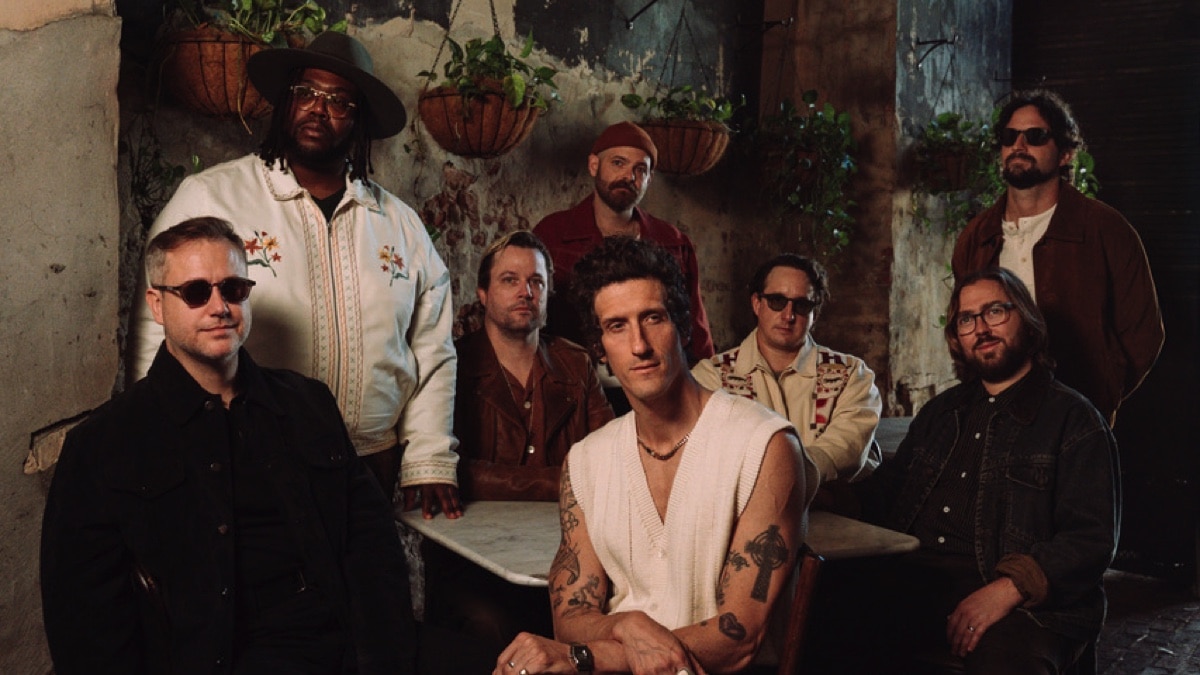
It’s hard to believe that I’ve been chatting with George Gekas, bassist for The Revivalists, for more than a decade. Over the years, we’ve connected during some of the band’s biggest moments, and now they’re preparing to release their sixth full-length studio album, Get It Honest, on July 24, making it the perfect time for another conversation.
Join me as we dive into the making of the new album, discuss what fans can expect from this exciting new chapter, and explore all the great things on the horizon for the band.
Here is George Gekas!
Photo, TommyMoore
Featured Videos:
Visit Online:
www.therevivalists.com
YTB, FB, IG, X @therevivalists
TikTok @therevivalistsband

Adam Russell, bassist for Story of the Year, hasn’t slowed down for a second.
With the band’s latest album A.R.S.O.N. dropping on February 13, 2026, they’ve not only delivered new music but also pushed their creativity further through a series of visually striking videos, several of which Adam himself co-directed and edited.
In this interview, we dive into the making of the new record, explore how Adam shapes his signature bass sound, and get the inside scoop on the band’s upcoming Camp Screamo Tour with Silverstein and Origami Angel.
Here’s Adam Russell.
Photo: Ryan Stephens
Featured Videos:
Visit Online:
IG @storyoftheyear
TT @storyoftheyear
FB @storyoftheyear
X @StoryoftheYear
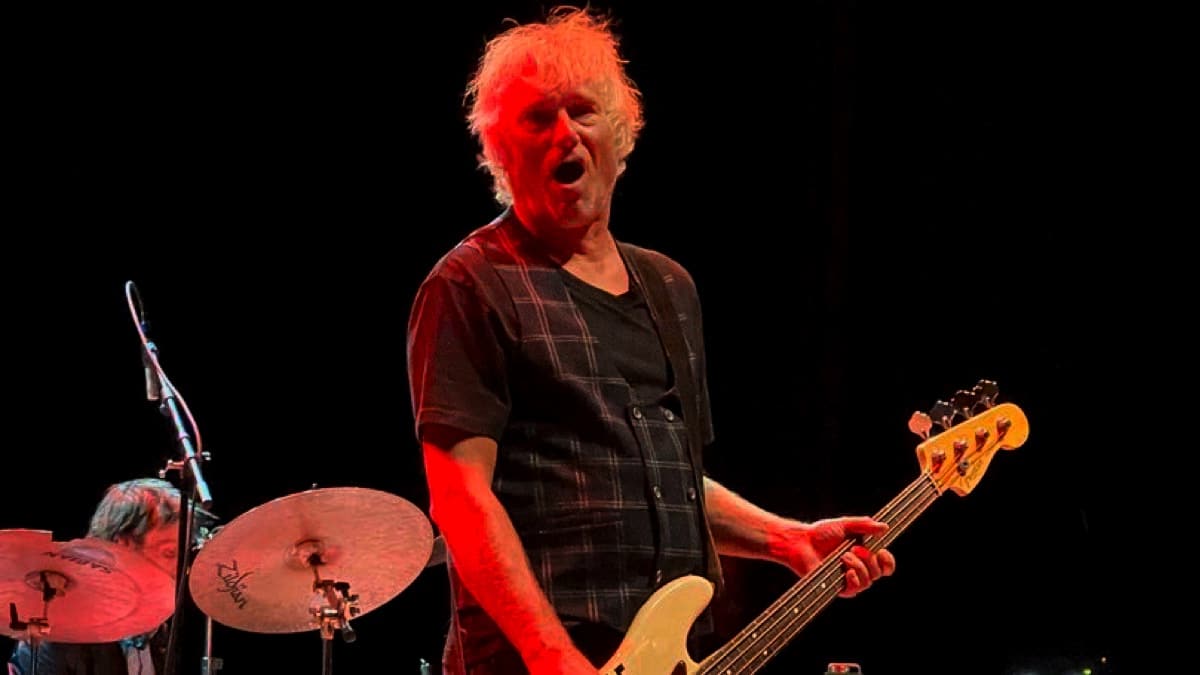
Get ready for a conversation with one of Southern rock’s enduring forces, Tim Neilsen. For over 35 years, Drivin N Cryin has been delivering a powerful blend of grit, melody, and heart, and they’re not slowing down anytime soon. With their brand-new album “Crushing Flowers” set to drop on April 10th, the band is gearing up for another exciting chapter.
At the core of that signature sound is bassist Tim Nielsen, whose driving grooves have helped define the band’s identity and earned them a place in the Georgia Music Hall of Fame.
In this interview, we sit down with Tim to talk about the new album, the secrets behind his unmistakable tone, and what lies ahead for Drivin N Cryin.
Here is Tim Nielsen.
Photos: Chris Neilsen, Carlton Freeman, Ted Lanthangue, and courtesy Tim Neilsen
Featured Videos
Visit Online
www.drivinncryin.com
FB & IG @drivinncryin

When I heard that American Vanity, formerly known as Burn the Jukebox, was gearing up to release a new album this summer, it felt like the perfect moment to catch up with bassist and vocalist Virginia Franks.
With a fresh name unveiled just this past January and a clear shift in musical direction, the band is entering an exciting new chapter, one defined by both sonic evolution and a deeper, more focused message.
In this conversation, Virginia opens up about the inspiration behind the upcoming record, how she crafts her distinctive bass tone, what fans can expect from their upcoming tour, and where she sees both herself and the band heading next.
Join me as we dive into it all.
Here is Virginia Franks.
Photo, Devin Kasparian
Featured Videos:
Follow Online:
thisisamericanvanity.com
IG @thisisamericanvanity
IG @virginiagracefranks/
TikTok @thisisamericanvanity
YouTube @thisisamericanvanity
Facebook: facebook.com/profile.php?id=61585585599800
Features
Interview With Bassist Bjorn Meyer on ‘Convergence’ … Exploring Sound, Space, and Innovation

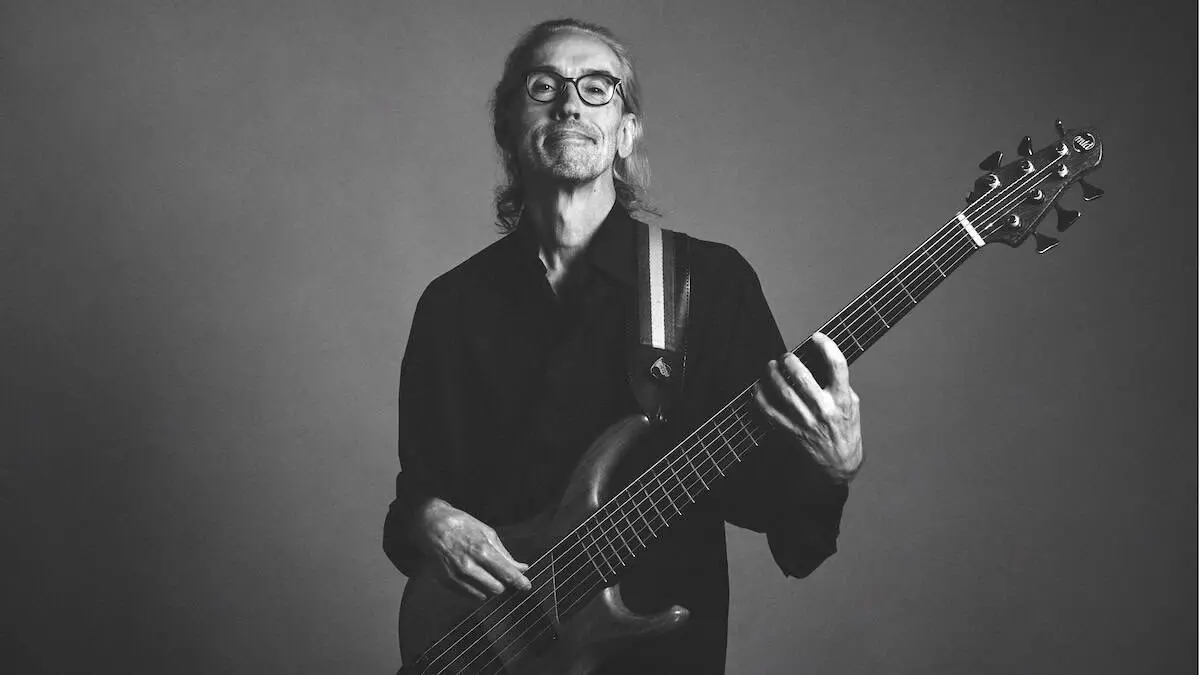
By Guest Contributor, Joe Barth
Joe Barth talks to Bjorn Meyer about his new album and exploring new musical territories with the electric bass.
Above photo courtesy: Björn Meyer © Fredrik Gille / ECM Records
Bjorn Meyer was born in Stockholm, Sweden in 1965 and has lived in Switzerland since 1996.
Starting on the piano, trumpet, and guitar, he turned to the electric bass at age eighteen. In 1996, the Nyckelharpa player Johan Herdin, percussionist Bazar Bia, and Bjorn formed the trio Bazar Bia. Since then, he has worked with Persian harpist Asita Hamidi, oud player Anouar Brahem, and pianist Nik Bartsch. Convergence is Bjorn’s second album on the ECM label.
JB: Before I ask about the new Convergence album, tell me about yourself. You grew up in Stockholm, Sweden. During your teenage years, you played guitar in punk-rock bands, then, at age eighteen, switched to bass. What was musically most helpful in your personal development as a bassist?
BM: My first encounter with the electric bass was pure luck and changed my life in an instant. Music had been an important part of my life from childhood, but always as one of many things I was interested in, like a very rewarding hobby. The bass changed all that. I had finally found my voice, and all the sounds I had heard and accumulated for so long without knowing how to make them real could finally burst out. I gladly spent every free minute of every day exploring this new universe, and that gave me a focused motivation that was hugely important.
Two important things helped me on my way and shaped me a lot at that time:
First of all, I realized that so much music that I was really interested in, as a guitar player, had resonated with me mainly because of the bass players involved! As a newly emerged bass player, I had a big library of music I could revisit. I learnt many important lessons by figuring out what made the music I loved work.
Second and definitely not less important: at the time I lived close to a house where many great musicians from Stockholm had their rehearsal spaces, jam sessions, and a general meeting point. Often there was a bassplayer missing — and I was five minutes away — so from the very early days as a bassist I could play with fantastic, experienced musicians from many different styles. From the very beginning, I was surrounded by role models and mentors who later on became colleagues and bandmates.
JB: Bjorn, to learn more about what shaped your musical values on the bass, to you, what are the three most influential bassists, and please give us a particular album they appeared on that you really connected with?
BM: There could obviously be many more than three, but – and this connects to the answer above! (Bass players “behind” guitar players)
Bass player: Jimmy Johnson
Album: Alan Holdsworth – Metal Fatigue.
I was (and still am) absolutely fascinated by Alan’s playing and compositions but the real magic was when I realized what Jimmy was doing to keep it all together, weaving fully logical basslines through “impossible” chord changes! And then there are these two very short fills at around 2:55 in the title track. 2 times 2 bars that I still remember the very first time I heard on Swedish radio. Time stopped, and I found myself trying to understand how to create such bass parts and how to adapt Alan’s unique chord voicings for the bass.
Bass player: Carles Benavent
Album: Paco De Lucia Sextet – Live One Summer Night
I had been intrigued by flamenco and the work of Paco De Lucia for a long time. My sister gave me the LP for Christmas, and this sextet redefined anything I had imagined possible. It taught me a lot about how to approach strong musical traditions with deep respect and still find my own space within and make the music even stronger.
It is absolutely incredible how Carles takes part in every function in the group – from rhythm and chords to melody and harmony – without ever losing the bass function of keeping all the sounds together and allowing the others to shine.
The bass solo in “Alta Mar”, the comping — if you can call it that — in Solo Qiero Caminar”.
Also, the studio album Solo Qiero Caminar was a game changer, just listen to the duo version of “Monasterio de sal.”
Bass player: Anthony Jackson
Album: (for once not a guitar player) Michel Camillo – Why Not!
I had been a fan from hearing Live In Central Park by Simon & Garfunkel but his playing with Michel Camillo was another ear-opener for me. Maybe also because my main working band at the time was a Latin-jazz band, so I guess it was a good match.
Having said that, Anthony was a huge inspiration across styles and genres over all the years we were fortunate enough to have him with us!
… that was already three … and I didn’t even get to mention Steve Swallow, Marcus Miller, Aston Barrett, Jaco Pastorius, Skuli Sverrison, Meshell N’Degeocello, Carol Kaye, Pino Palladino, and all the fabulous upright players that have inspired me so much – Charlie Haden, Palle Danielsson, Scott La Faro, Miroslav Vitous, and Eberhard Weber.
.. but the three I mentioned were definitely very important at the time!
JB: Convergence is you recording alone with your six-string bass. Your music has (for lack of better words) a very ethereal sound. How do you describe your music?
BM: The idea of an electric bass as a solo instrument triggers very diverse and often contradictory expectations. Many people have some idea of what a bass can do, and they expect anything from “root notes and fifths” to fast, equilibristic slapping frenzies with the comment, “How can you do that for more than three minutes per show?”
If I were to describe this program, I tend to use a few different approaches depending on who I am talking to:
Electric bass in acoustic space — I think it sums it up very well and gives some idea of what to expect without putting the music in a certain genre. For me, it is very important to share the music’s acoustic experience rather than focusing on the instrument’s electric character.
This music is also a mirror of my musical and personal journey through this life. The bass allows me to express myself without the risk of having my words misunderstood, and everything has a place in this music. Even though there are compositions, performing solo allows a unique freedom of interpretation depending on my state of mind that day.
Generally, I would be very happy to just say – new music for electric bass guitar!
JB: The album opens with “Convergence,” a song with deep textures, loops, and very staccato melodic figures. Talk about this.
BM: The album starts with a distorted chord progression – somewhat inspired by Alan Holdsworth – that I simultaneously feed into a loop through a shimmer reverb that I slowly fade in, played backwards. I find this texture very inspiring, and since it is all created live, it always turns out a bit different.
A pattern in 14/8 is presented – like a teaser – before an improvised part takes off in another direction. The pattern comes back in two versions: the original 14/8 (28/16) and a shortened 27/16 version. I loop the shorter version and play the original one on top, creating the rhythmical displacements you hear at the end.
I find such layering of patterns of different lengths very interesting, and it is a natural part of my vocabulary after many years of playing various kinds of minimal music with Don Li’s Tonus, Nik Bärtsch’s Ronin, NEN, and many others.
JB: The album consists of nine of your compositions. Were these songs all composed for this project? Talk about that process.
BM: Yes and no. I didn’t sit down to deliberately compose a fully new repertoire with this album in mind.
However, from the very first concert I played to release my first solo album, Provenance, in 2017, I noticed that the material and my playing were already shifting. Creative accidents happened, and new ideas emerged during concerts, soundchecks, and travels. After almost six years and many concerts, I had a tour in Japan and realized that there was nothing left of Provenance in the program. Then it took some time for Convergenceto emerge — during which the material continued to evolve.
In hindsight, I can see many stages of the development of Convergence that were definitely meant to become a new repertoire in its own right. One aspect of the name of the album reflects the convergence of ideas, moods, emotions, life, and time into this moment.
JB: Talk about the six-string bass you used in this recording. Did you use amplification, or was it mainly recorded directly?
BM: I play an MTD 635 (#160), an instrument that found its way to me by very lucky coincidence in New York in late 1995. I have played this very instrument on everything involving electric bass ever since.
As I mentioned earlier, the acoustic component is very important to me, and I am very lucky to have the support of producer Manfred Eicher for this approach. We recorded in a big, wonderful-sounding room that often hosts symphony orchestras and recordings of large film-music projects. The sound engineer Michael Hinreiner knows the room very well and was also very keen on the idea of making an acoustic-style recording.
I had a pair of Genelec 8030 Studio monitors and a small subwoofer behind me for the full signal (bass and effects) and a pair of satellite speakers further away, where I sent effects only (delays, reverbs, etc., but no direct bass signal) in order to fill the room and have a spatial experience.
This setup was then recorded using a lot of microphones to pick up all the aspects of the room, but also close miking on the instrument to pick up the acoustic sound. Much like you would approach a serious recording of any acoustic instrument, like a classical guitar or a cello.
Obviously, the line outputs of the bass and the effects were also recorded, but very little of that was used in the mix. I am very happy with the result, and I think you can really have the experience of sitting in the room with me when listening to the album.
JB: “Drift” is filled with harmonics. Tell us about that song.
BM: After Jaco’s “Portrait of Tracy,” anything involving harmonics on the bass is a bit sensitive. However, the range of the six-string and playing harmonics with a bit of a scraping sound with the plectrum does add another texture that I find very inspiring.
The piece started out as a reflection on the ice breaking on a river after a strong winter. Deep cracks forming, small pieces of ice breaking loose into the stream. Obviously, that is only my very personal picture. Some have said that it reminds them of northern lights, which is also a beautiful thought!
B: I love the sense of movement you create in the song “Motion.” Talk about this composition.
BM: Thanks! It took me a long time to become fluent in playing it and for the piece to develop to its current form. It started with the plucking pattern in 11/8 and the first two chords. For a long time, I couldn’t find a way out of this tonality, but the more my right hand started feeling comfortable in any tempo, I started hearing a harmonic development that the left hand was kind enough to accommodate.
“Motion” is a good example of two things that inspire me: I like it when odd meters still can have a dancing quality to them, and I often find this kind of incremental approach to harmony very interesting.
JB: This is your second ECM album. What do you appreciate about working with producer Manfred Eicher and ECM Records?
BM: It is my second solo album on ECM, but I have been lucky enough to work with Manfred on four albums with Nik Bärtsch’s Ronin and two albums with Anouar Brahem. All very different productions.
I am fascinated by his enormous dedication to music and very inspired by his way of listening. Knowing that he is listening changes my focus as a player. From being concerned with playing “right” it becomes all about playing in a way that allows for a deeper level of experience. Taking risks and adapting the performance so that the music translates well to someone who is attentively listening. He has the ability to ask or suggest things that allow me to shift focus away from the microcosm of “my composition” to the macrocosmic dramaturgy of the music.
This overview also applies to the full album, in how he balances the tracks and puts the track list together. For example, the idea of opening with “Convergence” was far from my original plan, but it turned out exactly right. Not to mention the choice of cover picture, a very unexpected but perfect match for me.
JB: Do you view the entire album as a kind of symphony or tone poem with multiple movements?
BM: I definitely see the album as a whole body of work in itself and a thoughtfully curated dramaturgical statement. But I still see it as a collection of separate compositions rather than multiple movements. The album has one sequence, but in a concert situation, I can freely choose another path to adapt the dramaturgy to the room, the audience, and the setting.
Having grown up listening to LPs, it is very important to me that listening to the full album adds an extra dimension to each song’s experience. Especially in this age of streaming and separate songs put together in more or less random playlists, I think it is more important than ever to at least try and compose as deep listening experiences as we possibly can.
JB: The album ends with the reflective “Nesodden.” Is there any connection with the peninsula in Norway?
BM: Yes – the song was written in a small cottage at Nesodden, overlooking the fjord running into Oslo. I was performing at the jazz festival there and arrived a day early due to travel issues. Sitting there, I saw a family of geese and two canoe paddlers in a beautifully respectful interaction. I guess it had something to do with who could land first or something, but all of a sudden, this whole tune had formed. I did rework some minor details over time, but the song was like a gift from Nesodden. It very seldom happens in that way.
JB: You moved to Switzerland a few years ago. Talk about the gigs you do in Europe and how you make a career in music work for you.
BM: You are kind – it has already been 30 years.
One thing I really appreciated coming from Sweden was how well-connected Switzerland is. In four to five hours, you reach Paris, Milano, Munich, and many other comparatively large cities by train or car! This makes touring so much easier than from Stockholm, where you either spend a full day just to reach the country’s border, or you have to fly all the time, which I don’t really like.
Interestingly, both Sweden and Switzerland are quite small countries, yet they have very strong, yet distinct and creative music scenes. There are also many interesting venues and festivals. Since I am involved in quite a few different projects all across Europe, Iran, and North Africa, my touring schedule will depend on which projects are active at the time. At the moment, my focus is on my large ensemble, Garden of Silence — 9 Musicians from 3 continents — on the one hand, and the solo project on the other.
I feel so very blessed to have the opportunity to present this music to so many fantastic audiences and to be part of so many inspiring collaborations.
Like everywhere, the economic situation for live music is changing quite rapidly, also here. However, I am confident that we will always need this form of human interaction, being in the same space at the same moment in time, sharing the same experience. Music is such a strong healing power, and we need it more than ever.

Gear News: Fender Honors James Jamerson with a 1962 Precision Bass

Artist Update With The Revivalists’ Bassist George Gekas

Maestro Ron Carter, Sharing the Spirit – June/July 2026 Issue

New Music: Danielle Nicole, Tug Of War

Right Hand Technique Strategies with Dr. Randy Kertz
Right Hand Technique Strategies with Dr. Randy Kertz

April 27 Edition – This Week’s Top 10 Basses on Instagram
May 4 Edition – This Week’s Top 10 Basses on Instagram
May 11 Edition – This Week’s Top 10 Basses on Instagram