
Cover
Yolanda Charles, MBE – July 2024

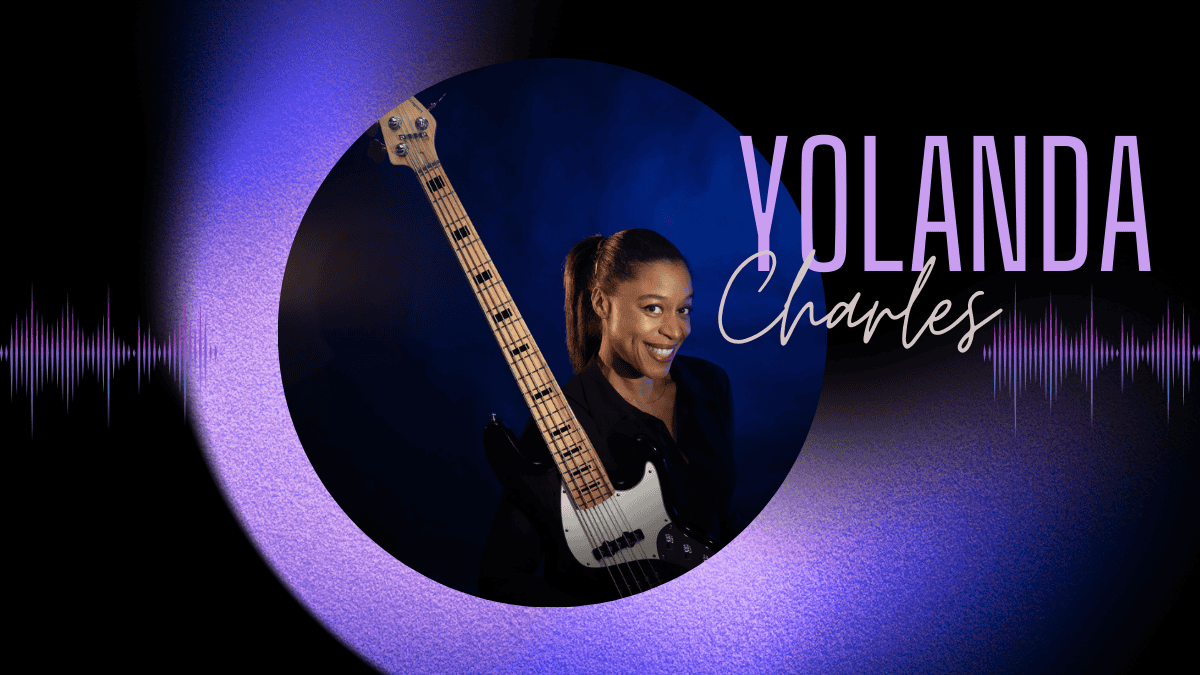
By David C. Gross & Tom Semioli
“I’ve never heard of Yolanda Charles…who is she?”
Such was the retort I received from my Notes From An Artist co-host and dear friend David C. Gross upon my suggestion that we invite Yolanda Charles, one of my favorite players, on our podcast – radio show. Two bass players with a seven-year age gap can sometimes forge a world of difference, which our listeners detect from time to time from our on-air banter.

Cover Photo Courtesy, Giuliano E at Graphik Vision
I have learned much from my partnership with my elder David – who looks, thinks, dresses, and acts much younger than I do- such as; the hidden merits of the six-string bass, why Mile Davis’ Bitches Brew is indeed monumental on levels I was not aware of, and the best entrees at Mamoun’s Falafel on the Lower East Side of Manhattan.
Oftentimes I educate my homie on the players who came to prominence in the 1990s – the decade wherein Brit Pop was my writer’s beat. I received my review copy of Paul Weller’s Live Wood album in late ’94 or thereabouts. First move every bass player makes when receiving said product is to check the bass credits! I didn’t recognize the name. A compendium of performances in support of the Mod Father’s then latest Wild Wood album, I’d never heard of Yolanda Charles either. I became a fan after the first listen – the combination of rock and roll and soul never fails to captivate this writer.
Yolanda is that rarest of players who fortifies her bandleader and simultaneously makes you aware of the instrument regardless of the supportive role. Dig Ms. Charles cutting through the beautiful bombast of Robbie Williams’ Live at Knebworth (2003). Her work with Squeeze on The Knowledge (2017) rendered a new coat of (ph)funky paint on the pop purveyances of Messrs. Chris Difford and Glen Tilbrook. Nice work if you can get it, and she does.
My choice Yolanda deep tracks/albums make for a fine playlist: Aztec Camera “Sun” (Frestonia), Deep MO Funk in the Third Quarter, Marcella Detroit “Boy” (Feeler), Mick Jagger & Dave Stewart “Old Habits Die Hard” (Alfie soundtrack), Mamayo The Game, Workshy “Finding The Feeling” (Coast), B.B. King & Friends with Roger Daltrey “Never Make Your Move Too Soon” (B.B. King & Friends 80), Misty Oldland “A Fair Affair”(Supernatural), Project pH “No ID,” “It’s Not a New Thing,” and “Hey Now,” to cite a select few. Get to work!
So, who is Yolanda Charles?
She’s a bassist, composer, bandleader (Yolanda Charles’ Project pH, pH Instra-Mentals), band member (Jimmy Summerville, Hans Zimmer…), educator/mentor (East London Artist & Music, Institute of Contemporary Music Performance, Royal Northern College of Music, Trinity Laban Music Conservatory), entrepreneur, musical collaborator, poetess, novice gardener, and recording and performing artist. Impressed? In 2020 Yolanda Charles was awarded the MBE – Member of the Most Excellent Order of The British Empire for her services as a musician in the United Kingdom. Bass Guitar Magazine crowned Yolanda as the “High Priestess of Funk.”
Here are select excerpts from our conversation which can be heard in its entirety on Notes From An Artist podcast available on Apple, Amazon, BuzzSprout, Spotify, and wherever podcasts are podded!
TS: David, we have royalty in our presence, tell us how you came to be recognized with an MBE.
YC: I love it, it’s great. I accepted the award – you’re asked first if you would like the award, and some people do turn it down because of the political connotations. At the time, I was confused as to why I was being given the award, because I thought those sorts of notices are given for public deeds and charities – and I’m not known for any of those things. I have had quiet activities that no one would know about that help local communities…and someone thought that I should receive an MBE! I guess they did a search on me, to see what my presence is like online – to see if there are any associations or incriminations… and I came up clean man! (laughter)
TS: Your solo project works under the moniker of pH – as in ‘pH’ which is the measure of acidity in water. Explain the origins…
YC: The name is representative of balance. There are lots of ways you can view it. I was looking to spell ‘funk’ but I wanted to avoid the ‘f-u-n-k’ spelling. And I like people to wonder what the ‘PH’ stands for. It also gives me material to find titles for my songs. For example, we have a track called ‘Acid Test’ and stuff like that.
DCG: Back in 1961 George Russell had a tune and an album titled Stratusphunk – and he used the ‘ph’ spelling.
TS: Let’s talk about Project pH – a jazz, funk, soul, fusion collective which includes Nick Linnik (guitar), Hamish Balfour (keyboards), Nicholas Py (drums/percussion); and vocalists Paris Ruel, Adeola Shyllon, and Carmen Olivia, among others. You’ve supported more than a few notable bandleaders – tell us about your approach.
YC: Creatively, I write a lot of the material. I explain to the band how I want it to go and I welcome their input. I don’t usually bring in a finished piece of music because I think if you’re going to work with a band its important to have their voice in the sound.
Sometimes we have a little bit of a tussle over chord changes – but we don’t fight over the basslines!
DCG: The chord change doesn’t change until the bass player makes it so!
YC: That’s right! (laughter) Recently I wrote a ballad on the bass, when I compose that way, I write the bass and the top line and I give them space for a bit of color. It’s fun to hear their ears take them, sometimes it’s not always where mine are and I like that. I get a fresh angle on something I thought I knew really well.
I think my reputation is a bit of a ‘whip-cracker.’ I’ve worked in the pop world, and everything in that realm is restricted. Sometimes you have musical directors that are listening to every little bass fill. And often they don’t want to do anything apart from what is on the record. If you play one extra note you’ll get a stern look, and if the keyboard player slightly changes the harmony – put the 6th in or even worse does an extension, a 9th or 13th they get fired.
I’m more lenient than that, we’re freer because pH is jazz-flavored. I make the band work on various sections of a composition until I’m happy. Sometimes I like the music to be really tight, other times I want the ebb and flow – so I use my body and my bass to conduct.
DCG: In a way, the bass player should be the band leader and the musical director – we are connecting the rhythm and the harmony.
YC: Absolutely. The role of the bass player in a band is the connection between harmony and rhythm. There is also something about the character of a bass player. Some of it is funny, like in ribbing someone or ‘taking the piss’ as we say in England. In a real sense, I think your character attracts you to the qualities of the instrument.
Or maybe, your character takes on the qualities of the instrument. Maybe all those guitar hero ego monsters – if they exist – get turned into that by the nature of the instrument! Who knows which comes first?
TS: When you were working for Paul Weller, he gave you ‘advice’ on how to position your bass – how did you adjust to the adjustment?
YC: I held the bass way up here (Yolanda positions her instrument beneath her neck, bow-tie fashion) because it’s easier to slap. When you drop the instrument down, you have to alter your technique.
I had to agree to be in Paul ‘The Modfather’s space with my 1980s tastes because he was definitely more of a 1960s guy. Luckily, I didn’t have to slap on the job – imagine doing that on a Paul Weller gig! (laughter)
TS: I would love to do that!
DCG: And you’d get fired!
YC: Check me out, I was 22. I was a kid. It was quite intimidating. I think I would handle how to hold my bass and position the instrument differently today!
DCG: On that topic, Billy Sheehan said to me, and it made more sense than anything; when you are sitting down and practicing, why would you change that because when you stand up – you have to physically reevaluate all of what you learned sitting down. Sit in position, get a piece of leather, cut it and that’s all you need.
TS: You use different muscles when you change positions.
YC: Yes. I also recommend my students to use a guitar footstool. Get the bass in the space that is right for you, sit with your knees akimbo, put the bass where it should be if you were standing, then stand up, and see where the bass should be on your body…
It’s a very personal thing. Getting back to Paul, that’s the thing about session work – it involves letting go of certain aspects of your character and personality. You have to allow yourself to be molded into the thing they want you to be. That goes for being a musician – stylistically. Even looks to a certain extent.
I had complaints from one female artist I worked for. From her management, not from her, that the most flattering colors that I wore … were banned! (laughter)
(Yolanda imitates artists management) ‘Er, could you just wear a sackcloth, please? And perhaps a bin back over your head?’ (hysterical laughter)
That’s why I advise my students ‘are you sure you want to be a session musician? Have you got the character for it?’ You have to be a team player and respect that you’re not the boss, it is a hierarchal situation. It is not a level playing field. You are hired help.
You have to kind of do things that people ask of friends. But you are also being paid a salary. And it’s really confusing. And you can get it wrong, and you can get fired because you overstepped.
You have to understand the politics of this stuff. Also, are you an argumentative type of person? Do you push back because you were told something by someone who does not have the best personal skills in the world and who might be making a demand of you in an unfriendly voice or using language you don’t like.
You sign a contract and the contract does not have a clause that reads ‘if they don’t speak to me nicely, I can leave…’
TS: The era of specialization on one instrument is over – how do you guide your students?
YC: They know. It’s funny, I made my first record in 2002, and I did it college industry style then. I created a website, and my own record label, but I did it with a few of the tools we have now. And I understood at that point I needed to have those skills. If you just make a record – you’ll be like all the musicians who think they’ve made a record because it never leaves the hard drive, or they press it and it’s in boxes for years and years.
I was determined to not have that happen to me. I kept the costs down by using friends’ studios, we produced ourselves… I was able to pay my musicians because I was touring with other artists. I pressed a thousand copies and I used the disc as a business card – like the way people use the web now.
Yes, it is entertainment for others and a way to make money by selling them at gigs, but for a musician, and other creatives, it is the way we tell people who we are, and what we do, and let them know that we are available.
Some people see social media as showing off, or being a narcissist, but it’s to let people know we are here, that we exist, and that we are available.
If you look at the artists I’ve worked with in my career, they are all in the kind of pop-rock territory. If I just stayed in funk and soul, I would have had a narrower career.
I was in a session with Dave Stewart, and he said, ‘so who is Yolanda?’ And I said ‘What do you mean?’ I told him I made a record and he asked me to bring it in. And I would never do that, some people are always hustling. A few days later he told me that he’d listened to it and he gave me a bunch of pointers. We were just talking as musicians.
When I first handed it to him, he said ‘Oh, so you’re not just a bass player…’ And I didn’t really understand what that meant at the time. He perceived it as me being an all-around musician as opposed to an instrumentalist purely. He saw that I could arrange, write, record and I could organize. Later, he hired me as a musical director for his band. It was because I had proof that I could do all these things. That qualified me, as well as the fact that we got along in the studio.
Making records is important if you want to put yourself out there – you can’t expect people to know who you are unless you tell them. How you tell them about yourself isn’t bragging. The gig with Dave Stewart led directly to me being in Hans Zimmer’s band. To me it’s kind of like chance and luck, however the opportunities for chance and luck only arrive if you create the conditions.
DCG: And now you can just give them a thumb drive!
YC: Yes, or you can simply send a link and they can see everything you do. People waste their time on social media showing, ‘This is what I had for breakfast… these are my new shoes…’ Don’t bother with that stuff, you don’t know who is looking. And most times they’re not looking at where you bought your shoes, they are looking at what you write, what do you sound like, what are your lyrics, what is your creative space?
TS: How do you mentor for success?
YC: People ask me for advice in the form of ‘Can you help me.’ My first response is ‘What do you want? What do you want to achieve? What are you actually looking for?’ And very few can answer that question straight away. Is it ‘you’ with a top-paying gig? Is it ‘you’ with a certain amount of recognition? Or sales? Or followers? Is it about making the best record you could have made? Look at where the compromise has to happen.
Maybe the best music you can make does not equate with a huge following. You have to hone it down to what is your actual core. You can’t have it all. If you want to make a great record, what does that entail?
If you really like atonal music – okay. But I’ve got something to tell you about that. Large followings do not come from artists who create atonal music! If you really want to make a record that’s a bit out there – okay! But you have to let go of some other ideas you have at what success looks like.
True success might mean you make records that don’t sell a lot. But you’ve identified what your actual real ambition is. And once that is acknowledged, once that is said out loud, strangely what happens is that kind of peace settles in. ‘Oh, I get it! I know what I want now!’
With that approach, it’s easier to not be envious of a kid who can play five chords and has ten million followers. You don’t have to bother with that because this thing you’ve created fully focuses your attention. So, what’s going on ‘out there’ does not really matter anymore.
A big part of happiness is really knowing what you want.
For all things Yolanda Charles, check out https://g4dz.com/


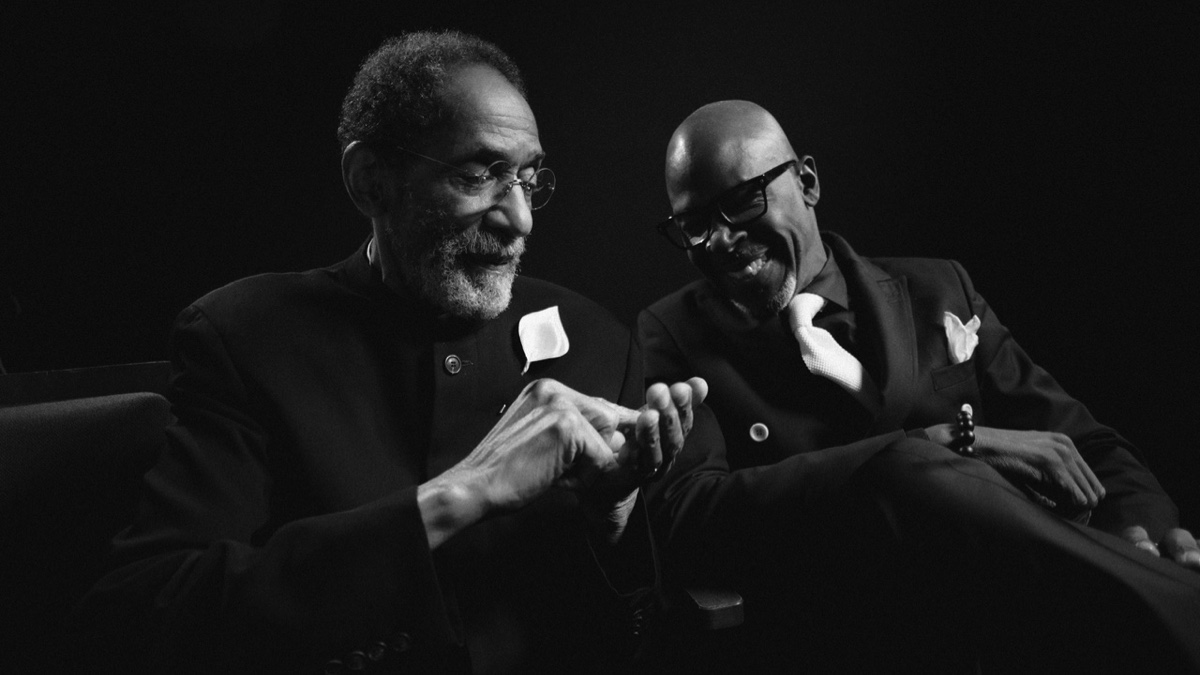
For more than six decades, the sound of the upright bass in modern jazz has carried the unmistakable authority, elegance, and intelligence of Ron Carter.

Recognized as the most recorded jazz bassist in history, Maestro Carter’s tone has become part of the very architecture of the genre.
From shaping the harmonic foundation behind countless landmark sessions to collaborating with many of the greatest jazz artists of our time, his artistry has both defined and expanded what the bass can be.
But beyond the staggering discography lies something even more enduring: dedication.
Maestro Carter has never stopped learning, never stopped refining, and never stopped listening. His commitment to excellence extends well beyond the stage and studio. As an educator and mentor, he has invested deeply in the next generation of bassists, setting a living example of discipline, curiosity, and musical integrity.
Now, in yet another inspired chapter of his extraordinary career, Maestro Carter joins forces with renowned choirmaster Ricky Dillard for a powerful gospel–jazz collaboration, Sweet Sweet Spirit, released February 6, 2026.

This project beautifully bridges sanctified soul and sophisticated swing, blending Carter’s masterful touch with Dillard’s uplifting choral brilliance.
The result is music that feels both reverent and rhythmically alive, deeply rooted, yet refreshingly expansive.
It is truly an honor to share this conversation with a living legend whose work continues to inspire musicians across genres and generations.
Here is Maestro Ron Carter.
Photo, Paul Rivera
Featured Videos:
Follow Online:
www.RonCarterJazz.com
www.facebook.com/RonCarterMusic
www.instagram.com/roncarterbassist/
x.com/RonCarterBass
www.youtube.com/@RonCarterBassist
www.threads.com/@roncarterbassist
www.tiktok.com/@roncarterjazz
imgur.com/user/RonCarterJazz/posts
www.tumblr.com/roncarterjazz
bsky.app/profile/roncarterjazz.com
open.spotify.com/artist/4wnzivx3OQ3vjrySAdTdJP?si=RUS946O4SpyHDD2ZI8-Y8Q
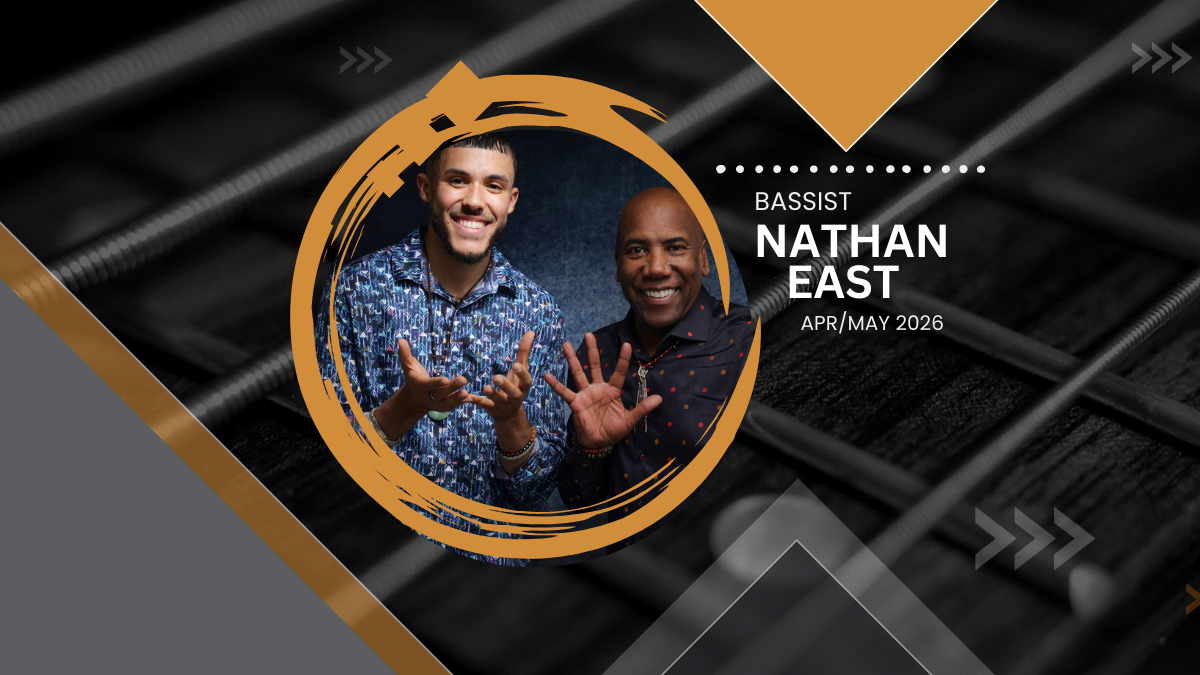
For decades, we’ve had the privilege of following the remarkable career of Nathan East, listening closely to his albums, tracking his milestones with Yamaha Instruments, and watching his evolving partnership with Laney Amplification with great interest. Along the way, we’ve talked gear, tone, and technique, while hearing his unmistakable musical “voice” woven into the work of more iconic artists than we could possibly list.

Today, we’re thrilled to reconnect with this true giant of the bass world following the release of a very special new album, Father Son, produced by Nathan alongside his son, Noah East. It’s a deeply personal project that showcases not only extraordinary musicianship but also a powerful family bond.
Join us as we dive into the making of this outstanding record, explore the new Laney Nathan East Signature Bass Preamp, and look ahead to what the future holds for one of music’s most respected and influential bassists.
Here is the one and only… Mr. Nathan East.
Photos, John Abbott @johnabbottphoto
Featured Videos:
Visit Online:
www.NathanEast.com
FB, IG, X, & YouTube @NathanEast
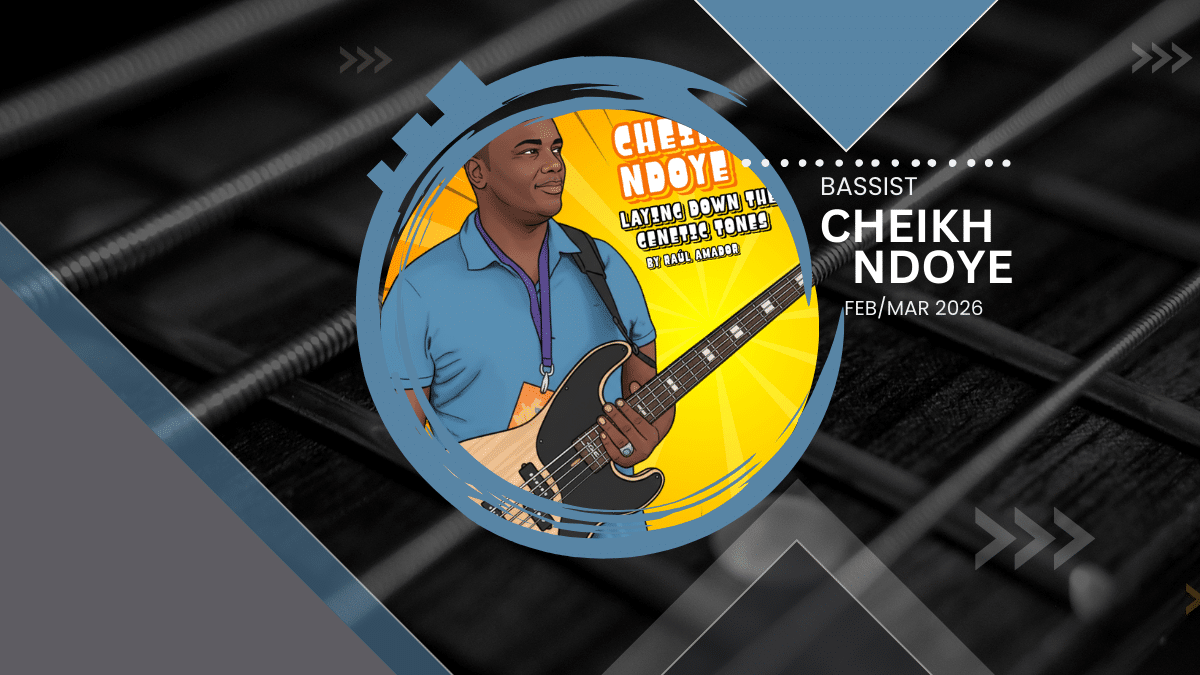
For nearly seventeen years, we’ve followed the ever-evolving journey of bassist Cheikh Ndoye, watching with admiration as his musical vision continues to deepen and expand. Each project has revealed a restless curiosity and a commitment to sound that resists easy categorization.

When we last spoke in 2018, Ndoye was already hinting at new directions, and he hasn’t slowed down since.
In the years that followed, he’s been quietly and intensely at work, culminating in a new album, Genetic Tones, a project that captures both his roots and his forward-looking approach to music.
I recently had the great pleasure of listening to several rough tracks from the album, and, as always, I was both impressed and genuinely excited by what I heard. Genetic Tones feels like a bold and thoughtful statement, rich in texture and intention. Join me as Cheikh shares insights into the making of this upcoming release and reflects on the ways his musical language has continued to transform over the years.
Photo Credits: Courtesy of Cheikh Ndoye and Courtesy of Aguilar Amplification
Featured Videos:
Visit Online:
IG @thegenetictones
tiktok.com/@cheikh.ndoye.the

This month, we have a real treat for all you metal fans out there! Joining us is none other than Pär Sundström, the powerhouse bassist and co-founding member of Sabaton, a band many consider to be the #1 global power metal act in the world.

Pär isn’t just the man behind those thunderous bass lines; he’s also one of the main lyricists and the band’s manager, helping to shape Sabaton’s unmistakable sound and unstoppable rise.
Hailing from Sweden, Sabaton has been conquering stages and hearts around the world for over twenty-five years, delivering their signature blend of history, heroism, and heavy metal might. And now, with the release of their brand-new album ‘Legends,’ the band is gearing up for a tour that promises to be absolutely spectacular.
We’re diving into all the details, from the making of Legends, to the evolution of Sabaton’s epic sound, to what lies ahead for this legendary band.
So, without further ado, let’s welcome the man himself… Pär Sundström!”
Photos: Jens De Vos (cover & interview photos), Ben Alexis (interview photos)
Featured Videos:
Templars”
“Hordes of Khan”
“The Duelist”
“Lightning at the Gates”
“Crossing The Rubicon”
(Featuring singer Jonny Hawkins and guitarist Mark Vollelunga of NOTHING MORE)
Visit Online:

I’m sure many of you will remember that I had the pleasure of chatting with Lettuce bassist Erick “Maverick” Coomes just last year, where we covered a ton of great material. (If you missed it, you can check out that interview here>>>bassmusicianmagazine.com.)

Now, with Lettuce on the verge of releasing their brand-new album Cook, I thought it was the perfect time to catch up with Erick and see what’s been cooking… pun definitely intended!
In this conversation, we dive into the new album and the videos that accompany it, explore Lettuce’s exciting collaboration with Aquila Cellars on their signature wines, and get a glimpse into what’s next for the band.
So sit back and enjoy… here’s Erick “Maverick” Coomes!
Cover Photo, Alex Varsa | Other Photos: HIllary Clinton, and Sam Silkworth
Featured Videos:
Visit Online:

Maestro Ron Carter, Sharing the Spirit – June/July 2026 Issue

New Music: Danielle Nicole, Tug Of War

Right Hand Technique Strategies with Dr. Randy Kertz

New Music: Golden Flower, Are You Even Awake?

Interview With Bassist Adam Russell
Right Hand Technique Strategies with Dr. Randy Kertz

April 6 Edition – This Week’s Top 10 Basses on Instagram
April 13 Edition – This Week’s Top 10 Basses on Instagram
20 April Edition – This Week’s Top 10 Basses on Instagram