
Gear News
New Gear: Gallien-Krueger RB Legacy Series Bass Amplifiers


PRESS ANNOUNCEMENT
Introducing the RB Legacy
Our goal was to create a new standard in bass amplification. After 5 years of design work, 20 revisions, and thousands of hours in the lab, we’ve created an unrivaled analog bass amplifier. Unprecedented performance, studio quality sound, boundless features, punch that never quits, indestructible analog power, and a metal enclosure machined to perfection. The 1001RB and 2001 RB Legacy achieves everything we set out to do and more. This is the new standard of excellence for the modern professional bass player.
Designed by founder and president, Bob Gallien, the RB Legacy is the result of more than 50 years of knowledge and dedication to his craft. His unrelenting drive for innovation and refinement has not only left a lasting influence in the world of modern bass amplification, but also raised the bar for what a bass amplifier can do. The RB Legacy sets the stage for a new era in professional sound equipment and aims to meet the needs of the most discerning of players, whether that’s on the road, in the studio, or at home.
Class H Power Amp
The RB Legacy 1001 and 2001 are equipped with Class H power amplifiers, which have two power supplies. One that operates lower output levels and one that handles higher output levels. These amps are designed to be played loud and with this configuration, it not only improves reliability, but allows you to play hard into the rails (maximum output) without overheating the amplifier or worrying about your tone giving out, a problem with many bass amplifiers.
Riding the Rails
Most amps start to run out of juice as they reach their maximum output, but the RB Legacy delivers almost twice the current required to develop full power. So, you can keep control over the speaker cone, even in extreme conditions. Without this extra capacity, you get an unresponsive sound, lacking punch or definition. When you play really loud — or “into the rails” — the RB Legacy produces a powerful, growly sound. Otherwise known as “riding the rails.”
Adjustable Limiter
Another new feature of the RB Legacy series is an adjustable limiter. This can be used to “limit” at the rail (maximum output) and can be adjusted to pull the signal off the rail, keeping the output clean. This helps tame excessive signal peaks, reduce unwanted transients and prevent unwanted distortion.
Cabinet Simulation
Turn on the cabinet simulation to get a faithful representation of a live cabinet feel that can be used with your DI and headphone signal. This gives you more control over your DI tone whether you’re recording, playing live, or practicing at home.
Studio Headphone Amp
Inspired by some of the industry’s most sought-after studio headphone amplifiers, our class A headphone amp delivers studio quality power into any headphones from 8 to 300 ohms. Whether at home or on stage, you’ll have your tone on tap.
Voicing Filters
The RB Legacy includes three filters that completely re-voice the amplifier, maintaining a neutral volume, so you don’t have to adjust the volume controls after turning them on or off. Bump adds a round bloom… contour boosts the highs and lows while dropping the mids… and presence adds a sheen to the top end.
Active EQ
All GK amplifiers use a proprietary, active variable Q four band equalizer. The controls are in series, so they won’t add or cancel frequencies that compromise your sound. As you adjust, the active equalizer reshapes based on the cut or boost you are adding. This produces an extremely wide range of usable tone settings.
Boost
The RB Legacy uses two selected field effect stages configured to optimize the Gate Induced Valve Effect (G.I.V.E.), or tubey grit, first pioneered in the 800 RB. This can be adjusted to fatten up your sound or to produce heavy overdrive. We have added an edge control to help you shape the sound to your preference.
Power Ratings:
2001 RB
Bridged Power (Amps Driving Single Load Together):
800 W RMS @ 8 ohms
1200 W RMS @ 4ohms
2000 W burst @ 4 ohms
Dual Mono Power (Amps Driving Load Separately):
300 W RMS @ 8 ohms per channel
400 W RMS @ 4 ohms per channel
600 W RMS @ 2 ohms per channel
700 W burst @ 4 ohms per channel
1000 W burst @ 2 ohms per channel
1001RB
300 W RMS @ 8ohms
400 W RMS @ 4ohms
600 W RMS @ 2 ohms
700 W burst @ 4 ohms
1000 W burst @ 2ohms
RMS = Continuous Power
Technical Specifications:
Preamp: Solid State
Power Amp: Class H, 16 Complimentary BJT’s in Each Power Amp Section
Transformer: Custom Toroidal Transformer
EQ: Active, Serial, Variable Q,4-band, Bump, Contour, Presence switches
Inputs: 1 x 1/4″, 1 x 1/8 (aux)
Outputs: 2 x SpeakON (1001RB), 6 x SpeakON (2001 RB), 1 x XLR (direct out), 1 x 1/4″ (tuner)
Headphones: 1 x 1/8″ (Studio Quality)
Effects Loop: Unbalanced ¼” Send and Return
Footswitch (Included): 1 x 1/4″ (boost)
Cooling System: 1 x Internal Fan with Thermal Speed Control (1001 RB) 2 x Internal Fans (2001 RB), Side and Back Intake Vents, Front Exhaust Vents
Power Source: Standard IEC AC cable
Chassis: Anodized Aluminum, Laser Etched Graphics
Height: 5.25″
Width: 17.2″
Depth: 13″
Weight: 1001RB: 25 lbs, 2001 RB: 41 lbs
MAP: 1001RB Legacy: $1499, 2001 RB Legacy: $2099


Fender Musical Instruments Corporation (FMIC) announces the James Jamerson 1962 Precision Bass®, an era-correct tribute to the bass that was nearly as iconic as the Motown monolith who used it to redefine what the low end was capable of.
“From R&B, to Rock, to Jazz, Country, and Reggae music… everyone owes a debt to James Jamerson. What he did on the 1962 P Bass has never been done. I am so honored to acknowledge that Fender changed everything with the 1962 Precision Bass,” said Raphael Saadiq.
James Jamerson was a phenom in the studio and the stage all throughout the 60s and 70s but more importantly, he drew the blueprint for how a bass part should feel, groove and swagger in order to turn a song into a hit and thereby inspired generations of players to come. Such an indelible impact is impossible without the proper tools, and as far as Jamerson was concerned, none did the job quite like his trusty P Bass®. Its effortless playability, sleek design and undeniable low-end response was and is the path of least resistance between a killer idea and a polished, pitch-perfect bassline that can tie an entire song together. This signature instrument harnesses the magic of the Jamerson’s own Precision Bass and offers it to players everywhere, giving them the opportunity to develop a style and tone that is entirely their own.
Born in 1936, Jamerson was introduced to live music through his grandmother and aunt, both church performers. Captivated by the energy of gospel and jazz, he taught himself piano and trombone before moving to Detroit at 18, where the downtown club scene pulled him toward the upright bass. After graduating high school, he began touring with local groups and by 1959 had become a fixture at Hitsville U.S.A., the recording studio that birthed Motown. It was there that Jamerson truly came into his own, laying down bass tracks for Smokey Robinson, Stevie Wonder, Marvin Gaye, John Lee Hooker and countless others, recordings now regarded as the foundation of modern electric bass playing. As a As a cornerstone of the Funk Brothers and throughout this storied catalog, one thing remains constant – the warm, polished sound of the Fender P Bass that would come to inspire greats like Geddy Lee, Pino Palladino, John Entwistle, Raphael Saadiq, Bootsy Collins, Leland Sklar, Nate Mendel, Geezer Butler, Tal Wilkenfeld, Freddie Washington, Bob Glaub, Matt Freeman, and countless musicians across the globe to pick up a bass and embark on their own journey towards greatness.
“I recalled saying to James as a teenager that he would be great one day! I am excited and happy those words have become a reality. James has received many awards, but the “P-Bass” is a tangible one. I hope you feel the funk and let the music play on!” said Annie Jamerson. “Thank you Fender, from my family and I, You Rock!”
The James Jamerson 1962 Precision Bass offers players all of the dynamic response, low-end presence and stylish looks that helped elevate Jamerson to the top of his craft. This era-accurate instrument comes equipped with a custom split single-coil pickup that provides enough lush, low-end for any band but offers enough definition and punch so that fills, runs and embellishments won’t go unnoticed. The Heirloom sunburst nitro cellulose lacquer finish oozes with classic elegance and will patina gorgeously over time just like the real thing. A classic “C” shape neck, slab rosewood fingerboard, and chrome bridge and pickup cover all ensure that this bass plays, feels and looks like something that you would find in the live room at Hitsville circa 1963. This signature instrument gives players the unique opportunity to hold an integral piece of bass history in their hands and find the sound that speaks to them, just as Jamerson himself did nearly seventy years ago.
“Jamerson is the reason the bass is what it is today. His 1962 Precision Bass wasn’t just an instrument; it was the heartbeat of an era,” said Justin Norvell, Chief Product Officer, Fender Guitars. “As we continue celebrating 75 years of the P Bass, we wanted every player, from bedroom musicians to touring professionals, to be able to hold a piece of that legacy in their hands. From the Heirloom Nitrocellulose Lacquer finish to the custom James Jamerson ’62 Precision Bass pickup, every detail was obsessed over to put that same magic in your hands. This recreation is our love letter to the man who made the groove non-negotiable.”
For more information, visit fender.com/products/james-jamerson-1962-precision-bass
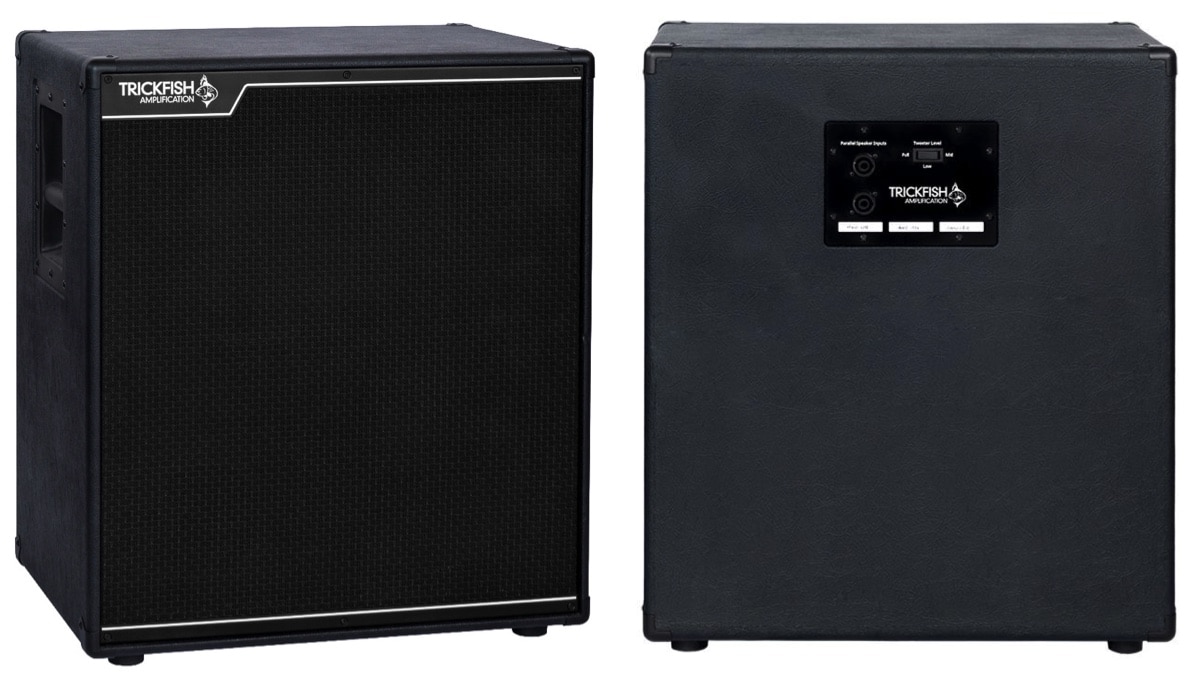
Trickfish Amplification has added the L212 to its L Series cabinet lineup — a 2×12″ with diagonally arranged Lavoce neodymium drivers in the same compact footprint as the L410.
The L212 delivers the tonal character that 12″ drivers are known for: warm and defined through the low end, present in the midrange, and an open and musical top end, with enough output to carry a stage without a second cabinet. At 800 watts AES and 45 lbs., it handles the full output of any Bullhead amp in a cabinet that’s easy to move.
Trickfish president Ryan Owens said, “Players who want the warmth and depth of 12″ drivers at full gigging volume now have a single cabinet that gets them there. The diagonal driver placement was a deliberate choice — it supports better stage coverage without changing the cabinet’s footprint, so you get more coverage without giving anything up.”
The L212 is available now at $1,449 MAP directly from www.trickfishamps.com.
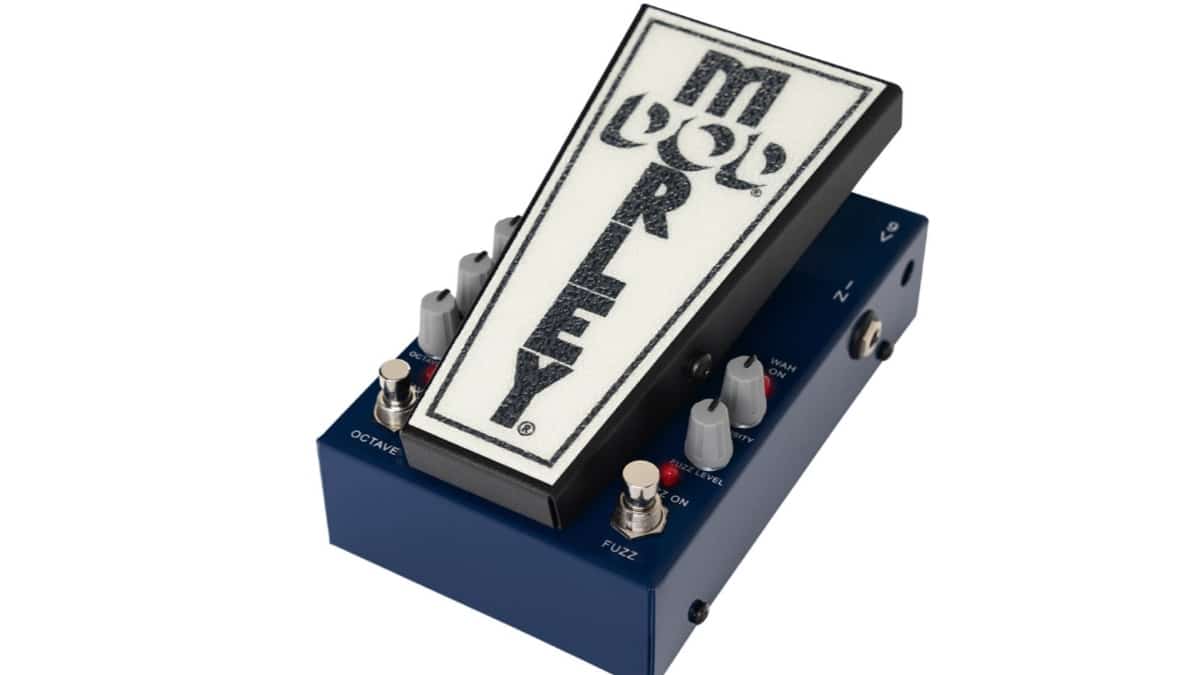
Legendary effects manufacturers DOD and Morley have united to create something truly remarkable: the Wah-ocTo-Fuzz™ pedal. Available now worldwide through local retailers and online, this innovative device answers the call of musicians looking to combine classic sounds by masterfully harmonizing three distinct effects into one unit. The pedal achieves this by blending DOD’s iconic 80’s FX35 Octoplus circuit with Morley’s timeless 70’s wah and fuzz circuits. The result is a pedal that simply leaves players saying, “WTF!”.
Designed to ignite creativity for guitar, bass, and keyboard players alike, the Wah-ocTo-Fuzz™ empowers musicians to use a singular effect or combine one, two, or all three simultaneously. The octave section utilizes the DOD FX35 Octoplus circuit to produce a classic analog octave blend that channels the captivating, glitchy essence of the 1980s. Players can easily sculpt this sound using the Direct Level to control the dry signal output, the Tone Control to adjust the overall brightness, and the Octave Level to dictate the lower octave signal.
The wah section boasts Morley’s classic Electro-Optical design and features convenient switchless operation; users simply step on the glow-in-the-dark treadle grip to instantly engage the wah effect. Finally, the fuzz circuit draws inspiration from the timeless sounds of Morley’s 1970s era, offering an Intensity Level knob to control the gain of the fuzz effect and a Fuzz Level knob to manage your overall signal when the fuzz is activated.
Built for maximum protection, the WTF pedal is housed in a rugged and lightweight Cold-Rolled Steel chassis. It also features a premium Morley buffer circuit designed to protect your tone from any mischief in your signal chain.
The new Wah-ocTo-Fuzz pedal features standard 1/4″ instrument jacks for both its input and output connections. For power, the unit operates using a standard 9VDC 300 mA center negative power supply, utilizing a standard +9V DC tip-negative barrel jack. Alternatively, it supports standard 9V battery operation that is easily accessible via a quick-clip battery door. Physically, the pedal measures 6.86 inches in length, 4.23 inches in width, and 3.88 inches in height, with a total weight of 2.27 lbs. (1.03kg). Finally, the Wah-ocTo-Fuzz is backed by a 1-year warranty.
For more information on the new DOD and Morley Wah-ocTo-Fuzz, please visit www.digitech.com.
Street Price: $249.99 USD
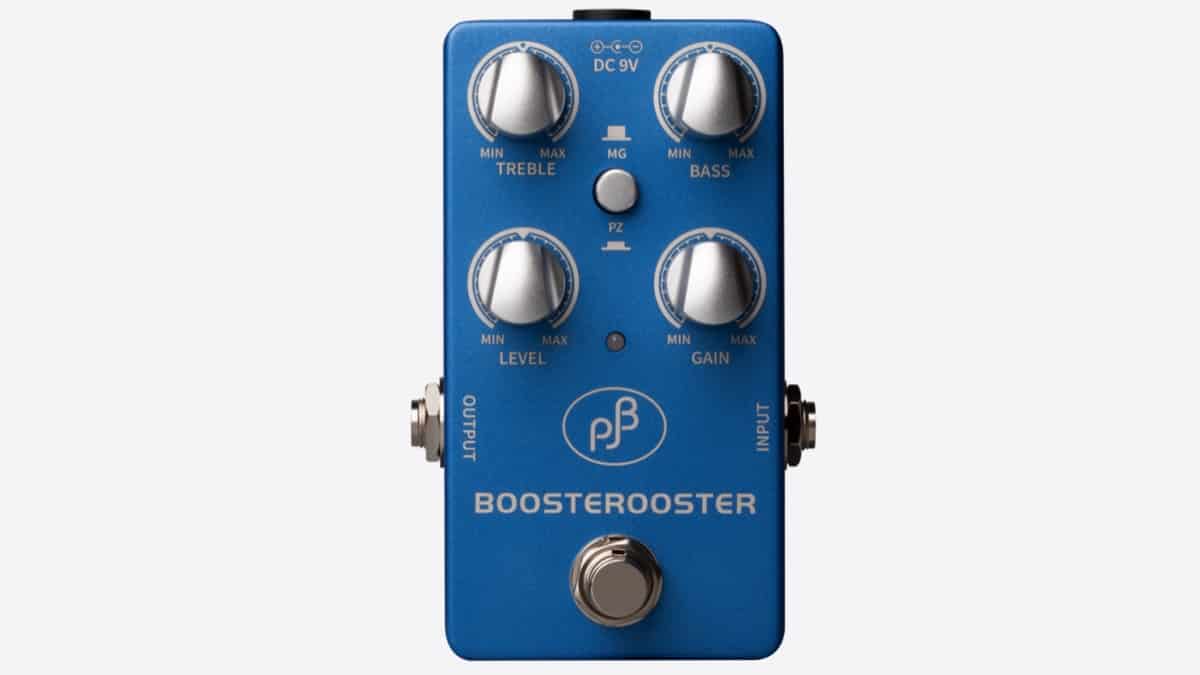
Phil Jones Bass announces the BOOSTEROOSTER Model PE-2, A precision 2-band EQ, preamp, and clean booster for bass. Packing a boost of 18dB of 2-band clean gain, the PE-2 is a compact preamp and EQ pedal engineered specifically for electric and upright bass. It has been engineered to restore tonal control in any environment and delivers consistent, authoritative bass tone when connecting to PAs, recording interfaces, or unfamiliar backline — where bass tone is most often compromised.
The BOOSTEROOSTER’S +18dB of clean gain will drive amplifiers into their optimal operating range, compensating for passive or low-output instruments, and maintaining signal strength through long cable runs or complex pedalboards with no distortion, no compression, no coloration.
Features of its precision EQ include Bass Control (±12dB @ 60Hz) — targets true fundamentals, adding weight and authority without boom or speaker overload.
Treble Control (±12dB @ 6kHz) — adds clarity and articulation without harshness.
For more features and information, visit online at www.pjbworld.com
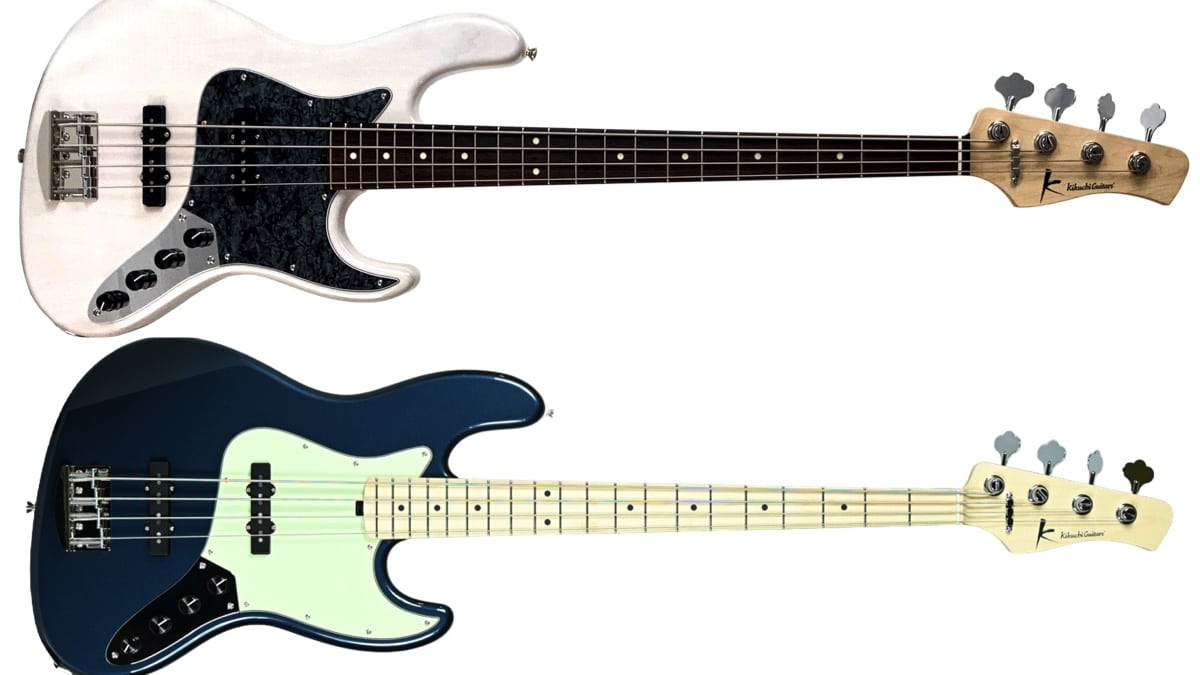
Kikuchi Guitars, Japanese boutique craftsmanship with a legacy behind it…
A new name has entered the international bass guitar scene, though the story behind it reaches back decades.
Kikuchi Guitars is the work of Japanese master luthier Yoshiyuki “Yoshi” Kikuchi, a respected builder whose career includes work connected to renowned Japanese and American bass brands and artists. During his career, Kikuchi has been associated with Atelier Z, John Suhr and Roger Sadowsky. In the early 1990s, he moved to New York to work alongside Roger Sadowsky and further refine his craft, later contributing to the development of Sadowsky’s Japanese production.
Today, decades of experience in design, setup and refinement come together in Kikuchi Guitars: instruments built around musicality, balance, smooth playability and immediate response.
The philosophy behind Kikuchi Guitars is simple: evolve the classic electric bass by improving feel, balance, response, consistency and musicality, without losing the soul players fell in love with in the first place.
“A legacy, made personal.”
The basses are manufactured in small batches in Japan and combine inspiration from classic 60’s and 70’s bass designs with carefully considered modern refinements. Features such as graphite-reinforced necks, lightweight hardware, transparent custom electronics, carefully selected woods and exceptionally low, even setups all contribute to instruments known for their comfort, balance and responsiveness.
The current lineup includes the Hermes Series, featuring models inspired by vintage configurations of Jazz Basses and available in both active and passive versions. Rather than custom shop instruments built to order, these basses are produced in limited batches with fixed specifications, allowing Kikuchi to offer boutique-level craftsmanship at a more accessible price point.
Tonally, Kikuchi basses are known for articulate lows, textured mids, crisp highs and a highly dynamic response. Whether played fingerstyle, slapped aggressively or used in subtle studio work, the instruments remain musical, balanced and expressive.
Kikuchi basses are already attracting attention from players looking for a refined boutique instrument that blends vintage familiarity with Japanese precision, detail and feel.
In addition to the bass lineup, Yoshi Kikuchi is also building a small number of handcrafted archtop guitars. At present, it has not yet been determined whether these instruments will become available outside Japan.
Kikuchi Guitars Europe, based in Hilversum, The Netherlands, is the official European distributor and showroom location for the brand. In the United States, players can connect through Kikuchi Guitars USA. Players are welcome to book private demo sessions in person or online.
Visit online at kikuchiguitars.com

Gear News: Fender Honors James Jamerson with a 1962 Precision Bass

Artist Update With The Revivalists’ Bassist George Gekas

Maestro Ron Carter, Sharing the Spirit – June/July 2026 Issue

New Music: Danielle Nicole, Tug Of War

Right Hand Technique Strategies with Dr. Randy Kertz
Right Hand Technique Strategies with Dr. Randy Kertz

April 27 Edition – This Week’s Top 10 Basses on Instagram
May 4 Edition – This Week’s Top 10 Basses on Instagram
May 11 Edition – This Week’s Top 10 Basses on Instagram