
Gear News
Gear News: Bergantino Welcomes Ace Livingston to Their Family of Artists

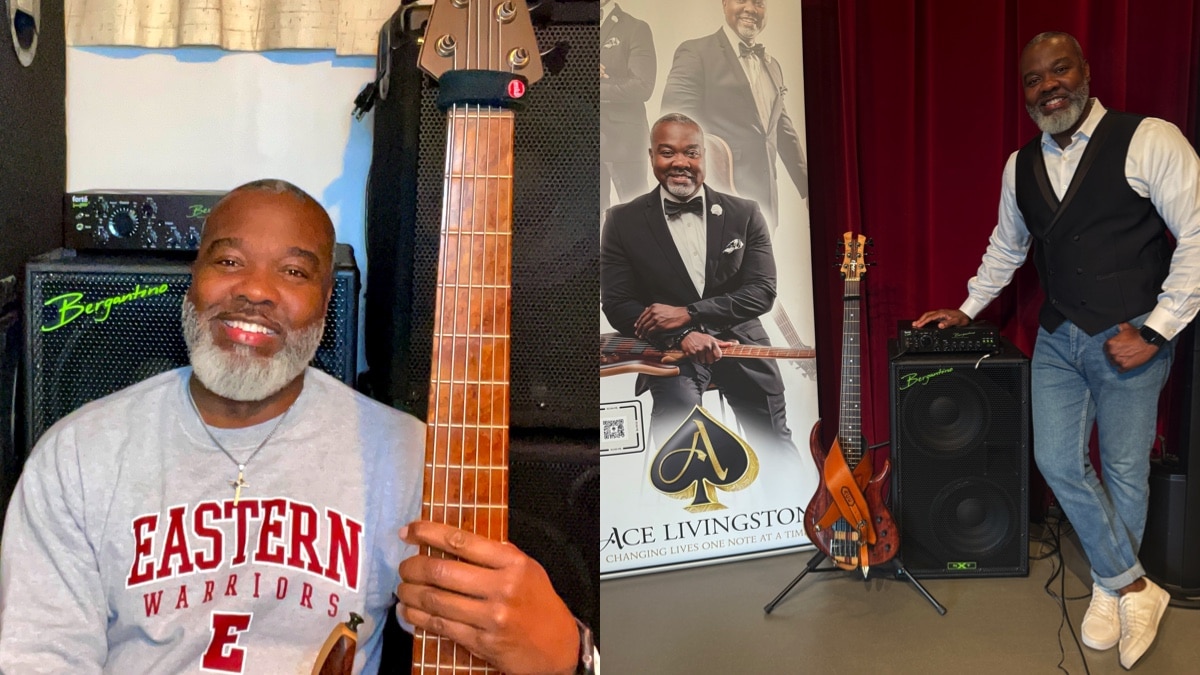
Photos and interview provided by Bergantino Audio.
Renowned global bassist, composer, and producer Ace Livingston continues to shape the landscape of modern worship music through his soulful artistry and deep musical roots in gospel and Christian traditions. In a recent conversation with Holly Bergantino, Livingston shared insights into his journey and passion for bass.
Known for his fluid technique, melodic sensitivity, and unwavering groove, Livingston has collaborated with top artists including Harry Connick Jr., 98°, Joe and Pink to name a few. His seamless fusion of gospel, jazz, and soul has defined his signature sound and cemented his place as a leading voice in contemporary music.
With a career spanning collaborations across genres and generations, Livingston’s work reflects both technical mastery and heartfelt devotion, bringing authenticity, excellence, and spiritual depth to every performance.
Can you tell us how your musical journey began and what led you to choose the bass guitar?
I come from a very musical and faith-driven family. My dad was a bishop and my mom a pastor, so church was a big part of our lives. I’m the third of four kids, and in our household, especially being part of a church family, we were expected to learn just about everything. We sang, played instruments, ran services, and whatever needed to be done, we did it.
Music naturally became a family thing. My oldest brother played piano, another played guitar, and my youngest plays drums. I also had a brother who passed away. He sang and played piano as well. So, we all sort of picked up instruments early on, and for me, the bass guitar just stuck. I connected with it, and that’s where my journey really began.
Who were your biggest influences growing up, both in sound and character, and how have those roots shaped your approach to music?
My biggest influence growing up was my dad. He was incredibly creative, a deep thinker, patient, never impulsive. He always took his time to analyze a situation and find a solution. He played both the saxophone and drums, but beyond the music, he taught me how to grow into the kind of man who can love deeply and respectfully and how to carry myself in life.
He even showed me the little things like how to get dressed, for example. Things like to put your belt through the loops before putting on your pants, put your socks on before your pants so you don’t have to bend over afterward. He was teaching me order, discipline, grooming, and how to always present myself with respect. He would say, “You present yourself how you want to be addressed.” That stuck with me.
He taught me to do my research, to genuinely get to know people, and to be able to communicate with anyone no matter their background. “You’re no better than anyone else,” he’d say. “We all just like different things.” That mindset shaped not just who I am but how I approach music. It gave me the ability to feel a room and to discern what’s needed in the moment. Because as musicians, we’re servants. We’re there to help people forget whatever burdens they’re carrying, even if just for a little while. Whether someone paid to be at a show or came for free, they’re giving us the most valuable thing they have: time. And you’ve got to honor that. Music is medicine.
Back then, we didn’t have YouTube. I grew up in the church, and we didn’t listen to secular music. It wasn’t until I turned 18 that I ventured out and discovered artists like Marcus Miller, Jaco Pastorius, Stanley Clarke, and later on, Richard Bona. Then there’s Nathan East, Bill Dickens, Joel Smith, so many, too many to name. I became a melting pot of all of them. Everything was brand new to me. Every sound I heard, I grabbed at it.
On the gospel side, Fred Hammond and Joel Smith were major influences. Joel’s playing was funky and full of confidence. Fred was the first person I heard play a melody line on bass — up until then, it was always saxophones carrying the melodies. That changed everything for me. I used to record little things on cassette tapes because we didn’t have CD players.
I’ll never forget the night I woke up to the most beautiful, pure, emotional sound I’d ever heard. I didn’t know the name of the track, just that it was on one of my tapes. Eventually, my neighbor told me it was Jimmy Haslip playing “Man Facing North” with the Yellowjackets. That song changed me.
At the time, I was thumping away on my Yamaha bass, but it just didn’t sound right, it sounded thirsty. That’s when I realized: my bass didn’t have frets. It was a whole different instrument. At the music store, I stumbled across Jaco Pastorius for the first time. I was floored. Then I heard Marcus Miller. I couldn’t believe what I was hearing. We didn’t have video tutorials, we had to use our imaginations. I would listen, wonder, “How are they getting that tone? Is it the thumb? The fingertip? A certain technique?” I had to figure it out on my own, and that helped me develop my own sound and style.
I’ve never had a teacher. The first time I saw a six-string bass player was at a church recording and his name was Keith Harper, and he’s since passed away. His bass shook the building. Then I saw a video of Marky Moore playing a four-string Michael Tobias bass, moving through tones is like a truck shifting gears going uphill. It was insane. You could tell he knew his instrument inside and out, and that inspired me to really study my own gear.
His brother, Georgie Moore, was something else too. Very nonchalant, chewing gum, and then out of nowhere he’d drop into Stanley Clarke lines. Just amazed me!
We had to rely on our imaginations back then. No tutorials. No classes. Just a lot of guessing, trial and error, and listening deeply.
And shout out to Mike Tobias as his bass changed my life. That was the tone I heard on “Man Facing North.” It set the whole journey in motion.
Gospel and Jazz are major parts of your sound. How have those roots shaped your approach to music?
Both Gospel and Jazz have deeply shaped my approach because they demand that you play from the soul. In these genres, expression is everything. Emotion isn’t optional, it’s the foundation. When you take a solo, it’s not just about the notes it’s about feeling. If you want people to cry, laugh, reflect, or really hear what you’re saying through your instrument, you have to be transparent. You have to speak from the soul.
Gospel in particular is incredibly emotional. The music often scores real-life stories. Stories that bring people back from the edge, that offer hope to someone in a hospital bed who’s been given just weeks to live. The lyrics and melodies strengthen faith, restore belief, and uplift broken spirits. So the music behind that message has to support it fully. You can’t fake it. If you don’t believe what you’re playing, it won’t resonate.
It’s like the movie Jaws! How did you know the shark was coming? The music told you. That same principle applies in Gospel. You’re singing about how amazing God is and that requires sensitivity, not just volume. Your dynamics, your note choices, your phrasing, they all have to align with the message. That kind of musical sensitivity has to be developed early on.
Jazz teaches a similar lesson. Like James Brown said, “You can’t be talking loud and saying nothing.” In Jazz, we speak through our instruments. We don’t just play notes, we tell stories. Gospel and Jazz helped me develop that emotional depth and sensitivity that defines my playing.
Your music carries a deep emotional weight to it. What’s the process for creating pieces that resonate on such a personal level?
It all starts with how you live. The soul of the song comes from the heart of the person playing it. Your soulfulness grows as you experience more, and as you live out the message you’re trying to deliver. That’s true in both Gospel and Jazz. The more honest you are with your life, the more authentic your music will be.
How do you balance the role of bassist, composer, and bandleader?
It comes down to understanding the assignment.
As a bassist, I come prepared to support the foundation. That’s my role, to hold the groove, to lock in, and to serve the song.
As a composer, I’m thinking about the big picture and what’s the emotional tone? What kind of journey do I want to take people on? How do the instruments relate to each other? Where do we start? What’s the high point, and how do we land the plane? Or maybe… do we even land at all?
If I had to describe it metaphorically, I’d say it’s like putting a destination into a GPS. Once I know where we’re going, I can figure out the best route to get us there.
Are there signature licks, scales, or phrases that define your style?
Not really, at least not in the traditional sense. My style is very melodic. I try to play the way I would sing. I heard John P. say in an interview, “If you can sing it, you can play it,” and that really stuck with me. I always aim to create lines that people can sing back, because if someone is humming your melody on their way home, that means you’ve connected, and you’ve communicated something real.
So no, I wouldn’t say I have one “signature lick”. It’s more about feel, touch, and tonality. That’s how you know it’s me.
How did you find Michael Tobias? And what are your favorite basses?
The first time I was introduced to Tobias basses was through my two cousins in Canada. John Clark had a Pedulla 5-string, and Tristen had a Tobias 5-string. My brother visited them and brought back some pictures. When I saw that Tobias bass, I instantly fell in love with it. It had such a slender, intimate neck—it looked like something you’d hang on a wall and never touch, just because it was that beautiful.
Not long after, I went to a music shop called Creative Music, and there it was: a 5-string version of the Tobias bass I’d seen in the photo. I had never played a bass that felt so personal, so connected. It felt like an extension of myself.
Then 6-string basses started becoming more popular. I told myself, “There’s no way I’m playing a 6-string unless it’s a Tobias.” My brother told me there was one at the same shop, so I went back—and there it was: a 6-string version of the same bass I’d seen before. I bought it immediately. I was so excited… until I brought it home.
The very next day, I tried to return it.
Why? Because you basically have to relearn everything. The spacing, the C string, it threw me off. Everything sounded sloppy because I was so used to the 5-string. That extra string kept getting in the way, and my technique didn’t translate smoothly. But when I went back to return it… they had already sold my old bass. It was gone.
I had a choice to make: either figure it out or give up. I decided I had to make it work. I needed to learn how to sound like Jaco, Marcus, Nathan East, all of them on a 6-string. That was one of those pivotal moments where you learn patience. I had to use my imagination, develop new techniques, and push myself creatively. That’s why I say Mike Tobias is a part of me. I could never go anywhere else. He’s been a part of my development, and I love him for it.
Mike is one of the most patient individuals I’ve ever met. He listens, not just to your words, but when you play. He watches closely. The Bible says, “Be quick to listen, slow to speak.” That’s Michael. A very smart man.
I first met Michael Tobias in 2000 while I was on tour with 98 Degrees in LA. It just so happened to be during the NAMM Show. That’s when we met! I even have a photo from that day, 25 years ago. He was a gentleman. Kind and grounded.
The next time I saw him wasn’t until 17 years later at the Bottom End show in New York. That’s also when I met Jim Bergantino. Reggie Young and Dwayne Wright were raving about Bergantino and how clear, crystal, and true the sound is.
Mike and I have been on a journey together with MTD. Right now, we’re working on a masterpiece, and I couldn’t be more excited. Anything truly great requires a process. But once it’s done…
Watch out, world.
You’ve performed with major artists including 98°, Harry Connick Jr., Pink, and more. What’s your approach to being a supportive bassist in different musical settings?
It all starts with understanding the assignment. Before I even touch the bass, I listen deeply. I listen to the supporting cast, to the artist, to the entire musical conversation happening around me. I ask myself: What role am I here to play? Am I driving the groove? Am I creating ambiance? Does this call for personality and flair, or does it require simplicity and restraint?
Sometimes it’s just about playing the straight notes and nothing extra. Artists often want to hear the elements from their records live. Those parts are like landmarks in the music, and I listen for them. They’re important. Studying the music ahead of time helps me know what to bring to the table and how to approach the performance.
How has social media impacted your music, and what platforms do you use?
I enjoy them all. TikTok, Instagram, Facebook. Social media gives me a platform to share my music, but more importantly, it lets me fulfill my purpose: to motivate, encourage, bring change, and bring healing through music. It allows me to reach people far beyond my immediate surroundings and even beyond the continent I’m on.
It also makes me more accessible. People have questions, and I like to pay it forward when I can. I enjoy checking out what others are doing too as there’s a lot of inspiration out there.
Of course, social media has its pros and cons. One downside is that it can sometimes limit imagination. When people see everything laid out visually, they don’t always develop the skill of figuring things out for themselves. It’s like giving someone a math problem with all the steps already solved, great for clarity, but not for growth.
That said, I use social media to share, to promote, to stay connected, and to uplift—not to criticize or tear others down.
How did you come to discover Bergantino Audio Systems?
The first time I encountered Bergantino was at the Lords of the Bottom End show. I met you there alongside two of my top guys, Ricky and Reggie Young. Reggie was performing with Felix, and I remember how crystal clear his tone was. Whatever he was putting out from his bass, it was authentic, no sonic catfishing. It was the real deal.
As a student of music, your ears become finely tuned to detail. I asked my friend Dwayne Wright about Bergantino, and he said, “I’ll introduce you to Jim.” And he did.
In this musical journey, having the right gear is crucial. You want your equipment to support what you’re saying and feeling musically and to amplify the truth of your sound. I was also visiting Mike Tobias around that time, and every time I plugged in through the Bergantino amp, it sounded heavenly. I asked Mike, “What is this amp?” He said, “That’s Bergantino. I’ll connect you, they’re good people. This amp has been here for years and it never fails me and gives me a true sense of what the instrument sounds like, that’s why I use Bergantino.”
That was the third time someone mentioned Bergantino to me, and as they say, third time’s the charm.
On top of that, Holly’s support made a lasting impression. There was a genuine sense of family. Yes, the gear is top-tier, but the service and community are just as incredible.
When you got the HP2X amp, you weren’t so sure about the sound at first. What happened?
Oh man! Holly, it was like Christmas when I got the cab and amp. I was so excited! I hooked everything up, had my basses ready, and went straight to a show. I didn’t even have time to practice with it first.
When I started to play, I felt like I had new dentures in my mouth that I wasn’t accustomed too and I was asked to give a speech and nothing sounded right. My voice, my musical voice was off. I was mortified.
I called Marc Stranger-Najjar in a panic and said, “Help me!” He got on a conference call with me and asked to see my amp settings. Everything was flat, right up the middle. Then he asked me to play. He said, “Your high-pass and low-pass filters need adjusting.” Once he walked me through that, everything changed.
Marc Stranger-Najjar was so kind and explained how those filters work. That one piece of information changed everything. Now, I run the amp flat. I don’t even cut or boost anything. It’s that good.
Honestly, this amp is like a beautiful woman who doesn’t need makeup. It’s just wow. It’s Bergantino and it’s a WOW.
You helped us address the importance of high-pass and low-pass filters.
Yes! That conversation really highlighted how essential those features are. I’m so glad Jim made a video to explain them for other users. It makes such a difference when people understand how to tailor the sound to their liking. Everyone plays differently—different amounts of drive, voicing, tone preferences. It’s great that Bergantino gives players the tools to sculpt their own sound.
How are you liking the Bergantino NXT212 bass speaker cabinet?
My current rig is the NXT212, and let me tell you, I’ve always played through 10s, but this 212 is just bananas. Absolute fire. Paired with the HP2X? I love it.
And the look? That green and white pops! I love the aesthetic just as much as the sound. It’s a powerhouse setup, and I couldn’t be happier with it.
What hobbies do you have outside of music?
Music is a huge part of my life, but I also enjoy other things. I’m a big basketball fan and love watching sports in general. Before music took over, soccer was my passion, though I had to step away due to an injury. I’m very sociable and enjoy meeting new people, learning about their stories, and connecting on a deeper level. Spending quality time with my family is really important to me as well. I’m also an avid reader, especially biographies—I find inspiration in other people’s life experiences and often reflect on how I can apply their lessons to my own journey.
What’s next for you creatively?
I recently signed with J. Roberts Management Company, and we’re gearing up for some exciting projects. They’re helping me reach the right platforms as an artist to share my story authentically. I currently have three albums out: “The Ace Livingston Project, My Metamorphosis, and The Next Chapter.” My main focus now is to tell my story through my music. My management team believes in me and my vision, and they work hard to support me as an artist. This includes organizing performances, workshops, speaking engagements, and even programs that help children use music as a coping mechanism.
Your favorite food?
It’s a Jamaican dish that I absolutely love, brown stew chicken with rice, peas, and steamed vegetables! Jerk chicken is another one of my favorites. I tend to gravitate toward healthy, flavorful foods that remind me of home.
What else would you like to share, Asa?
You can follow me on my socials (insert handles). Please support my music on Spotify, Apple Music, and other streaming platforms. Also, for those interested, I’ve got a list of the gear I use, which you can find on my main artist page.
Life is a precious gift, and for me, helping others is an addiction I cherish. Knowing I’ve made a difference in someone’s life means more to me than any amount of money. You can’t take material things with you when leave this life so while we are here remember time is our most valuable asset. Let’s use it wisely, being kind and supporting one another. If we all do that, the world will become a better place.
Follow Ace here:
TikTok: @acelivingston
Instagram: Ace Livingston
Facebook: Ace Livingston
All Links: linktr.ee/AceLivingston1


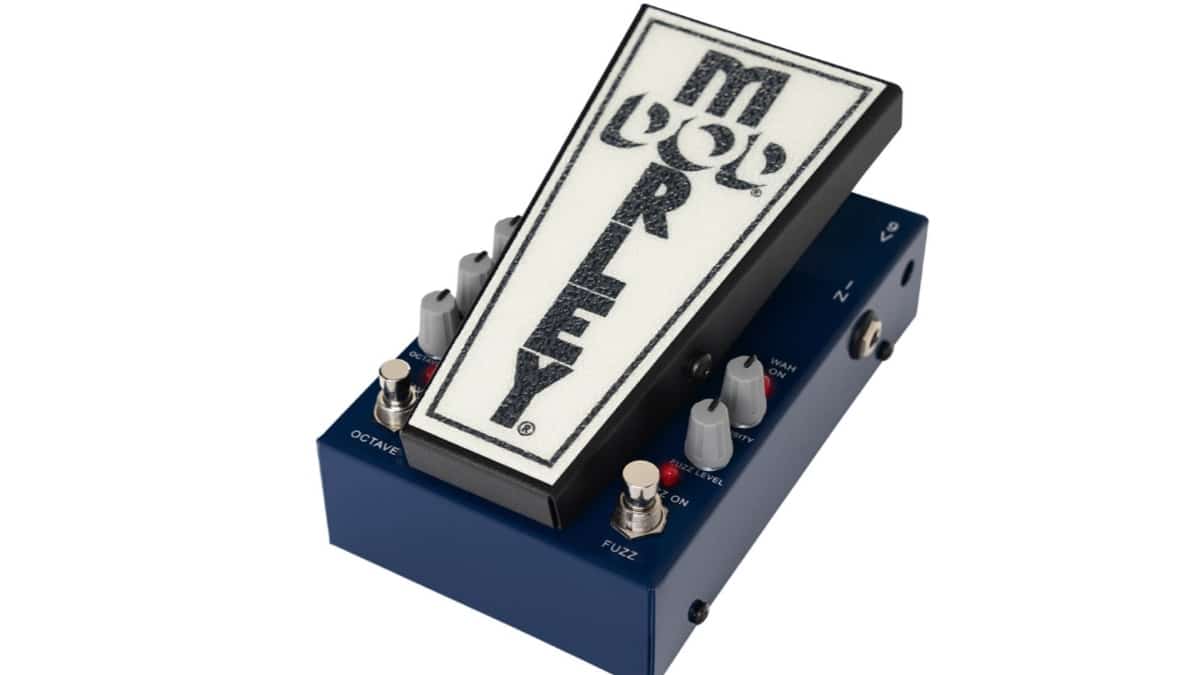
Legendary effects manufacturers DOD and Morley have united to create something truly remarkable: the Wah-ocTo-Fuzz™ pedal. Available now worldwide through local retailers and online, this innovative device answers the call of musicians looking to combine classic sounds by masterfully harmonizing three distinct effects into one unit. The pedal achieves this by blending DOD’s iconic 80’s FX35 Octoplus circuit with Morley’s timeless 70’s wah and fuzz circuits. The result is a pedal that simply leaves players saying, “WTF!”.
Designed to ignite creativity for guitar, bass, and keyboard players alike, the Wah-ocTo-Fuzz™ empowers musicians to use a singular effect or combine one, two, or all three simultaneously. The octave section utilizes the DOD FX35 Octoplus circuit to produce a classic analog octave blend that channels the captivating, glitchy essence of the 1980s. Players can easily sculpt this sound using the Direct Level to control the dry signal output, the Tone Control to adjust the overall brightness, and the Octave Level to dictate the lower octave signal.
The wah section boasts Morley’s classic Electro-Optical design and features convenient switchless operation; users simply step on the glow-in-the-dark treadle grip to instantly engage the wah effect. Finally, the fuzz circuit draws inspiration from the timeless sounds of Morley’s 1970s era, offering an Intensity Level knob to control the gain of the fuzz effect and a Fuzz Level knob to manage your overall signal when the fuzz is activated.
Built for maximum protection, the WTF pedal is housed in a rugged and lightweight Cold-Rolled Steel chassis. It also features a premium Morley buffer circuit designed to protect your tone from any mischief in your signal chain.
The new Wah-ocTo-Fuzz pedal features standard 1/4″ instrument jacks for both its input and output connections. For power, the unit operates using a standard 9VDC 300 mA center negative power supply, utilizing a standard +9V DC tip-negative barrel jack. Alternatively, it supports standard 9V battery operation that is easily accessible via a quick-clip battery door. Physically, the pedal measures 6.86 inches in length, 4.23 inches in width, and 3.88 inches in height, with a total weight of 2.27 lbs. (1.03kg). Finally, the Wah-ocTo-Fuzz is backed by a 1-year warranty.
For more information on the new DOD and Morley Wah-ocTo-Fuzz, please visit www.digitech.com.
Street Price: $249.99 USD
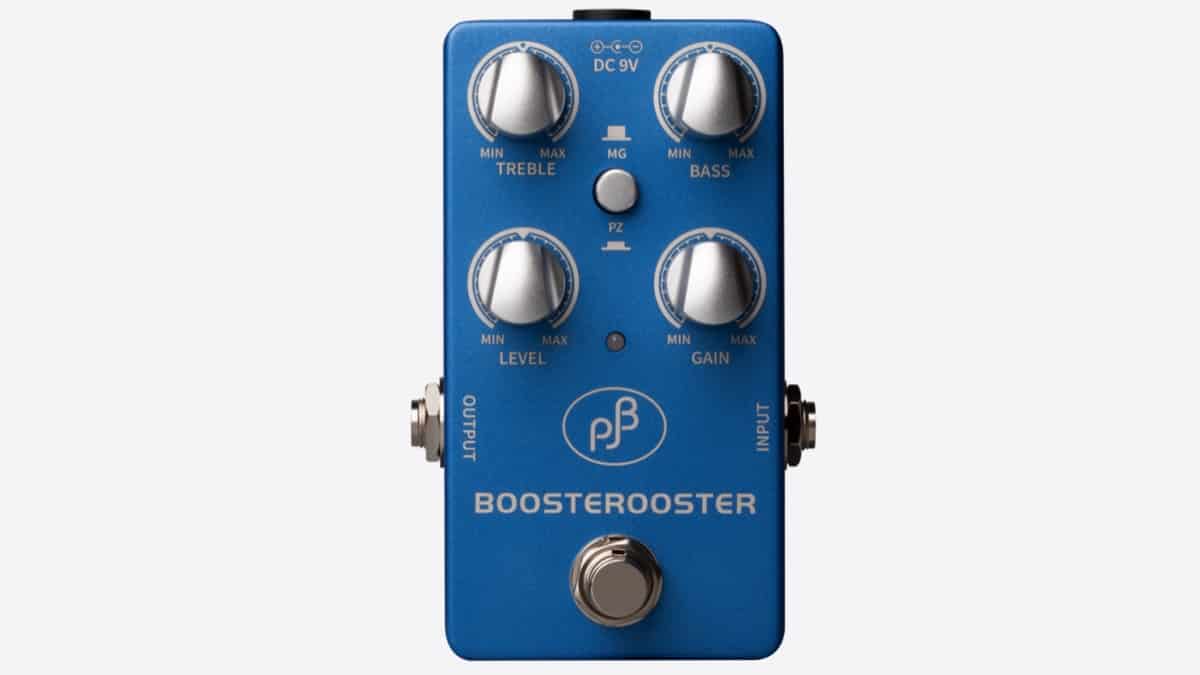
Phil Jones Bass announces the BOOSTEROOSTER Model PE-2, A precision 2-band EQ, preamp, and clean booster for bass. Packing a boost of 18dB of 2-band clean gain, the PE-2 is a compact preamp and EQ pedal engineered specifically for electric and upright bass. It has been engineered to restore tonal control in any environment and delivers consistent, authoritative bass tone when connecting to PAs, recording interfaces, or unfamiliar backline — where bass tone is most often compromised.
The BOOSTEROOSTER’S +18dB of clean gain will drive amplifiers into their optimal operating range, compensating for passive or low-output instruments, and maintaining signal strength through long cable runs or complex pedalboards with no distortion, no compression, no coloration.
Features of its precision EQ include Bass Control (±12dB @ 60Hz) — targets true fundamentals, adding weight and authority without boom or speaker overload.
Treble Control (±12dB @ 6kHz) — adds clarity and articulation without harshness.
For more features and information, visit online at www.pjbworld.com
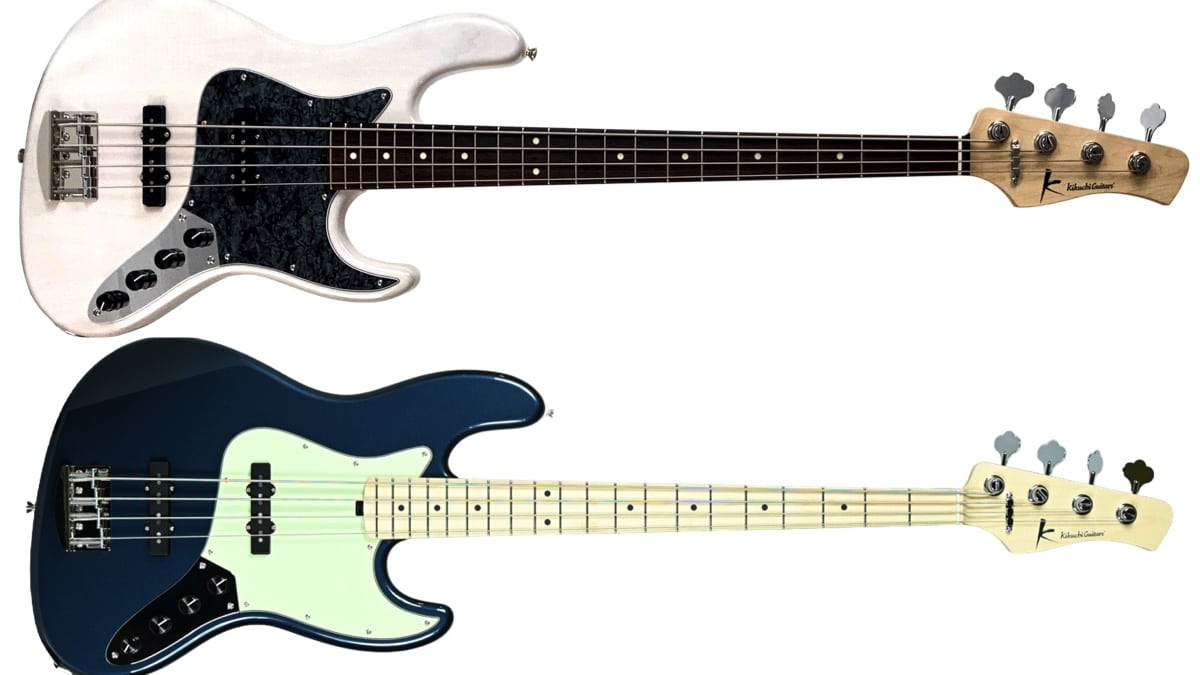
Kikuchi Guitars, Japanese boutique craftsmanship with a legacy behind it…
A new name has entered the international bass guitar scene, though the story behind it reaches back decades.
Kikuchi Guitars is the work of Japanese master luthier Yoshiyuki “Yoshi” Kikuchi, a respected builder whose career includes work connected to renowned Japanese and American bass brands and artists. During his career, Kikuchi has been associated with Atelier Z, John Suhr and Roger Sadowsky. In the early 1990s, he moved to New York to work alongside Roger Sadowsky and further refine his craft, later contributing to the development of Sadowsky’s Japanese production.
Today, decades of experience in design, setup and refinement come together in Kikuchi Guitars: instruments built around musicality, balance, smooth playability and immediate response.
The philosophy behind Kikuchi Guitars is simple: evolve the classic electric bass by improving feel, balance, response, consistency and musicality, without losing the soul players fell in love with in the first place.
“A legacy, made personal.”
The basses are manufactured in small batches in Japan and combine inspiration from classic 60’s and 70’s bass designs with carefully considered modern refinements. Features such as graphite-reinforced necks, lightweight hardware, transparent custom electronics, carefully selected woods and exceptionally low, even setups all contribute to instruments known for their comfort, balance and responsiveness.
The current lineup includes the Hermes Series, featuring models inspired by vintage configurations of Jazz Basses and available in both active and passive versions. Rather than custom shop instruments built to order, these basses are produced in limited batches with fixed specifications, allowing Kikuchi to offer boutique-level craftsmanship at a more accessible price point.
Tonally, Kikuchi basses are known for articulate lows, textured mids, crisp highs and a highly dynamic response. Whether played fingerstyle, slapped aggressively or used in subtle studio work, the instruments remain musical, balanced and expressive.
Kikuchi basses are already attracting attention from players looking for a refined boutique instrument that blends vintage familiarity with Japanese precision, detail and feel.
In addition to the bass lineup, Yoshi Kikuchi is also building a small number of handcrafted archtop guitars. At present, it has not yet been determined whether these instruments will become available outside Japan.
Kikuchi Guitars Europe, based in Hilversum, The Netherlands, is the official European distributor and showroom location for the brand. In the United States, players can connect through Kikuchi Guitars USA. Players are welcome to book private demo sessions in person or online.
Visit online at kikuchiguitars.com
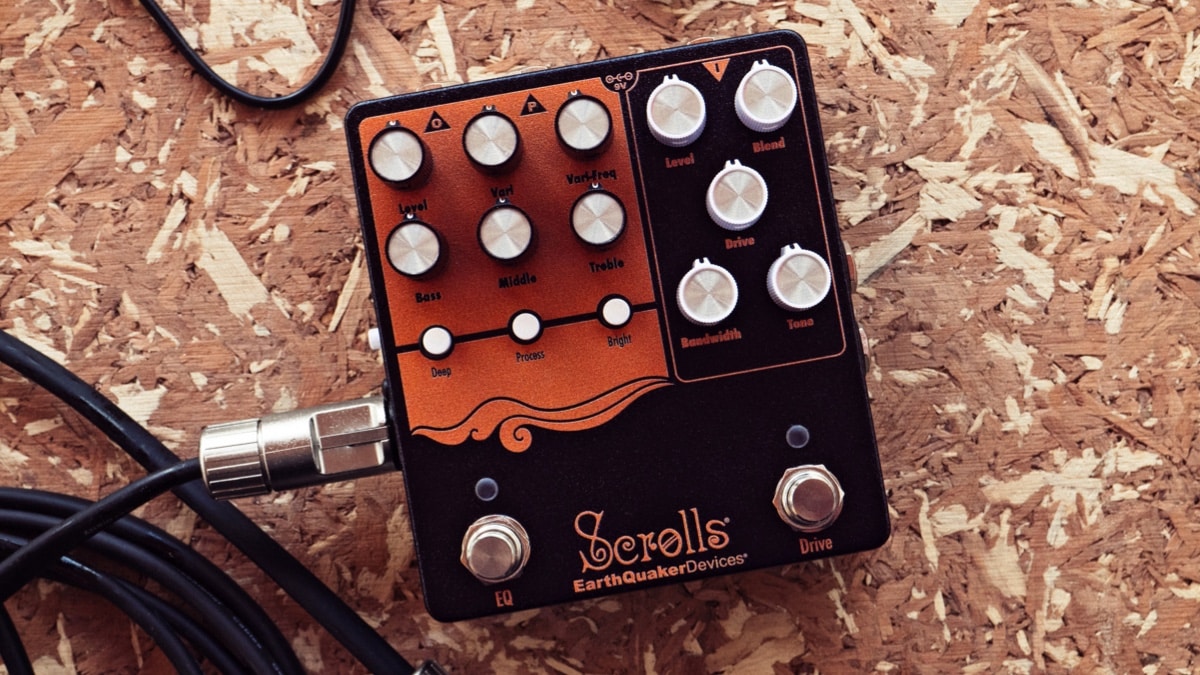
EarthQuaker Devices Announces the Scrolls Bass Odyssey, A Bass Rig in a Box That Takes Your Tone From Motown to Metal With the Click of a Button…
Bassists are historically a painfully underserved demographic when it comes to new pedal releases in general, let alone ones that are truly exciting and groundbreaking.
But even the bass players get lucky sometimes.
And today is their lucky day, because the insatiable tonesmiths at EarthQuaker Devices have released the Scrolls Bass Odyssey—a powerful, modern tool capable of shaping any bass signal to match virtually any bass and amp combination imaginable.
Essentially, Scrolls is a sonic pilgrimage through the entire universe of electric bass tone. From Motown to Metal and everywhere between and beyond.
It all started when legendary bassist Kentaro Nakao, best known for his work with ’90s Japanese rock band Number Girl, challenged EarthQuaker Devices to capture the vast history of vintage and modern bass tones in a single, portable form factor. Ultimately, Nakao wanted the ability to summon any bass sound he needed, no matter where in the world he was playing and regardless of the other gear at his disposal.
“I am constantly playing shows in every type of venue you can imagine, so having my sound in a portable rig is a must—that’s why I’ve been a big believer in preamps for a long time,” Nakao explained. “I’ve realized that what’s most important to me is a wide range of EQ control and the ability to shape overdriven tones.”
The pedal’s Drive is a rich, tube amp-like distortion that was inspired by a rare, little known pedal from Nakao’s personal collection. Key amongst the Drive channel’s features are the Blend and Bandwidth controls that are on tap to ensure the low-end response remains intact.
The EQ channel boasts a full suite of active, audiophile-quality controls. The secret weapon of the EQ is the Variable Frequency control—a feature that enables players to cut or boost frequencies from around 20 Hz to 10 kHz. It’s the perfect tool for cutting out the mud and boosting the high-end.
“When we were working on Scrolls, I wanted the EQ channel to be totally transparent when the knobs are set at 12 o’clock, so the output sounds exactly like the clean signal coming in,” Nakao revealed. “This keeps my bass sounding like my bass, while giving me the ability to enhance its natural tonal qualities and make adjustments across a full frequency spectrum.”
Additionally, the EQ side of Scrolls features three push buttons for one-click on-demand tone sculpting. The Deep button adds 80 Hz boost for booming, but clear low end. The Process button scoops the mids and instantly produces a modern tone that is punchy, dynamic, and defined. Finally, a quick press of the Bright button activates 5 kHz boost to add articulation and attack.
Ideal for use in complex setups with multiple signal paths, Scrolls features three outputs that all work simultaneously. There’s a buffered parallel out for sending clean signal to an external destination like an amp, tuner, DI, or other effects; a balanced XLR out to run Scrolls directly to front of house or into a recording interface; and finally a good-old fashioned ¼” output for your amp.
Scrolls also features an effects loop that lives between the Drive and EQ channels.
“The effects loop is really designed so that Scrolls can function as the brains of your pedalboard,” EarthQuaker Devices Founder & President Jamie Stillman explained. “Bassists can place modulation, time-based, or any other effects that they’d normally place after their dirt pedals (including more dirt pedals) after the Drive channel, while still retaining all the tone-shaping benefits the EQ channel offers.”
Much like the speaker cab simulations EarthQuaker has worked into their Easy Listening and ZEQD-Pre pedals, the signal from the XLR out on Scrolls includes just a splash of discrete analog filtering to give it some amp-like-character. No menu diving or digital modeling required.
“Most XLR outs tend to have a harsh top end that sounds nothing like what is coming out of the amp, especially when dirt is involved,” Stillman said. “I thought it would be useful to add a bit of natural filtering so what is sent to the front of house is much closer to what is coming out of the amp.”
If you’re wondering whether or not Scrolls is for you, here’s an easy way to tell. Ask yourself the following questions: Do you play bass? Would you like to have a pedal that can make your bass sound like virtually any bass/amp combo with the click of a button and the turn of a knob or two? Would you like a pedal that’s compact and versatile enough to be the only thing you need to play a session or show other than a bass if that’s all you wanted to bring?
If you answered yes to even just one of those questions, then you’re exactly who Scrolls is for.
Each and every Scrolls is all-analog, true bypass, and built one-at-a-time by credentialed professionals at the EarthQuaker Devices Tone Wellness Clinic under the malt gray skies of Akron, Ohio.
Scrolls Bass Odyssey is available now wherever EarthQuaker Devices are sold.
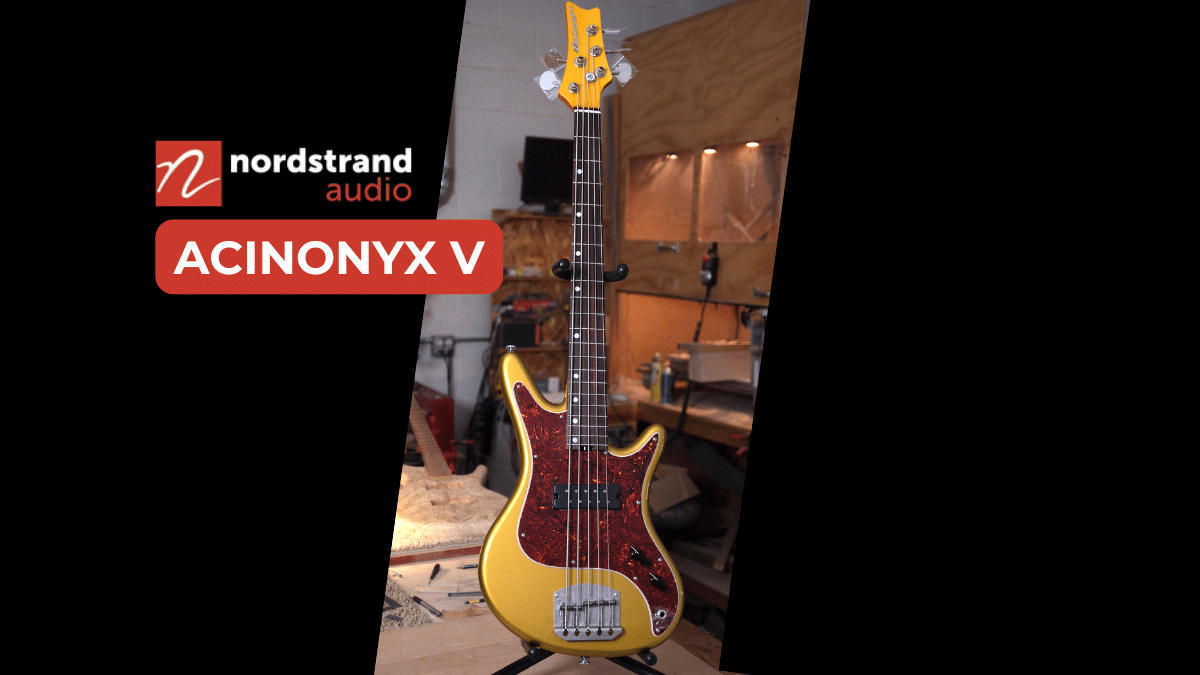
As an homage to classic single pickup basses of the past the V1 Acinonyx 5 features a solitary PolyVox “pickup” (technically pickupS – 6 total coils under the cover) placed for maximum versatility. A volume and a wide range tone offer a broad palette of rich passive sounds and the single asymmetrical aperture captures all the organic goodness that a soft maple body with a classic maple/EIR neck can bring. Anything from super dark synth-y sub vibes to clean and clear chime are all available with nary a blurry, undefined note to be found.
The fingerboard features a compound radius for optimal even playability up and down the neck and the profile fits the hand like an old, broken-in glove.
Technical Details:
• Body Finish: Polyester
• Neck Finish: Urethane Satin Satin Lacquer
• Weight: 6.90 lbs average 7 lbs
• Body Wood: soft maple
• Neck Wood: hard maple
• Neck Shape: Classic Medium Slim
• Neck Dimensions: ~.810” @ 1st fret – .910” @ 15th fret
• Fingerboard Wood: Indian Rosewood
• Fingerboard Radius: 7.5” – 14”
• Fingerboard Inlays: Dots
• Scale Length: 30.7”
• Width at Nut: 1.725”
• Nut Material: Bone
• Frets: StewMac #147 Fretwire (Narrow/Medium) – Nickel/Silver
• Pickups: 1 Nordstrand PolyVox 5
• Controls: 1 Volume, 1 wide range Tone
Price starting at $4995
For more information, visit online at nordstrandaudio.com/

New Music: Danielle Nicole, Tug Of War

Right Hand Technique Strategies with Dr. Randy Kertz

New Music: Golden Flower, Are You Even Awake?

Interview With Bassist Adam Russell

Interview With Bassist Tim Neilsen
Right Hand Technique Strategies with Dr. Randy Kertz

April 6 Edition – This Week’s Top 10 Basses on Instagram
April 13 Edition – This Week’s Top 10 Basses on Instagram
20 April Edition – This Week’s Top 10 Basses on Instagram