
Features
Manifesting Make Believe: Catching up with Bassist John Ferrara


It had been a few years since I’d had an opportunity to chat with bassist John Ferrara about his solo material and other projects. When I learned he was about to release another solo album, one entitled, Skinned Knees and Make Believe, it seemed like the perfect time to catch up with him and discuss the things he’s been working on in the interim. Not surprisingly, Ferrara has accomplished quite a bit and continues to hone his innovative playing style, a style so unique and imaginative, it seems that it, too, must be born of the world of make-believe.
Ferrara and I kicked off our conversation with his decision to base the song, “A Catalyst for Change,” in a major key, something highlighted in his press release for Skinned Knees and Make Believe. That’s a bit of a departure for him, so having enjoyed and appreciated his previous material, I was curious about what prompted him to make the switch. Ferrara explained, “My songs tend to oscillate between minor and major keys. They generally start in a minor key, which is not necessarily a conscious decision, just what my body feels like doing. I‘ve always gravitated towards it, so it’s been a long time since I’ve written anything that began in a major key and primarily stayed there. It could be my own way of hearing and expressing more beauty and positive things, arriving at a better place in life. In retrospect, it seems kind of silly to include that particular in my press release because artists generally only pick major or minor keys. For me specifically, though, writing in a major key is something very different.”
Even though adding the decision to write “A Catalyst for Change” in a major scale to his press materials may seem superfluous to Ferrara after the fact, I couldn’t help but mention how glad I was that he did. The joy and positivity expressed in the song come through quite clearly, especially when watching its video. Ferrara has a big smile on his face as he plays, and the overall mood and tempo of the track are upbeat throughout. It’s not that his playing demeanor was all that different in the past. It’s just very apparent how much fun he’s having playing that song and sharing its vibe.
In addition to his solo material, Ferrara plays bass for the bands Consider the Source and Mono Means One. So after discussing the background behind “A Catalyst for Change,” our conversation shifted to his other projects and how his playing style tends to vary with each. I was curious to learn whether Ferrara tailors the way he writes and plays to fit each band’s unique sound or if they share enough in common that he can transition seamlessly between them.
Ferrara replied, “I just let my writing ideas unfold however they may. As that happens, I get a sense for how those ideas might manifest differently within the framework of each band. For example, I’m already working on a Mono Means One version of “Skinned Knees and Make Believe,” the title track of my latest solo record. I’ve written entire drum parts and come up with sections I’d want to play in unison with my bandmates. That said, there’s a special beauty and simplicity about a song at its bare bones, played on just one instrument.
Songs can exist in multiple forms, having lots of parts and layers or being completely stripped down. Knowing that a song has the potential to become pretty much anything, played solo or with a group, helps me write without the pressure of thinking about all its parts at once. I actually planned for and wrote both solo and Mono Means One versions of “Skinned Knees and Make Believe” right from the start. Interestingly enough, a lot of the tapping riffs I’d written in the past, ones that eventually made their way into Consider the Source songs, were either changed or rewritten to be played without tapping at all. In those instances, songs were already written and riffs needed to be incorporated in whatever way made the most sense.
I don’t start out writing a song thinking about whether it’ll end up being played solo or by one of the bands. I just write and allow songs to evolve organically, be what they want to be, before I decide where they’ll fit best. It’s gotten to the point where I can tell pretty early in the writing process where that’s likely to be. That wasn’t necessarily the case early on, but after doing it for many years, I can tell what makes for a good Consider the Source or Mono Means One song. That’s equally true for future projects I’d like to start. I get a feel very quickly for which songs will fit in each of them while still leaving the door open to as many versions as possible.”
Next up, Ferrara and I talked about the uniqueness of his material and his approach to bass playing itself. I explained that, prior to our discussion, I’d listened to many different genres of music and how each came across when played on various instruments. Still, I’d yet to find anything exactly like the multi-layered, self-accompaniment sound his songs exhibit. Lacking a good comparison, I decided to ask Ferrara how he describes his music and playing style.
Ferrara laughingly replied, “To be honest with you, I don’t know how to categorize it. Nor do I put that much thought into it. As I shared with you in our last discussion, I try not to compartmentalize my music into any one category. That way, I won’t find myself trying to conform to the category’s constraints, even if unconsciously. It’s funny! When it comes to promoting the album or telling people about it, there are lots of times when I feel as though I don’t sell it very well, mostly because I don’t really know how to explain it. People who enjoy my music tend to be fans of Jazz, Progressive and even Folk. I like all three of those genres quite a lot, but all sorts of styles and genres have a way of coming through when I write. Some of my songs might end up sounding like an instrumental version of an unmade ‘90s Pop song. While others may turn out like a Philip Glass piece that was never written. I don’t really know how to categorize my music and I really enjoy not thinking about it all that much. As I mentioned before, the only time it becomes a problem is when I have to describe or promote it. People always ask who they should compare me with, but I’m not really sure.”
There are so many different elements to Ferrara’s style, it really is quite difficult to categorize or describe. It can sound like everything from Folk mandolin or banjo to Jazz or Classical guitar or piano. The closest I’d found to something similar, something with the same type of self-accompaniment, was Classical guitar; however, even that tended to sound tinny compared to the warmer tone Ferrara achieves with the bass. After listening to Skinned Knees and Make Believe, I came away thinking that Ferrara’s self-accompaniment sound results from tapping over chords combined with strumming, things I wouldn’t necessarily relate to conventional bass playing.
After sharing my observations with Ferrara, I asked him how he likes to describe the multi-layered texture of his music. He replied, “At various times throughout my life, I’ve had the impulse to learn another instrument, such as the piano or guitar. I’d dabble, but I always found myself thinking, ‘What if I tried playing this on the bass just to see how it sounds or if it even works?’ That may seem a bit petulant, but I feel as though doing so helped me expand my playing in countless new directions, all of which tend to complement one another. I’m also very fortunate to have found my bandmates in Consider the Source because we all share the ethos, ‘Let’s just see what an instrument can do and then find a place for it together.’ Because of that and the band’s cult success, for years I’ve had a playground for seeing how different techniques function where they’re appropriate.
I still like playing conventional bass, and when I do, I focus on how using my fingers traditionally fits best within a song. Other times, I might find that tapping, strumming or using block chords makes more sense. Whether writing for a band or as a solo artist, I’m always thinking in terms of juxtaposition. If I’m working on a particularly busy song, for instance, at some point I’m likely to bring it down to almost nothing. I’ll play around with techniques until I figure out which ones I can employ to reach both ends of the spectrum and everything in between. I’ll either tap chords or strum them depending on the texture or volume I want. Different timbres yield different dynamics and texture is everything. It’s taken many years of trying things out, forcing them into songs in my early days, which I don’t recommend doing if you’re putting them on an album. I do, however, encourage giving them a try if you’re just testing the waters. I’m at a point in life now where I feel as though I have much better aesthetic judgment than I had early on.”
I shared with Ferrara that I tend to be a pretty regimented person, always trying to color within the lines. As such, I gravitate toward those who, while knowing traditional boundaries, don’t limit themselves to doing everything by the book. Though Ferrara is highly skilled playing conventional bass, he’s more than comfortable exploring new techniques, things not typically associated with a traditional playing method. So I asked him to expound on the impetus behind his open-minded approach and how he found a balance between traditional and unconventional playing styles.
Ferrara explained, “Like you, I tend to be very regimented. But, we can simultaneously be both regimented and progressive in our musical pursuits. It’s of equal value to urge progress while preserving the past. Styles that have been around for generations need to be preserved, the ones used by certain Bluegrass or Jazz players. There should always be musicians who do that really well, finding their own voice within it, of course. That’s what inspired me growing up. For some reason, however, I always gravitated towards more unorthodox ways of playing, but that doesn’t mean that I don’t attack them in a very regimented way. For example, when I started doing two-handed tapping, it was just a means to compose. I used it to write songs for Consider the Source, but that was pretty much it. I realized as time went on that I was developing chops with it, so I began wondering how I might make it a more viable technique, one I could use to compose in a more nuanced way and maybe even use to write songs like I do now.
Pulling from knowledge that worked for me with other techniques, I started developing practice routines, always wondering how I could create tapping versions of each one. I came up with different scale patterns and different piano exercises. I learned entire piano pieces and literally using pen and paper, wrote out a practice routine that I still follow and continue to refine many years later.
Trying something completely new and then integrating it into your playing style can be a bit presumptive. I wouldn’t call it blind confidence, but you’re definitely betting on yourself and your ability to figure things out. That’s an important way to approach anything in life, which is what I tell all of my students. A lot of them are composing and some are really crushing it, getting better than me in certain ways. I tell them to go into every piece, whether it’s born of their own minds or something they want to cover with tapping, always assume there’s a way it can be done.
The answers are on the fretboard and in my fingers. Some combination of frets and fingers will make it happen. If you go into songs with that mindset, convinced that you’ll be able to figure them out, you might discover that there are a few things you can’t do, but for the most part, you’ll find a way to play them. The melody is there. The chord progression is there. There might be times when you have to find a workaround simply because tapping a part is literally impossible, but if you go into it with a bit of bullheadedness, you’ll end up getting significantly further and write in much more nuanced ways than you would have if you’d assumed there was no way to accomplish it.”
To clarify, I asked Ferrara if he was essentially encouraging his students not to let themselves be defined by the limitations of others. Simply because others think they can’t do something given the same circumstances doesn’t mean that you can’t do it.
“Exactly,” Ferrara responded. “That doesn’t mean you can’t do it. It’s a good outlook to have, but people can very easily be led to believe the opposite due to all of the negativity surrounding us these days. It’s pervasive. You see it everywhere, in all aspects of life. We have to be the gatekeepers of our own hearts and minds. Say, ‘Screw it,’ to people or circumstances that seem insurmountable. That applies to musicians trying to master new techniques and to all aspects of life really.
A beautiful thing about music is that it can live adjacent to all the negativity, yet still impact you in a positive way, which in turn makes it possible for your music to impact others in a way that’s equally positive. Once you prove to yourself that you can gain proficiency as a player and start putting your music out for others to hear, there’s an opportunity for you to inspire those who hear it to take up their own instruments and continue the cycle. That’s where the performer/audience symbiosis really takes place. The stories you tell with your music open the door for audience members to feed off what you’re doing and be inspired by it. If they’re musicians or any type of artist, for that matter, they can then take that inspiration and run with it.
I’m just as inspired by books, movies, or even TV shows that I love as I am by music. Comedians, too. I’ll listen to a great hour of standup comedy, laughing my ass off the whole time and think to myself, ‘Wow! That was a perfectly constructed comedy bit.’ It inspires me to create better art and think about how I can, rather than focusing on real or perceived limitations.”
With a few different ideas in mind, I thought it best to ask Ferrara which direction he’d like our discussion to go next: a closer look at his new solo record or a deep dive into John Ferrara the person and the things that prompt him to create and experiment with music in the ways he has. Ferrara indicated that he’d like to do a little of both, so I went on to explain that, having known him for several years and followed his online feeds, I’d become aware of his regular trips to Costa Rica and his girlfriend, Emily’s, regular appearances in his posts. I was curious to know what led him to pick Costa Rica specifically and how his relationship with Emily helps shape his music. I referenced one of his YouTube shorts, in particular, wherein he opts to play a song much slower than he’d originally planned based on Emily’s recommendation, a short he captioned, “Emily’s always right.”
Ferrara explained, “I’ll start with why I love Costa Rica so much and what prompted my decision to record my new album there. Emily and I have been together for a little over four years now and we’d been friends for a long time prior to that, so I was already aware that Costa Rica is her favorite place in the world. As such, I knew that once we began dating we’d be going there as much as possible. At first I was thinking, ‘I love this woman, so I want to go with her wherever she’d like.’ But once we visited Costa Rica together, I ended up falling in love with it, too. It’s now become something of a tradition for us to spend the month of February there every year.
Going to Costa Rica during the winter provides a welcome respite from the cold, and being there also helped me realize how much I love playing outdoors. Growing up, my dad would practice outside the apartment where we lived when the weather was nice, hanging out with the neighbors, greeting passersby and playing his guitar. It seemed commonplace back then because I was always around it. When I started playing bass, I did the same thing, so I’m very accustomed to the comfort and the beauty of creating outside. There’s a different context when you’re inside at home, surrounded by your living environment and sleeping space. It’s much more open and beautiful outside, so what could be better than spending every day for a month practicing and creating in Costa Rica’s beautiful weather?”
I quickly interjected how much I liked that he gives his listeners a window into the beauty and ambiance of creating outdoors by incorporating recordings of the Costa Rican ocean breeze into the background of Skinned Knees and Make Believe‘s tracks.
Ferrara replied, “Speaking of Emily always being right, including the sound of the ocean in the background of the album’s songs was her idea. She wanted to capture it because she’d become so accustomed to hearing a lot of the ideas being created in Costa Rica. Some of the songs were created here in the States, but the lion’s share of them were written in Costa Rica. One of them, in fact, “Luna’s Song,” was written just a week prior to my recording it there. Most of the album’s tracks were created while we were in Costa Rica, and even the ones that began in the States were fleshed out there. Nuances are brought to light when I practice there because it’s the only time during the year when I have a stretch of time that I can really be alone with my thoughts and explore my ideas. When you sit with an idea or practice it long enough, your brain naturally starts putting things together that you wouldn’t have otherwise if you only played for twenty minutes or half an hour a day.
When you practice for four hours, after the second hour or so, you suddenly find yourself following all of the possible threads that exist within the song you’re working on. You’re really warmed up, and your fingers are doing things they couldn’t when you initially picked up the instrument. Your imagination grows, and your fingers are able to accomplish more. I can’t think of a better time to record than when I’m in such a beautiful environment and finally have time to fully explore so many different ideas. I want to record them while the creative iron is hot, and I can best capture what I think is beautiful about the organization of particular rhythms and melodies.
I’m on tour all year long with Consider the Source, Mono Means One, my solo projects and even some private house concerts. I teach three or four days a week, as well, so my life has a tendency to get a little hectic. Don’t get me wrong. I’m lucky and very thankful that I’m able to make a living playing music on my terms, but it can make for a long day. I’m doing what seems like a ridiculous amount of stuff, and don’t really get a chance to practice all that much when I’m home. I’m either teaching or traveling, like I’m doing today. I still work and teach my lessons while I’m in Costa Rica, but there are three days a week when I’m completely off the grid. I barely even have cell service, so I can just commit all of my time to writing and recording music. I feel as though recording in that environment fully honors the songs written there, the ones that give me the most peace.”
With that, I jumped in for a second to add that the sense of peace Ferrara describes really comes across on Skinned Knees and Make Believe. The album feels relaxed and peaceful, even when song tempos speed up or during fast tapping sections. The whole record is a very soothing listen.
“I appreciate that,” Ferrara replied, “There’s gratuitous busy and then there’s busy because I’m thinking about how other instruments, rhythms, and melodies would sound if I were playing with a full band, making sure that they’re all present. There’s a lot of busyness, but I don’t know that I’d categorize it as shredding. Nowadays, I do my best to leave shredding out of my songs. I did it in my twenties and early thirties, but I’m at a place now where I’ve seen shrediness for shrediness’ sake to its end, and I don’t want to pursue that anymore. It’s no longer of interest.
That said, I don’t advise people to avoid that phase of musical development, because I went through it and, in so doing, I developed technical abilities that I may not otherwise have if the desire to excel weren’t present. So, when I see some of my younger students shredding like crazy and writing songs that are shred heavy, I’m careful with my words, urging them to figure out their intentions before they play a note and see where it takes them. I encourage things like that, but I try not to say much beyond it because I remember being their age. For reasons I can’t explain, I just wanted to prove that I could play faster than any human on the planet.
It’s funny, because bands might choose not to hire musicians for certain gigs because what they’re doing is less about the music than the conquerative element of it. But even that can manifest in a positive way. I’ve spent lots of time considering my intentions behind these types of things, and I wonder whether I’ve lost years of my life chasing technique just for the sake of being like, ‘This is sick, yo! I can play this now.’
One of the most formative times in my life occurred during a four to six-month period when I was trying to sweep on the bass. It’s such an efficient and cool-sounding technique on the guitar, but it takes a lot of time to develop properly. I wanted to be able to do it on the bass, so I spent hours each day for months trying to get the technique down, not practicing other things or giving them as much attention as I should. I spent hours being patient and fighting with frustration just to be able to sweep even at a moderate tempo. At some point, I was like, ‘Why am I doing this? Is there a technique that I already know or could explore that will result in something that sounds the same?’ Lo and behold, that thought ended up sinking me further into tapping. As soon as I tried tapping, I realized that it made so much more sense. I mention that particular experience because there’s definitely something to going through the arc of wasting time in pursuit of something simply for ego’s sake only to realize that you could have been doing something else that’s more applicable and already in your wheelhouse.
We all can point to some things we do better than others whether due to our anatomy or our points of reference. For example, I can’t double thumb. I slap in a totally different way and because of the frustration of not being able to double thumb, I created a different way of slapping that made more sense for me, my anatomy and my point of reference. There’s something about that kind of humbling that brings us to the realization that we should always pursue techniques that help us express our voice. If we’re having difficulty with certain techniques, perhaps there’s another, slightly different way of approaching it that allows us to execute the melodies, rhythms, harmonies, or whatever it is we actually want to say.
I used a technique in the beginning of “Skinned Knees and Make Believe” to create a pop effect. It’s a mixture of tapping a note with my left hand, palm muting with my right, tapping a note with the pinky finger of my left hand and then plucking a note with my index finger. It’s a tap strike, tap strike sort of thing. I taught one of my students the technique who ended up preferring to play it with double thumbing. I think Tosin Abasi does something similar and it works well for him. Others of my students play it using the technique I employ and it works for them. At the end of the day, we just have to pay attention to what we’re trying to do. Are we trying to express who we are, our souls, trying to uncover our voice, or are we just out to conquer techniques? It’s an important lesson to learn.”
Ferrara’s comments regarding the value of technique versus expression led me to think that he’d found a terrific balance between the two. Dedicating as much time as he has to developing technique helped him assemble a substantial toolkit from which to draw in his effort to fully express his particular voice. When I shared that with him, Ferrara replied, “Absolutely! I’m not saying not to pursue technique development at all. Only to make sure that we pay attention to the process, what we’re getting out of it and how we relate to it. If we do that, we’ll still spend four or five hours a day practicing, but the focus will be on techniques and shapes on the neck that help us say what we need to say.
Shifting gears a bit, I told Ferrara that I couldn’t help but notice a common theme across all of his solo album covers. They always feature a photo of him reading a story to a group of animals, so I inquired about the basis behind that choice. Ferrara explained, “Much like the way I write songs, I don’t necessarily have specific intentions behind my album covers, other than there’s something about them I like. While recording my first album, A Harmony of Opposites, I happened to be at a studio recording an album with Consider the Source. For reasons that escape me, there were little statues of all sorts of different animals at the studio, pigs and things that were half-human looking, doing human things. It was silly, but I thought it’d be fun to have a photo taken of me reading to those animal statues, never expecting it to amount to anything. Eventually, though, it occurred to me that it was funny and could make for a great album cover. I loved the look of it, so I took it to my graphic designer, Chris Resnick, who’s done the artwork for all of my solo albums, and he had the idea of making it into a retro, ’70s-looking record. I liked that, too, because it fit the material really well.
I live much of my life based on what feels right and there’s something about that picture that seemed funny and cool. The silliness of it also offsets the seriousness of some of the songs. Even though the record’s instrumental, some of its songs might express emotions that can be a bit heavy. I liked the juxtaposition of the cover’s silliness with the seriousness of some of its songs. You might have noticed that the word ‘juxtaposition’ is one of my favorite words and its meaning has a way of manifesting throughout my life. After the first album, I decided to make that photo a theme for all of my solo albums going forward. All of them will likely feature a picture of me reading a book I enjoy to a bunch of inanimate objects. I have an idea for my next album, which I won’t give away just yet, as I’m focused on the current record right now. I already know what the next one’s going to be, though, and that it’ll be really funny.”
From his music to his outlook on life, Ferrara tends to exhibit a sense of wonder. Skinned Knees and Make Believe, the title of his latest record, evokes a return to innocence, a time when the whole world seemed magical. His songs have catchy names, plays on words, such as “Furniture Music” and “Authentic Frontier Gibberish.” So I asked him where that sensibility originated and how he’s been able to retain it seemingly since childhood. “Coming up with titles for instrumental songs is tough,” Ferrara replied. “Historically, the names have come from references to books or TV shows that I like. I’m not as eloquent as book authors or the writers for those shows, so I borrow and take things out of context. I go back and listen to my songs over and over while looking back through potential names until I find ones that seem to match really well. That’s how it happens in most cases, but every now and then an idea pops into mind and I know right away which song to match it with.
Skinned Knees and Make Believe is actually a quote from the TV show, Fargo, which I love to death. It’s brilliant!. I love the Cohen brothers, who made the movie, Fargo. Even though they only produce the TV show, it’s still beautiful and poetic. It’s dark, but very philosophical and it touches on a lot of things that I tend to think about, as well. You described it perfectly a minute ago. There was a point during the show, amidst some crazy, awful things that were happening, when one of Fargo’s characters begins reminiscing about skinned knees and make-believe, a time when things were simpler and there was that childhood sense of wonder. Those words really do conjure that image for me.
I’m also really saddened by the state of the world right now due to politics and amplified divisiveness on social media. I’m pretty sure I’m preaching to the choir, though. Everyone, even those actively being divisive, seems to feel the same way. There was a time when we didn’t feel as though our heart rates were elevated all the time. A big part of the reason I do albums like this one is because they boil down to a human being doing his best to express something. It’s simple. The reason I choose to do house concerts with this material is because they allow me to convey my ideas directly to people. If it means something to them, they see that I’m taking notice, which is something you and I discussed the last time we spoke. If my life is going to be worth anything, one of my missions has to be conveying my art as best I can, at home alone at first or in Costa Rica, and then to be able to share it, saying, ‘Look! This is how I see things. Does it help?’”
Going back to song names, such as “Skinned Knees and Make Believe” and “A Catalyst for Change,“ those are just words meant to remind us that things could be better and simpler. I’m not going around telling people that I know how, or that my message is any more important than the ones other artists are trying to convey. This album’s message expresses much of what’s been behind my writing over the last several years, ideas I continue to develop and feel even more strongly about now.”
As our conversation moved to song titles, I recalled that the song, “Say Charles!,” from Ferrara’s last solo record, A Lesson In Impermanence, was written for his grandfather. That made me wonder if “Luna’s Song,” one of the tracks from Skinned Knees and Make Believe, was also written for someone in particular. Ferrara explained, “That song was literally written about a week before I recorded the album. It’s about a place where we stay in Costa Rica that has a caretaker, Emily and I have come to adore. We’ve spent time with him during each of our last three visits, and but for maybe fifteen words each of us knows in the other’s language, he only speaks Spanish and we only speak English. Regardless, we always invite him over, cook him dinner and have a beer together. Somehow, we figure out how to convey things to one another and it’s just beautiful. He has several dogs with him on the property and it seems as though he’s got a new one every year. I’m a big dog lover to begin with, and the ones we encounter there are terrific. Luna is one of the ones we ended up spending quite a bit of time with during our last trip, so that song is named for her. It wasn’t written specifically about Luna, but there was something very special about her being part of our experience. All of my songs share a common thread, the constant struggle between beauty and pain. I’ve wrestled with those emotions extensively throughout my life and thankfully, I’m in a much calmer place now and have been for a while. It’s great, but when I sit down to write songs, I still want to pay homage to all the sadness and beauty that life brings, and the balance between the two.”
Having discussed much of Ferrara’s background previously, I knew he’d gone through difficult times in the past. Be that as it may, he seems elated in his video for “A Catalyst for Change.” There’s a dichotomy, a juxtaposition to use Ferrara’s favorite word, that exists within all of us. Simply because he appears elated in that particular moment doesn’t mean that he’s perpetually elated. “Absolutely,” Ferrara agreed, “That’s something we all have to realize about artists in general. How many times have we heard an artist singing about positivity and love not knowing that they struggle privately with deep-seated depression? So much so that some even become reclusive later in life. Next to music, comedy is my favorite art form. I probably listen to as much comedy as I do music nowadays. In fact, I was listening to Stavros Halkias just before I jumped on this call. I adore comedy for the laughs as well as the perspectives and artistry. By and large, comedians tend to struggle with depression and are very vocal about it. Comedy helps keep them sane, but sometimes laughing about issues can make dealing with them even harder since they never truly get addressed.
When I’m writing coming from a sad place, at the very least, I come out of it feeling as though I’ve turned the sadness into something beautiful. I had to actually train myself to write from a good place because I struggled with certain emotions for many years and got to a point where I really enjoyed what I was writing, even though it always seemed to happen when I was bummed. But that’s changed. All of my emotions come across now when I’m writing and it’s really nice.”
Before our conversation concluded, I asked Ferrara if he had any bass playing or recording tips he’d like to include. “Yes,” Ferrara said, “I have one piece of advice that falls under the recording umbrella. When you start recording your ideas, don’t worry about which DAW to use, Logic, Pro Tools, Reaper or whatever. Start by capturing ideas on your phone using the voice memo or video recording apps. Videos tend to be better because they allow you to reference what your hands were doing. Anytime you have even the slightest inkling that something might turn into a good idea, record it. There’s nothing more frustrating than practicing or having a jam session, coming up with a great idea only to end up forgetting it. You might feel certain that you’ll remember it, but oftentimes you still don’t. Record as you’re playing so you can listen back to and reference everything later.
I’ve gotten into the habit of recording any idea I have and really like. I record it, make a video of it and then listen to it on the road. When I’m driving somewhere, either to a gig or to see family or whatever, I go through my list of potential song ideas and ask myself whether I have anything new to add to them. Sometimes, you’re in the right circumstance of quietude and inspiration and you hear an idea you came up with three months ago and know exactly where it should go. Or you realize you’ve written another riff that would go perfectly with it. It might seem like a bootleg way of recording, but it works better than only recording when you’re at your desk using professional recording software.
Once you reach a point that you’re ready to record yourself, make sure you’re set up to do so all the time. I’m a big proponent of recording when the muse and inspiration are present, at the moment when your fingers are ready and fired up to record. There’s nothing better than walking right over to your studio area and pressing the record button. You don’t necessarily have to share everything you put down, but at least you’ll have all of it as a point of reference. Only you can determine when to put something out, whether it’s ready or not.
Not on this album, but on others I’ve worked on previously, I recorded the whole album just to have the songs as scratch tracks and then recorded the final takes afterwards. If there was a song or two that were good to go, then we’d use them. Otherwise, the potential was there to keep recording until the essence of what a song should be is gone. There’s the danger of overwriting, because you think something’s not ready or not good enough. You worry about what people are going to think, if they’re going to like it or hate it, but at some point you have to accept that you’ve done your very best.”
As the discussion wrapped, I asked Ferrara to share any additional details about Skinned Knees and Make Believe, or any upcoming shows featuring the record’s material. “I’m going to be on tour during the months of September, October and November,” Ferrara replied. “I’m doing solo shows, some of which will be at public venues, while others are private house concerts. Depending on the host, some house concerts may also be open to the public, so I encourage people to keep an eye out for them, as well. All of the tour dates are listed on my website, Additionally, I’ll be playing Mono Means One shows this fall, most of which are in the Southeast, and I’ll be performing some of the songs from this record during those sets, as well.”
Even after talking with Ferrara and listening to Skinned Knees and Make Believe several times, I still have a difficult time explaining or categorizing his playing style or the sound it exhibits. Odd though it may seem, that’s a good thing. It means listeners have to experience Ferrara’s material themselves, decide what they think it sounds like and what emotions or ideas it evokes. We all need a little escape into the world of make believe and John Ferrara’s music continues to show the way.
Visit online at johnferraramusic.com/


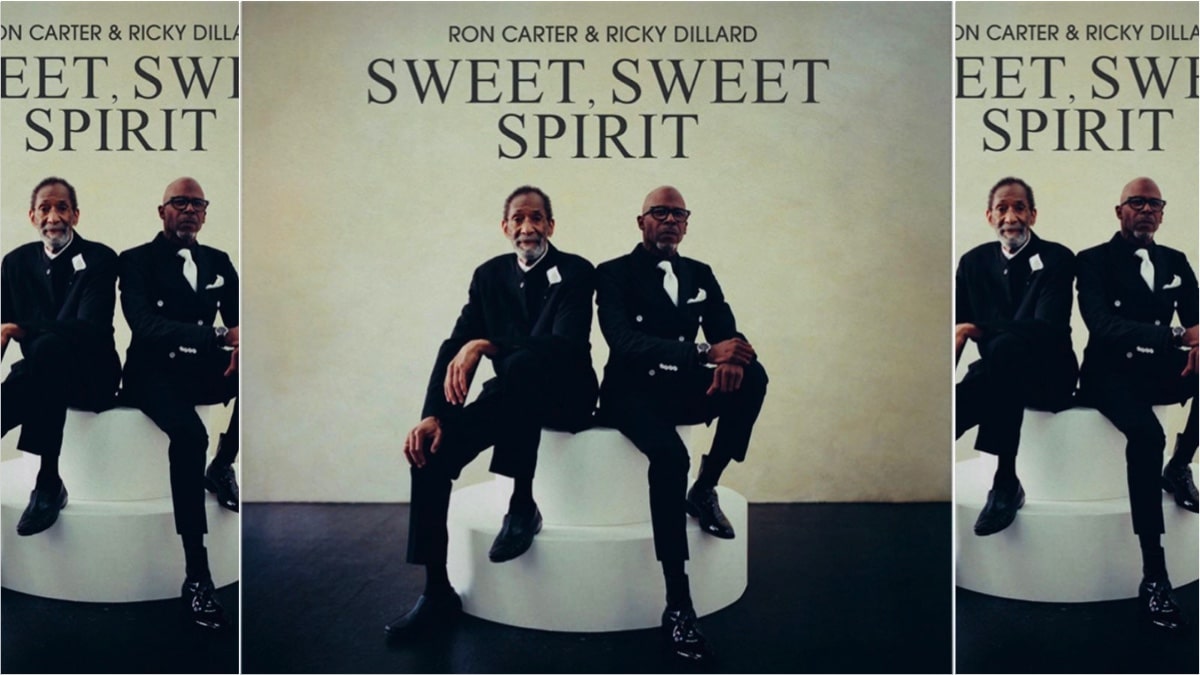
Ron Carter is an American Double Bassist with a career spanning more than 60 years who has recorded over 2200 albums. This is a Guinness World Record. He is not only a musician, but also a teacher, a band leader, and an author. He won three Grammys and earned seven honorary doctorates. His new album “Sweet, Sweet Spirit”, with choirmaster Ricky Dillard and New G, was released on 6 February.
KB: Your new album “Sweet, Sweet Spirit”… What was the creative process?
I shared the recordings I made for my mom 30 years ago, and Dr. Dillard and I worked together (along with Zeke Listenbee) on the arrangements to weave the choir, instrumentation, and merge the jazz-gospel genres.
KB: Does the album title have a special meaning?
Aside from being the title of one of the hymns on the album, it embodies the spirit of my mother, and the inspiration and joy I hope everyone feels when listening to this music.
KB: What is the album’s story?
The story on my website tells it best:
The hymns on this album have an independent and deep history for the gospel community, in addition to having been integrated weekly into the life and musical development of the Carter family in the intimate Detroit church community they attended. A church that depended solely on the voices of the parishioners as instruments.
When Willie O. Carter was on bed rest toward the end of her life, she asked her son to sit with her and sing the hymns of his childhood to keep her spirits elevated in musical reminiscence. Mr. Carter promptly went home, recorded himself composing his bass lines integrated with the hymns, for his mother to enjoy during the final weeks of her life.
KB: You collaborated on this album with Dr. Ricky Dillard… How did this come about?
We met when Don Was (President of Blue Note Records) introduced us. He knew I wanted to do an album of hymns, and he knew that Dr. Dillard and I would make a formidable musical team. He and his choir were wonderful. We were able to meld jazz and gospel in a way that has never been done before.
KB: Which musicians are working with you on the album?
In addition to Ricky Dillard and New G, The Baylor Project is on “Farther Along”, Wendy Wyatt is incredible on “Softly and Tenderly”, Avery Sunshine on “Just a Closer Walk with Thee,” and Tim White on “In The Garden”.
KB: Which basses and equipment did you use on the album?
Only my upright Juzek bass and Epifani amp.
KB: I did an interview with Brandi Disterheft, and she called you her mentor.
Brandi is a wonderful student starting to make some headway in the industry. I’m just the bass teacher.
KB: What are the rest of your plans for this year?
No tour plans for this album at the moment, although I’ve got a pretty busy recording and touring schedule this year.
Follow Online
Website
Facebook
Instagram
YouTube
Spotify

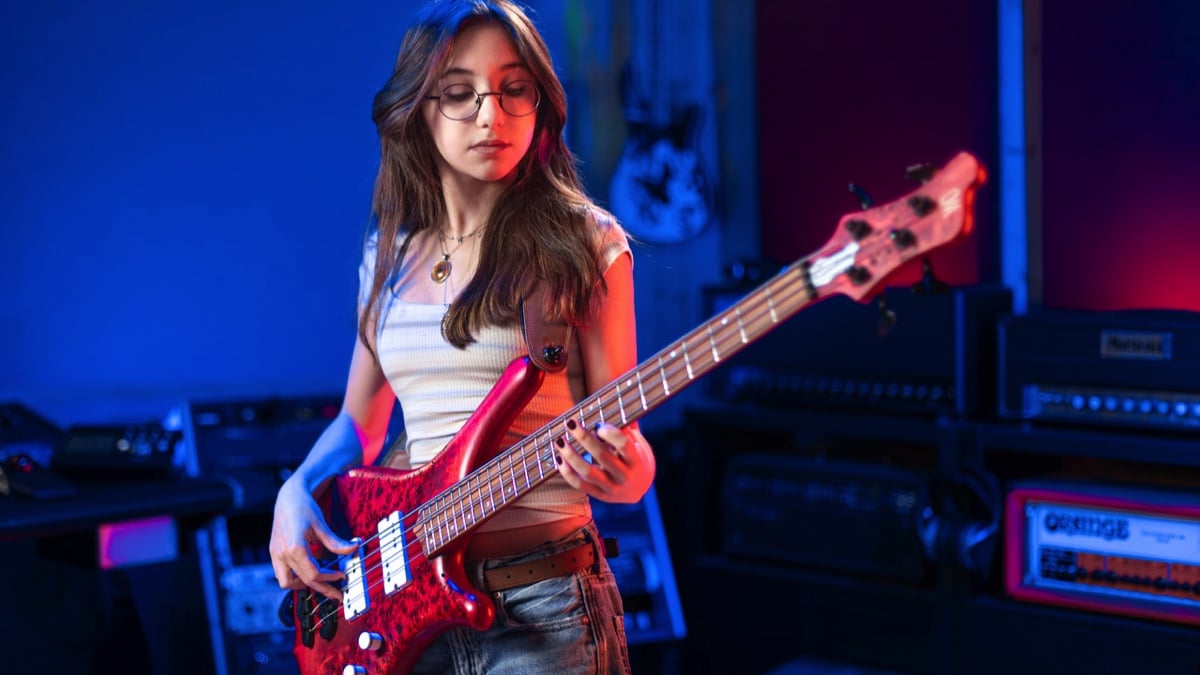
Back in May 2021, I had the pleasure of speaking with a talented nine-year-old bassist named Ellen Alaverdyan, who was just beginning to make waves in the music world (View Interview). Even then, her passion, dedication, and remarkable talent hinted at a bright future ahead.
Today, I’m excited to welcome Ellen back, along with her father, professional guitarist Hovak Alaverdyan, following the release of Take Off, the debut album from Ellen’s band, Jaminai.
Join me as we discuss the making of this exciting new project, explore how Ellen developed her now-signature bass tone and style, and learn what lies ahead for this young musician whose career continues to soar.
Please welcome Ellen and Hovak Alaverdyan!
Album cover artwork, Ellen Alaverdyan

Header Photo, Hovak Alaverdyan
Featured Videos:
Follow Online:
Website: www.EllenPlaysBass.com
Facebook: www.facebook.com/EllenPlaysBass
Instagram: www.instagram.com/ellenplaysbass
YouTube: www.youtube.com/@EllenPlaysBass
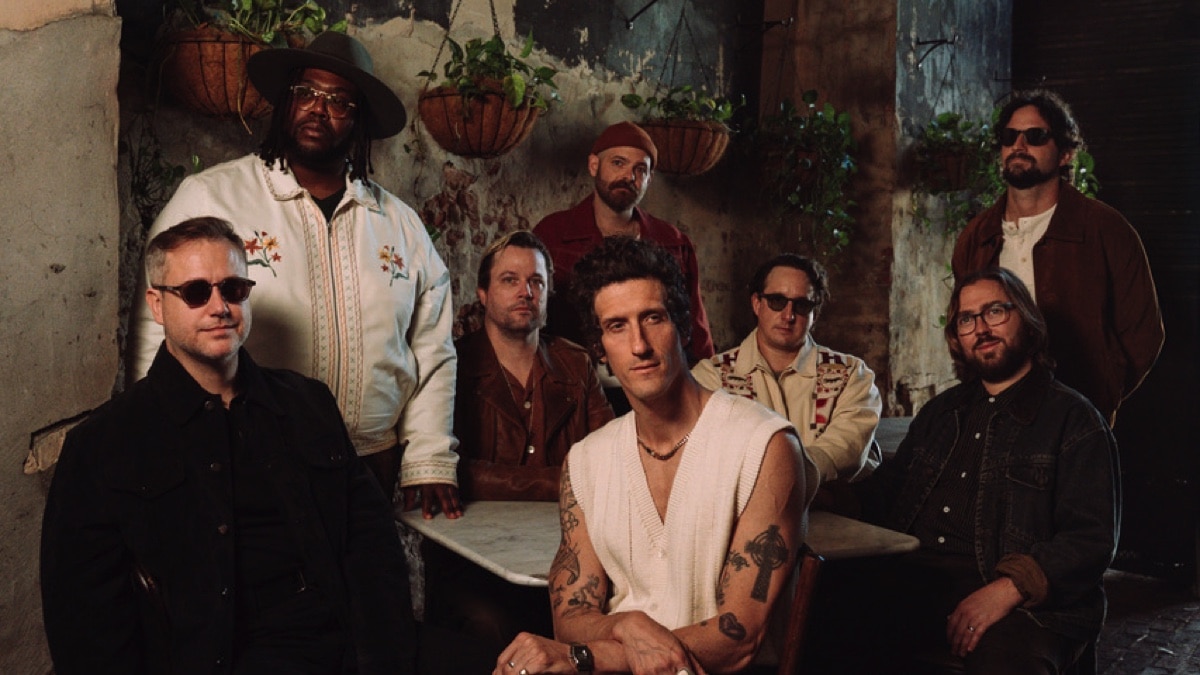
It’s hard to believe that I’ve been chatting with George Gekas, bassist for The Revivalists, for more than a decade. Over the years, we’ve connected during some of the band’s biggest moments, and now they’re preparing to release their sixth full-length studio album, Get It Honest, on July 24, making it the perfect time for another conversation.
Join me as we dive into the making of the new album, discuss what fans can expect from this exciting new chapter, and explore all the great things on the horizon for the band.
Here is George Gekas!
Photo, TommyMoore
Featured Videos:
Visit Online:
www.therevivalists.com
YTB, FB, IG, X @therevivalists
TikTok @therevivalistsband

Adam Russell, bassist for Story of the Year, hasn’t slowed down for a second.
With the band’s latest album A.R.S.O.N. dropping on February 13, 2026, they’ve not only delivered new music but also pushed their creativity further through a series of visually striking videos, several of which Adam himself co-directed and edited.
In this interview, we dive into the making of the new record, explore how Adam shapes his signature bass sound, and get the inside scoop on the band’s upcoming Camp Screamo Tour with Silverstein and Origami Angel.
Here’s Adam Russell.
Photo: Ryan Stephens
Featured Videos:
Visit Online:
IG @storyoftheyear
TT @storyoftheyear
FB @storyoftheyear
X @StoryoftheYear
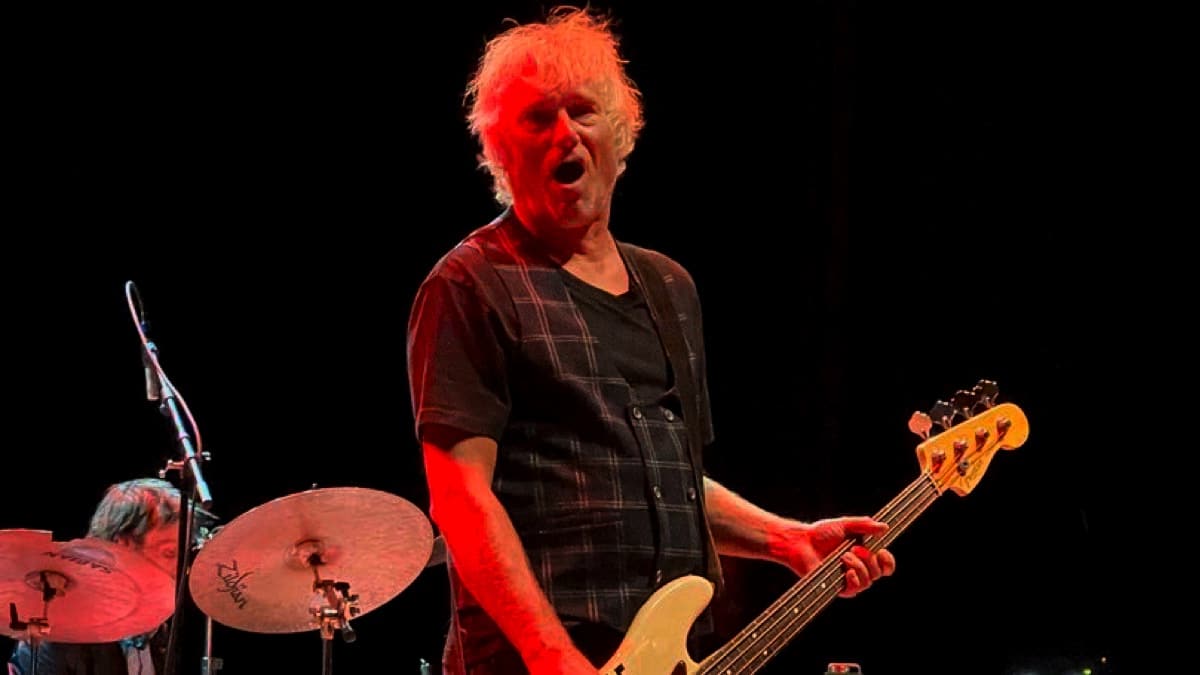
Get ready for a conversation with one of Southern rock’s enduring forces, Tim Neilsen. For over 35 years, Drivin N Cryin has been delivering a powerful blend of grit, melody, and heart, and they’re not slowing down anytime soon. With their brand-new album “Crushing Flowers” set to drop on April 10th, the band is gearing up for another exciting chapter.
At the core of that signature sound is bassist Tim Nielsen, whose driving grooves have helped define the band’s identity and earned them a place in the Georgia Music Hall of Fame.
In this interview, we sit down with Tim to talk about the new album, the secrets behind his unmistakable tone, and what lies ahead for Drivin N Cryin.
Here is Tim Nielsen.
Photos: Chris Neilsen, Carlton Freeman, Ted Lanthangue, and courtesy Tim Neilsen
Featured Videos
Visit Online
www.drivinncryin.com
FB & IG @drivinncryin

Interview With Bassist Ellen Alaverdyan and Guitarist Hovak Alaverdyan

Gear News: Fender Honors James Jamerson with a 1962 Precision Bass

Artist Update With The Revivalists’ Bassist George Gekas

Maestro Ron Carter, Sharing the Spirit – June/July 2026 Issue

New Music: Danielle Nicole, Tug Of War

Right Hand Technique Strategies with Dr. Randy Kertz

May 4 Edition – This Week’s Top 10 Basses on Instagram
May 11 Edition – This Week’s Top 10 Basses on Instagram
May 18 Edition – This Week’s Top 10 Basses on Instagram