
Bass CDs
New Music: The Nth Power, Never Alone

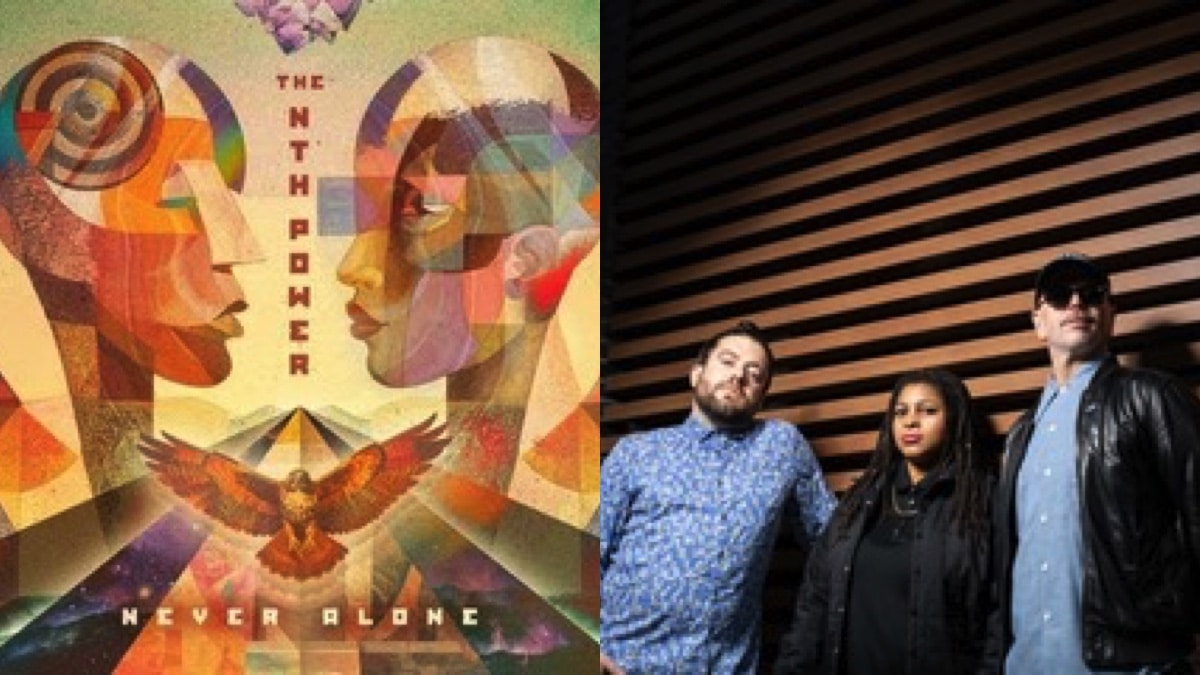
The healing power of music is more than just a mantra for The Nth Power, it’s an energy that drummer Nikki Glaspie, guitarist Nick Cassarino and bassist Nate Edgar harness with intent in the recording studio. When preparing to bring their fourth studio album ‘Never Alone’ to life, the trio converged on a remote farmhouse studio in Colchester, Vermont at the personal invitation of Phish bassist Mike Gordon. Over the course of two weeklong sessions overlooking a quiet bay of Lake Champlain, they tapped into what Cassarino calls “The Great Spirit” – a creative, driving force behind their genre-defying, soulful music.
“Vermont has an energy, there’s something special in the air,” Cassarino explains. “We were there recording late into the early morning hours one night during a lunar eclipse, and it was like the whole atmosphere changed. The creative force and beauty of where we were was just ridiculous.” Each band member brought raw demos and ideas into the recording space and collectively tracked songs that would become the final eight tracks on ‘Never Alone’.
Glaspie shares, “We created this album with the intention of sharing love back into the world, with the understanding that all people deserve love. You don’t have to know someone to love them. It’s about inspiring others to have more compassion for your fellow man, and mankind as a whole. We’re only here for a speck of time, so be nice. Time is precious.”
Throughout their individual careers, The Nth Power have used their time wisely, creating and performing with some of music’s most recognizable names. Notably, Nikki Glaspie was hand-picked by Beyoncé to join her all-female touring ensemble the Suga Mamas for many years, before expanding her chops with legendary saxophonist Maceo Parker, New Orleans funk torchbearers Dumpstaphunk, and most recently with Grammy-winning jazz ensemble Snarky Puppy. A longtime member of John Brown’s Body, Nate Edgar’s signature reggae-forward bass stylings have been tapped by Sister Nancy, G. Love & Special Sauce and Rubblebucket. And Nick Cassarino has been called upon by Christian McBride, Big Daddy Kane and Babyface along the way. But no matter where individual ventures take them, they always find their way back to each other, and the higher vibrations discovered in the music they create together as The Nth Power.
The album’s lead track “Dream Alive” delivers a transcendent first taste of the new record, with driving rhythms and colorful musicianship that captures The Nth Power’s raw and unapologetic musical approach as a power trio. “It’s a song about rolling with your crew, the chosen family we get to spend our lives with,” shares Cassarino. “The chorus says it all. We’re just happy to be creating, learning and riding together.” The closeness of their bond as friends, musicians and leaders is reinforced in the accompanying video for “Dream Alive”. Recorded in San Francisco during the group’s 2025 fall tour, visuals capture scenes from a spirited performance at the historic Glide Memorial Church, where the band led a musical worship of love one Sunday morning in between tour dates on the West Coast.
Love has always been a central theme of The Nth Power, ever since the group first coalesced during a late night New Orleans Jazz Fest showcase in 2011. The new album dives into a spectrum of sexy songs – “Crave You” speaks to the deliciously addicting nuances of a relationship with its sweet, irreverent country-funk groove; while “Thirsty” calls out more carnal elements of desire with early 80s R&B undertones. “Could It Be ‘74 Remix” – a 70s-esque revamp of a song originally heard on their 2015 album ‘Abundance’ – calls upon the band’s deep roots in soulful R&B and their collective love of Leon Ware. Former bandmate Courtney Smith delivers a powerful vocal performance in the final verse to round out the song’s smooth, soulful presence.
The title track “Never Alone” ushers in a more experimental undertaking for the group. Glaspie brought a raw afro-beat demo to the Vermont farmhouse recording sessions. Inspired by musical stylings from multiple regions across the globe, the song embodies the group’s uncanny ability to transcend genres with depth, meaning and musicality. Edgar explains, “‘Never Alone’ really represents who we are as a band that can’t be defined by one musical genre,” while Glaspie adds of the lyrical inspiration, “We’re all out here doing the best we can, but we’re all in this together. You don’t have to feel alone because you aren’t.”
Embodying that same spirit of community, The Nth Power called upon a handful of special guests to lend their talents to the new album. One of the standout songs “Smile” is enriched with world-class horn arrangements provided by jazz trumpeter Nicholas Payton and master saxophonist Skerik. Recorded at Marigny Studios in the band’s spiritual hometown of New Orleans, “Smile” has been kicking around The Nth Power’s catalog ever since their initial recording session for their debut EP ‘Basic Minimum Skills Test’. A song about finding light in the darkness of drug addiction, its lyrics are pleading yet hopeful. “‘Smile’ has one of my favorite choruses we’ve ever created, and feeds my inner strengths with its message,” says Edgar. With building, layered instrumentation and exceptionally powerful horn solos, it’s a track that will give you chills.
‘Never Alone’ comes full circle with its final offering, “Simple Life” – a song about enjoying the simple pleasures and finding peace with what’s in front of you, whether that be solace in the woods or a Michelin-star meal. Edgar explains, “I came up with the groove and idea for the title when I was living in remote California during the pandemic and asking myself what it really was that I wanted from life.” The capstone song showcases duet-style vocals from Cassarino and Glaspie, while horn ensemble The Soul Rebels elevate the recording with a joyous, New Orleans-style celebration throughout.
To The Nth Power, ‘Never Alone’ continues a heartfelt mission now 13 years in the making. Glaspie explains. “We believe in the power of love, and exhibit that belief through our music. This album is a culmination of our calling as musicians and human beings on this planet. We want to take the message as far as it can go.”
Listen on all platforms HERE
Find Nate Edgar on Instagram @n8_bass
Find the Nth Power on Instagram @thenthpower



Danielle Nicole is excited to announce the release of her new album Fireflies, arriving August 28 via 40 Below Records. Pre-order here. Alongside the announcement, Nicole is sharing the album’s powerful new single, “Tug Of War,” a soulful anthem about reclaiming strength in the face of imbalance and emotional exhaustion.
“I wrote ‘Tug Of War’ for anyone finding themself no longer willing to accept the terms of a one way relationship,” says Danielle.
Long celebrated for her commanding voice, masterful bass playing, and emotionally fearless songwriting, Danielle Nicole traces the beginning of her musical journey back to a transformative moment in her teenage years: seeing Etta James perform live in Kansas City.
“We had a great blues festival in Kansas City,” Nicole recalls, “and I was able to see Etta James perform. She was fearless. My parents were musicians who played in cover bands, so music was always part of my family — but I didn’t realize I wanted to sing and perform, too, until I heard Etta.”
That reverence for the great soul singers, storytellers, and trailblazers who came before her has fueled a career spanning nearly 25 years, including 10 Blues Music Awards, a Grammy nomination, and international acclaim as both a songwriter and performer. With Fireflies, Nicole delivers what may be her most personal and musically adventurous statement yet — a raw, deeply felt collection recorded live to analog tape that explores grief, resilience, empowerment, and transformation through a rich blend of blues, soul, R&B, and roots music.
“There’s a lot of soul-driven music here,” she says. “A lot of storytelling. It’s a major step forward in my songwriting.”
Visit online at daniellenicolemusic.com/
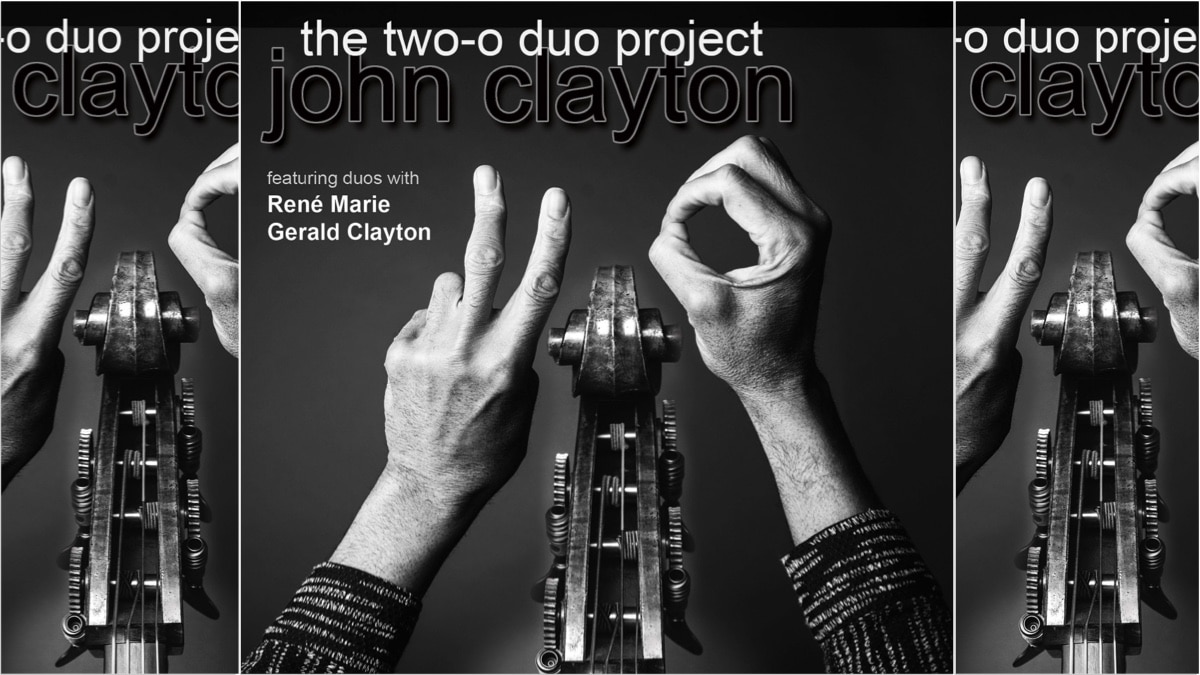
Grammy Award-winning bassist, composer and cherished educator John Clayton — one of jazz’s most celebrated voices on the instrument — has released Two-o Duo, his 8th leader album exclusively via ArtistShare. This much-anticipated release features his longtime collaborator, vocalist and contemporary storyteller René Marie, and his son & frequent musical partner, 7-time Grammy-nominated pianist and composer Gerald Clayton. With a strong focus on duo playing, Two-o Duo presents 11 songs, spotlighting a range of material through different cultural eras, plus lyrical and compositional contributions from both Marie and the Claytons, respectively.
The worldwide digital release of Two-o Duo will be on July 3, 2026.
While the duo context and its many iterations shapes the project’s sound, Clayton seized the opportunity to explore further: “Since we were all there [in the studio], hanging out on the same day, why not do a few trio things as well?” Together, the three artists breathe through the repertoire, filling and leaving space and letting resonances linger. They embrace all that’s intimate and vulnerable. “Some really magical things happened,” he says. “If you’re close with somebody and you’re in the room with them, both of you feel the closeness that you share. There’s no word for it. It’s intangible. But it’s very real.”
When he began gathering ideas for the record, Clayton encouraged Marie to share repertoire selections that held meaning for her. His goal was to center her personal & eclectic musical tastes as part of the album’s character and development. “She’s not just singing jazz tunes,” says Clayton. “She’s singing songs that she would hear on AM radio, for instance, and pop hits. She’ll just walk around her house singing these tunes and the next thing you know, she’s asking her group if she can do these songs. She’s always been like that, which is a cool thing that I’ve always loved about her.”
The album opens on an utterly syncopated invention of “Blue Bayou,” the early ’60s ballad made famous by its co-composer Roy Orbison, then later by Linda Ronstadt. “We came up with this other vibe,” says Clayton. “I liken it to a cart that’s missing a wheel. It’s always just a little bit off.” With certain harmonic exceptions that allow the song to breathe through Marie’s treatment of the lyric, the Claytons keep it weird, anchored throughout by Clayton’s characteristically fluid yet propulsive bass lines. — even through Gerald’s piano solo. “It’s as if he didn’t want to destroy the weirdness.”
Two-o Duo’s first instrumental, Gerald’s blues composition “Nail… In Need” expands the album’s familial connection. When he performed it live at Pasadena’s Bacchus Kitchen, his godfather, drummer Jeff “Hammer” Hamilton fell in love with the aptly named tune and recorded it with his trio. Another deeply felt, intuitive gesture, “Beautiful” showcases Marie’s ability to embody a lyric’s poetry, musicality and stark humanness. “There’s a beautiful arc to this song where you feel René preaching with more intensity as the song goes on,” says Clayton. She amplifies that energy through her part-spoken, part-sung performance of “On the Day You Were Born,” taking her lead from Clayton’s melodic and conversational bass intro. After reading through Marie’s original lyrics ,and experiencing their dramatic yet intimate delivery, both John and Gerald contributed pieces of the composition, leaving plenty of room for the unfolding of Marie’s story. “I was frozen by its dramatic impact on me,” says Clayton. Together, they recorded a single take. “When it was over and we listened back, I said, ‘We could do another take, but it won’t be better. It’ll be different but it won’t be better.’ So we left it.”
A song that touches so many listeners through so many generations, Martin Rojas’ “En La Orilla del Mundo” pays homage to Charlie Haden and features John and Gerald at their most tender and resonant. Opening on piano-arco duo, the artists treat the iconic melody with curiosity and care. “It’s one of those songs I’m jealous I didn’t write,” says Clayton. “I don’t know what I’m capable of but I wish I were capable of writing a song like that [laughs].” Back and forth between them, Clayton and Marie pass intimate energy, dream walking through Billy Joel’s timeless love song “For the Longest Time.”
Combining “When You’re Smiling,” “Smile,” “Make Someone Happy” and a sweet shadow of “Put on a Happy Face,” Two-o Duo’s “Smile Medley” shares a moment of joy, with an almost literal translation of something abstract: genuine connection between artists. Marie provided the song selections but the arrangement, according to Clayton, was a team effort. Of their approach to “Some Other Time,” he says, “I feel Rio in the air on this one.” Clayton’s tight arrangement creates the movement of brushes without the brushes. “It’s a samba but we allow the listener to provide the drums.”
The arco tremolo introducing Duke Ellington’s treasured ballad “Come Sunday” sets the tone for a fog lifting moment when Gerald’s piano enters. “There’s a completeness to this song that’s absent in the first A because it’s just René and me,” says Clayton. “And then when that A comes in again, it’s Gerald. And now he’s got the entire orchestra — the piano — to fill in the gaps that you weren’t getting when it was just us.”
Clayton and Marie deliver a contemplative, rubato verse and ending on “Somewhere Over the Rainbow.” Her handling of the verse prompted Clayton, again, to pull out his bow. “René knows how to invite freedom and inspire creativity,” he says. “It’s what every artist wants to bathe in.” Two-o Duo concludes on Gerald’s layering composition “Forth,” performed as a duo with Clayton. The latter creates a bass orchestra in concert with Gerald’s piano and collection of keyboards. “I didn’t know what the song was about. I just had to read the music and watch it unfold. It wasn’t until the mix that I finally went, ‘Ahh…’ and heard how the pieces came together … It’s like unwrapping a gift.”
Dedicated to Clayton’s dear friend, the recently departed engineer Joel Moss, Two-o Duo is a gesture toward connection, in generous tribute to family, friendship and the sacred bond between artist and listener. “There’s always something spiritual about people who are related. It usually isn’t conscious and it doesn’t always have to be in your face. There’s some kind of line unspoken that’s going through there. I may not be related to René but we’re sharing energy. And the audience may not know what’s going on but they’re going to feel something, too.”
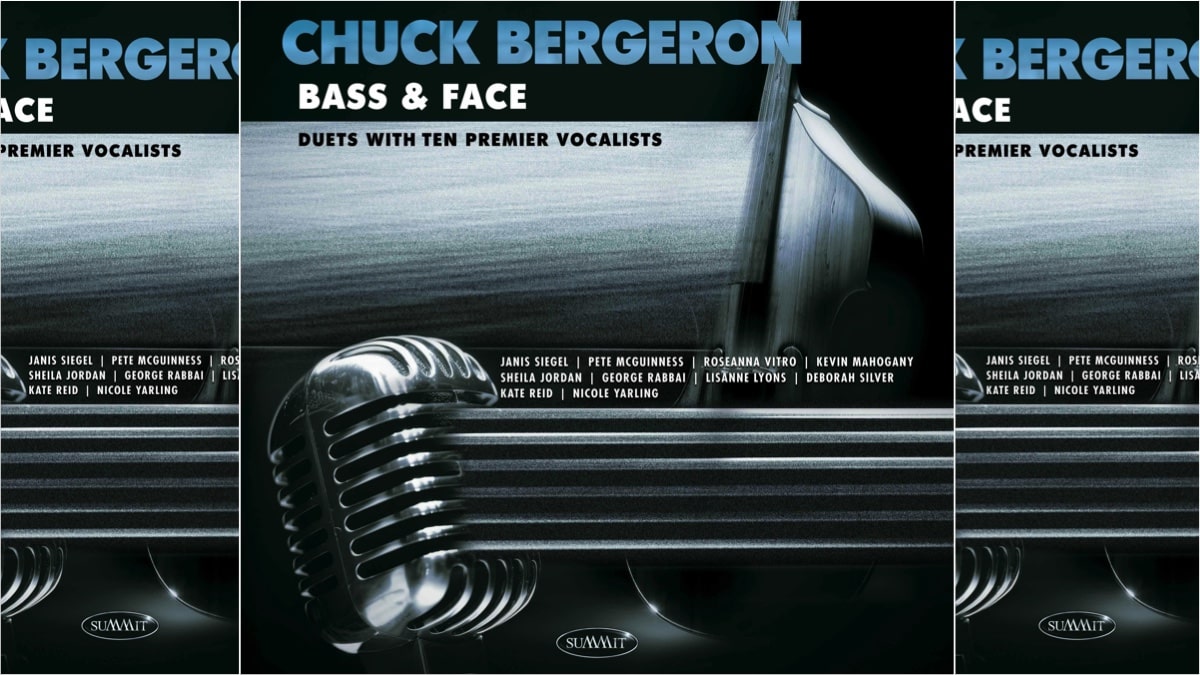
Bassist Chuck Bergeron has enjoyed working in a wide variety of settings over the course of his more than four-decade career, from hard-charging small groups to the boisterous big band swing of his South Florida Jazz Orchestra. But he has especially cherished his interactions with singers.
On his new album, Bass and Face, Bergeron realizes his long-held dream to pair up with some of his favorite vocalists for a set of intimate duets. Out June 5, 2026 via Summit Records, Bass and Face features a world-class roster of voices pairing with Bergeron on a diverse repertoire of songs. The line-up includes Janis Siegel of the legendary Manhattan Transfer, Pete McGuinness, Roseanna Vitro, George Rabbai, Lisanne Lyons, Deborah Silver (Grammy-nominated for her 2025 collaboration with the Count Basie Orchestra), Kate Reid and Nicole Yarling, as well as two iconic singers who are no longer with us: Sheila Jordan, who passed away shortly after the recording, and Kevin Mahogany, whose contributions stem from a 2005 session undertaken during Bergeron’s seven-year stint in the singer’s band.
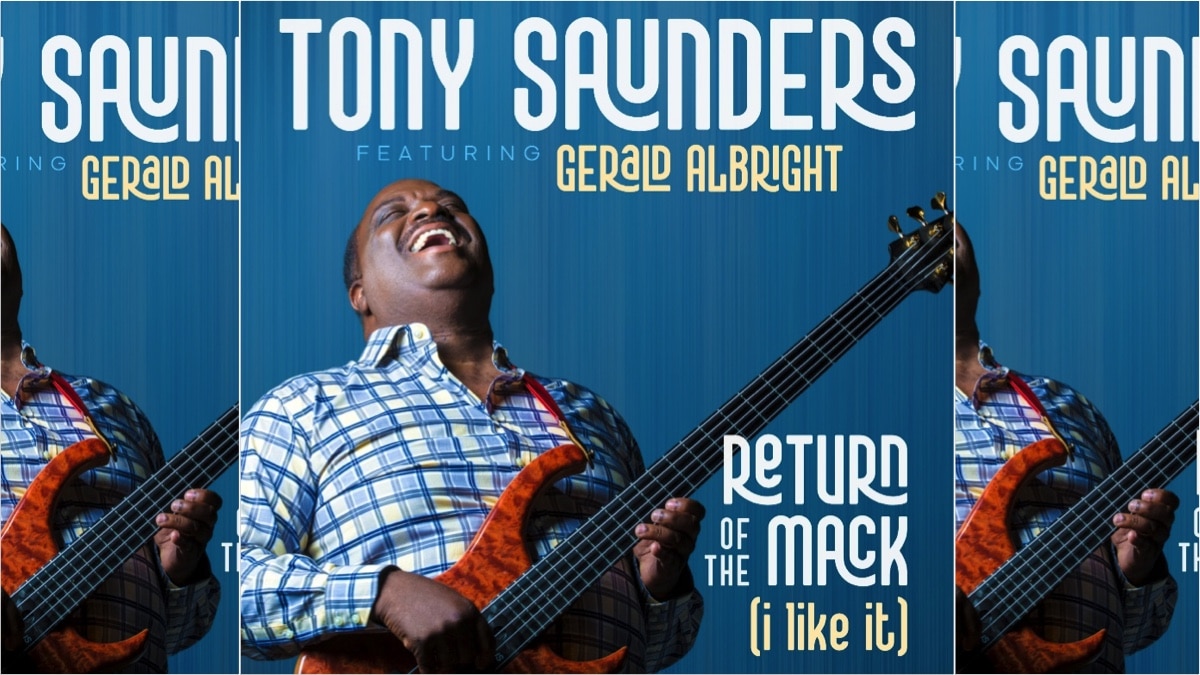
Bassist Tony Saunders Reimagines Two R&B Classics on “Return of the Mack (I Like It)” with GRAMMY® Nominee Gerald Albright
During January’s NAMM Show, two?time EMMY?winning bassist Tony Saunders played a demo mashup of Mark Morrison’s “Return of the Mack” that weaves in El DeBarge’s “I Like It” for 9?time GRAMMY® nominee Gerald Albright. The saxophonist instantly heard its radio potential and agreed to play on the recording. The newly released single is now climbing the Billboard and Mediabase charts.
Joining Saunders and Albright on the track is GRAMMY®-winning keyboardist Michael Mani (Carlos Santana, Eric Clapton, Tori Kelly), who produced the single with Saunders along with playing keyboards, synths, key bass, vocal processing, drum programming, and guitar synths. John Mitchell added live drums to anchor the rhythm track.
“I’ve always loved ‘Return of the Mack’ — the groove is off the hook — and I knew I’d record it someday. ‘I Like It’ has also been one of my favorites, and because it’s in the same key, the mashup came together naturally. The reaction from fans when we play it live is incredible,” said Saunders, who records for the Baja/TSR label and received clearance to release the single on his own imprint.
Saunders dedicates the new single to the memory of two of his cousins, Kurt Kaywood and Oliver Rodgers. They passed away two weeks apart as Saunders was finishing up work on the track. “They played an important part of my life, always introducing me to new things.”
“Return of the Mack” peaked at No. 2 on the Billboard Hot 100 in 1996. El DeBarge’s “I Like It” was the group’s breakthrough hit, peaking at No. 2 on Billboard’s R&B chart in 1982.
Last week, Saunders was on-set in Sacramento shooting a cameo appearance in the Belton Mouras Entertainment film Fingers: The Vegan Zombie Musical, which is expected this Halloween. In addition to scoring several films, Saunders made his big screen debut in 1986 in the Francis Ford Coppola blockbuster Peggy Sue Got Married playing in a scene as a band member of Nicolas Cage.
Saunders’ musical path began with taking piano lessons from Herbie Hancock. He was gifted with an organ by Sly Stone and received his first bass from Creedence Clearwater Revival’s Tom Fogerty. His professional career began when he was invited to play in his father’s band. His father was Merl Saunders, and the co-band’s leader was Grateful Dead legend Jerry Garcia. Tony Saunders’ diverse musical journey spans jazz, funk, rock, R&B, and Latin music. He also composed the musical Rock Justice with Jefferson Starship’s Marty Balin.
Saunders debuted as a solo artist with 2011’s Romancing the Bass. His latest collection, 2024’s The Romance Continues, spawned multiple Billboard Top 10 hits. Over the years, Saunders has collaborated with contemporary jazz luminaries Jeff Lorber,Paul Brown, Paul Jackson Jr., Nils, Jeff Ryan, Randy Crawford, Blake Aaron, and Adam Hawley.
In addition to releasing more new music this year, Saunders is eager to perform with his new band: Mitchell on drums, bassist Vernon Hall (Tony! Toni! Tone!), guitarist Tim Landis, and keyboardist Ray Roland.
“I have played with a lot of musicians in my life, but this group really gets the Tony Saunders vibe!”
For more information, please visit www.tonysaunders.com.

VIDEO: “Who Are the People?” – Composed by Brandon Kyle Miller, Performed by Golden Flower
Golden Flower is an improvising quintet from Orlando, Florida… violin, trumpet/flugelhorn, Rhodes/piano, upright and electric bass, and drums, whose debut studio album “Are You Even Awake?” releases June 12, 2026, on Romantic Poker Records.
Brandon Kyle Miller handles both upright and electric bass with effects throughout the record, navigating everything from deep funk grooves to Indian classical-inspired rhythmic structures to post-rock textures, often in the same song. The album was recorded live at Phat Planet Studios and mixed and mastered by Aaron Gandia, and represents five years of development from a band that has clearly found its voice.
Standout bass moments include the deeply grooving “Piecemeal” and “Distant Glow,” the slow-burn intensity of “Intrasomatic” (composed by Brandon) and “The Search Goes On,” and the album’s epic closing triptych “Perihelion I, Interlude, & Perihelion II,” which moves through funk, African 12/8, and metric modulation with purpose and power.
The band also cites Roy Hargrove, The Bad Plus, Kneebody, and Vijay Iyer among their touchstones, a lineage that should resonate with Bass Musician readers.
Pre-order: goldenflower.bandcamp.com/album/are-you-even-awake and visit online at goldenflowermusic.com

Maestro Ron Carter, Sharing the Spirit – June/July 2026 Issue

New Music: Danielle Nicole, Tug Of War

Right Hand Technique Strategies with Dr. Randy Kertz

New Music: Golden Flower, Are You Even Awake?

Interview With Bassist Adam Russell
Right Hand Technique Strategies with Dr. Randy Kertz

April 6 Edition – This Week’s Top 10 Basses on Instagram
April 13 Edition – This Week’s Top 10 Basses on Instagram
20 April Edition – This Week’s Top 10 Basses on Instagram