
Bass Edu
Walking the Bass Line 2


Opening Photo Credit: Tony Cole, 2022
The other day a new bass-playing friend asked me for advice on the best exercises to improve his playing.
I have to admit I’ve never been a great fan of the standard teaching approaches of recent times. There are hundreds of seemingly quick routes on YouTube but I decided to go as old school as possible.
What to learn is half the battle and depends on what floats your boat. YouTube has given us access to some very good, and very bad, tutorials on how to play our favourite songs.
Legendary bassist Carol Kaye said that simply learning ‘scales’ will ruin your ears from a Jazz musician’s perspective. Although not conversant with jazz, I agreed with her and chose to learn songs I loved which featured bass players I respected.
- John Paul Jones | Led Zeppelin
- Andy Fraser | Free
- Jack Bruce | Cream
- Carl Radle | Eric Clapton
Today I feature John Paul Jones and Andy Fraser with Bruce and Radle coming along in the next episode.
All about bass guitar
If you happened to stumble across this article, it may be worth reading the June edition of Walking the Bass Line which is the first in my series for new bass players.
John Paul Jones // Led Zeppelin // The Lemon Song – aka Killing Floor
Lemon is great for killing parasites on raw chicken. It is also a zesty addition to a large vodka and tonic but in a musical context the playfulness of sexual innuendo in Blues music.
Back in 1929, Joe Williams sang “You Squeezed my lemon/Caused my juice to run” in the song I Want It Awful Bad.
This pales into a smoothie of citric insignificance when you consider the mightiest lemon of all time for players of the electric bass guitar – The Lemon Song from Led Zeppelin II played by the legendary John Paul Jones (JPJ) and recorded in 1969.
The song borrowed heavily from Howlin’ Wolf’s Killing Floor. Copyright holders for Chester Burnett (Wolf’s birth name) ended up reclaiming the tune in an out-of-court settlement in 1972.
Before Led Zeppelin, JPJ was a much sought-after London-based session musician playing hundreds of sessions with a variety of artists, genres and styles giving him great versatility.
Learning to love the lemon
Word has it that he improvised the whole song, adopting more of a funk-oriented approach rather than your typical walking blues lines.
Starting at the beginning I would play a phrase of the song over and over and over again trying to work out what notes/chords were being played, then tried to cross-reference with any half-decent videos that were out there to make sure I was playing in the right place of the neck.
Then unlearning phrases because I had made a pig’s ear of it and made things doubly difficult (at times impossible) for myself …and so it continued for months! And by months I mean half a year!
Standing at the foot of the bass mountain, I reminded myself of a note I had pinned to my wall when I was studying for a second degree at University – “It’s only difficult because you haven’t learned it yet!”
I fell asleep with the bass line running through my head – and woke up with the same blinkin’ line there to greet me – it almost drove me crazy!!
Don’t get me wrong, I love playing but this was an absolute brain mangler at times, especially dissecting the faster parts; it made me feel like I was spinning on a never-ending mad fairground ride!
It’s all about the tone…
Part of learning the song is emulating the ‘sound’ of the bass in the track. This is tricky as only a small part of the tone comes from the gear, the real sound comes from the way you play the part – yes, your fingers.
I love that ‘60s/‘70s sound and am the proud owner of a ‘70s HiWatt DR201 valve amp which I use with a selection of cabinets.
Early on with Led Zeppelin, JPJ used HiWatt and Marshall amps, moving on later to the more powerful Acoustic 360 bass head paired with a 361 cabinet – the stack of choice for bass players in the ’70s, including the mighty Jaco Pastorius.

Taken from the Acoustic 361 User Manual – late ‘60s
Flats
From the tone, I suspect that he employed a Marshall or HiWatt plus his trusty 1962 Fender Jazz Bass with flat-wound strings in the recording of The Lemon Song. I use flats on most of my basses born from an early recommendation from bassist Andy Seward, and later reinforced by JPJ and Andy Fraser. They were right, flats are punchy, thick and gorgeous!
Anyway, enough of the chatter, just listen to this badass track…
Led Zeppelin – The Lemon Song (Official Audio)
Andy Fraser // Mr Big // Free
Andy Fraser was the bass player and co-composer in British rock band Free which he co-founded in 1968 with vocalist Paul Rodgers, guitarist Paul Kossof and drummer Simon Kirke – he was 15 years old – so young!!

Photo, Permission given by Jasmine and Hannah Fraser
That same year he had been kicked out of Grammar school for refusing to have his hair cut and enrolled at Hammersmith College of FE where he met Sappo, the daughter of Alexis Korner, a pioneering bluesman and a hugely influential radio presenter. Alexis became like a father figure to Andy who came from a broken home and was influential in him joining the legendary band John Mayall’s Bluesbreakers.
Sadly Andy died in 2015 of a heart attack at the young age of 62 and John Mayall died a few days ago at the ripe old age of 90. Read John’s obituary in The Guardian newspaper to get an overview of his influence and achievements.
“Andy was the most amazing musician. As a bass player, he was up there with Jack Bruce. But as Andy would say, if he was around now, he wasn’t just a bass player, he was a great all-round musician. He had this amazing ability to listen to something and play it straight back.” Simon Kirke

The list of Andy’s musical influences comes as no surprise – Paul McCartney, Bill Wyman, Stax, Motown, James Jamerson, Carol Kay and early Stevie Wonder. Jack Bruce also played a big part in the early days of Fraser’s tutelage. Amongst others, his band ‘Free’ was based on ‘Cream’ with Eric Clapton, Jack Bruce and Ginger Baker.
What I do like is that he mentioned specific stand-out songs to check out:
- The Rolling Stones version of I Wanna Be Your Man (composed by Lennon & McCartney) with Bill Wyman on bass
- John Entwistle’s bass break in The Who’s My Generation
- Marvin Gaye’s What’s Going On with James Jamerson on bass
If you want to find out more about Andy’s life, read his autobiography ‘All Right Now… Life, Death and Life Again’.
Valve power
As was the de rigueur in those heady days, Andy used amplifiers by Marshall, Matamp and Orange plus 4×12 speaker cabinets. It’s now easy to discount this setup but know from experience, that it sounds great both live and in the studio.
His basses were always short-scale fitted with flat wound strings, the Gibson EB3 being his weapon of choice, just like his hero Jack.
Watch this live video of ‘Free’ when they played at Granada Studios in Manchester, UK in July 1970. Andy has a fabulous bass tone – like a big stomping elephant.
British rock at its finest…
FREE Live – Granada , Manchester, England 24th July 1970 FULL HD
Amps & cabs
I started playing with a tour booked and an album to record on so my gear trajectory was set. No pressure!
In last month’s article, I wrote about my first two bass guitars and first pedal board setup which was simple and designed for a tour of the UK with my husband Simon.
Where do you start when buying your first amplifier & cabinet?
It all depends on what kind of sound you are looking for – there are so many to choose from in all shapes and sizes and it can be a bit overwhelming.
Are you planning on playing live or just in the bedroom? Do you want to rehearse with friends? Are you concerned with weight, size and portability?
All these factors will determine your selection, but like any gear, buying the best you can afford is important.
Choosing second-hand from a reputable source such as REVERB (which does have customer protection) and/or paying via PayPal is always a good plan.
A well setup bass and an amplifier which cleanly reproduces the sound of your instrument are essential.
I would be happy to give specific recommendations.
It’s all about the space…
One thing that influences the sound of any bass amplifier is its position. You will always hear more low end if the cabinet is on the floor due to half-space loading. If you want to mash your brain, check out this article – but an easier and more pleasurable way is to try it yourself by lifting the cabinet off the floor.
The Hiwatt DR201 & Bergantino NV610
I met music producer and bassist Andy Seward back in 2014 when he was working on my husband Simon’s second solo album The Knife and knowing what I was up to, suggested I buy a Bergantino NV610 to match the 1974 HiWatt DR201 which I had picked up in the UK – my first amplifier.

Photo Credit, Simon Campbell
The NV610 is cool and here is a precis from Bergantino’s press release:
“Unique in the Bergantino Audio Systems line of speakers are the New Vintage NV series of bass guitar speaker cabinets. Designed by Jim Bergantino (who is a really lovely chap) the cabinets are sealed (rather than the traditional ported design) which provides the NV cabinets with a tighter and more immediate bass response
The NV620 with six – 10 inch speakers, comes with ‘tilt-back’ casters and full-length amp glides on the back to facilitate loading and unloading. It also has side mounted recessed handles (at the right height to lift these onto any stage).
The cabinetry employs a precision-tuned cabinet architecture with the enclosure built from the finest 100% Baltic birch plywood. It is covered in traditional tolex for durability and has a rigid black grille to protect the drivers.
The NV series is a favorite of both finger style and pick players because of the tight-creamy low end.
If you want a little more clarity and open sound, but don’t like tweeters? This is THE cabinet for you! It sounds great with tube amplifiers (pull out the V4B, Model T, Hiwatt, etc.) and this cab will make you smile. Vintage heaven!”
I decided to buy the version without the tweeter as my style doesn’t require the extended top end.
Many bass players still love these cabinets and they are very hard to come by. I bought my 610 when Jim and Holly Bergantino produced a limited run back in 2015 and I’m hoping they will do another production run again soon.
Unusually, Jim Bergantino uses ceramic magnets in a lot of his speaker cabinets because he prefers the sound. This obviously adds some weight to the finished cabinet but I’ve always thought that this is my sound and part of the sonic ritual of my setup.
However, if lighter is the way you want to go, Bergantino also produces a range featuring neodymium magnets and lighter smaller cabinets.
Check out their website and take a look for yourself bergantino.com/bass-guitar-speakers/
From big rigs to no rigs
This move to smaller and smaller gear – the ultimate being the modelling pedal – and in-ear monitoring saddens me somewhat. Even though I love technology and keep up with many of the advances, there is nothing like a valve head and a big cabinet with heavy ferrite magnets.
Watch this video when we played a very rare cover of Free’s Mr Big at The Met in Bury, UK with Starlite & Campbell. Warning – bass solo at 3:55.
Gear employed: Gretsch ThunderJet bass with TV Jones pickups fitted with Thomastik-Infeld Jazz Bass (JF324) short-scale flat-wound strings // Supertone MinCap ‘A’ cable // Lehle RMI BassSwitch IQ DI with all FX disengaged // 1974 HiWatt DR201 bass head // Bergantino NV610 bass cabinet mic’d with no DI.
Starlite Campbell Band: ‘Mr Big’ LIVE at The Met, Bury, UK featuring Suzy Starlite on bass guitar
Second pedal
My second pedal on my board sounds like the son of a comedian – the Ernie Ball Volume Pedal Jr. It’s a sturdy piece of gear made from aircraft-grade aluminium housing which is virtually indestructible.
It gives you a smooth foot sweep that does the job and doesn’t break the bank. I use it to swell in the sound smoothly, which along with a delay device (echo unit), is especially effective in creating atmospheric soundscapes.

Photo Credit, Simon Campbell
I used this on our song Hello which we played live at the Head for the Hills Festival (Ramsbottom Festival) whilst touring the UK with my husband Simon. It’s a 28-minute song which we are releasing later this year.
The eagle-eyed reader will notice that this is the 25K version which is suitable for active electronics. Apart from my Fylde King John acoustic bass – with an under-saddle transducer – all my basses are passive. So what’s that all about? The answer: it’s always in a buffered FX loop!
The importance of good technique
Understanding what chord you are playing under and your left-hand fingering shapes are super important to give a smooth performance. Once dialled in, this allows you the freedom to improvise over a chord when writing a part for yourself.
Listen to the part.
How is the bass line sitting in the track? Is it serving what the song needs? Am I crashing the vocal? Is the line too busy and confusing the track or is it not giving the movement by not being busy enough? Is this major third working with the bass synth? Do I need to play that note an octave up or down? And most importantly is it working with the drums??
All these are vital but fade into the cheap seats if you have poor technique.
Recording an electric bass guitar
One key aspect that has benefitted my bass playing is working in the recording studio. I started tracking bass on various projects virtually from day one, which helped me understand both the role of the bass in a piece of music and also my technical ability – or lack thereof.
When recording with a multi-speaker cabinet, you need to mic up the best-sounding speaker. Of course, they should sound the same, but that isn’t always the case. Usually, you find one that sounds better than the rest and once you’ve found the best one, move the microphone around the speaker cone to find that sweet spot: there always is one!
Try it out and listen for yourself.
Keep it clean
I’ve learned a few harsh lessons from recording and can’t stress enough how important it is to record your bass from the very beginning. It allows you to hear, in detail, what you sound like and if you are playing clean notes.
If you are a real low-end dweller, mostly below the seventh fret and working in a typical live rock band, it’s tricky to hear the real details of your playing. Ringing notes, clacking and buzzing strings are all camouflaged by the racket created by the band; when recording everything is revealed – warts and all.
OK, you think you’ve recorded a groovy take but something isn’t quite gelling! The producer is trying to work out what’s going on and through a process of elimination, listens to all the instruments separately until that fateful moment when they solo the bass track!
Yeah, baby – solo bass – just the bass – on it’s own – usually heavily compressed which brings out every tiny detail – and you, on your own! It feels like you are standing there naked in that moment of truth.
Oh shit!! That doesn’t sound at all like I thought I’d played it – strings are ringing here and there and a sort of growling, humming low-end dissonance and unwanted harmonics in places because I’d not always managed to dampen/mute the other strings. It’s a harsh, but necessary lesson.
Watch this video where I bare my soul and go acoustically naked live on camera.
Also, check out Simon’s article How to record an electric bass guitar which is part of a series on Analogue Recording Techniques.
ANALOGUE RECORDING – HOW TO RECORD BASS GUITAR
And finally
Next month I will feature two songs from Jack Bruce and Carl Radle, my practice amp setup – you will be surprised – and another pedal.


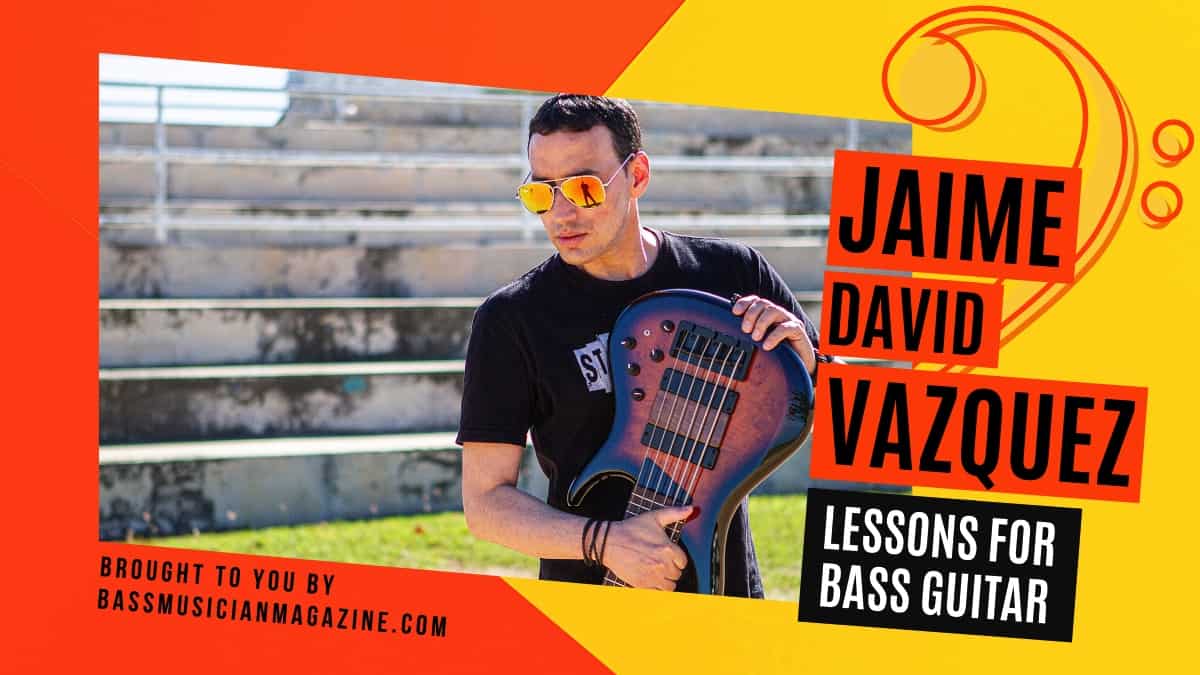
The bass line is the heartbeat of modern music. It bridges rhythm and harmony, connecting the groove of the drums with the harmonic structure of the band. A well-crafted bass line does more than support; it defines the feel, direction, and emotional impact of a song. From Motown to rock, jazz to Latin music, the bass serves as both anchor and storyteller.
What Makes a Great Bass Line?
A great bass line balances time, tone, note choice, and space. While technical skill is valuable, musicality and intention are what truly elevate a bass performance.
1. Time and Groove
The primary responsibility of the bassist is to lock in with the drummer. This rhythmic unity creates the pocket, the groove that makes listeners move.
• Play slightly behind the beat for a laid-back feel
• Sit on top of the beat for energy and drive
• Maintain consistency to build trust within the band
Legendary players like James Jamerson demonstrated how groove can define an entire genre.
2. Note Choice and Harmony
Bass lines outline chord progressions and guide listeners through harmonic movement.
Essential tools include:
• Root notes to establish tonal center
• Fifths and octaves for strength and clarity
• Passing tones to create motion
• Chromatic approaches for tension and release
A strong bass line makes harmony audible even without chords.
3. Space: The Power of Restraint
One of the most overlooked aspects of bass playing is silence. Space allows the music to breathe and enhances the impact of each note.
Ask yourself:
• Does this note serve the song?
• Am I leaving room for other instruments?
Great bassists know that what you don’t play is just as important as what you do.
Styles of Bass Lines
Walking Bass
Common in jazz, walking bass lines use quarter notes to create forward motion while outlining chord changes.
Ostinato and Riffs
Repeated patterns, common in rock, funk, and Latin music, establish identity and groove. Think of iconic riffs that define entire songs.
Melodic Bass Lines
In modern genres, the bass often takes on a lyrical role, using phrasing and dynamics to create memorable melodies.
Tone: Your Sonic Signature
Your tone is your voice. Factors that shape tone include:
• Fingerstyle vs. pick vs. slap
• String type and gauge
• Instrument choice
• Amplification and EQ
A warm, round tone suits ballads, while a brighter tone can add articulation and presence in dense mixes.
The Bass in Contemporary Music
Today’s bassist must be versatile. In modern productions, bass lines may blend traditional playing with effects, extended range instruments, and melodic approaches. Six-string basses, looping, and chordal techniques are expanding the role of the instrument beyond its traditional boundaries.
The bass line is more than a supporting role, it is the foundation upon which music stands. Whether simple or complex, the best bass lines serve the song, connect the band, and move the listener.
As bassists, our mission is clear: support, enhance, and inspire through groove and musicality
Stay tuned for more great stuff in the next issue and keep in touch with #bassmusicianmag,
#basslines, #bmmbasslines, #keepgrooving, #keepthegroovealive&kicking, #jdvinstrumental, #groovewars, #fullbassattack, #jdv, #boricuabass, #groovingtheworld, #bassgrooves, #groovemaniac, #6stringbass, #goodpracticemakesperfect, #jdvbass, #jdvinstrumental

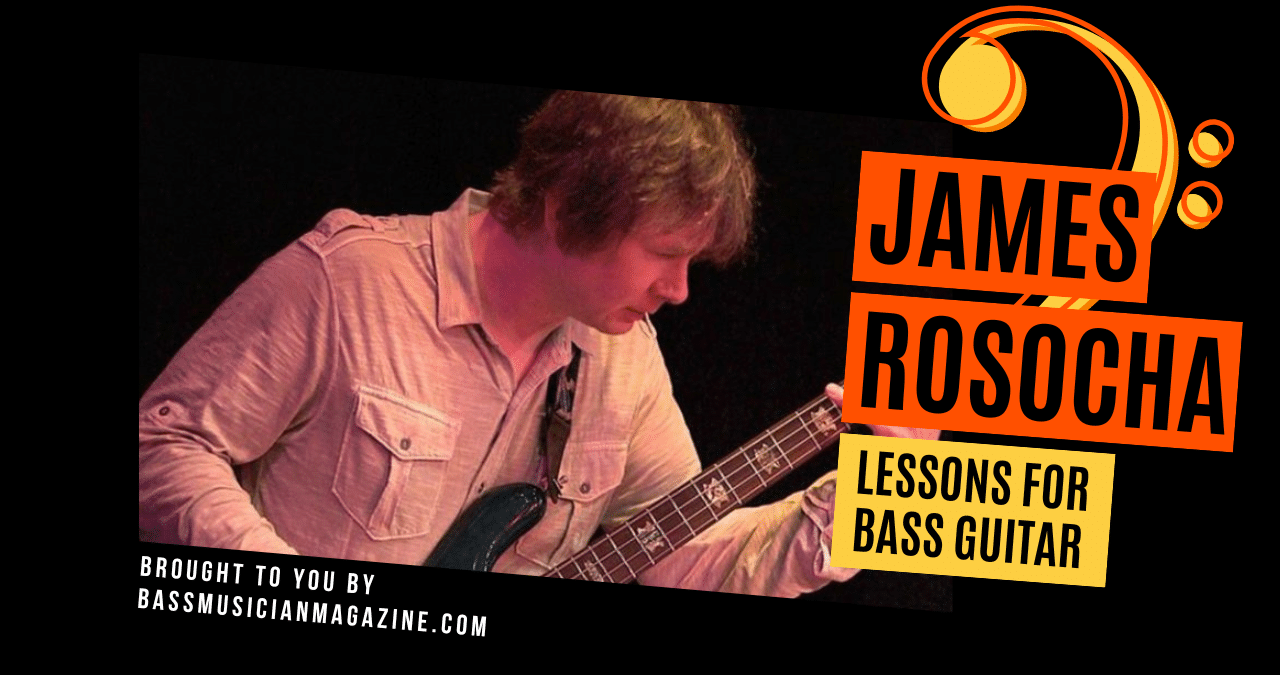
Practicing scales using sequence variations ignites the imagination and provides a wealth of new melodic ideas and concepts to choose from. My previous lesson on “Seeing Shapes and Patterns” introduced the basic pentatonic scale along with the five permutations that are derived from the scale. Review this lesson before proceeding.
The first exercise breaks the scale into ascending groups of four. Practice the patterns up and back, respectively.

The second exercise follows a pattern starting with the root, second scale degree, fifth, and third. Practice and follow the pattern up and back through the scale.

The third exercise starts with the pattern—root, third, fifth, and second scale degree. Follow the pattern up and back, respectively.

As with many scale exercises, don’t make the mistake of only learning them in root position. Take them through all five permutations, in all 12 keys. Good Luck!
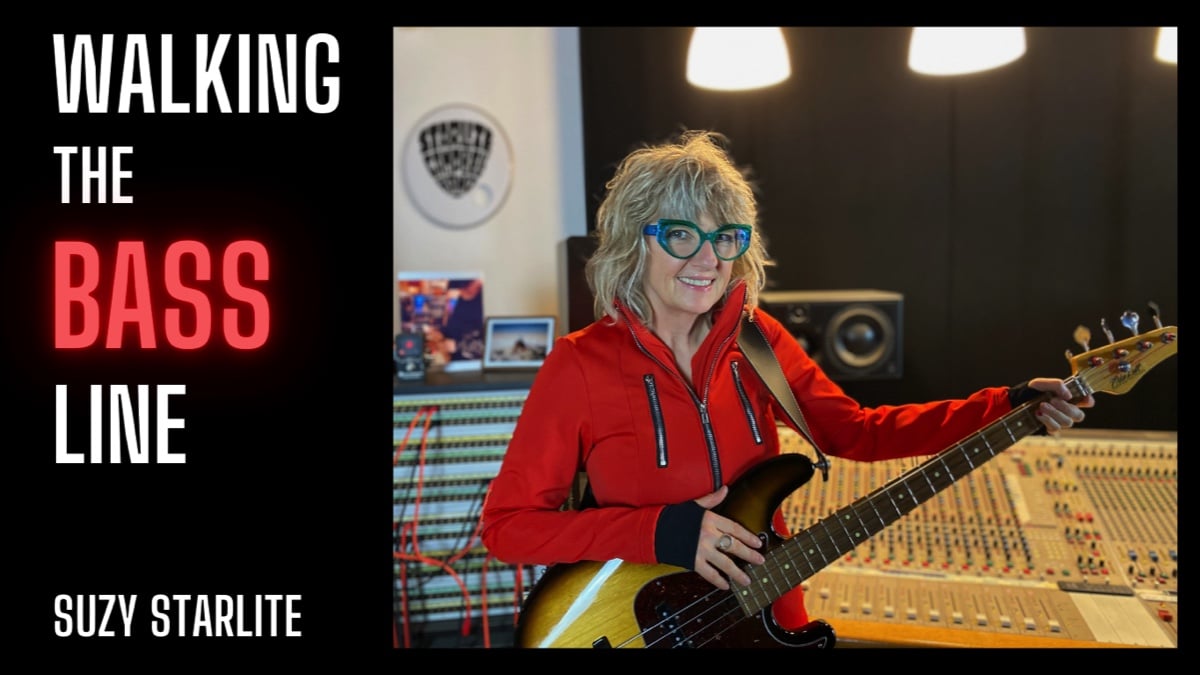
The news…
It’s been a while, but it’s good to be back. Last year was a bit of a steep climb, and I had to step back for a while to focus on the essentials. Thankfully, things have calmed down, the coffee’s hot, the beer is cold, and we are officially back in the saddle.
2026 is looking like a cracker—I’m releasing my first solo album, and there’s a lot more in the works from Starlite & Campbell, the VIBRATIONISTS, and my session work for the lovely Trent Chapa.
I’ll be getting stuck into the bass side of things shortly, but first, in case you missed it, here’s a New Year’s greeting to celebrate a brand new chapter with you all.
All about the bass…
If you happen to stumble across this article, and to understand where it all started, it may be worth reading Walking the Bass Line #7, which is the first in my series for new bass players, or, if you want to deep dive, check out all the articles about my bass journey.
Let’s start a little theory
Before we continue the chronological journey through my bass career to date, we need to confront a little theory, whilst not trying to fry your head.
Track breakdown | Blow Them All To Pieces
As I mentioned in my previous article, I was hoping to do a full breakdown of two tracks for you this time, but things have been a bit of a squeeze with our current workload. Instead, I’ve dug out a video from a couple of years back where I’m playing Blow Them All To Pieces from Starlite.One. I’ll be sure to do the full ‘behind-the-scenes’ talk soon—stay tuned for that!
Working with the chords
The most important thing about the bass part in Blow Them All To Pieces is the melody and how it works with the chords, which I will be covering in the next edition. For now, let’s look at the basis—I was going to say bassis, but that would be far too cheesy—of my thinking.
I’m all about the melody—as soon as I hear a few chords, a tune pops into my head straight away. It’s how I write everything, from the songs themselves down to the bass lines.
To be honest, it can be a bit of a nightmare technically, especially when I’m doing session work. You haven’t got the luxury of sitting around for hours treading water and ‘finding the vibe’. You’ve got to be sharp, get stuck in, and nail the part right then and there. No hanging about.
When I first started playing bass, I had a bit of an epiphany: you’ve got to master the ‘safe’ notes within a chord and wrap your head around scale harmonisation. It sounds like academic heavy lifting, but once it clicks, it’s a total game-changer for your playing.
Take a piece in G Major. The major scale is G, A, B, C, D, E, F?, and these are the likely root notes of chords you will find in the song.
When you stack these into triads (three-note chords), the landscape reveals itself: G, Am, Bm, C, D, Em, F?m?5 (that lovely, bruised half-diminished sound we’ll dive into next time), and back home to the G major octave.
If a song is in G major, these are the chords most likely to show up. Your ‘safe harbour’ notes for each chord are the root, the third (major or minor), and the fifth. Now, you could just stick to the root and fifth—it’s the ‘reliable’ choice, but frankly, it’s a bit pedestrian. We’ve all heard a million country tracks that don’t dare to stray further.
Make your bass lines cool
The real trick I picked up early on? You aren’t tethered to the root. It’s far more evocative to lean into the third, the fifth, or even a cheeky seventh—which I will discuss next time. It adds a bit of grit and character to the line.
For example, take God Only Knows by The Beach Boys.
The bass line is famous for avoiding the root notes. Brian Wilson (who composed the part exactly as played) used two bassists, Ray Pohlman (electric bass) & Lyle Ritz (upright), to highlight inversions (putting the third or fifth in the bass). This creates that famous sense of ‘suspended’ emotion, where the song never quite feels like it’s landing on solid ground until the very end.
Fun fact. While many associate bass on the Pet Sounds sessions exclusively with the legendary Carol Kaye, on this track she played 12 string guitar!
If you want to try something more straightforward, try While My Guitar Gently Weeps, by The Beatles.
Remember, when playing the line, look at the underlying chords and understand which note from the chord they are using in the bass!
Caveat – many interesting and great songs—including the ones mentioned above—change key within the song structure and therefore unexpected chords appear! Play what sounds right to you, don’t be shackled by theory.
But that’s quite enough theory for one session.
Before we leave though, take a look at what Kid Anderson has to say about George Porter’s much-discussed note in The Meters’ track, Cissy Strut. Very, very funny and always makes me laugh…
Endorsements #2
As mentioned in my previous article, I endorse several products, but in the real world, what does that mean?
Firstly, I only endorse products I love and use. In exchange for the endorsement, I receive discounts on the products, ranging from modest to mind-bogglingly great!
Currently, I am lucky enough to be working with Curt Mangan Strings, Matamp, Scott Dixon Cases (which have saved my basses more time than you can believe), HiWatt, Fylde Guitars, Bergantino Audio Systems, TWS Pedals, Radial Engineering, ACS, Sequential, Hipshot, Mike Lull Guitars & Basses, Hudson Electronics, Headway Music Audio, Supertone, Lehle and our wonderful friend Jez Levy of Eyes on St Albans.
So, how do you do it?
You always have to remember that a commercial organisation will want something in exchange for preferential discounts, and therefore, you must have something to offer them.
If you are a famous session musician like Guy Pratt, Pino Palladino, Gail Ann Dorsey or Rhonda Smith, it’s easy. Even easier if you are a world-famous artist: I am sure companies are falling over themselves to encourage the likes of Justin Chancellor (Tool), Joe Dart (Vulfpeck), Paz Lenchantin (Pixies) and the wonderful Laura Lee (Khruangbin) to use their products!
For me, it’s just about loving the product, then contacting them. If they think you can help their brand, they will come back with an offer of some type, which usually includes promotion of the products at live gigs, social media and…
Interviews
Over the years, I have been interviewed many times, first by Joel McIver for the now-defunct Bass Guitar Magazine (Bass Guitar) in November 2018 and July 2022, I was featured on the Wonderwoman section of the ‘No Treble’ website with a feature-length article and 60-minute video interview with the wonderful Britanny Frompovitch.
2025 saw me becoming a writer for Bass Musician Magazine and the editor, Raul Amado, interviewed me. Take a look!
It’s this type of thing that encourages suppliers to work with you.
Take a deep dive by visiting the equipment section of my website here >>> VIEW
A big surprise
I haven’t given birth to children, but on marrying my musical and life partner Simon Campbell, I inherited two fully grown and well-trained sons, James (Jim) and Joseph (Joe). In the 13 years since we have been together, they have both married, and we now have three grandchildren: who’d have thought it, eh…
We have always lived in Europe together, but visit them as much as we can.
Several years ago, the band were staying in Brixton, London, hanging out with Jim for a couple of days after playing a gig at The Half Moon in Putney.
We had just opened our first adventurous beer of the day when in walks Jim carrying his 1974 Fender Precision and proceeds to place it in my hands, saying that he would like me to have his bass as he doesn’t play anymore, and I will make more use of it! What an amazing gift!
Here is a detailed piece on my website
My amps & cabs (part three)
As mentioned in my last article, I like to play loud on stage using valve (tube) amps and big cabinets. The funny thing is—which I haven’t gotten my head around yet—is that a 200W valve amp sounds louder and more present than a more powerful, solid state (transistor) based amp.
Over the past few years I have seen the resurgence of lower powered valve amps, such as vintage 100W Fender Bassman stacks on stage replacing the ubiquitous—but still wonderful—Ampeg SVT. Perhaps it’s because stages are getting quieter, I don’t know.
Sunn have rereleased the legendary 60W 200S and no Nashville studio is complete without a vintage 25W Ampeg B15N Portaflex.
Bass players still love the sound of the mighty valve!!
A little history about British valve (tube) amps
In the early days, British amps were trying to be ‘clean.’ You had brands like Selmer and Watkins (WEM) popping up, but the real game-changer was Vox. Dick Denney at Jennings Musical Instruments (JMI) created the AC15 in 1958. When bands needed more volume to be heard over screaming fans, they doubled it to create the AC30 championed by The Shadows and The Beatles.
As the decade progressed, players needed more grunt. Remember, this was in the days before great PA systems, with bands relying on guitar and bass amps on stage to be heard.
Jim Marshall, a drum shop owner, started building amps because American imports like the Fender Bassman were too pricey. He took the Bassman circuit, tweaked it for British components (like the KT66 and later EL34 valves), and created the JTM45 and later SuperLead/SuperBass 100W and Major 200W models as demand for more power became prevalent.
While Marshall was all about saturation, other builders focused on clarity and military-grade construction. Enter Sound City—known as the proto HiWatt and HiWatt.
Dave Reeves’ Hiwatt amps were the ‘Rolls-Royce’ of the amp world. Used heavily by guitar and bass players of the time, they offered massive headroom—they stayed clean and punchy even at ear-splitting volumes. Yes, that’s why I own a HiWatt DR201 (200W) from the 70s and wrote about it in edition #8 of this series.
Matamp & Orange
Matamp has one of those classic British origin stories that starts in a garden shed and ends up on the world stage.
The foundation was laid by Mat Mathias, a German-born engineer who moved to the UK during WWII. Around 1945 or 1946, he started a business called RadioCraft in Huddersfield. At first, he was basically the “Radio Doctor,” fixing anything electronic, but by the late 50s, he’d opened a recording studio and was experimenting with his own amplifier circuits because he wanted a different sound from the ubiquitous Vox amps of the era.
The name we know today appeared in 1964. Mat partnered with a hi-fi engineer named Tony Emerson. This is when things got serious. They released the Series 2000, which caught the ear of a young Peter Green. Green used his Matamp to record much of the early Fleetwood Mac catalogue, giving the brand instant ‘holy grail’ status among blues-rockers.
In 1968, Mat teamed up with Cliff Cooper, who owned the Orange music shop in London. For a few years, Matamp actually manufactured the amplifiers for Orange (the legendary Orange-Matamp units) used by Wishbone Ash, Free and Led Zeppelin, amongst others.
By 1971, the partnership split because Orange wanted to move to mass production, while Mat wanted to keep things small, hand-built, and high-quality.
The Supertone Matamp 200
I love my HiWatt but it’s 42 years old, and although ultra-reliable, touring with just one amp is a dangerous business. I also needed a new sound, something bigger at the bottom end and a more prominent mid-range.
Simon has known the current owner of Matamp, Jeff Lewis, for many years. He is a troublesome Yorkshireman, in a very cool kind of way and always swayed by a pack of chocolate biscuits! Simon was having a customised 120W amp made for him, and when we met, I asked him if he could build me an old-school Matamp 200. Their current model is the Green / Matamp GT200 mkII, which features a mid-cut control, but I really wanted the original preamp circuit with a few personal tweaks.

Jeff and his amp tech Hayden Minett, built this for me under our Supertone brand, and it is available to buy 🙂
It’s built like a tank, totally beautiful and can be played at any level—but beware, it can tear your head off…
Another couple of pedals
If you delve into the previous articles, you will see that at this point in my career, I was using a Sonic Research ST-300 TurboTuner, Supertone Custom Bass FUZZ, Ernie Ball Volume Pedal Jr., and ElectroHarmonix POG2 polyphonic octave generator running through a Lehle RMI BassSwitch IQ DI.
Grit…
Listening to Lemmy (Motörhead), Geezer Butler (Black Sabbath), and Chris Wolstenholme (Muse), motivated me to explore ‘edge’.
Loud is one thing, but getting the amp to the point of breakup is quite another. As discussed in edition #8, I have a Supertone Fuzz, which is fantastic for solos and specific parts, but I did need something for grit that would not have my band members and the audience being sonically disembowelled.
Enter the…
Hudson Broadcast
I have never played through a classic British broadcast console of the 60s, but we do have a similar type of preamp in the studio: the H2 Audio 2120. This is a faithful recreation of the preamps found in the first Helios consoles, probably best known for the installation in Olympic Studios, London and the recording of Led Zeppelin 1 along with many others including the Rolling Stones, The Who and David Bowie.

When you plug in and raise the gain, the transformer saturates, and components start to overload, giving a fabulous, gritty tone.
The Broadcast is similar but uses a discrete Class-A germanium pre-amplifier (I am not a tech head and know nothing of this; it’s straight from the Hudson Broadcast website).
They go on to say:
“In the low-gain setting, the Broadcast can cover everything from sparkling clean boost through to transparent overdrive, all with a healthy dose of volume available to push your amp. The Broadcast features a specially selected Triad steel-core transformer and a Germanium transistor. Advancing the gain on the Broadcast starts to saturate the transformer and the pedal’s discrete circuitry, giving rise to a gentle and dynamic compression coupled with subtle thickening of the mid-range. With the gain switch in the high setting and the trim control wound up, the Broadcast starts to deliver heavier distorted sounds with a warm and fuzzy edge to them.”
It’s all Japanese to me. All I know is you plug it in, turn it up, mess with the controls and hear the beauty. It’s featured right from the start of Saving Me from our latest studio album Starlite.One.
https://starlite-campbell.bandcamp.com/track/saving-me
Compression
99% of every recorded track you hear featuring bass guitar or upright bass will feature compression, to a greater or lesser extent.
But what the hell is compression, and why do we need it??
To explain it in the simplest way possible: imagine you have a tiny, super-fast sound engineer living inside your amp with their hand on the volume knob. Think of a compressor as an automatic volume smoother.
When you play the bass hard and cross a certain line (the Threshold), the ‘engineer’ quickly turns the volume down. When the music gets quiet again, they turn it back up.
So basically, it squashes the difference between your loudest notes and your quietest notes. It makes your playing sound more consistent, allowing it to ‘sit in the mix’. It also adds sustain to a bass or guitar because, as the note naturally fades out, the compressor is effectively ‘turning up’ the tail of the note.
Warning: compression also make any ringing notes, pops, squeaks, or thumps louder, so your technique has to be spot on.
Origin Effects Cali76 Bass Compressor
In the studio, we tend to use rack-mounted studio compressors. Simon favours our vintage DBX 165 and Urei 1176, but there are plethora of pedals available for use in a live scenario. After testing many of them, the Origin Effects Cali76 Bass came out on top.
As you would expect from the name, the Cali76 is inspired by the world-famous Urei 1176.
They are a bit tricky to set up, and not wishing to go over old ground, there are plenty of YouTube videos out there that can help, but as far as I’m concerned its a very usable effect that really tightens up the sound.
There are two very useful controls in addition to those found on many more basic compressors.
The ‘dry’ knob varies the amount of uncompressed signal through the pedal (known as parallel compression). So, you can compress the bass heavily then add some of the original signal which allows the dynamics to shine through! It’s very useful and often used in studio as compression is like a drug; you always want more, but overuse can take the dynamics out of your tone.
The other is the ‘High Pass Filter’ (HPF), which allows you to vary the amount of bass frequencies (0-400Hz) that is allowed through the pedal without compression.
If you think about it, it’s usually the transients—god help me like those created by slap bass techniques—pick attack, and increase in volume and thinness of tone/increase in volume as you move up the neck (especially on the D and G strings) that need controlling. You want the lows to breathe!
Again, I plug it in and mess with the controls until is sounds the way I want it, but you do need to know some technical stuff to get the best out of it! Watch the video.
I always have this on and adjust the amount of signal going into it using my GigRig ATOM switching unit to accommodate my different basses, which have a huge variety of outputs. But more of that next time.

Headroom
The unit allows a power supply to deliver from 9-18V DC. The higher the voltage you give it the more headroom (the amount of level you can put in before distortion) you have. This got me thinking about power supplies: time to speak to Simon, who has been using pedalboards for most of his career. I run this at 12V, as that’s what I have.
And finally
Next month, I will feature my approach to session playing, a new big speaker cabinet, my own signature bass and of course, more pedals.
Please comment below. I look forward to hearing from you!
Much love
Suzy
One of the most common sources of confusion for bassists studying harmony is the melodic minor scale.
You may have encountered two different definitions that seem to contradict each other: the traditional (classical) melodic minor and the jazz melodic minor. Understanding the difference between these two is essential, not only for theory exams, but for real-world application on the bass.
In this column, we’ll break down both concepts clearly and, most importantly, explain how and why jazz bassists use the melodic minor scale the way they do.
The Traditional (Classical) Melodic Minor Scale
In classical theory, the melodic minor scale is directional, meaning it changes depending on whether you are ascending or descending.

Why does this happen?

When descending, those alterations are removed, reverting back to the natural minor scale. This approach makes sense in a classical, melodic context, but it presents challenges for improvisers and rhythm section players.
For bassists, a scale that changes depending on direction is impractical for spontaneous improvisation and harmonic analysis.
The Jazz Melodic Minor Scale
Jazz musicians simplified the concept.
In jazz, the melodic minor scale is:
The major scale with a flat 3rd — used the same ascending and descending.

This consistency makes the scale extremely useful for:
• Improvisation
• Chord–scale relationships
• Modern harmonic vocabulary
For bassists, this is the version that truly matters in jazz, fusion, gospel, and contemporary music.
Why Jazz Uses This Version
Jazz harmony is vertical and functional. Chords do not exist in isolation—they imply scales.
From the jazz melodic minor scale come seven powerful modes, each associated with specific chord qualities.

These sounds define modern jazz language. Without the jazz melodic minor scale, much of contemporary harmony simply doesn’t exist.
Practical Application for Bassists
Here’s how bassists should approach the melodic minor scale in real playing situations:
• Forget directionality — use one form up and down.
• Associate the scale with chords, not keys.
• Practice modes from chord roots, not scale roots.
• Apply it to walking bass lines, not just solos.
For example:
• Use Lydian Dominant on a V7 chord resolving to a major tonic.
• Use the Altered Scale on a dominant chord with tensions.
• Outline minor-major 7 chords with confidence instead of avoiding them.
The melodic minor scale is not just a “soloist’s tool.” It’s a harmonic roadmap that allows bassists to support, color, and drive the music forward.
Final Thoughts
The traditional melodic minor scale belongs to classical voice-leading and composition. The jazz melodic minor scale, however, belongs to the language of modern music.
As bassists, our job is clarity, foundation, and intention. Understanding the jazz melodic minor scale equips us to navigate complex harmony while remaining grounded in the groove.
Learn it. Internalize it. Apply it musically.
Stay tuned for more great stuff in the next issue and keep in touch with #bassmusicianmag,
#basslines, #bmmbasslines, #keepgrooving, #keepthegroovealive&kicking, #jdvinstrumental, #groovewars, #fullbassattack, #jdv, #boricuabass, #groovingtheworld, #bassgrooves, #groovemaniac, #6stringbass, #goodpracticemakesperfect
Hello bass players and fans of bass playing! This is it! 2026 is here! This month, we’re going to learn everything about the enharmonics for bass.
On the electric bass, playing the right notes is not always enough. Understanding how notes are named and what function they serve within a harmonic context is a fundamental part of musical maturity. This is where enharmonics come into play—a theoretical concept with very practical implications for the modern bassist.
What are enharmonics?

Why are enharmonics important for bassists?

Enharmonics and harmonic function

Enharmonics on the bass fingerboard

Practical application
Here are a few ways to integrate enharmonic thinking into your daily practice:
• Practice scales while saying the note names out loud
• Analyze progressions using correct key signatures and spellings
• Read music in both sharp and flat keys
• Relate each note to its function (root, third, seventh, etc.)
This approach not only improves your reading skills, but also strengthens your musical judgment.
Beyond theory
Enharmonics are not merely an academic detail; they are a tool for thinking about music with greater clarity. When bassists understand the harmonic language, their playing becomes more precise, intentional, and professional.
The electric bass does more than support the music—it helps define it. Understanding concepts like enharmonics allows us to embrace that role with deeper awareness and confidence.
Stay tuned for more great stuff in the next issue and keep in touch with #bassmusicianmag,
#basslines, #bmmbasslines, #keepgrooving, #keepthegroovealive&kicking, #jdvinstrumental, #groovewars, #fullbassattack, #jdv, #boricuabass, #groovingtheworld, #bassgrooves, #groovemaniac, #6stringbass, #goodpracticemakesperfect

Nathan East, Echoes of a Lineage – April/May 2026 Issue

Gear Review: Italia Leather Straps

New Album: Oteil Burbridge & Lamar Williams, The Offering

Interview With Bassist Tom Doyle

Interview With Bassist Alex Blake

Feb 16 Edition – This Week’s Top 10 Basses on Instagram
Feb 23 Edition – This Week’s Top 10 Basses on Instagram
Mar 2 Edition – This Week’s Top 10 Basses on Instagram
Mar 9 Edition – This Week’s Top 10 Basses on Instagram