
Latest
A Lesson in Carl Radle’s Style

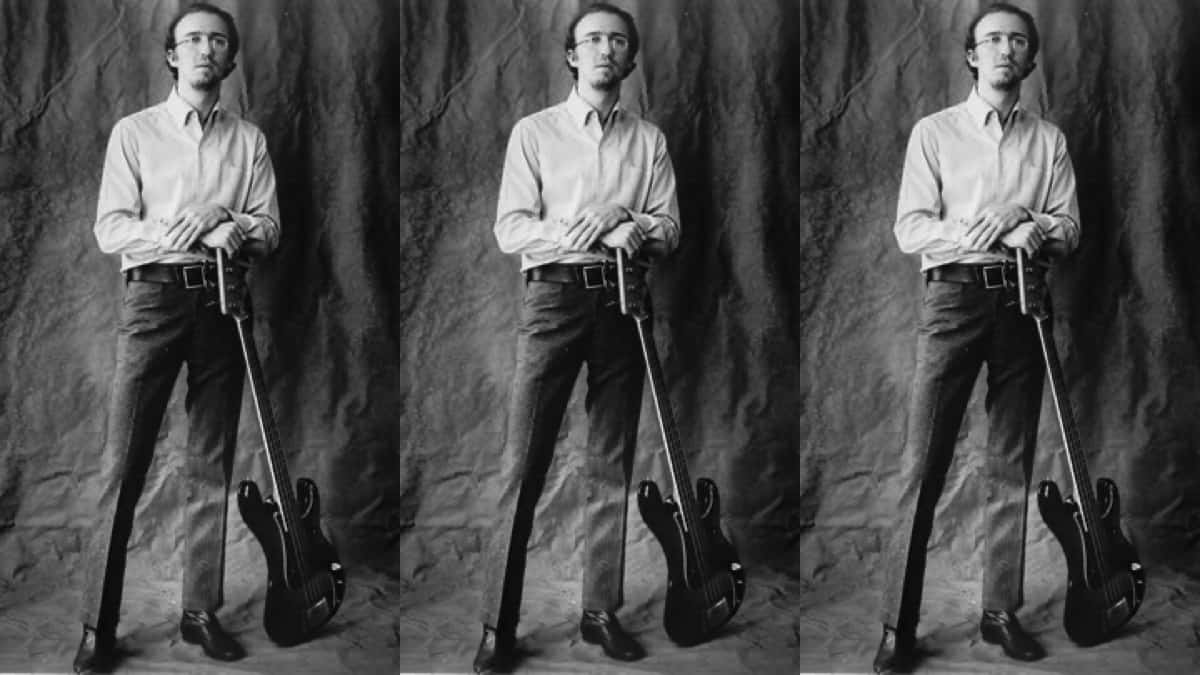
 Reader Submission: Rob Collier, May 2011… The Hand That Rocks the Radle
With bass virtuosos, session super-heroes, and low end innovators from Jamerson to Jaco getting most of our attention (and deservedly so), there will always be players who are overlooked and/or taken for granted. Though Carl Radle’s name was a frequent sight in album credits and musician polls in the 1970s—and he is generally considered one of the great sideman stalwarts of that era—his playing style is rarely discussed in print. Best known as Eric Clapton’s bass player throughout the ‘70s, Radle’s straightforward, supportive grooves made him a favorite of the likes of George Harrison, Leon Russell, Dave Mason, and Delaney Bramlett.
Radle had a no-nonsense style of playing that was utterly devoid of flash. He favored short, repetitive bass patterns steeped in gospel and rhythm & blues. At times he displayed McCartney-esque melodicism, creating lines that rivaled the song’s vocal melody for its catchiness. But first and foremost, Radle played to support the song. If that meant quarter-note roots for the entire song, that’s what Radle played, and he made it groove.
At the request of Leon Russell, Radle moved from his hometown of Tulsa to Los Angeles in the late 1960s. Russell introduced Radle to Delaney Bramlett, through whom Radle met Eric Clapton. With the rhythm section of Bramlett’s band, Clapton formed Derek & the Dominoes. Together they recorded the iconic Layla and Other Assorted Love Songs as well as being the backing band on George Harrison’s masterful debut All Things Must Pass. This period from 1969-1972 was Radle’s most prolific and will be the focus of this discussion.
“Keep On Growing” from the Layla album shows several important aspects of Radle’s style. His line on the chorus is a very simple and repetitive arpeggiation of an A-D chord progression (example 1).

Radle seldom makes any variations on this pattern. Even when the band vamps on this two-chord groove for the last two minutes of the song, Radle sticks to this line with a few extra ghost notes as his only embellishments.
The chord progression in the verse is also A-D, but here each chord is a full measure instead of a half-measure. Again, Radle sets up a one-measure groove and sticks to it, not even altering it when the chord changes.

Thus, the bass line acts as a sort of pedal point. The repetition of the line against the changing harmony creates a lot of tension which is (temporarily) released in the fourth bar with the G-D-A cadence.
During the bridge, Radle helps the song “open up” by playing longer phrases that move through the changes melodically.

The contrast between the moving line of the bridge and the short repetitive patterns in the rest of the song creates a large-scale tension/release that mirrors the tension/release that occurs every four measures within each verse.
Radle shows off his McCartney influence with one of his most melodic bass lines in “Bell Bottom Blues”, also from the Derek & the Dominoes record.

In the pre-chorus and chorus, he holds down the bottom end while providing a beautiful counter-melody to the vocal part. The B on the downbeat of the ninth bar of the example is an unexpected choice, but contributes to making this one of Radle’s most sing-able lines.
Joe Cocker’s Mad Dogs and Englishmen featured a who’s who of session players. When Leon Russell was put in charge of assembling the musicians, there was no question as to whom he would call for the bass chair. With an 11-piece band (not counting backing vocalists), Radle’s lines don’t cut through on the recording the way some of us would like, but you can always feel them moving. In “Sticks and Stones” Radle lays down a solid gospel/R&B groove. The accents on the “and” of 2 and 4 in the chorus really make this line move.

The chord progression in the chorus is moving back and forth between Bb and F (IV-I, a very common gospel progression). Here again, Radle varies his groove relatively little. He plays the same pattern for every Bb chord. On the F chord, he has two basic patterns that he alternates between. (Both are given.)
Carl Radle first connected with his future Dominos bandmates while playing with Delaney & Bonnie and Friends. Their live album, “On Tour with Eric Clapton” is the group’s most widely known, though arguably not their finest work. Still, the band is energetic and Radle’s playing is outstanding (not to mention crystal clear on the recording!). In “Coming Home,” Radle has two main patterns that he plays in the song—one during the guitar riff

…and one during the verses.

Each is a two-measure groove that he rarely embellishes. The syncopation in the middle of the groove on the verse keeps propelling the line to the next downbeat.
Radle went on to play on almost every Eric Clapton record in the 1970s. His premature death in 1980 at age 37 left a void in the bass community. Radle’s stripped-down, no-frills approach to playing is an in-your-face reminder of what a rock bass player’s primary goal should be: to make the song sound good.
Rob Collier earned his DMA in Composition at the University of Maryland and has taught theory and music technology courses at Chatham University, the University of Louisville, and the University of Maryland. He is currently an active bass player and bandleader in Pittsburgh, Pennsylvania.


Check out our top 10 favorite basses on Instagram this week…
Click to follow Bass Musician on Instagram @bassmusicianmag
FEATURED @warwickbassesofficial @walbasscollective @fidelityguitars @bass.buddha @rayriendeau @paullairat @marusyaguitars @stevemcdbasses @michaeltobiasdesign @alesvychodilbasses
Check out our top 10 favorite basses on Instagram this week…
Click to follow Bass Musician on Instagram @bassmusicianmag
FEATURED @pensacustomguitars @niklas_lukassen @malinoskiguitar @custom_painter @belforti.instruments @mubcustom @sebastiengavetguitars @carl_thompson_guitars @marleaux_bassguitars @wilcockbasses
Check out our top 10 favorite basses on Instagram this week…
Click to follow Bass Musician on Instagram @bassmusicianmag
FEATURED @hiltonguitars @olintobass @vortice.custom.guitars @cb_basses @belforti.instruments @acguitars.co.uk @basscentralofficial @michaeltobiasdesign @timsway1 @officialspector
Check out our top 10 favorite basses on Instagram this week…
Click to follow Bass Musician on Instagram @bassmusicianmag
FEATURED @didonatoguitars @brancoguitars @ja.guitars @lindoguitars @sawtooth_musical_instruments @pensacustomguitars @alpherinstruments @dtcbass @camazon_guitars @ebg_instruments
Check out our top 10 favorite basses on Instagram this week…
Click to follow Bass Musician on Instagram @bassmusicianmag
FEATURED @ja.guitars @mrrjackson @skjolddesign @karvanguitars @sireusaofficial @wonkorbasses @mihado_gs @odiengcustom @sirekorea @brute_bass_guitars

Gear News: Fender Honors James Jamerson with a 1962 Precision Bass

Artist Update With The Revivalists’ Bassist George Gekas

Maestro Ron Carter, Sharing the Spirit – June/July 2026 Issue

New Music: Danielle Nicole, Tug Of War

Right Hand Technique Strategies with Dr. Randy Kertz
Right Hand Technique Strategies with Dr. Randy Kertz

April 27 Edition – This Week’s Top 10 Basses on Instagram
May 4 Edition – This Week’s Top 10 Basses on Instagram
May 11 Edition – This Week’s Top 10 Basses on Instagram