
Latest
Worship Bassist’s Toolkit – Transcription by Steven Gregory

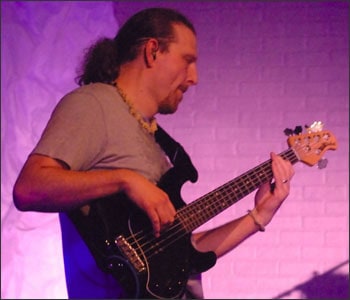
 Welcome to the next article in my “Worship Bassist’s Toolkit” series. In this series, we are thinking about tools that worship bassists must have available, maintained, and ready to use in order to create passionate, musical worship. Rather than the physical tools that are required for our craft, we have investigated musical tools such as fretboard knowledge and technique awareness. In this article, we will examine another musical tool: transcription.
Transcription, which is listening to music and translating it into a written form, is a skill that is critical for all musicians to practice. Those who transcribe regularly experience amazing increase in their musical abilities and understanding. In truth, more than one article is required to thoroughly investigate the art of transcription and I will most certainly dedicate future articles to this topic. However, transcription of music is definitely a tool that worship bassists must have in their toolkit, so this article will give an overview of transcription and look at the practical application of transcription for worship bassists.
Transcription has become a vital tool for the worship bassist due to the regular practice of worship teams using recordings, rather than sheet music, to learn songs. As worship team members, our job is to learn the songs from the recordings and be ready to play them in performance by the next Sunday. One approach to this task is to learn the songs by ear, without transferring the information to paper. This is certainly a valid way to learn tunes and can be, in certain situations, the right choice. If our charge is to bring our best to worship and provide a depth of understanding to the songs, transcription is the better option. Transcription allows the worship bassist to analyze song structure, chord progressions, dynamic changes, and other important elements in addition to the bass line. The act of translating from an aural to visual format forces the music to be truly understood, rather than accepting a superficial grasp of a song.
If never or rarely done, transcription can be a daunting task. As with many things, the best way to learn to transcribe is to do a lot of transcriptions! To help, break down transcription into smaller steps:
1. Listen. This is the obvious first step, but consider taking this step without having your instrument in hand and paper and pen at the ready. Just listen to the song, without distraction. Use a quality system for this – whether you use headphones or speakers is completely up to you. If you have taken the crazy step of actually giving yourself a few days to transcribe your music, listening with different systems can help. I often do my main transcription work at home with headphones, but listen to the songs when I am driving in my car as well. For larger transcription projects, I have often been surprised at what I notice distinctly in the car that was less noticeable at home. Take your time and listen to the song.
2. Learn. Start the learning process still away from pen and paper – try to separate the bass line in your mind and hear the rhythm and harmony that you will be playing. Also mentally take note of the basic song structure. If there are certain parts of the line and/or song that are noteworthy, listen to them carefully and take notice that this part will need extra attention later.
3. Write. Depending on your situation, you may need to translate the recording into a chord chart with notes about the bass line, a note-for-note transcription of the bass line, or a hybrid of the two. For basic tunes, I often do a chord transcription along with bass line elements. When approaching a more difficult section or song, I prefer to do a strict note-for-note transcription. Even when doing a basic chord transcription, use staff paper so that you can translate the music across the measures appropriately. In any transcription, mark song sections, use repeats and endings, and notate as much as possible.
During this stage, you often will need to incorporate the use of your instrument to determine the harmony and bass line elements you are transcribing. When you do use your instrument, make sure that you are careful to not play over parts in a way that blocks you from hearing the actual recorded bass line. Using your ears to determine what is being played on the recording is key here, not focusing on your playing.
4. Edit. Once you’ve been through the transcription, go back and listen with a critical ear. Make sure your notation is correct and you have accurately transcribed the song. This is also an excellent opportunity to mark dynamics and make notes on the page to alert you to tricky spots. Any extra performance notes should be added at this time.
5. Play. Play along with your transcription, correct any mistakes, and add final notes. This is also the stage where you can learn the bass-specific technical intricacies necessary to play the part you have just transcribed.
When you have completed this process you have trained your ears, learned a song, and brought forth performance elements that should be considered in rehearsal. In addition, your chart will save a lot of time the next time the song shows up on the set list. Rather than learning the music superficially and forgetting the song immediately after performance, you have obtained a wealth of knowledge about the song and have given yourself a platform from which you can bring your very best to worship.
Transcription is an essential tool for worship bassists to have available, maintained, and ready to use. As I mentioned above, this article is only the start of a discussion on transcription. I would love to hear about your experiences with transcription – leave a comment below!
Until next time, I hope that your bass playing is blessed and that you can bless others through your bass playing!


Check out our top 10 favorite basses on Instagram this week…
Click to follow Bass Musician on Instagram @bassmusicianmag
FEATURED @pensacustomguitars @niklas_lukassen @malinoskiguitar @custom_painter @belforti.instruments @mubcustom @sebastiengavetguitars @carl_thompson_guitars @marleaux_bassguitars @wilcockbasses
Check out our top 10 favorite basses on Instagram this week…
Click to follow Bass Musician on Instagram @bassmusicianmag
FEATURED @hiltonguitars @olintobass @vortice.custom.guitars @cb_basses @belforti.instruments @acguitars.co.uk @basscentralofficial @michaeltobiasdesign @timsway1 @officialspector
Check out our top 10 favorite basses on Instagram this week…
Click to follow Bass Musician on Instagram @bassmusicianmag
FEATURED @didonatoguitars @brancoguitars @ja.guitars @lindoguitars @sawtooth_musical_instruments @pensacustomguitars @alpherinstruments @dtcbass @camazon_guitars @ebg_instruments
Check out our top 10 favorite basses on Instagram this week…
Click to follow Bass Musician on Instagram @bassmusicianmag
FEATURED @ja.guitars @mrrjackson @skjolddesign @karvanguitars @sireusaofficial @wonkorbasses @mihado_gs @odiengcustom @sirekorea @brute_bass_guitars
Check out our top 10 favorite basses on Instagram this week…
Click to follow Bass Musician on Instagram @bassmusicianmag
FEATURED @polarisbasses @daveswiftbass @ramabass.ok @officialibanezguitars @serek_basses @dacruzluthieria @alusonic @sadowskynyc @maruszczyk_instruments @pensacustomguitars

Artist Updated With The Revivalists’ Bassist George Gekas

Maestro Ron Carter, Sharing the Spirit – June/July 2026 Issue

New Music: Danielle Nicole, Tug Of War

Right Hand Technique Strategies with Dr. Randy Kertz

New Music: Golden Flower, Are You Even Awake?
Right Hand Technique Strategies with Dr. Randy Kertz

April 13 Edition – This Week’s Top 10 Basses on Instagram
April 27 Edition – This Week’s Top 10 Basses on Instagram
20 April Edition – This Week’s Top 10 Basses on Instagram