
Features
Chicago Bassist Chuck Webb by Vuyani Wakaba

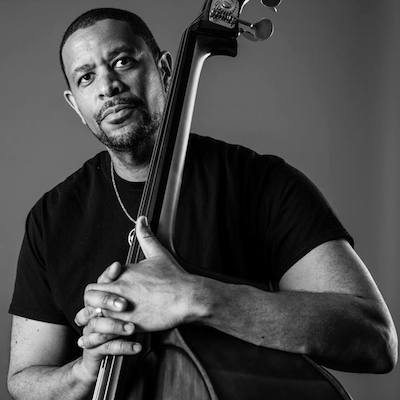

Featured bass Interview – Chicago Bassist Chuck Webb
In this issue, we sit and chat with Chicago bassist Chuck Webb about his new CD/DVD project. Chuck, for those who may not be aware, has a very long resume of being a sideman to many great players. He has toured and recorded with many musicians who are known around the world. In addition to that, he also maintains a very active teaching schedule.
Bass Musician Magazine (BMM): Chuck, thank you so much for taking the time to sit and chat. We appreciate your fitting us into your busy schedule. Word on the street in Chicago is that you and your new band, The Chuck Webb Band just recorded a new CD/DVD. Can you tell us a little bit about what you chose to record, where you recorded…and the line up of players you used? Of course, please tell us the title of your new CD and DVD.
Chuck Webb (CW): Firstly, Vuyani I really want to thank you for the opportunity to talk to you & BMM readers. I truly appreciate it! Yes, after many years of being a sideman last year I decided to start my own band project, The CWB (the Chuck Webb Band).
I really have my wife to thank (or to blame) for giving me the kick in the behind to finally do this. Just before my birthday last year she decided to throw me a party at a very popular weekly jazz event here in Chicago hosted by the Hyde Park Jazz Society. Not only did she arrange for the party to be held there she also booked ME to be the featured performer! I put together some of my favorite players and we performed two sets of straight ahead jazz & contemporary jazz/funk to a packed house.
The whole event went over so well that I knew I had a great concept for a band. After several great performances around the city I decided to take it to the next level and record the CD/DVD “No Smoke, No Mirrors.” I knew that even though I’ve been touring & recording for quite a while, I am a new name to a lot of people, so I wanted this CD to be a good representation of all of my bass identities.
Since I am a doubler on upright & electric, the CD is half acoustic and half electric. I chose to record the whole disk live with an audience in great little studio called Sound Mine which is just minutes from my house on the south side of Chicago. Some of my favorite jazz and contemporary recordings are live sets so I wanted to capture that same energy but with the audio quality that you can only get in a studio environment. Best of both worlds!
Some of the best musicians in the world are either from Chicago or still live here & I was very fortunate to pull together the best of the best for this project. You know, sometimes I get a little disappointed when I get a CD from a musician that I really like and the music on it is all about their compositions, or their production chops and they don’t really get down and play. I can guarantee that listeners won’t be disappointed with “No Smoke, No Mirrors” because we play our hearts out!
The line up on the CD is:
- Me on electric & upright bass
- Ben Johnson on drums
- Buddy Fambro on electric & acoustic guitars
- Tom Vaitsas on acoustic piano, Fender Rhodes and Hammond B3 organ
- Steve Eisen on tenor sax & flute
- Michael Scott on vocals
BMM: You definitely brought out the big guns, in terms of players, for this project. Your concept of recording live with an audience pays homage to the essence of jazz performance. The emphasis on “getting down and playing” fits in very well with the Chicago musical culture. Can you talk a little bit with us about the songs on “No Smoke, No Mirrors”? How were they chosen? Did you include your own compositions?
CW: It was really tough to decide on what tunes to put on “No Smoke, No Mirrors”. I felt that I needed to show as many sides of my musical personality as possible & still have the record be cohesive. That was a challenge because I play in and love so many different styles of music. My heart is in straight ahead jazz, electric funk, and R&B/ soul music so that is the essence of what the CD is about.
I included two of my original songs on the CD. “Swank” is an angular minor blues that features some cool left hand piano doubling the bass line and some ridiculously killer solos. “Momo’s Groove” is a song that I wrote for my mother (affectionately called Momo by the family). It’s a modern take on that 60’s Soul/Jazz sound that I grew up listening to as a kid.
I chose the cover tunes to represent the music that I love & the artists that influenced me. On the acoustic side there’s the beautiful but not often covered “Beatrice” by Sam Rivers. I first heard Chet Baker’s version of this song and fell in love with the elegant melody. It features me on upright bass in a traditional trio setting. Next is “Armando’s Rhumba” by Chick Corea. I always dug this tune for it’s Spanish/Latin vibe. I actually played this song a lot on tour with Ramsey Lewis. Most of the other versions of this song are played really fast and, for me, that kind of kills the groove a little bit. I decided to slow it down to what I call South Side Chicago Groove tempo! It’s actually very danceable the way we played it. We did it all acoustic with piano, upright, drums, acoustic guitar and a brilliant performance by Steve Eisen on flute.
Finally I covered “Song For Bilbao” by Pat Metheny. I first got hip to this tune from Michael Brecker’s version. I rearranged it a little to feature our drummer, Ben Johnson who IMO is one of the best soloists on drums today.
For the electric tunes I paid tribute to Charles Mingus with “Goodbye Porkpie Hat.” A lot of bass players have done this tune but I put a different spin on it with an extended solo electric bass intro and melody (on my Sadowsky RV5) and some interesting re-harmonizations.
We also did Thelonius Monk’s “Epistrophy.” I heard Russell Gunn’s version of this while I was driving one day & almost crashed the car it was so funky. I adapted that concept for my version and did a lot of slapping for the funk fans. I knew I wanted to do some straight up R&B or soul songs on the CD, so of course I went with the Godfather-James Brown. My all time favorite JB tune is Get On The Good Foot. The simplicity and the groove factor are just killing on that tune. I always loved the little bass breaks James put in the record but I wished the were longer, so of course for my version I did an extended bass solo on that break section. I used my Fender Road Worn P-bass on this track so there’s some real P-funk going on.
And finally I had to do some Stevie Wonder because he is my all time favorite composer. I chose a version of “Living for the City” that features the bass playing the 3/4 interlude section as a solo and some hot New York style sax and piano solo sections. Michael Scott came in and laid down some serious vocals on these tunes for me live with the band in one take. Smoking!
 BMM: Your selection of tunes sounds great. I’ve always loved “Good Bye Pork Pie Hat”, as well as the bulk of Stevie Wonder’s catalog. Of course, you can’t go wrong with any James Brown song.
Although we are focusing on your new Chuck Webb Band CD/DVD release “No Smoke, No Mirrors”, we should talk a little about your background. I know, from a conversation I had a couple years ago with our mutual friend, Nashville bassist Roy Vogt, that you attended the University of Miami. In addition to that, you toured, recorded or performed with a spectacular list of artists from various genres. In your opinion, what gigs, tours or music classes were pivotal in helping you arrive at this point in your musical development and career?
CW: I have been very very fortunate in my career. Even though I’m not a household name I’ve been able to sustain a great touring, studio, teaching and local schedule that has supported me & my family for many years. I’ve toured or recorded with Al DiMeola, Ramsey Lewis, David Sanborn, Grover Washington Jr., Freddy Hubbard, Stanley Turrentine, Bill Withers, Joe Sample, Jerry Butler, Phil Perry and many others.
As far helping me to arrive at where I am today, the Al DiMeola situation taught me to never underestimate your potential. I was living in Chicago and got a phone call out of the blue from Al’s tour manager that my name was put on the list to be invited to audition for Al’s upcoming tour. At that time I was only vaguely familiar with Al’s music. Of course I was hip to his Return TO Forever work but not much else.
My initial impulse was to say thanks but no thanks to the audition because I didn’t think an unknown Chicago guy like me would ever get that gig. Fortunately, my inner voice said “You’ll always regret it if you don’t at least try!” So, I bought a round trip ticket to New York for that Thursday morning, returning that same night!
The audition was at S.I.R. in Manhattan & when I got there the hallway was literally packed with bass players all shredding DiMeola licks! I thought to myself “Oh hell no, no way you’re going to get this gig!” When it was my turn I went in & the cats in the band were very cool, friendly & laid back. I really didn’t know any DiMeola tunes but my reading was decent so we went through some things. I thought I did pretty well on the basic parts of the songs, but there were some 16th note unison lines that I knew I didn’t nail.
When it was over everybody said nice job & I cabbed it back to the airport and came home. I figured I wouldn’t get the gig but I was proud of myself for giving it my best shot. 2 days later I got the call that I did indeed get the gig and I toured with Al for close to two years from 1987 to 89.
I found out after the fact that the reason I got the gig over the other players was that even though a lot of them knew the tunes & could play all the fast licks Al & the band liked the way I made the music FEEL and they dug my groove the best. They said they could tell that I could learn all the licks, but the groove was something you either had or you didn’t have. Needless to say GROOVE FIRST has been my credo ever since.
Another big lesson I learned was on a short tour with David Sanborn. David & the guys in that band played with such intensity it was like every gig was the Superbowl. That taught me the importance playing with complete conviction at all times. Ramsey Lewis taught me about the power & importance of playing softly. Most inexperienced players play too loud all the time.
In Ramsey’s band we had to be able to groove as hard as hell but do it at a whisper volume. When you can do that it makes your loud playing really mean something. If you just play loud all the time it’s like someone shouting at you. Eventually you just tune it out.
BMM: Those are great lessons! Teaching is another significant part of your career. Currently, you are the Director of Bass Studies at Columbia College in Chicago. How has teaching impacted you as a player?
CW: I really love teaching and I am a MUCH better player because of my teaching experience. Having to continually teach basic concepts to intermediate level students really solidifies my knowledge of the essentials of theory and functional bass playing. Then when I get the occasional super talented & gifted student it really makes me bust my butt to stay a step or two ahead of them so I have something fresh to teach in each lesson! The administrative roles that I have at Columbia came about by really being a reliable, professional presence and being the kind of person that will get the job done no matter what, no excuses.
BMM: As a doubler on acoustic upright bass and the electric bass, what do you do to keep your chops up on both instruments?
CW: Practice a lot! (laughs…) Really, there is no other way. I try to practice every single day and if I have to miss a day for some reason I feel “off.” My practice time is split about 65/35 upright/electric. Because I have more years behind me as an electric player it comes more naturally to me. Upright definitely takes more time and effort for me. I start every upright session with arco studies.
I’ve found that the other big thing about being a doubler is perception. It’s important that people in your musical circles know what you do and perceive you the way you want them to. When I really got serious about playing upright I only listened to acoustic jazz for about a year. I would go to jam sessions and just be seen on the jazz set. It worked so well that some people didn’t even know that I played electric bass. You have to REALLY love to play both instruments because it’s a lot of work to play them both well and authentically!
BMM: Thank you for being so candid in sharing how much effort you put into being the first call double you are. Most of all, we appreciate your sharing how much of your practice time you devote to each instrument.
When is “No Smoke, No Mirrors” being released? Aside from your website (www.chuckwebbmusic.com), where else will it be available for purchase or download? I hope you are planning a CD/DVD release party as well so Bass Musician Magazine readers can hear about that.
CW: “No Smoke, No Mirrors” will be released on May 23 on ITunes, CD Baby, Amazon & my website (www.chuckwebbmusic.com). Clips from the live recording session will be on YouTube and my Facebook page (facebook.com/chuckwebbbass).
BMM: Thanks so much Chuck for taking the time to talk to Bass Musician Magazine. We hope that your CD/DVD project “No Smoke, No Mirrors” will be wildly successful for you!
Chuck Webb can be found at www.chuckwebbmusic.com on the web, or at www.facebook.com/chuckwebbbass on Facebook.


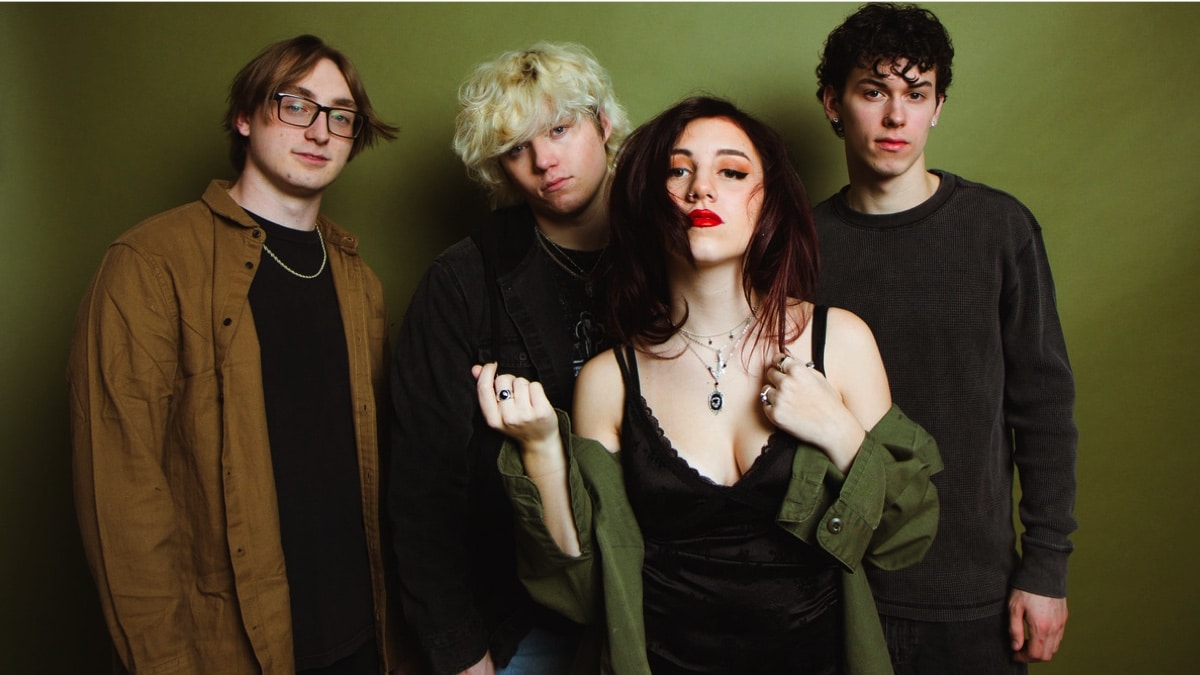
When I heard that American Vanity, formerly known as Burn the Jukebox, was gearing up to release a new album this summer, it felt like the perfect moment to catch up with bassist and vocalist Virginia Franks.
With a fresh name unveiled just this past January and a clear shift in musical direction, the band is entering an exciting new chapter, one defined by both sonic evolution and a deeper, more focused message.
In this conversation, Virginia opens up about the inspiration behind the upcoming record, how she crafts her distinctive bass tone, what fans can expect from their upcoming tour, and where she sees both herself and the band heading next.
Join me as we dive into it all.
Here is Virginia Franks.
Photo, Devin Kasparian
Featured Videos:
Follow Online:
thisisamericanvanity.com
IG @thisisamericanvanity
IG @virginiagracefranks/
TikTok @thisisamericanvanity
YouTube @thisisamericanvanity
Facebook: facebook.com/profile.php?id=61585585599800
Features
Interview With Bassist Bjorn Meyer on ‘Convergence’ … Exploring Sound, Space, and Innovation

By Guest Contributor, Joe Barth
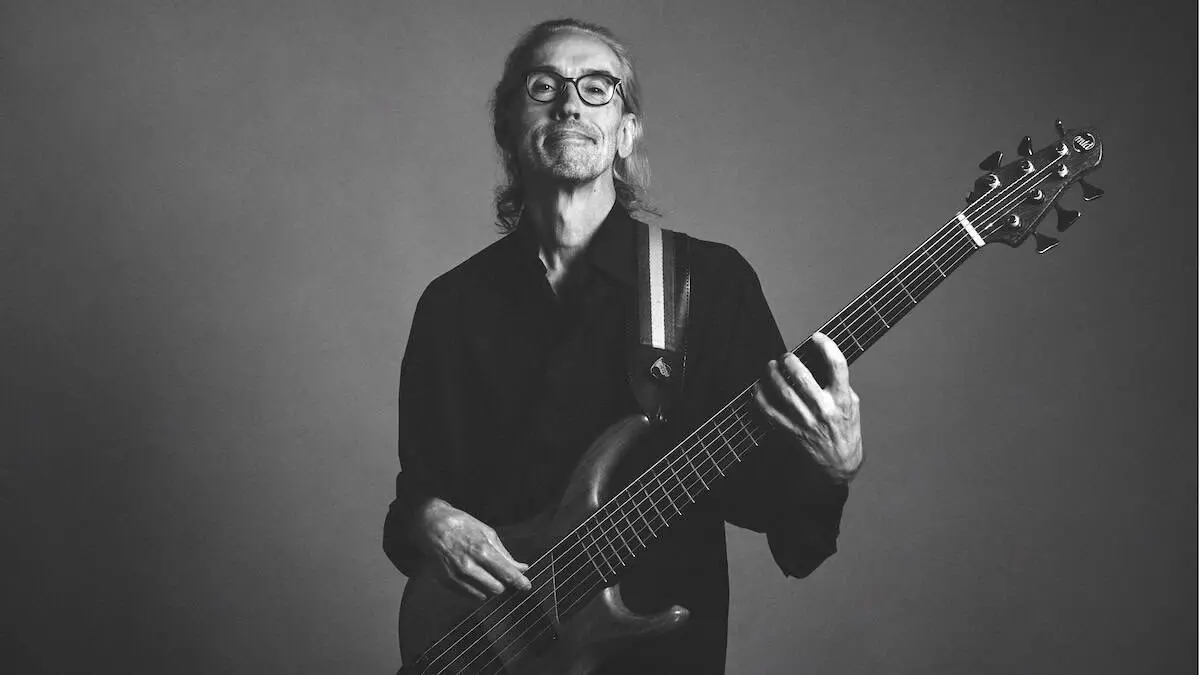
Joe Barth talks to Bjorn Meyer about his new album and exploring new musical territories with the electric bass.
Above photo courtesy: Björn Meyer © Fredrik Gille / ECM Records
Bjorn Meyer was born in Stockholm, Sweden in 1965 and has lived in Switzerland since 1996.
Starting on the piano, trumpet, and guitar, he turned to the electric bass at age eighteen. In 1996, the Nyckelharpa player Johan Herdin, percussionist Bazar Bia, and Bjorn formed the trio Bazar Bia. Since then, he has worked with Persian harpist Asita Hamidi, oud player Anouar Brahem, and pianist Nik Bartsch. Convergence is Bjorn’s second album on the ECM label.
JB: Before I ask about the new Convergence album, tell me about yourself. You grew up in Stockholm, Sweden. During your teenage years, you played guitar in punk-rock bands, then, at age eighteen, switched to bass. What was musically most helpful in your personal development as a bassist?
BM: My first encounter with the electric bass was pure luck and changed my life in an instant. Music had been an important part of my life from childhood, but always as one of many things I was interested in, like a very rewarding hobby. The bass changed all that. I had finally found my voice, and all the sounds I had heard and accumulated for so long without knowing how to make them real could finally burst out. I gladly spent every free minute of every day exploring this new universe, and that gave me a focused motivation that was hugely important.
Two important things helped me on my way and shaped me a lot at that time:
First of all, I realized that so much music that I was really interested in, as a guitar player, had resonated with me mainly because of the bass players involved! As a newly emerged bass player, I had a big library of music I could revisit. I learnt many important lessons by figuring out what made the music I loved work.
Second and definitely not less important: at the time I lived close to a house where many great musicians from Stockholm had their rehearsal spaces, jam sessions, and a general meeting point. Often there was a bassplayer missing — and I was five minutes away — so from the very early days as a bassist I could play with fantastic, experienced musicians from many different styles. From the very beginning, I was surrounded by role models and mentors who later on became colleagues and bandmates.
JB: Bjorn, to learn more about what shaped your musical values on the bass, to you, what are the three most influential bassists, and please give us a particular album they appeared on that you really connected with?
BM: There could obviously be many more than three, but – and this connects to the answer above! (Bass players “behind” guitar players)
Bass player: Jimmy Johnson
Album: Alan Holdsworth – Metal Fatigue.
I was (and still am) absolutely fascinated by Alan’s playing and compositions but the real magic was when I realized what Jimmy was doing to keep it all together, weaving fully logical basslines through “impossible” chord changes! And then there are these two very short fills at around 2:55 in the title track. 2 times 2 bars that I still remember the very first time I heard on Swedish radio. Time stopped, and I found myself trying to understand how to create such bass parts and how to adapt Alan’s unique chord voicings for the bass.
Bass player: Carles Benavent
Album: Paco De Lucia Sextet – Live One Summer Night
I had been intrigued by flamenco and the work of Paco De Lucia for a long time. My sister gave me the LP for Christmas, and this sextet redefined anything I had imagined possible. It taught me a lot about how to approach strong musical traditions with deep respect and still find my own space within and make the music even stronger.
It is absolutely incredible how Carles takes part in every function in the group – from rhythm and chords to melody and harmony – without ever losing the bass function of keeping all the sounds together and allowing the others to shine.
The bass solo in “Alta Mar”, the comping — if you can call it that — in Solo Qiero Caminar”.
Also, the studio album Solo Qiero Caminar was a game changer, just listen to the duo version of “Monasterio de sal.”
Bass player: Anthony Jackson
Album: (for once not a guitar player) Michel Camillo – Why Not!
I had been a fan from hearing Live In Central Park by Simon & Garfunkel but his playing with Michel Camillo was another ear-opener for me. Maybe also because my main working band at the time was a Latin-jazz band, so I guess it was a good match.
Having said that, Anthony was a huge inspiration across styles and genres over all the years we were fortunate enough to have him with us!
… that was already three … and I didn’t even get to mention Steve Swallow, Marcus Miller, Aston Barrett, Jaco Pastorius, Skuli Sverrison, Meshell N’Degeocello, Carol Kaye, Pino Palladino, and all the fabulous upright players that have inspired me so much – Charlie Haden, Palle Danielsson, Scott La Faro, Miroslav Vitous, and Eberhard Weber.
.. but the three I mentioned were definitely very important at the time!
JB: Convergence is you recording alone with your six-string bass. Your music has (for lack of better words) a very ethereal sound. How do you describe your music?
BM: The idea of an electric bass as a solo instrument triggers very diverse and often contradictory expectations. Many people have some idea of what a bass can do, and they expect anything from “root notes and fifths” to fast, equilibristic slapping frenzies with the comment, “How can you do that for more than three minutes per show?”
If I were to describe this program, I tend to use a few different approaches depending on who I am talking to:
Electric bass in acoustic space — I think it sums it up very well and gives some idea of what to expect without putting the music in a certain genre. For me, it is very important to share the music’s acoustic experience rather than focusing on the instrument’s electric character.
This music is also a mirror of my musical and personal journey through this life. The bass allows me to express myself without the risk of having my words misunderstood, and everything has a place in this music. Even though there are compositions, performing solo allows a unique freedom of interpretation depending on my state of mind that day.
Generally, I would be very happy to just say – new music for electric bass guitar!
JB: The album opens with “Convergence,” a song with deep textures, loops, and very staccato melodic figures. Talk about this.
BM: The album starts with a distorted chord progression – somewhat inspired by Alan Holdsworth – that I simultaneously feed into a loop through a shimmer reverb that I slowly fade in, played backwards. I find this texture very inspiring, and since it is all created live, it always turns out a bit different.
A pattern in 14/8 is presented – like a teaser – before an improvised part takes off in another direction. The pattern comes back in two versions: the original 14/8 (28/16) and a shortened 27/16 version. I loop the shorter version and play the original one on top, creating the rhythmical displacements you hear at the end.
I find such layering of patterns of different lengths very interesting, and it is a natural part of my vocabulary after many years of playing various kinds of minimal music with Don Li’s Tonus, Nik Bärtsch’s Ronin, NEN, and many others.
JB: The album consists of nine of your compositions. Were these songs all composed for this project? Talk about that process.
BM: Yes and no. I didn’t sit down to deliberately compose a fully new repertoire with this album in mind.
However, from the very first concert I played to release my first solo album, Provenance, in 2017, I noticed that the material and my playing were already shifting. Creative accidents happened, and new ideas emerged during concerts, soundchecks, and travels. After almost six years and many concerts, I had a tour in Japan and realized that there was nothing left of Provenance in the program. Then it took some time for Convergenceto emerge — during which the material continued to evolve.
In hindsight, I can see many stages of the development of Convergence that were definitely meant to become a new repertoire in its own right. One aspect of the name of the album reflects the convergence of ideas, moods, emotions, life, and time into this moment.
JB: Talk about the six-string bass you used in this recording. Did you use amplification, or was it mainly recorded directly?
BM: I play an MTD 635 (#160), an instrument that found its way to me by very lucky coincidence in New York in late 1995. I have played this very instrument on everything involving electric bass ever since.
As I mentioned earlier, the acoustic component is very important to me, and I am very lucky to have the support of producer Manfred Eicher for this approach. We recorded in a big, wonderful-sounding room that often hosts symphony orchestras and recordings of large film-music projects. The sound engineer Michael Hinreiner knows the room very well and was also very keen on the idea of making an acoustic-style recording.
I had a pair of Genelec 8030 Studio monitors and a small subwoofer behind me for the full signal (bass and effects) and a pair of satellite speakers further away, where I sent effects only (delays, reverbs, etc., but no direct bass signal) in order to fill the room and have a spatial experience.
This setup was then recorded using a lot of microphones to pick up all the aspects of the room, but also close miking on the instrument to pick up the acoustic sound. Much like you would approach a serious recording of any acoustic instrument, like a classical guitar or a cello.
Obviously, the line outputs of the bass and the effects were also recorded, but very little of that was used in the mix. I am very happy with the result, and I think you can really have the experience of sitting in the room with me when listening to the album.
JB: “Drift” is filled with harmonics. Tell us about that song.
BM: After Jaco’s “Portrait of Tracy,” anything involving harmonics on the bass is a bit sensitive. However, the range of the six-string and playing harmonics with a bit of a scraping sound with the plectrum does add another texture that I find very inspiring.
The piece started out as a reflection on the ice breaking on a river after a strong winter. Deep cracks forming, small pieces of ice breaking loose into the stream. Obviously, that is only my very personal picture. Some have said that it reminds them of northern lights, which is also a beautiful thought!
B: I love the sense of movement you create in the song “Motion.” Talk about this composition.
BM: Thanks! It took me a long time to become fluent in playing it and for the piece to develop to its current form. It started with the plucking pattern in 11/8 and the first two chords. For a long time, I couldn’t find a way out of this tonality, but the more my right hand started feeling comfortable in any tempo, I started hearing a harmonic development that the left hand was kind enough to accommodate.
“Motion” is a good example of two things that inspire me: I like it when odd meters still can have a dancing quality to them, and I often find this kind of incremental approach to harmony very interesting.
JB: This is your second ECM album. What do you appreciate about working with producer Manfred Eicher and ECM Records?
BM: It is my second solo album on ECM, but I have been lucky enough to work with Manfred on four albums with Nik Bärtsch’s Ronin and two albums with Anouar Brahem. All very different productions.
I am fascinated by his enormous dedication to music and very inspired by his way of listening. Knowing that he is listening changes my focus as a player. From being concerned with playing “right” it becomes all about playing in a way that allows for a deeper level of experience. Taking risks and adapting the performance so that the music translates well to someone who is attentively listening. He has the ability to ask or suggest things that allow me to shift focus away from the microcosm of “my composition” to the macrocosmic dramaturgy of the music.
This overview also applies to the full album, in how he balances the tracks and puts the track list together. For example, the idea of opening with “Convergence” was far from my original plan, but it turned out exactly right. Not to mention the choice of cover picture, a very unexpected but perfect match for me.
JB: Do you view the entire album as a kind of symphony or tone poem with multiple movements?
BM: I definitely see the album as a whole body of work in itself and a thoughtfully curated dramaturgical statement. But I still see it as a collection of separate compositions rather than multiple movements. The album has one sequence, but in a concert situation, I can freely choose another path to adapt the dramaturgy to the room, the audience, and the setting.
Having grown up listening to LPs, it is very important to me that listening to the full album adds an extra dimension to each song’s experience. Especially in this age of streaming and separate songs put together in more or less random playlists, I think it is more important than ever to at least try and compose as deep listening experiences as we possibly can.
JB: The album ends with the reflective “Nesodden.” Is there any connection with the peninsula in Norway?
BM: Yes – the song was written in a small cottage at Nesodden, overlooking the fjord running into Oslo. I was performing at the jazz festival there and arrived a day early due to travel issues. Sitting there, I saw a family of geese and two canoe paddlers in a beautifully respectful interaction. I guess it had something to do with who could land first or something, but all of a sudden, this whole tune had formed. I did rework some minor details over time, but the song was like a gift from Nesodden. It very seldom happens in that way.
JB: You moved to Switzerland a few years ago. Talk about the gigs you do in Europe and how you make a career in music work for you.
BM: You are kind – it has already been 30 years.
One thing I really appreciated coming from Sweden was how well-connected Switzerland is. In four to five hours, you reach Paris, Milano, Munich, and many other comparatively large cities by train or car! This makes touring so much easier than from Stockholm, where you either spend a full day just to reach the country’s border, or you have to fly all the time, which I don’t really like.
Interestingly, both Sweden and Switzerland are quite small countries, yet they have very strong, yet distinct and creative music scenes. There are also many interesting venues and festivals. Since I am involved in quite a few different projects all across Europe, Iran, and North Africa, my touring schedule will depend on which projects are active at the time. At the moment, my focus is on my large ensemble, Garden of Silence — 9 Musicians from 3 continents — on the one hand, and the solo project on the other.
I feel so very blessed to have the opportunity to present this music to so many fantastic audiences and to be part of so many inspiring collaborations.
Like everywhere, the economic situation for live music is changing quite rapidly, also here. However, I am confident that we will always need this form of human interaction, being in the same space at the same moment in time, sharing the same experience. Music is such a strong healing power, and we need it more than ever.

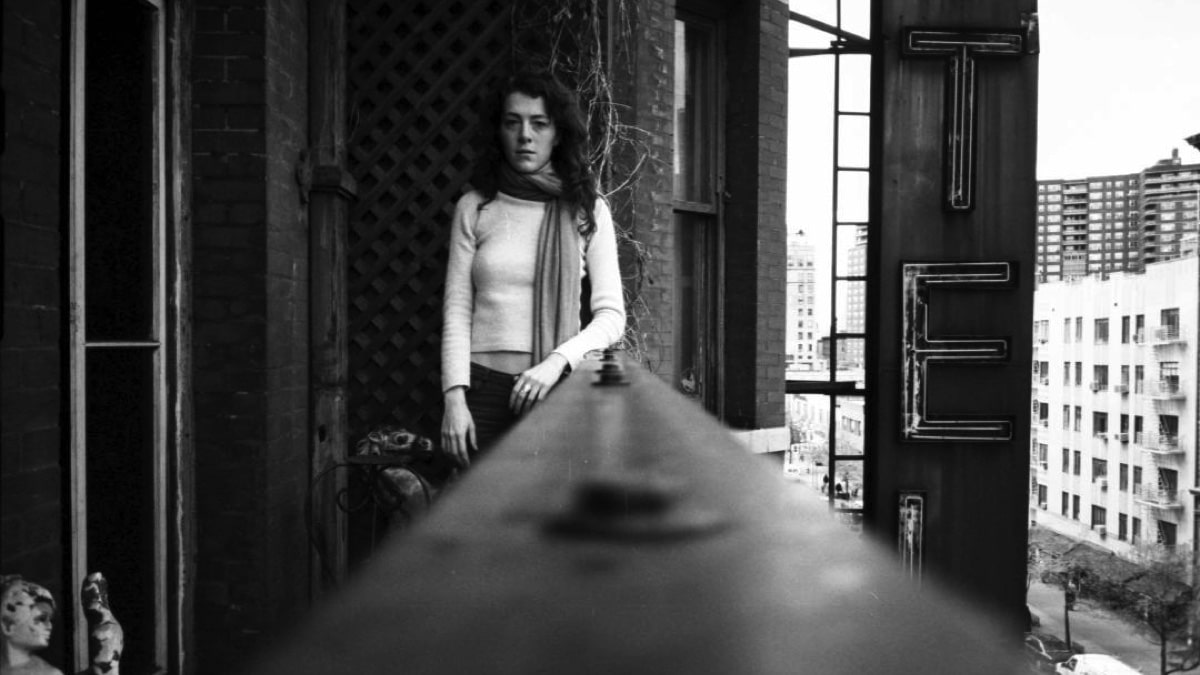
Photo: Self-portrait by Melissa Auf Der Maur
Melissa Auf Der Maur is a Canadian bassist who played with Tinker, Hole, and The Smashing Pumpkins. She released her own work and is a photographer with photos published in Nylon, Bust, and National Geographic. She released her ‘90s Rock Memoir “Even The Good Girls Will Cry” on 17 March 2026.
KB: Did you always want to be a singer-musician growing up?
I’ve played music my whole life. In school, I played trumpet and sang in a children’s choir, so music was always within me. My mother was the first female disc jockey on the Montreal airwaves; her record collection played a huge role in my inspiration and love of music.
KB: When did you start playing bass, and why this instrument?
When I was 19, the early 90s music explosion began to percolate in tiny clubs around the world. I was lucky to be a ticket girl at Montreal’s underground music club. In one year, I saw Hole, Sonic Youth, Smashing Pumpkins, White Zombie, and The Breeders – all had female bass players. That’s when the seed was planted. By the age of 22, I was the bass player of Hole.
KB: Which brands of basses have you used in your career, and which one are you using now?
The first bass that I learned on was a vintage Squier Precision. Hole was sponsored by Fender guitars, so I upgraded to Fender Custom Shop Precisions. That is all I play, but I have a cool vintage 8-string Greco that I use on recordings to thicken up guitar parts.
KB: What equipment do you use or have you used with your basses?
Ampeg SVT amps and cabinets, a couple of Sans-Amp pedals, and that is it.
KB: How did you become a member of Hole, and what is your fondest memory of that time?
Billy Corgan of the Smashing Pumpkins was helping scout a replacement for (RIP) Kristen Pfaff, Hole’s bass player. My band, Tinker, opened for them on the Siamese Dream tour, so Billy had seen me play and could vouch for me. Courtney trusted her talented friend, and that was it. I initially said “no thank you” due to my commitment to my photographic studies and the drama and chaos surrounding the band during the “Live Through This” album release. Courtney took it as a good sign that I said no, so convinced me to reconsider, and soon after, I accepted their invitation, in the name of helping put females in the male-dominated landscape of rock music. My fondest memory is every show we played as a mostly female band, symbolizing what a woman could do in a rock band. Every show had a purpose: get more women to play music.
KB: You are a photographer as well. What makes a great picture? Do you shoot in color or b/w?
I started shooting photographs at age 15. Initially only shot black & white and worked in the art school darkroom. In university, I took a color photography course, and shifted mostly and forever to that, because it was easier to process film on the road when I joined a rock band. I experimented with many cameras, point and shoots, manual, polaroids, medium format, and vintage finds. The trick to a good photograph is to shoot many and all the time – the magic is in the edit and selection process.
KB: Are there artists you would love to collaborate with or wish you had?
??I’ve been lucky to collaborate with some of my favorite musicians in my career. I would still love to collaborate with a new generation heavy electronic artist on an analog bass, heavy electronic drums, and synths collaboration project. Take me out of my usual zone, merging the past and future: my love of 80s dark new wave and new artists exploring that genre. It was very futuristic back then, and we are now, after all, living in the future. I am in the mood to play bass to heavy beats I want to dance to.
KB: What are your 7 favorite bass lines in music across all genres? And why these 7?
“Mountain Song” – Jane’s Addiction (love a rambling, rolling bass line – feels like the ocean waves)
“Black Top – Helmet” (was the first bass line I taught myself)
“Gold Dust Woman” – Hole from “The Crow 2” Soundtrack (it was my first bass line contribution to the band)
“Get Ready” – The Temptations (Motown just feels so good, because of the bass)
“Lucretia My Reflection” – Sisters of Mercy (makes me want to hit the dance floor and play bass simultaneously)
“Be My Druidess” – Type O Negative (full chord bass playing at its best by iconic, demonic, Peter Steele, RIP)
“Romantic Rights” – Death from Above (1979 – unique distorted overdriven tone, combined dance rhythm and melodic intelligence, all in one shot – also! Shout out to a bass & drum only band, which is awesome, and we should have more of, but the bass player needs to be a killer to fill that role.
KB: What are you currently up to?
Releasing my ‘90s Rock Memoir “EVEN THE GOOD GIRLS WILL CRY”. Visceral healing process, it was to get it out of me and write it, but I suspect the real magic will begin by putting it into the world and reflecting with others on what the magic of the ‘90s was all about. Powerful music decade that carried us into what is now a brave new world of digital corporate weirdness – may the past shed a light on our future. That’s my hope for this book release and tour.
Visit online:
Official Website
Facebook
Instagram
YouTube
Spotify
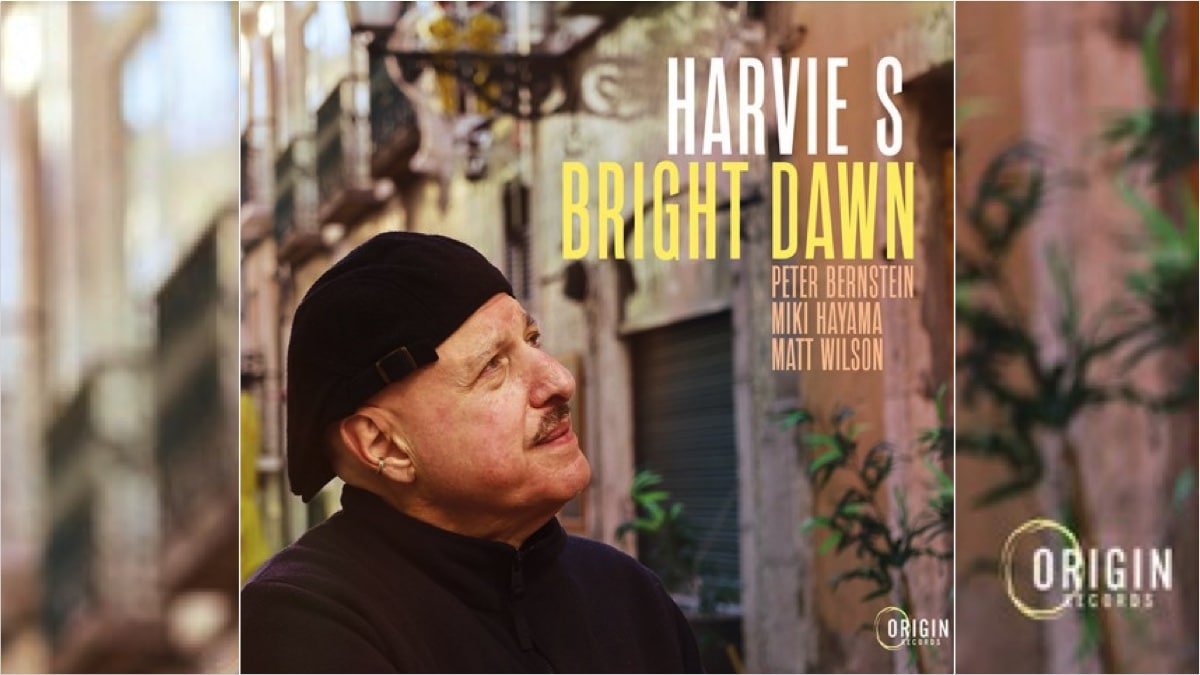
Harvie S is an American jazz double-bassist. He recorded numerous albums as a leader and co-leader, with over 400 recordings as a sideman. He has been a professor of jazz bass and ensembles at the Manhattan School of Music since 1984. He has a new album coming out on 20 March: “Bright Dawn”, where he features the bass as a melodic instrument.
KB: Did you always want to be a musician growing up?
In my childhood days, I wanted to be a professional football player. When I hit my early teens, I didn’t know what I wanted to do, but I finally decided that music was calling me. No one supported my decision, especially my guidance counselor at my High School. I decided to go to Berklee College and enrolled as a pianist.
KB: Why did you pick the double bass?
I was always listening to Jazz in High School, but I had a cheap stereo and the bass never came through, so I was not into the bass. I bought the Riverside Bill Evans “Waltz for Debby” recording and could hear the bass on that. Scott LaFaro made a huge impact on me. I realized what you could do on the bass through that.
In my first year at Berklee, I made the decision to get a bass and give it a try. No lessons, but I started working immediately and took to the instrument fast, even though I really didn’t quite know what I was doing. Berklee at the time didn’t really have much of a bass department (they do now), so I stayed as a composition major and piano minor. I was doing gigs on both instruments, but leaning towards the bass. In my senior year, my hero, George Mraz, graduated, and I was chosen to replace him. I was amazed by that, but it inspired me to do better.
KB: What double basses have you used over the years? Which one are you using now?
Good question. I have owned over 30 basses in my life. I would buy and sell a lot, and quite truthfully, I let some great basses go. About 12 years ago, I got a Jusek bass made in the 1920’s that Barrie Kolstein had completely restored after it was in an accident. He made it better than it ever was. I love this bass. He then turned me onto a Prague 100-year-old bass. I decided on this bass to use a gut G string and added a C-extention. This is my power bass, and my Jusek is great for trio work I do with Alan Broadbent and others. It bows really nicely. I used it on my new recording. I also have a Busetto bass, which is kind of a travel bass with a small body, and I use it around town and can take it on the bus. It sounds so real. Probably isn’t made anymore.
KB: What equipment do you use with your double bass?
I am very concerned about equipment. So concerned that I invented a bass amp called the “Upshot”. It is a completely different design where the sound goes up rather than straight out. For some reason, it projects perfectly and sounds like there is no amp, but has plenty of volume.
I also designed it to fit in a backpack which frees your arms when you carry the bass. It only weighs about 13 pounds. Acoustic Image was making it, but unfortunately, the owner, Rick Jones, passed away, and the company disappeared. I have some spares, so I can still use it. I use Heritage strings because I was involved with the development. Great strings, but maybe hard to get now. I use the Planet Wing pick-up, which, in my estimation, is the best there is, and it is such a simple design.
I use Weidoeft rosin, which Barrie Kolstein invented. Best rosin I ever used.
KB: You are teaching bass at Manhattan School of Music: What is the first thing you teach someone who is new to bass playing?
I really spend a lot of time working on how to get a sound. After that, timing and intonation.Then a lot more.
KB: Are there people you would love to collaborate with or wish you had?
I never got to play with Billy Higgins or Jack DeJohnette. I would have really liked that. I’ve been blessed and have gotten to play with many of my heroes. On my website, you can see the list.
KB: What are your 7 favorite bass lines in all music genres, and why these?
Hard question to answer, but I love the bass lines Ron Carter played on the Miles Davis recordings.
Israel Crosby with Ahmad Jamal
Ray Brown with Oscar Peterson and others
Luizão Maia & Elis Regina
Bobby Rodriguez with Tito Puente and Alegre All Stars
Scott LaFaro with Bill Evans
James Jamerson with everybody
Gene Taylor with Blue Mitchell
Butch Warren with Herbie Hancock
Thelonius Monk (with Wilbur Ware) on everything he ever did
I know I left out a lot, but it’s a good start.
KB: You have a new CD coming out in March… What can you tell me about it? How excited are you?
I’ve made over 20 recordings as a leader and over 20 recordings as a co-leader, but I never did a bass feature project. On “Bright Dawn,” I decided to feature the bass as a melodic instrument. I don’t play all the melodies, but more than in the past. That’s for sure. I wrote all but 2 compositions. I carefully picked the band and was able to get Peter Bernstein, Matt Wilson, and Miki Hayama for the date. I know their playing and have recorded separately with them in the past. I tried to make the music fit with their style so they could shine (and they did).
I am very happy with the result, and I was involved with the mix. Actually, in the past 10 years, I have assisted many musicians in mixing their recordings. I believe the mix to be essential in getting the message across. I have also been doing recordings, and I have recorded over 12 CDs as a recording engineer, mixing assistant, and producer. I enjoy the process so much. I like a hands-on approach to music that I record, and it has been working very well.
The importance of music to me is to tell a story and inspire others to fulfill their potential. Just playing notes is not the way for me. I’ve had a hard road to travel all my life, but I wouldn’t want it any other way. I’ve had a blessed life.
Visit Online:
Official Website
Facebook
Instagram
YouTube
Spotify
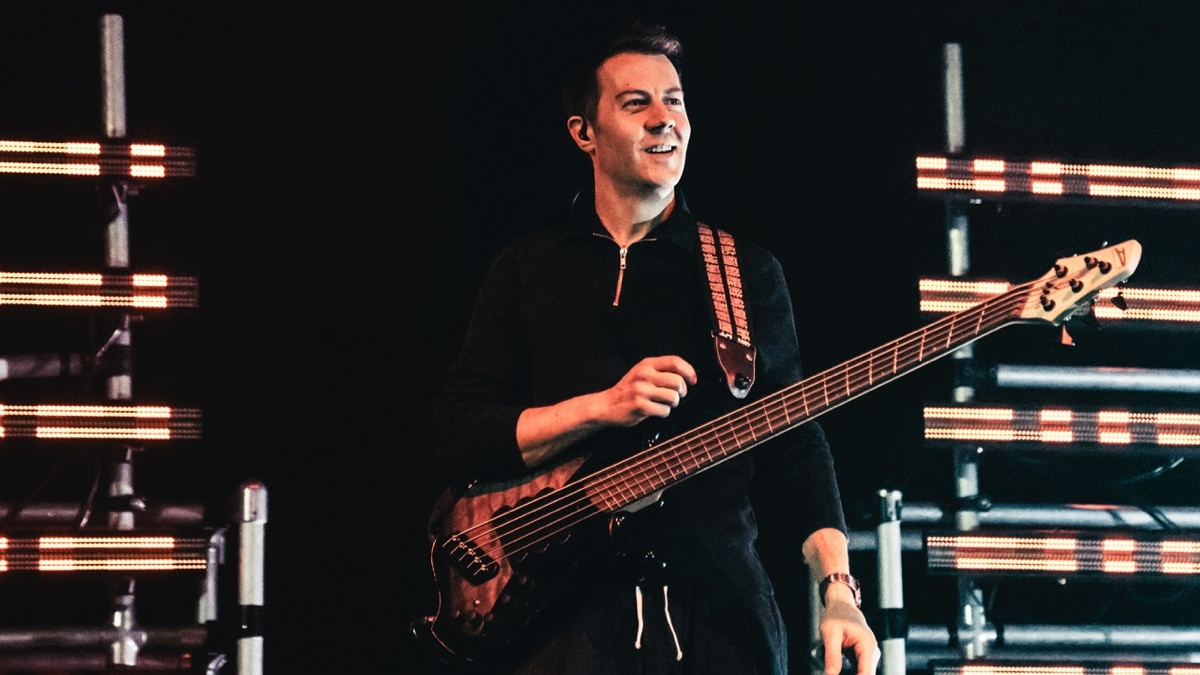
Since 2012, Tom Doyle has been holding down the low end for UK alt-rock heavyweights Don Broco, helping to shape the band’s groove-driven, genre-blurring sound into one of the most distinctive in modern British rock. With thunderous tone, razor-sharp precision, and an instinct for hooks that hit just as hard as the riffs, Doyle has become a crucial force behind the band’s ever-evolving sonic identity.
As Don Broco gear up to unleash their highly anticipated new album, Nightmare Tripping, this feels like the perfect moment to dive into the mind of the man anchoring the chaos. From his musical roots and influences to the gear and techniques that craft his signature sound, Doyle opens up about the journey so far and what lies ahead.
Join me as we explore Tom’s evolution as a musician, the creative process behind Nightmare Tripping, and his vision for the future in a band that refuses to stand still.
Here is Tom Doyle.
Photos by Ton Pullen
Featured Videos:
Follow Online:

Gear News: Fender Unveils Highly Anticipated Vintera III Series

New Music: Oteil Burbridge & Lamar Williams Jr. New Single, Hush

Interview With Bassist Virginia Franks

Nathan East, Echoes of a Lineage – April/May 2026 Issue

Gear Review: Italia Leather Straps

Mar 2 Edition – This Week’s Top 10 Basses on Instagram
Mar 9 Edition – This Week’s Top 10 Basses on Instagram
Mar 16 Edition – This Week’s Top 10 Basses on Instagram
Mar 23 Edition – This Week’s Top 10 Basses on Instagram