
Features
The Bassists of Gary Moore by Freddy Villano

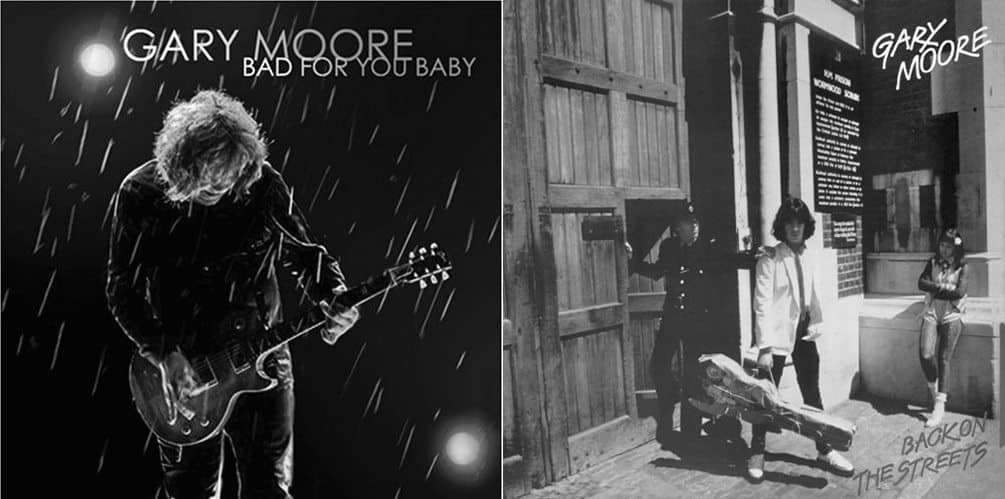
 The Bassists of Gary Moore by Freddy Villano…
 The Bassists of Gary Moore by Freddy Villano…
Reader Submission…
February 6th, 2016 marked the five-year anniversary of the death of guitar great Gary Moore. A somber moment indeed, and also, most certainly, an opportunity for thousands of guitarist worldwide to reflect upon the immense influence he’s had on their instrument as well as their kin. Many marquee players, like Vivian Campbell (Def Leppard/Dio/Last In Line) and John Sykes (Whitesnake/Blue Murder/Thin Lizzy), forged their own identities by emulating Moore’s tone and technique early in their careers.
Inasmuch as Moore was an inspiration to the guitar world, his influence was even broader, as he often surrounded himself with some of the best musicians in the business—and his bassists were no exception. Bass Musician caught up with some of his former bass players and asked them to reflect on their time with Moore and to find out about what they’re up to now.
Jimmy Bain
In 1981, Scottish bassist Jimmy Bain, most famous for his work with Rainbow (and subsequently Dio), managed to cut the bass tracks for Gary Moore’s Dirty Fingers album (Jet, 1984) while simultaneously mixing Stand Your Ground (EMI, 1981), the second Wild Horses record (his collaboration with ex-Thin Lizzy guitarist and fellow Scotsman Brian Robertson). “Gary was doing his album in London, at Morgan Studios, and the bass player he had wasn’t working out so he asked me to come over and play on some tracks,” recalled the 68-year-old bassist. “Chris Tsangarides was the producer and Tommy Aldridge was playing drums. He was one of my favorite drummers at the time—we clicked right away.” Bain already knew Moore from Thin Lizzy, a band with whom he had a close personal relationship, so it wasn’t even remotely an issue when he was asked to pull double-duty. “I started working with Gary at noon and went to about six or seven and then took a break and went down and worked on the Wild Horses mixes starting at about 11 o’clock and worked through the night,” he remembers. “I lost a lot of sleep for a few weeks, but I really enjoyed working with Gary.”
Known for being adept with Moog Taurus pedals (Kate Bush hired him for her 1982 record The Dreaming (EMI) because of his reputation), Bain used them on the track “Rest In Peace” and employed a Yamaha BB2000 bass and an Ampeg SVT throughout the session. He named “Nuclear Attack,” “Hiroshima” and “Run To Your Mama” as standout tracks.
Unfortunately, Bain passed away on January 23rd, 2016. Since 2012, Bain had been working with his ex-band mates from the original incarnation of Dio in the band Last In Line. Their debut CD, Heavy Crown (Frontiers) was released on February 20th. He was reportedly writing an autobiography at the time of his death, titled, I Fell into Metal.
Jimmy Bain w/Gary Moore, “Hiroshima,” Dirty Fingers:
Bob Daisley
Famous for the indelible mark he left on Ozzy Osbourne’s first two solo records, 65-year old Australian bassist Bob Daisley says the first time he saw Moore play was in 1975 at the Rainbow Theatre in Finsbury Park, London when he was in Coliseum II. “Gary was the new sort of whiz kid guitar player that people were talking about,” he recalls. In 1983, when Daisley was in New York with Ozzy and guitarist Jake E. Lee writing for the Bark At The Moon (Epic, 1983) record, Moore, who was friends and former band mates with Ozzy keyboardist Don Airey and drummer Tommy Aldridge, visited and initiated a jam with the bassist. “He loved it,” says Daisley. Not long after, Daisley was called upon to play on a few tracks on Victims Of The Future (10 Records, 1984) and subsequent tour dates, which resulted in Emerald Aisles: Gary Moore Live In Ireland (1986). “At the end of the last show Gary said to me, ‘I know you’re with Ozzy, but if ever you’d like to work with me the door is always open,’” recalls Daisley.
Daisley says that Moore was a big fan of bassist Jack Bruce. “He did like that style of playing, although for Gary’s music it had to be a little more disciplined,” admits Daisley. “Cream was very free and Jack overplayed a lot, but he did it so well. You couldn’t go that far with Gary. He was quite particular and could be quite pedantic in what he wanted and didn’t want,” he admits. “His perfectionism sometimes polished the shine off of things, if you know what I mean.”
Daisley credits Power Of The Blues, the last album he did with Moore, (Sanctuary, 2004), as a highlight. “Power Of The Blues is pretty raw—we recorded it quickly,” he admits. “The basic tracks were done in nine days and the enjoyment we were having comes across in the music.” Daisley used a Gibson EB-3 on many of the tracks along with one of Moore’s 50-watt vintage Marshall heads and 4X12 cabinets. “The other bass I used was a 1963 Olympic white Fender Precision through a vintage Ampeg SVT.”
In 2013 Daisley released his autobiography, For Facts Sake. He took time off from playing to complete the endeavor, saying, “If you don’t put your all into something like that it can go on for years and you never get it finished.”
Bob Daisley w/Gary Moore, “Power Of The Blues,” Power Of The Blues:
Mo Foster
70-year-old session ace Mo Foster says it was vital to be able to play by ear when working with Moore: “Gary never wrote out any parts in advance—it was up to you to figure out the chords, any licks and the structure of the song. You could make suggestions but he generally knew exactly what he wanted.” Foster recalls that Moore had seen him playing with Jeff Beck at Hammersmith Odeon back in 1981, but the two didn’t actually meet for the first time until a session in July 1982 at Townhouse Studios in London. Though he has no memory of what they recorded at that session, Foster subsequently contributed one of the most memorable moments to the guitarist’s illustrious career—the fretless bass solo on the song “Empty Rooms” from the Victims Of The Future record. The sessions took place at Sarm West Studios in Notting Hill, West London in October 1983. “I just used my regular fretless Fender Jazz bass through a little Roland Cube 60 amp,” he says. “We recorded the basic track as a rhythm section first – it was a joy to play with Ian Paice whom I’d never met before – and I then overdubbed the fretless solo, copying Gary’s acoustic solo melody, including the harmonics, as accurately as possible. I used the fretless to make it more haunting.”
Today, Foster is currently promoting a book—British Rock Guitar: The First 50 Years, the Musicians and Their Stories (Northumbria University Press, 2011). “There’s a picture of Gary at eight years old in the book,” he says. “I’ve also been recording a new album with guitarist Ray Russell and drummer Gary Husband (another ex-Moore member), and we’ve been playing some gigs around town too.”
Mo Foster w/Gary Moore, “Empty Rooms,” Victims Of The Future:
Neil Murray
Former Whitesnake mainstay Neil Murray first played with Moore in Colosseum II. He auditioned for the group in 1975 and “didn’t get the gig in actual fact,” admits the 65-year-old Scottish bassist. “I thought I would be pretty suitable for it, but I had to borrow somebody else’s bass guitar and it just didn’t sound very good.” Some months later, Murray got the gig anyhow, and though his tenure didn’t last long, the two would reunite in the ‘80’s on Moore’s Corridors Of Power record (Virgin, 1982).
“It was a bit of a culture shock for me in that it was very much Gary-plus-a-backing group,” recalls Murray, referring to the difference between Moore’s band and his previous outfit, Whitesnake. “In terms of the songwriting the bass was much less important—just either playing the riff or pedaling along, which could be frustrating because Gary very much admired Jack Bruce, but he didn’t want that style of bass playing on his records.” Murray notes that although they often clashed stylistically, they were often very much on the same wavelength. “We always seemed to have the same musical taste at any moment,” he says. “It’s just that what he was looking for in a bass player wasn’t quite me. He didn’t want anything unusual happening behind him, whereas I would prefer something more unexpected from time to time, like what Ian Paice and I did together in Whitesnake.” Murray used a custom-made B.C. Rich Mockingbird with two DiMarzio p-bass pick-ups in reverse position through a Hiwatt bass amp on Corridors.
For the last ten-plus years Murray was the house bassist in the London production of Queen’s hit musical We Will Rock You. In 2013, Murray’s current band, Snakecharmer, released their eponymous debut on Frontiers Records.
Neil Murray w/Gary Moore, “Wishing Well,” Corridors Of Power:
Other bassists worth mentioning include the late Craig Gruber of Elf/Rainbow fame, who can be found on We Want Moore! (Virgin, 1984), Andy Pyle who appears on Gary Moore & The Midnight Blues Band – Live at Montreux 1990 (Eagle Rock Ent.) and Will Lee, bassist for the World’s Most Dangerous Band on The Late Show with David Letterman, who performed on much of After Hours (Charisma, 1992).
Craig Gruber w/Gary Moore, “Shapes Of Things,” We Want Moore!:


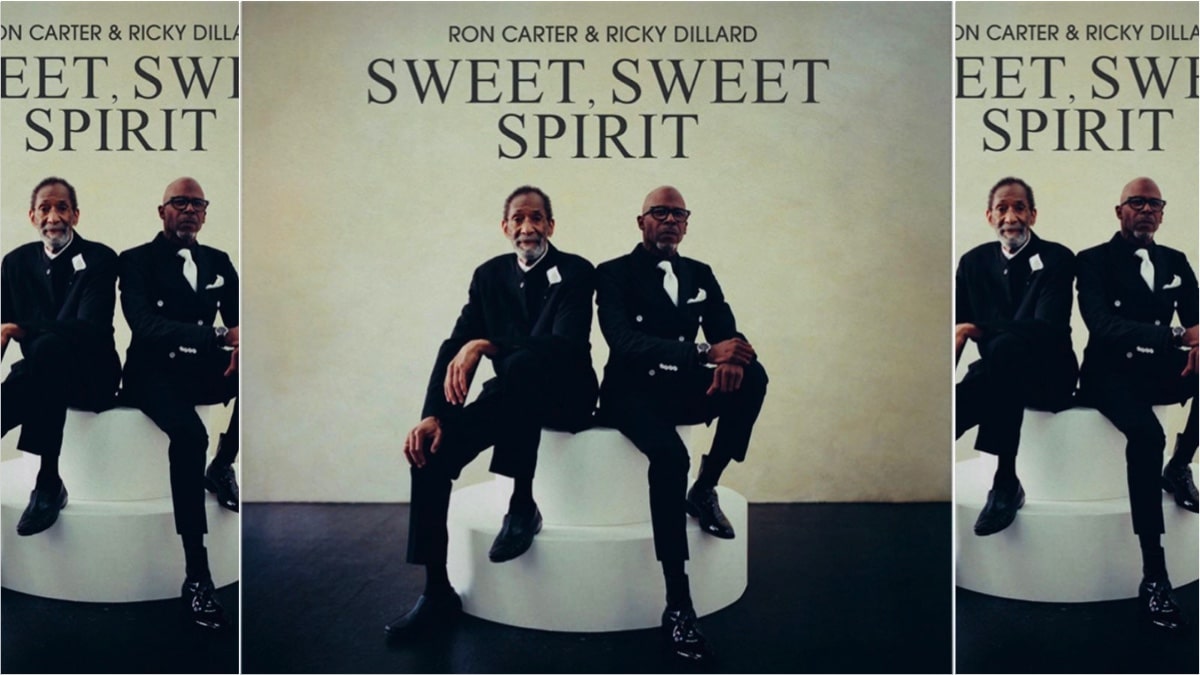
Ron Carter is an American Double Bassist with a career spanning more than 60 years who has recorded over 2200 albums. This is a Guinness World Record. He is not only a musician, but also a teacher, a band leader, and an author. He won three Grammys and earned seven honorary doctorates. His new album “Sweet, Sweet Spirit”, with choirmaster Ricky Dillard and New G, was released on 6 February.
KB: Your new album “Sweet, Sweet Spirit”… What was the creative process?
I shared the recordings I made for my mom 30 years ago, and Dr. Dillard and I worked together (along with Zeke Listenbee) on the arrangements to weave the choir, instrumentation, and merge the jazz-gospel genres.
KB: Does the album title have a special meaning?
Aside from being the title of one of the hymns on the album, it embodies the spirit of my mother, and the inspiration and joy I hope everyone feels when listening to this music.
KB: What is the album’s story?
The story on my website tells it best:
The hymns on this album have an independent and deep history for the gospel community, in addition to having been integrated weekly into the life and musical development of the Carter family in the intimate Detroit church community they attended. A church that depended solely on the voices of the parishioners as instruments.
When Willie O. Carter was on bed rest toward the end of her life, she asked her son to sit with her and sing the hymns of his childhood to keep her spirits elevated in musical reminiscence. Mr. Carter promptly went home, recorded himself composing his bass lines integrated with the hymns, for his mother to enjoy during the final weeks of her life.
KB: You collaborated on this album with Dr. Ricky Dillard… How did this come about?
We met when Don Was (President of Blue Note Records) introduced us. He knew I wanted to do an album of hymns, and he knew that Dr. Dillard and I would make a formidable musical team. He and his choir were wonderful. We were able to meld jazz and gospel in a way that has never been done before.
KB: Which musicians are working with you on the album?
In addition to Ricky Dillard and New G, The Baylor Project is on “Farther Along”, Wendy Wyatt is incredible on “Softly and Tenderly”, Avery Sunshine on “Just a Closer Walk with Thee,” and Tim White on “In The Garden”.
KB: Which basses and equipment did you use on the album?
Only my upright Juzek bass and Epifani amp.
KB: I did an interview with Brandi Disterheft, and she called you her mentor.
Brandi is a wonderful student starting to make some headway in the industry. I’m just the bass teacher.
KB: What are the rest of your plans for this year?
No tour plans for this album at the moment, although I’ve got a pretty busy recording and touring schedule this year.
Follow Online
Website
Facebook
Instagram
YouTube
Spotify


Back in May 2021, I had the pleasure of speaking with a talented nine-year-old bassist named Ellen Alaverdyan, who was just beginning to make waves in the music world (View Interview). Even then, her passion, dedication, and remarkable talent hinted at a bright future ahead.
Today, I’m excited to welcome Ellen back, along with her father, professional guitarist Hovak Alaverdyan, following the release of Take Off, the debut album from Ellen’s band, Jaminai.
Join me as we discuss the making of this exciting new project, explore how Ellen developed her now-signature bass tone and style, and learn what lies ahead for this young musician whose career continues to soar.
Please welcome Ellen and Hovak Alaverdyan!
Album cover artwork, Ellen Alaverdyan

Header Photo, Hovak Alaverdyan
Featured Videos:
Follow Online:
Website: www.EllenPlaysBass.com
Facebook: www.facebook.com/EllenPlaysBass
Instagram: www.instagram.com/ellenplaysbass
YouTube: www.youtube.com/@EllenPlaysBass
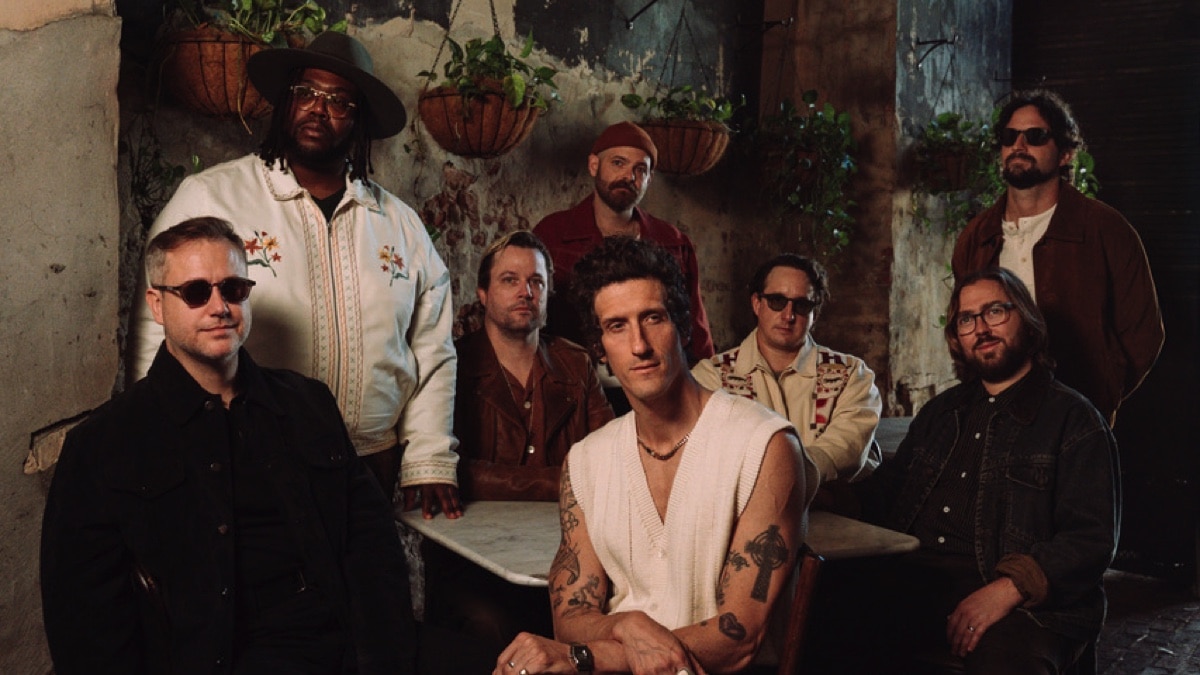
It’s hard to believe that I’ve been chatting with George Gekas, bassist for The Revivalists, for more than a decade. Over the years, we’ve connected during some of the band’s biggest moments, and now they’re preparing to release their sixth full-length studio album, Get It Honest, on July 24, making it the perfect time for another conversation.
Join me as we dive into the making of the new album, discuss what fans can expect from this exciting new chapter, and explore all the great things on the horizon for the band.
Here is George Gekas!
Photo, TommyMoore
Featured Videos:
Visit Online:
www.therevivalists.com
YTB, FB, IG, X @therevivalists
TikTok @therevivalistsband

Adam Russell, bassist for Story of the Year, hasn’t slowed down for a second.
With the band’s latest album A.R.S.O.N. dropping on February 13, 2026, they’ve not only delivered new music but also pushed their creativity further through a series of visually striking videos, several of which Adam himself co-directed and edited.
In this interview, we dive into the making of the new record, explore how Adam shapes his signature bass sound, and get the inside scoop on the band’s upcoming Camp Screamo Tour with Silverstein and Origami Angel.
Here’s Adam Russell.
Photo: Ryan Stephens
Featured Videos:
Visit Online:
IG @storyoftheyear
TT @storyoftheyear
FB @storyoftheyear
X @StoryoftheYear
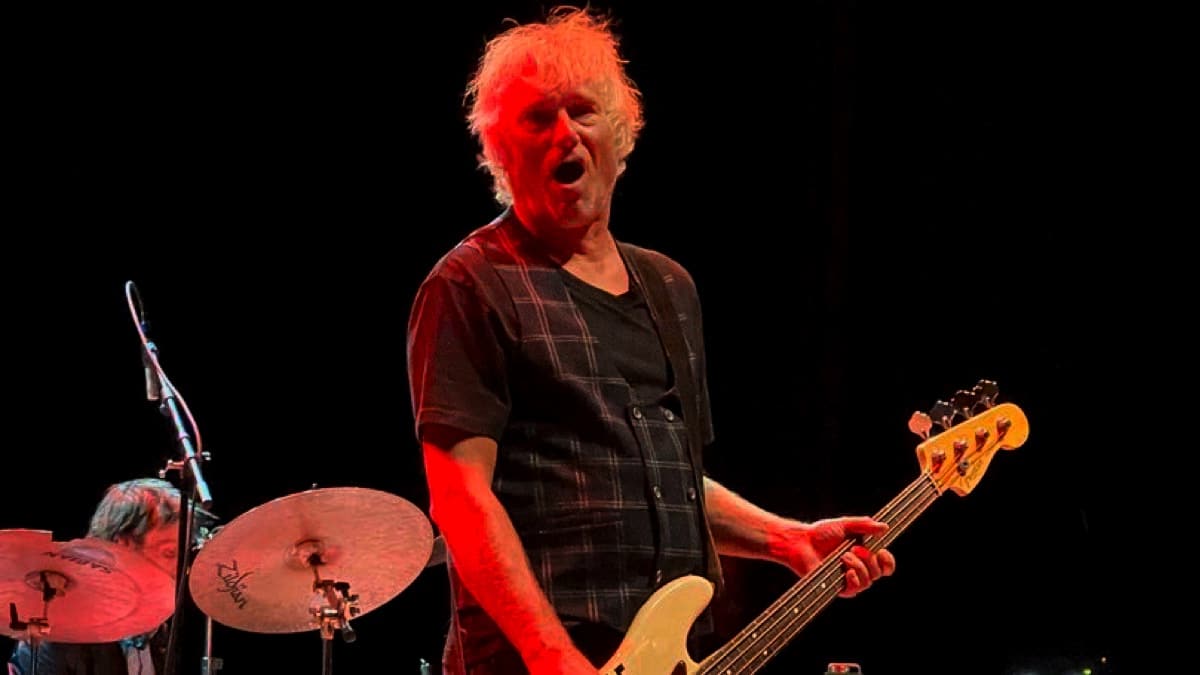
Get ready for a conversation with one of Southern rock’s enduring forces, Tim Neilsen. For over 35 years, Drivin N Cryin has been delivering a powerful blend of grit, melody, and heart, and they’re not slowing down anytime soon. With their brand-new album “Crushing Flowers” set to drop on April 10th, the band is gearing up for another exciting chapter.
At the core of that signature sound is bassist Tim Nielsen, whose driving grooves have helped define the band’s identity and earned them a place in the Georgia Music Hall of Fame.
In this interview, we sit down with Tim to talk about the new album, the secrets behind his unmistakable tone, and what lies ahead for Drivin N Cryin.
Here is Tim Nielsen.
Photos: Chris Neilsen, Carlton Freeman, Ted Lanthangue, and courtesy Tim Neilsen
Featured Videos
Visit Online
www.drivinncryin.com
FB & IG @drivinncryin

Interview With Bassist Ellen Alaverdyan and Guitarist Hovak Alaverdyan

Gear News: Fender Honors James Jamerson with a 1962 Precision Bass

Artist Update With The Revivalists’ Bassist George Gekas

Maestro Ron Carter, Sharing the Spirit – June/July 2026 Issue

New Music: Danielle Nicole, Tug Of War

Right Hand Technique Strategies with Dr. Randy Kertz

May 4 Edition – This Week’s Top 10 Basses on Instagram
May 11 Edition – This Week’s Top 10 Basses on Instagram
May 18 Edition – This Week’s Top 10 Basses on Instagram