
Features
Gear News: Bergantino Welcomes Marc Brownstein to Their Family of Artists

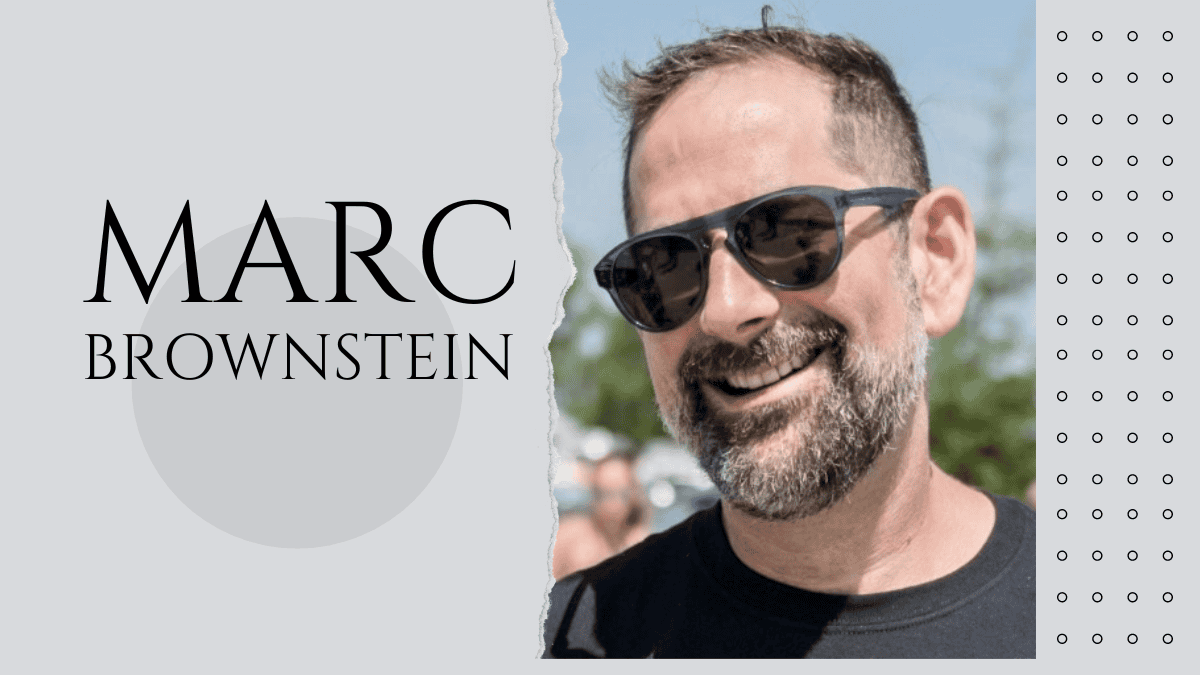
Bergantino Welcomes Marc Brownstein to Their Family of Artists
Bergantino Shares: The innovative bassist/sonic explorer/DJ Marc Brownstein discusses his life of touring with Disco Biscuits, the current tour with the new album “Revolution in Motion, and more!
By Holly Bergantino
Marc Brownstein is the king of “Trance-Fusion” – a subgenre that his band Disco Biscuits has been in the center of for the past two decades. As a founding member of the band from their days at UPenn, Marc has quite the experience under his belt, and each tour has gotten more and more exciting. Disco Biscuits is currently on tour with their new album Revolution in Motion, a full multimedia experience accompanied by a 25-minute animated film that tells a story of intergalactic travelers finding their way on Earth.
D. J. Brownie! What made you want to be a musician and start playing bass and who drew you to it?
I was drawn to music after John Lennon was assassinated. I was raised in NYC and the city was just going crazy. I was 7 years old at the time and my thought was, wow why is everyone freaking out so much, this guy must be really special. And so I started to check the Beatles out and that was the beginning of my journey with music.
A question from one of your fans and fellow bass players Karina Rykman: “How do you keep your bubble of positivity intact and thriving”?
Well it’s funny she should ask. I don’t think it’s a coincidence that the run of positivity we are experiencing now began right at the beginning of tour at the beginning of January 2023 when we had Karina opening for us for a week. I can say that her positive energy on tour definitely left its mark on the rest of our tour. Some people are so naturally happy and positive that it leaves you feeling that way, sometimes permanently!
Besides the bass guitar, what other instruments do you play?
I dabble with piano, guitar, and I can make my way around a drum kit if I get into it for a few weeks. I’ve played flute and saxophone as well at different times. I also play the double bass. But I would say Piano is my second instrument at this point. I play everyday.
What is your favorite (and least favorite) thing about touring?
The best part of touring is the 4 hours on stage with the band. But also getting to visit so many great places all of the time. That’s the silver lining. The only thing I don’t love about touring is missing my family.
Tell us about your first music teacher. What lesson did you learn from this person and still use today?
My first music teacher, Mrs. Koslov, 2nd grade, I just was at her funeral a few weeks ago. I eventually became best friends with Mrs Koslov’s son and we stayed in touch for my whole life. She taught me a lot but really she was the one who gave me the courage to perform. My first public performance ever was a piano version of Eleanor Rigby.
What was the first bass you had?
This is tough. I think I had a standard Ibanez jazz style bass first. Within a year or two I got an American Fender Jazz bass.
What are the basses you have and use now?
My main bass is an Elrick 5 string by Rob Elrick. I also have a Q5 Modulus and an Alembic 5 as well. Oteil (Burbridge) sent me a Roscoe custom 6 during the Pandemic that I like to play. I also have a Sire Marcus Miller, a newer American Fender Jazz bass, a custom Ibanez SDGR, an Ibanez BTB and an Elrick 5 string Fretless bass which is my main bass at home.
Who were the musicians who inspired you and what qualities do you admire about them?
I was deeply influenced by Phish when I discovered them in college. I admired their ability to mesh jazz, classical and rock Improvisational styles. I was very inspired by classic jazz musicians. Miles. Monk. Coltrane. Dexter Gordon. Cannonball Adderly. Mingus. This is the generation of musicians that laid the groundwork for what we do now.
You studied and started the band Disco Biscuits at UPenn. Tell us more about the origins.
The band just sort of linked up in the quad (dormitory) and we started to set up our gear and jam for fun. Within a short time I realized the guys I was playing with were really talented and so I applied to the New School for jazz and went and spent a year crash coursing music at a high level so I could return to Penn and start a band with them.
You have a new album “Revolution in Motion,” that you’re currently touring on. How is it going?
The tour has been amazing. It’s one of the best tours we ever had in our career. We sold out more than half of the shows and are receiving really great feedback across the country.
I watched the video on YT for Revolution in Motion. The Choreography, production, color, cartoon characters, and theme were so much fun. Space aliens and psychedelic art, pop ups like a comic book, and you in your alien jump suit with your baseball cap were amazing. Loved! How was this collaborated?
We have a co-writer on this project named Joey friedman. He conceived of the concept for the album and he had a very specific vision for what the visuals would look like. He spent hours and hours with the animators (Blunt Action) and the AI animator (Todd Kushnir) working through each iteration to make it come to life in the way that it was conceived.
How would you describe the music you create for Disco Biscuits?
We always hoped that the music we created would be the weirdest and craziest music of all time but we describe it as Trance-Fusion, which was a name that was drawn from jazz-fusion, the mixing of jazz with rock and roll instruments. We found our own sound by mixing trance music with rock and roll instruments, hence the genre title. It was renamed jamtronica many years later by the folks over at SiriusXM who started a radio show called the Jamtronica show to highlight acts from our scene. I was the host of that show for the first 3 years.
Describe the creative process when you write new music.
These days the creative process is a team effort. Usually we start by combing through improvisational sections of music from the tours to see if we can find any melodies or chord structures that are song worthy. When we find it we bring it into our DAW (ableton) and creating a grid. This is easy for us because we often play to a time clock on stage. From there we start building out the structures of the new piece of music while Joey and maybe me or Aron or Jon will start working on some lyrical concepts. Within an hour or two we start to record some of these initial lyrics and melodies and Jon usually starts to adapt them and tweak them to make them comfortable for him to sing. Usually within a few hours we are able to walk away with a very advanced demo of a new song. It’s been an extremely fruitful experience that has left us with albums worth of the best material we’ve had in decades.
The lighting for your shows is amazing. Who does the lighting design work and choreography for the tours?
Our new LD is known as Herm, but his name is Alex. We know him as Herm though. He came to us from the band Twiddle at the beginning of this year and has totally revitalized the visual elements of the stage show. He’s a really great fit and we feel grateful to have been linked up with such a massive talent. It was luck and timing and some might call it fate.
How would your bandmates describe you?
My bandmates would probably describe me as energetic and talkative and headstrong but also they might notice that I’ve become really good at going with the flow and backing their creative instincts. They may further describe me as anxious and nervous but may also notice that these elements have been remediated of recent. Mostly I think they would describe me as loyal and dedicated.
How did you find Bergantino Audio systems?
I was first introduced to it by Ed Grasmeyer who I know as Mike Gordon’s tech in Burlington. I was playing a show at Nectars and needed a backline and Ed came and set me up with the ForteHP2 and I was blown away by the tone. I then noticed Karina Rykman was using Bergantino as well and that’s when I started to think I needed to get in contact with the company. Karina was opening for the Biscuits on Boston and that’s where I had the chance to demo the forte hp2 in the context of the biscuits stage show. I haven’t looked back since that night.
Tell us about your experience with the Forté HP2 on the tour?
There are so many things that I can say about it but the most notable is that I’m not struggling to hear the frequencies that I want to hear on stage anymore. I used to have to boost the bass everywhere. In an EQ pedal, on the preamp on the actual bass. But every time you add a little of those low frequencies in those other places you risk degrading the tone of the signal. With the Forte HP2 there is a punch button that gives me exactly the frequency I’m looking for. 100 hz. 4 db. It’s perfect.
Did you think Jim talked too much when you met him in Boston?
I will never notice when someone talks too much because chances are I’m out talking them.
What’s your process for dealing with performance anxiety?
I used to self-medicate for this purpose but I was recently in touch with a psychiatrist who has helped me regulate my own chemical imbalances and I have found that my performance anxiety isn’t really an issue when I have the proper amount of dopamine in the system!
Imagine that you’re at a party and it’s a little stale. What’s the “party trick” (or hidden talent) that you’d bust out to liven the place up?
Before the app existed I was known as a real life fruit ninja. I take a big knife and people throw fruit from across the room and I chop it in half in mid-air. It’s not the safest party trick anymore because I lost vision in my right eye a few years ago and I’m not as accurate as I used to be!
What hobbies do you have outside of music?
I love sports. I love reading. I love word games. I love gardening. I love hiking/running/moving. My biggest hobby was snowboarding for many years but I’ve grown injury prone and stay off the mountain these days.
What is the most trouble you ever got into?
Well, I managed to stay out of trouble until college. But before weed was legalized I had a series of run-ins with the law and spent a night in the clink in Amherst Mass during my freshman year fraternity pledge trip. Luckily this isn’t an issue anymore for those of us who don’t drink or smoke cigarettes but prefer a little of the wacky tabacky to cool down.
What is the message you would give to your fans?
Well I give them so many messages all the time but the most important one that I try to remember to keep constant is a message of gratitude. Thank you so much for sticking with us through thick and thin, through ups and downs, for decades now you have allowed us to live our dreams and have the most blessed lives possible.
How do you feel social media has impacted your music?
Social media is a double edged sword. It has allowed us to create a strong community where everyone feels like a family but for someone like me who gets addicted to things easily, I really have to be vigilant with practice and writing and other aspects of my life not to spend the whole day scrolling and wasting the time away.
What is your favorite song of all time?
Right now my favorite song of all time is probably a short and beautiful little ditty by Labi Siffre called Bless the Telephone. I would suggest everyone take the 1:29 to listen to it and feel the bliss.
What did I miss for a question that you would like to share?
Bass players don’t really get to play solo shows, at least not my style of bass, so I’ve had to learn how to DJ in order to perform by myself at times and I would suggest coming out to see a DJ Brownie show at some point.
Last one! Describe your perfect meal!
I love to eat great meals. I’m partial to Asian foods but the perfect meal to me is one slice of pizza from Freddie and Peppers on 72nd and Amsterdam in NYC. PERFECTION.
Follow Marc Brownstein:
Instagram: @marcbrownstein
X (formerly Twitter): @marc_brownstein
Facebook: https://www.facebook.com/marcbrownstein4
www.discobiscuits.com


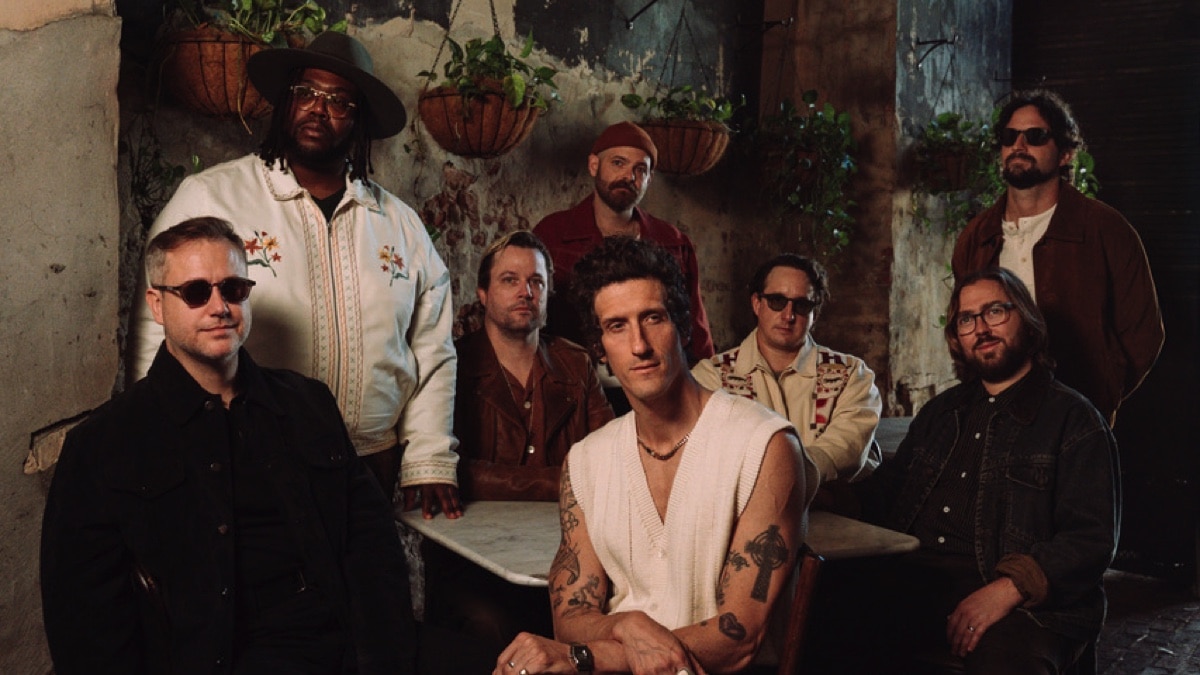
It’s hard to believe that I’ve been chatting with George Gekas, bassist for The Revivalists, for more than a decade. Over the years, we’ve connected during some of the band’s biggest moments, and now they’re preparing to release their sixth full-length studio album, Get It Honest, on July 24, making it the perfect time for another conversation.
Join me as we dive into the making of the new album, discuss what fans can expect from this exciting new chapter, and explore all the great things on the horizon for the band.
Here is George Gekas!
Photo, TommyMoore
Featured Videos:
Visit Online:
www.therevivalists.com
YTB, FB, IG, X @therevivalists
TikTok @therevivalistsband

Adam Russell, bassist for Story of the Year, hasn’t slowed down for a second.
With the band’s latest album A.R.S.O.N. dropping on February 13, 2026, they’ve not only delivered new music but also pushed their creativity further through a series of visually striking videos, several of which Adam himself co-directed and edited.
In this interview, we dive into the making of the new record, explore how Adam shapes his signature bass sound, and get the inside scoop on the band’s upcoming Camp Screamo Tour with Silverstein and Origami Angel.
Here’s Adam Russell.
Photo: Ryan Stephens
Featured Videos:
Visit Online:
IG @storyoftheyear
TT @storyoftheyear
FB @storyoftheyear
X @StoryoftheYear
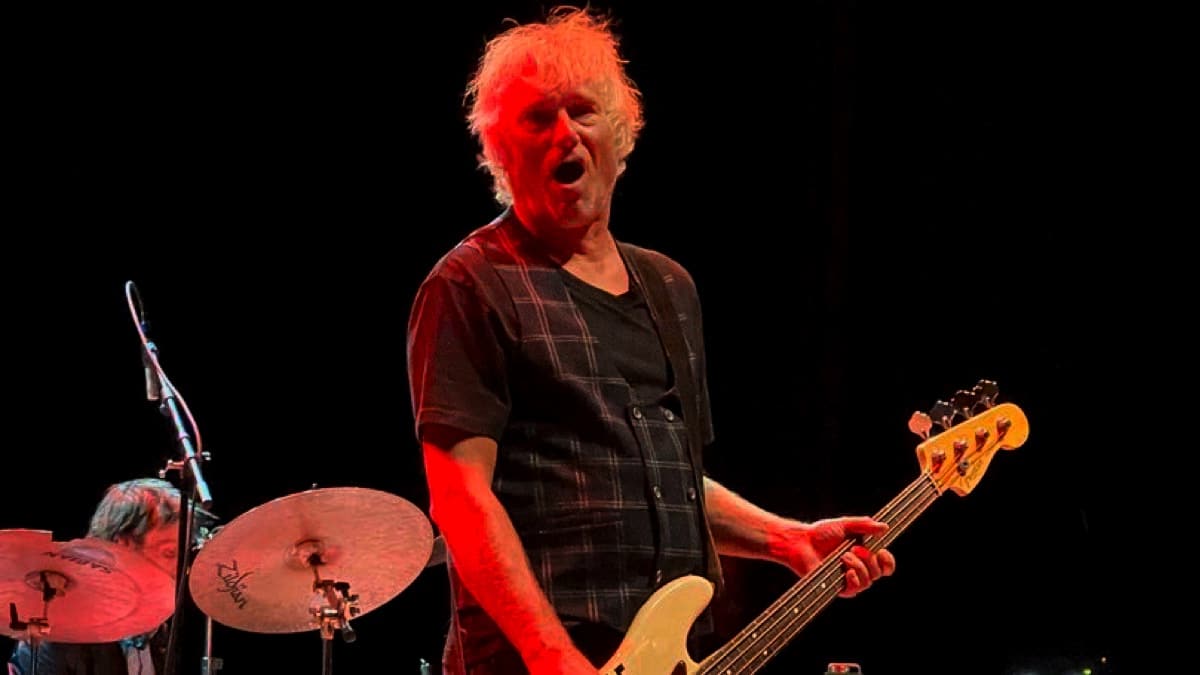
Get ready for a conversation with one of Southern rock’s enduring forces, Tim Neilsen. For over 35 years, Drivin N Cryin has been delivering a powerful blend of grit, melody, and heart, and they’re not slowing down anytime soon. With their brand-new album “Crushing Flowers” set to drop on April 10th, the band is gearing up for another exciting chapter.
At the core of that signature sound is bassist Tim Nielsen, whose driving grooves have helped define the band’s identity and earned them a place in the Georgia Music Hall of Fame.
In this interview, we sit down with Tim to talk about the new album, the secrets behind his unmistakable tone, and what lies ahead for Drivin N Cryin.
Here is Tim Nielsen.
Photos: Chris Neilsen, Carlton Freeman, Ted Lanthangue, and courtesy Tim Neilsen
Featured Videos
Visit Online
www.drivinncryin.com
FB & IG @drivinncryin
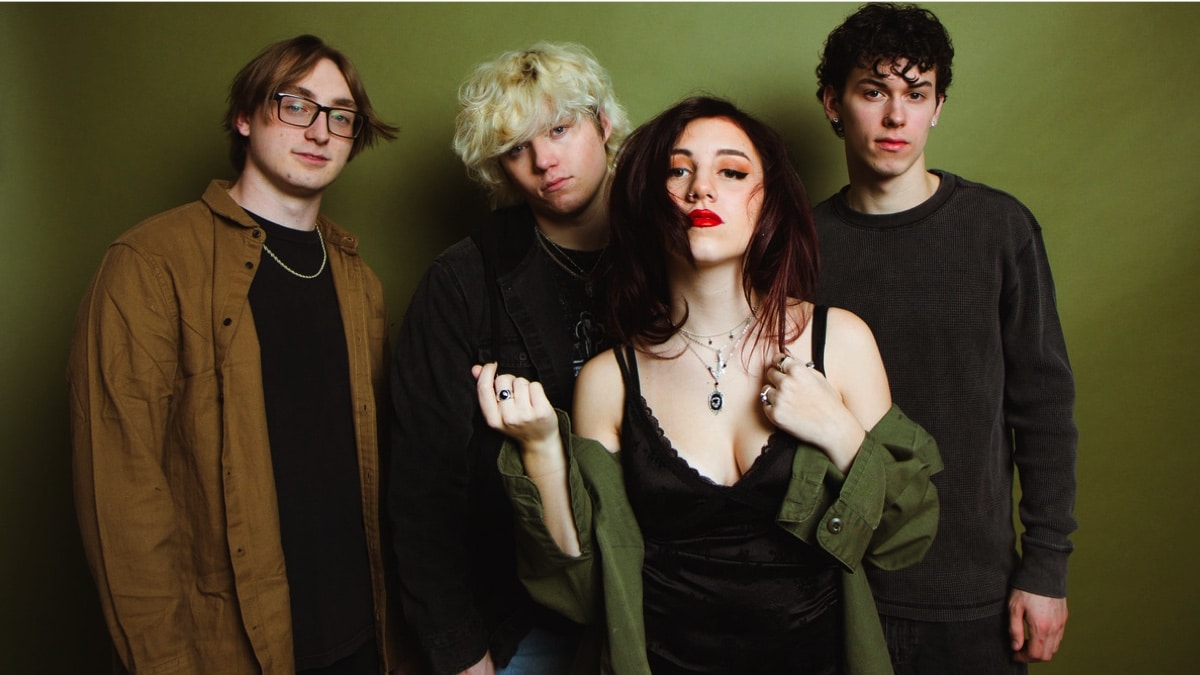
When I heard that American Vanity, formerly known as Burn the Jukebox, was gearing up to release a new album this summer, it felt like the perfect moment to catch up with bassist and vocalist Virginia Franks.
With a fresh name unveiled just this past January and a clear shift in musical direction, the band is entering an exciting new chapter, one defined by both sonic evolution and a deeper, more focused message.
In this conversation, Virginia opens up about the inspiration behind the upcoming record, how she crafts her distinctive bass tone, what fans can expect from their upcoming tour, and where she sees both herself and the band heading next.
Join me as we dive into it all.
Here is Virginia Franks.
Photo, Devin Kasparian
Featured Videos:
Follow Online:
thisisamericanvanity.com
IG @thisisamericanvanity
IG @virginiagracefranks/
TikTok @thisisamericanvanity
YouTube @thisisamericanvanity
Facebook: facebook.com/profile.php?id=61585585599800
Features
Interview With Bassist Bjorn Meyer on ‘Convergence’ … Exploring Sound, Space, and Innovation
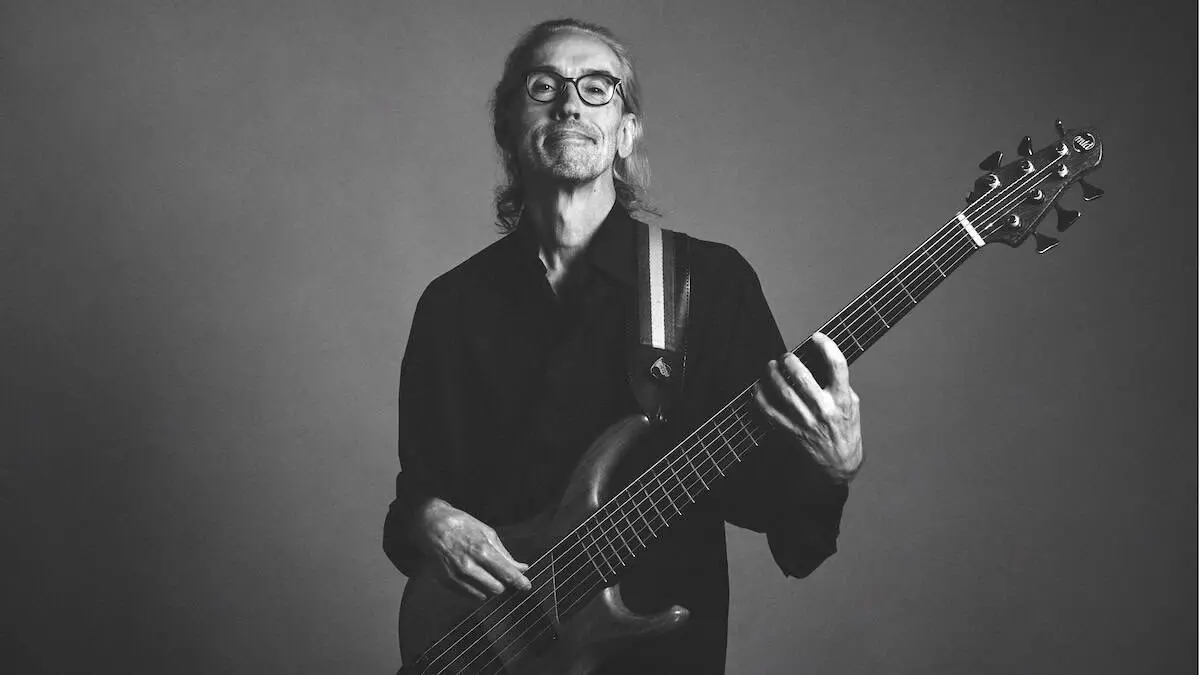
By Guest Contributor, Joe Barth
Joe Barth talks to Bjorn Meyer about his new album and exploring new musical territories with the electric bass.
Above photo courtesy: Björn Meyer © Fredrik Gille / ECM Records
Bjorn Meyer was born in Stockholm, Sweden in 1965 and has lived in Switzerland since 1996.
Starting on the piano, trumpet, and guitar, he turned to the electric bass at age eighteen. In 1996, the Nyckelharpa player Johan Herdin, percussionist Bazar Bia, and Bjorn formed the trio Bazar Bia. Since then, he has worked with Persian harpist Asita Hamidi, oud player Anouar Brahem, and pianist Nik Bartsch. Convergence is Bjorn’s second album on the ECM label.
JB: Before I ask about the new Convergence album, tell me about yourself. You grew up in Stockholm, Sweden. During your teenage years, you played guitar in punk-rock bands, then, at age eighteen, switched to bass. What was musically most helpful in your personal development as a bassist?
BM: My first encounter with the electric bass was pure luck and changed my life in an instant. Music had been an important part of my life from childhood, but always as one of many things I was interested in, like a very rewarding hobby. The bass changed all that. I had finally found my voice, and all the sounds I had heard and accumulated for so long without knowing how to make them real could finally burst out. I gladly spent every free minute of every day exploring this new universe, and that gave me a focused motivation that was hugely important.
Two important things helped me on my way and shaped me a lot at that time:
First of all, I realized that so much music that I was really interested in, as a guitar player, had resonated with me mainly because of the bass players involved! As a newly emerged bass player, I had a big library of music I could revisit. I learnt many important lessons by figuring out what made the music I loved work.
Second and definitely not less important: at the time I lived close to a house where many great musicians from Stockholm had their rehearsal spaces, jam sessions, and a general meeting point. Often there was a bassplayer missing — and I was five minutes away — so from the very early days as a bassist I could play with fantastic, experienced musicians from many different styles. From the very beginning, I was surrounded by role models and mentors who later on became colleagues and bandmates.
JB: Bjorn, to learn more about what shaped your musical values on the bass, to you, what are the three most influential bassists, and please give us a particular album they appeared on that you really connected with?
BM: There could obviously be many more than three, but – and this connects to the answer above! (Bass players “behind” guitar players)
Bass player: Jimmy Johnson
Album: Alan Holdsworth – Metal Fatigue.
I was (and still am) absolutely fascinated by Alan’s playing and compositions but the real magic was when I realized what Jimmy was doing to keep it all together, weaving fully logical basslines through “impossible” chord changes! And then there are these two very short fills at around 2:55 in the title track. 2 times 2 bars that I still remember the very first time I heard on Swedish radio. Time stopped, and I found myself trying to understand how to create such bass parts and how to adapt Alan’s unique chord voicings for the bass.
Bass player: Carles Benavent
Album: Paco De Lucia Sextet – Live One Summer Night
I had been intrigued by flamenco and the work of Paco De Lucia for a long time. My sister gave me the LP for Christmas, and this sextet redefined anything I had imagined possible. It taught me a lot about how to approach strong musical traditions with deep respect and still find my own space within and make the music even stronger.
It is absolutely incredible how Carles takes part in every function in the group – from rhythm and chords to melody and harmony – without ever losing the bass function of keeping all the sounds together and allowing the others to shine.
The bass solo in “Alta Mar”, the comping — if you can call it that — in Solo Qiero Caminar”.
Also, the studio album Solo Qiero Caminar was a game changer, just listen to the duo version of “Monasterio de sal.”
Bass player: Anthony Jackson
Album: (for once not a guitar player) Michel Camillo – Why Not!
I had been a fan from hearing Live In Central Park by Simon & Garfunkel but his playing with Michel Camillo was another ear-opener for me. Maybe also because my main working band at the time was a Latin-jazz band, so I guess it was a good match.
Having said that, Anthony was a huge inspiration across styles and genres over all the years we were fortunate enough to have him with us!
… that was already three … and I didn’t even get to mention Steve Swallow, Marcus Miller, Aston Barrett, Jaco Pastorius, Skuli Sverrison, Meshell N’Degeocello, Carol Kaye, Pino Palladino, and all the fabulous upright players that have inspired me so much – Charlie Haden, Palle Danielsson, Scott La Faro, Miroslav Vitous, and Eberhard Weber.
.. but the three I mentioned were definitely very important at the time!
JB: Convergence is you recording alone with your six-string bass. Your music has (for lack of better words) a very ethereal sound. How do you describe your music?
BM: The idea of an electric bass as a solo instrument triggers very diverse and often contradictory expectations. Many people have some idea of what a bass can do, and they expect anything from “root notes and fifths” to fast, equilibristic slapping frenzies with the comment, “How can you do that for more than three minutes per show?”
If I were to describe this program, I tend to use a few different approaches depending on who I am talking to:
Electric bass in acoustic space — I think it sums it up very well and gives some idea of what to expect without putting the music in a certain genre. For me, it is very important to share the music’s acoustic experience rather than focusing on the instrument’s electric character.
This music is also a mirror of my musical and personal journey through this life. The bass allows me to express myself without the risk of having my words misunderstood, and everything has a place in this music. Even though there are compositions, performing solo allows a unique freedom of interpretation depending on my state of mind that day.
Generally, I would be very happy to just say – new music for electric bass guitar!
JB: The album opens with “Convergence,” a song with deep textures, loops, and very staccato melodic figures. Talk about this.
BM: The album starts with a distorted chord progression – somewhat inspired by Alan Holdsworth – that I simultaneously feed into a loop through a shimmer reverb that I slowly fade in, played backwards. I find this texture very inspiring, and since it is all created live, it always turns out a bit different.
A pattern in 14/8 is presented – like a teaser – before an improvised part takes off in another direction. The pattern comes back in two versions: the original 14/8 (28/16) and a shortened 27/16 version. I loop the shorter version and play the original one on top, creating the rhythmical displacements you hear at the end.
I find such layering of patterns of different lengths very interesting, and it is a natural part of my vocabulary after many years of playing various kinds of minimal music with Don Li’s Tonus, Nik Bärtsch’s Ronin, NEN, and many others.
JB: The album consists of nine of your compositions. Were these songs all composed for this project? Talk about that process.
BM: Yes and no. I didn’t sit down to deliberately compose a fully new repertoire with this album in mind.
However, from the very first concert I played to release my first solo album, Provenance, in 2017, I noticed that the material and my playing were already shifting. Creative accidents happened, and new ideas emerged during concerts, soundchecks, and travels. After almost six years and many concerts, I had a tour in Japan and realized that there was nothing left of Provenance in the program. Then it took some time for Convergenceto emerge — during which the material continued to evolve.
In hindsight, I can see many stages of the development of Convergence that were definitely meant to become a new repertoire in its own right. One aspect of the name of the album reflects the convergence of ideas, moods, emotions, life, and time into this moment.
JB: Talk about the six-string bass you used in this recording. Did you use amplification, or was it mainly recorded directly?
BM: I play an MTD 635 (#160), an instrument that found its way to me by very lucky coincidence in New York in late 1995. I have played this very instrument on everything involving electric bass ever since.
As I mentioned earlier, the acoustic component is very important to me, and I am very lucky to have the support of producer Manfred Eicher for this approach. We recorded in a big, wonderful-sounding room that often hosts symphony orchestras and recordings of large film-music projects. The sound engineer Michael Hinreiner knows the room very well and was also very keen on the idea of making an acoustic-style recording.
I had a pair of Genelec 8030 Studio monitors and a small subwoofer behind me for the full signal (bass and effects) and a pair of satellite speakers further away, where I sent effects only (delays, reverbs, etc., but no direct bass signal) in order to fill the room and have a spatial experience.
This setup was then recorded using a lot of microphones to pick up all the aspects of the room, but also close miking on the instrument to pick up the acoustic sound. Much like you would approach a serious recording of any acoustic instrument, like a classical guitar or a cello.
Obviously, the line outputs of the bass and the effects were also recorded, but very little of that was used in the mix. I am very happy with the result, and I think you can really have the experience of sitting in the room with me when listening to the album.
JB: “Drift” is filled with harmonics. Tell us about that song.
BM: After Jaco’s “Portrait of Tracy,” anything involving harmonics on the bass is a bit sensitive. However, the range of the six-string and playing harmonics with a bit of a scraping sound with the plectrum does add another texture that I find very inspiring.
The piece started out as a reflection on the ice breaking on a river after a strong winter. Deep cracks forming, small pieces of ice breaking loose into the stream. Obviously, that is only my very personal picture. Some have said that it reminds them of northern lights, which is also a beautiful thought!
B: I love the sense of movement you create in the song “Motion.” Talk about this composition.
BM: Thanks! It took me a long time to become fluent in playing it and for the piece to develop to its current form. It started with the plucking pattern in 11/8 and the first two chords. For a long time, I couldn’t find a way out of this tonality, but the more my right hand started feeling comfortable in any tempo, I started hearing a harmonic development that the left hand was kind enough to accommodate.
“Motion” is a good example of two things that inspire me: I like it when odd meters still can have a dancing quality to them, and I often find this kind of incremental approach to harmony very interesting.
JB: This is your second ECM album. What do you appreciate about working with producer Manfred Eicher and ECM Records?
BM: It is my second solo album on ECM, but I have been lucky enough to work with Manfred on four albums with Nik Bärtsch’s Ronin and two albums with Anouar Brahem. All very different productions.
I am fascinated by his enormous dedication to music and very inspired by his way of listening. Knowing that he is listening changes my focus as a player. From being concerned with playing “right” it becomes all about playing in a way that allows for a deeper level of experience. Taking risks and adapting the performance so that the music translates well to someone who is attentively listening. He has the ability to ask or suggest things that allow me to shift focus away from the microcosm of “my composition” to the macrocosmic dramaturgy of the music.
This overview also applies to the full album, in how he balances the tracks and puts the track list together. For example, the idea of opening with “Convergence” was far from my original plan, but it turned out exactly right. Not to mention the choice of cover picture, a very unexpected but perfect match for me.
JB: Do you view the entire album as a kind of symphony or tone poem with multiple movements?
BM: I definitely see the album as a whole body of work in itself and a thoughtfully curated dramaturgical statement. But I still see it as a collection of separate compositions rather than multiple movements. The album has one sequence, but in a concert situation, I can freely choose another path to adapt the dramaturgy to the room, the audience, and the setting.
Having grown up listening to LPs, it is very important to me that listening to the full album adds an extra dimension to each song’s experience. Especially in this age of streaming and separate songs put together in more or less random playlists, I think it is more important than ever to at least try and compose as deep listening experiences as we possibly can.
JB: The album ends with the reflective “Nesodden.” Is there any connection with the peninsula in Norway?
BM: Yes – the song was written in a small cottage at Nesodden, overlooking the fjord running into Oslo. I was performing at the jazz festival there and arrived a day early due to travel issues. Sitting there, I saw a family of geese and two canoe paddlers in a beautifully respectful interaction. I guess it had something to do with who could land first or something, but all of a sudden, this whole tune had formed. I did rework some minor details over time, but the song was like a gift from Nesodden. It very seldom happens in that way.
JB: You moved to Switzerland a few years ago. Talk about the gigs you do in Europe and how you make a career in music work for you.
BM: You are kind – it has already been 30 years.
One thing I really appreciated coming from Sweden was how well-connected Switzerland is. In four to five hours, you reach Paris, Milano, Munich, and many other comparatively large cities by train or car! This makes touring so much easier than from Stockholm, where you either spend a full day just to reach the country’s border, or you have to fly all the time, which I don’t really like.
Interestingly, both Sweden and Switzerland are quite small countries, yet they have very strong, yet distinct and creative music scenes. There are also many interesting venues and festivals. Since I am involved in quite a few different projects all across Europe, Iran, and North Africa, my touring schedule will depend on which projects are active at the time. At the moment, my focus is on my large ensemble, Garden of Silence — 9 Musicians from 3 continents — on the one hand, and the solo project on the other.
I feel so very blessed to have the opportunity to present this music to so many fantastic audiences and to be part of so many inspiring collaborations.
Like everywhere, the economic situation for live music is changing quite rapidly, also here. However, I am confident that we will always need this form of human interaction, being in the same space at the same moment in time, sharing the same experience. Music is such a strong healing power, and we need it more than ever.

Artist Update With The Revivalists’ Bassist George Gekas

Maestro Ron Carter, Sharing the Spirit – June/July 2026 Issue

New Music: Danielle Nicole, Tug Of War

Right Hand Technique Strategies with Dr. Randy Kertz

New Music: Golden Flower, Are You Even Awake?
Right Hand Technique Strategies with Dr. Randy Kertz

April 13 Edition – This Week’s Top 10 Basses on Instagram
April 27 Edition – This Week’s Top 10 Basses on Instagram
20 April Edition – This Week’s Top 10 Basses on Instagram