
Features
Bergantino Welcomes Suzy Starlite to Their Family of Artists

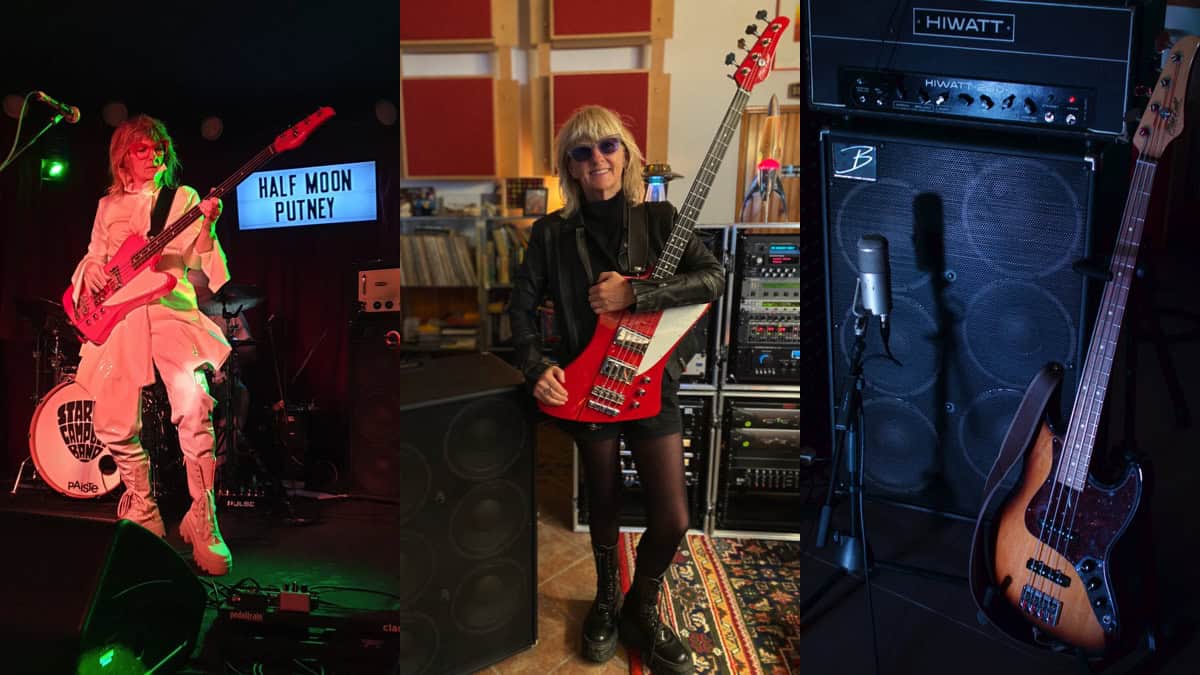
Suzy Starlite, the British songwriter and multi-instrumentalist, shares her amazing history as a musician and her journey to falling for the bass…
Photos provided by Bergantino
Full of life and with a plethora of amazing stories, Suzy Starlite has had quite a career as a lifelong songwriter. The fearless, well-traveled multi-instrumentalist is no stranger to trying new things, which has led her to become an award-winning radio broadcaster as well as an award-winning motorcycle racer. With this adventurous spirit, Suzy found herself gravitating toward the bass later in her career and instantly fell in love! Bergantino sat down recently to learn more about her amazing story – interview here:
What inspired you to want to start playing bass and who drew you to it?
I was messing around with a cheap bass guitar and our Sequential Tempest drum machine in the studio when Simon and I had just moved to France. Simon had a four-on-the-floor groove going down and I joined in. He looked at me with wide eyes and said “You’re a bass player”. Of course, I didn’t believe him but he insisted saying I had a natural feel for the groove and the way I played on the one.
To cut a long story short, a few months later I decided that I would start learning and see how I progressed and, more importantly, if I was any good. A year later I was on tour!
We’ve read that, besides singing and playing the bass, you also play many instruments! Can you share what other instruments you play?
My first instrument was a harmonica when I was a child followed by descant and treble recorders. At Grammar School I played French Horn and now play piano, fife, synthesizers (specifically my beloved Prophet 5), mandolin, percussion and acoustic guitar. I like to make sounds with anything so that can range from a child’s xylophone to a kazoo. Simon bought me a Leaf Audio microphonic soundbox for Christmas two years ago which is great fun.
Tell us about your first music teacher. What lesson did you learn from this person and still use today?
I grew up in Ross-on-Wye in the beautiful countryside of Herefordshire – just think of The Shire where the Hobbits lived and you get the picture.
I attended St. Joseph’s Convent even though my family weren’t Catholic because it was renowned for being an excellent school and my first music teacher at the age of four was Sister Cuthbert or ‘Sister Bertie’ as we liked to call her.
She was the oldest nun in the Convent – so wrinkly she looked 150 years old and played the piano during our morning assemblies. The whole school marched into the room to the tune of some Classical god – single file – military fashion – no talking – eyes straight ahead – we were a student army of disciplinary excellence.
Sister Bertie taught singing, descant and treble recorders. I remember the silhouette of her habit as we practised – holding our recorders unusually high at 95 degrees which I always thought was rather strange compared to all the other schools.
What did I learn from her? Well, my first introduction to reading music and a sense of discipline – if you’re going to do something – give it your best!
What was your first bass?
My first bass was a Gretsch ThunderJet. It’s a semi-hollow short-scale fitted with flat wound strings and has that great vintage sound – perfect for those ‘60s punchy lines you hear in Free and The Beatles.
I chose it because I have small hands and thought it would be a great instrument to learn my chops on. On the advice of Andy Seward, who I mention later, I fitted Thomastik-Infeld flat wound strings.
It’s a mighty fine-looking bass and people would come up to me at the end of gigs and all they wanted to talk about was my bass and how sexy it looked hahaha.
What are the basses you have and use now?
Not long after the ThunderJet my husband Simon bought me a surprise wedding present in the shape of a Mike Lull M4V – their version of a Jazz bass with a Hipshot drop D peg and Lindy Fralin pickups. I was stunned – I’d never been given a present of this magnitude before and also deep down I thought oh crikey – I already have one, why do I need another? That’s how naïve I was.
The M4V is such a versatile and exquisite bass we bonded straight away. This is my Avatar dragon where I truly became one with my instrument and really took off when it came to my playing.
I also have a 1974 Fender Precision which my son James gave me. Simon had given it to him as his 18th birthday present and he thought I’d make better use of it. I was blown away! The P bass is great for tracking in the studio. It sits so well in any mix and you can’t mistake its signature sound.
I also have a King John acoustic bass made by Roger Bucknall of Fylde Guitars. It’s a magnificent instrument which I bought from bassist Josh Clapp who is well-known in the UK folk scene.
Sadly he contracted Lymes disease and couldn’t play anymore so we saved up and a year later I became custodian of this old soul which is one of the finest-sounding acoustic basses you will ever hear. There’s history in the wood, Sting has played it and it has also graced the stage of the Royal Albert Hall.
I have one more bass – a Mike Lull custom Starlite T4. It’s influenced by the design of a Gibson Thunderbird but again with a Hipshot drop D, stainless steel frets and the only bass I have fitted round-wound strings (Curt Mangan). The headstock is smaller and lighter than the Gibson so you don’t suffer the dreaded neck dive.
And the sound!! Oh, she is a mighty fire-breathing dragon!! Talk about attitude!!! You can hear it on Saving Me from our latest studio album STARLITE.ONE.
Each bass has its own personality which gives me flexibility when recording and it’s not just the sound, it’s the way they make you play.
I think there could be room for a couple more though, specifically a Rickenbacker 4002 and a Gibson EB2 – everyone needs a semi-acoustic bass complete with mudbucker.
Who are the musicians who inspired you and what qualities do you admire about them?
It’s always a hard question to answer as I’m all about the song so I’m inspired by musicians across all genres, except perhaps death metal – the screaming disturbs me – but you never know as tastes change.
I’ve always had a thing for a great groove and love dancing which meant I was out nearly every weekend at my local nightclub. The first big concert I attended was Stevie Wonder when I was 16 which set the bar for live performances
I’m also enchanted by beautiful melodies and harmonies of which Karen Carpenter was my childhood musical companion growing up. The emotion was all in her tone and understated delivery – something I think perhaps we are coming full circle back around to.
When writing STARLITE.ONE we created a very eclectic playlist that featured Silver Apples, through Roxy Music, Leonard Cohen, Miles Davis, Arvo Pärt, Can, Sterolab, Low, Nick Cave, Jacques Brel, S P A R K S and Scott Walker to name a few.
There was also a liberal splash of my new favourite band The Smile which consists of Johnny Greenwood and Thom Yorke of Radiohead and Tom Skinner, formally of Sons of Kennet. Hell, take a listen yourself!
To me, it’s all about the song: melody, performance, instrumentation and production.
In terms of bassists, there were four people that I decided to study when I first started to learn the bass and am documenting that story as part of my Walking The Bass Line series for Bass Musician Magazine – written especially for new bass players. They are John Paul Jones – Led Zeppelin, Andy Fraser – Free, Jack Bruce – Cream and Carl Radle – Eric Clapton.
You studied at Salford University in the ’90s. What can you share about this experience?
I passed the audition to attend the very first course of its kind in the country for Media & Performance which was the best and also the most challenging thing I have ever done.
The course was based in the Adelphi building which was an old structure – four stories high with big high ceilings and hidden corridors, welcoming you with a big shiny red front door – just like the TV series Fame.
As soon as I walked inside I had goosebumps. You could hear all kinds of music and brass instruments echoing down the corridors. We had our own studio theatre and the canteen was a real melting pot of activity.
They also ran the first-ever degree in Popular Music & Recording so there were also some really cool musicians hanging around. The biggest treasure however lay underground in the basement which was full of analogue recording studios. It felt like heaven and practically lived in that building.
My course was a tapas of everything from acting, script-writing, videography, radio, contemporary dance, dramatical history, singing to dance and musical theatre. I chose this because I needed to find out what I wanted to do and what I was any good at – if anything.
What I discovered is that the music called me more than anything else.
I started writing songs at age 16 with my acoustic guitar and really wanted to play one of the lunchtime concerts – which was unheard of for a ‘drama’ student. So I recruited some of the guys off the music course and under the moniker I Never Used To Like Brussel Sprouts was the first drama/media student to play a hallowed lunchtime concert.
This then opened the floodgates for everyone and we had loads of drama/media students merging with the musicians – it was brilliant. I also fronted a folk rock band called Megiddo and we toured the UK folk circuit for a few years, self-releasing our album On The Outside.
The hardest lesson and the biggest thing I have learned is that it’s all about contacts more than talent.
Describe your playing style(s), tone, strengths and/or areas that can be improved on the bass.
I’ll give it a go. You see I never really listened to bass until I started to play and didn’t know what it did. I reached an understanding having listened to the four bass players above plus Tina Weymouth and Carol Kaye. The latter two created riffs and lines that defined the song. Would ‘Psycho Killer’ or ‘The Beat Goes On’ sound the same without that bass line? One band where the bass – and rhythm section – is consistently fabulous is Roxy Music. Listen to Manifesto – outstanding work.
I try and connect the drums with the rest of the band with a combination of groove, riffs and melodic lines.
Almost all the tone comes from your fingers and to get consistency I play quite softly letting the amp do the work. I love flat wound strings, which combined with a big valve (tube) amp define what I want to hear. As you know the first big cabinet I bought was the Bergantino NV610, which combined with the 200W vintage HiWatt DR201 or Supertone Matamp 200 really floats my boat.
I do play very loud on stage – it’s that energy that really makes the bass work for me.
I am constantly learning and trying to improve my technique. Playing with a pick was a big challenge for me as I had never used one before and now I am trying to achieve consistency in volume and tone. It’s a love-hate relationship but sometimes that is the only sound that will do. What changed my mind was using the P bass fitted with flatwounds and the Ellio Martinez string-damping system. Instant ‘60s vibe.
How did you and your husband Simon Campbell meet?
I first met Simon when I was living on the Isle of Man. He heard about a singer-songwriter living next to the sea in Laxey through his friend Lenny Conroy who was a postman by day and music promoter on the weekend. Simon and I met up and I played him some of my songs which he really liked.
We ended up gigging as an acoustic duo and then he got a band together for me playing all my original songs named Starlite. So, Simon ended up being the guitar player in my band and we gigged at festivals and all over the place. Then we accidentally fell in love and the rest is history.
How would your bandmates describe you?
Crikey – that’s a really hard question to answer.
I can be edgy, as I like to get it right and very passionate when playing whether that’s calm for a ballad or jumping around on stage. I have been called intense and off-the-wall which is a fair comment.
Our original drummer Steve Gibson calls me bass queen which is very complimentary and all stems from when his pro-drumming mate Paul Burgess came to see us in concert in Manchester a few years ago and he said to Steve – “finally you have a great rhythm section”.
Describe the creative process when you write new music.
There’s no set way when it comes to writing. It can come through a riff or a melody. I like to jam with our drum machine and/or Simon and see what comes out.
Lyrically I’m always writing ideas and certain phrases down that inspire me and then I trawl through all those ideas and see what still resonates. I now write mostly on piano as I fell into a nasty chordal trap when writing on guitar, but occasionally write a bass line that we work with. Piano allows me to plonk around until things hit me.
I have never been into music theory and hence do things that aren’t conventional or strictly ‘correct’.
How has social media impacted your music?
There is no doubt that SM has given musicians more reach but as a result, there’s a lot of ‘noise’ and it’s difficult to be heard.
The algorithm is a difficult beast to ride, especially when your audience demographic is older than a teenager. Festival and gig bookings now rely heavily on the number of likes, subscribers and plays you have, which in turn affects people’s perception of you.
This can easily be manipulated if you have the right marketing/PR firm working for you plus the many thousands of pounds you need to pay for their services.
Our first foray away from the algorithm was being avid users of Mastodon following the whole Twitter/X debacle.
We now use a subscription-based platform called Substack where we host our blog/podcast VIBES. Substack is really growing and hosts many independent authors and musicians.
On VIBES we post articles, music, videos, lyrics, art, photography, The Supertone Show podcast (a music & chat show) plus whatever we feel inspired to write. You can create paywalled content available exclusively for your paid subscribers and it works well for us. It also has a microblogging feature called Notes which enables us to replace X and Facebook et al. We feel this is where the future lies for independent creatives.
Of course, we still post to the bewildering number of SM sites, but generally simple links back to VIBES and Notes.
We have found YouTube to be the best algorithmically based platform as it seems to pick you up if you have good content.
We use Bandcamp for our streaming/downloads and music subscriptions, YouTube/VIBES for videos, and Shopify for our merchandise sales: vinyl, CD, clothing and products for guitar and bass.
What led you to Bergantino?
One of the foremost bass players in the UK folk scene is Andy Seward. He was producing Simon’s second solo album The Knife and when he found out we had just bought a 1974 Hiwatt DR201 valve amp he suggested we compliment this with a Bergantino NV610. He recommended I speak with Mark Stickley at Bass Direct who supplied both of my Bergantino cabinets. That’s the story!
What drew you to the Bergantino NV610 and the HD112?
The NV610 is a perfect cabinet for that vintage sound so it was a no-brainer. Naturally, I looked at the Ampeg 8×10 but to me, the Bergantino sounded tighter and punchier, especially with flat wound strings. I use the fabulous HD112 for smaller acoustic gigs and it’s such a great sound.
We also learned about your love of motorcycles! Care to tell us more about this?
I decided to learn to ride when I turned 40 so I bought a 125cc Yamaha motorcycle off eBay and was out every weekend learning to ride on long ride-outs with my friend John Wood from Mossley, Lancashire.
I loved the freedom it gave out in the open air – it was exhilarating. My first lesson we drove up across the tops in Lancashire on the way to Leeds – it was snowing and very cold. Woody told me to relax in the seat like a sack of potatoes and follow in his tracks which was pretty hairy – then we stopped on the side, put our wet gloves on the engine to dry out and he broke out a flask of coffee with a wee drop of brandy in it to warm us up.
I do have a couple of memories that I still can’t quite believe happened. I was offered a Ducatti 650cc motorbike to ride at the Isle of Man TT Ramsey Sprint. When I saw the guys get it out of the van it was a proper sprint bike with roll bars and it was huge! I’d never ridden anything more than a 350 before and that was in a field where I fell off so I had a major challenge.
I spent the whole day trying to get it right, I’d either not be revving high enough and would stall going from first to second gear – then I nearly came off at the start so the guys burned the tyre out for me to get it a bit sticky – I’d get back on and give it another shot.
You had to queue 45 minutes to get your chance for a run so that’s what I did – all day. On my 12th and final run, I just decided to give it a Guy Martin mindset and ended up crossing the line as Winner of my Class and Fastest Woman of the event. It was a crazy and magnificent experience!!!
I was also asked to be Crew Chief by Richard Barks for the Lonan Gentleman’s Fellowship which was the first team to represent the Isle of Man at Speed Week in Bonneville, USA. Richard was a champion Manx motorcyclist and he aimed to break a world land speed record riding The Manxman – a 500cc motorcycle, which they hand build in garages behind the team’s houses in Laxey.
I had to work out how to export a bike plus all our tools to Los Angeles and then get us through inspection, pick up nitrous oxide in Salt Lake City etc and oversee the whole operation.
We had an incredible experience and ended up breaking two world land speed records and were deemed the most successful rookie crew in the history of Speedweek.
Amazing!! I’ll never forget driving in convoy across the salt flats at sunrise with all the other qualifiers – you had to repeat the run a second time to break a world record. The CB radio was on – a man was chatting away like it was NASA and we were so excited – it felt like we were about to take off for the moon!
Do you have a sidecar big enough for Marc?
I don’t ride any more even though I still have my 1958 Classic 200cc Ariel Colt motorcycle which now lives in our Supertone recording studio. I had to make a choice and decided I wanted to play bass and follow the musical path. With motorcycling it’s often a case of not ‘if’ but ‘when’ you come off a bike and I really don’t want to damage my hands or any part of me come to think of it.
If I still rode he would be more than welcome as my passenger!
You’re at a party and it’s a little stale – what’s your party trick or hidden talent that you’re busting out to get the place rocking?
In the ‘90s I used to programme and present radio shows and DJ at clubs. Top tips – assess the people there – change the music to suit – put on a classic tune – pump up the volume and get a groove on!
Last one! Describe your perfect meal!
My husband Simon is the main cook in our family and I love his work. We eat very well as if you shop sensibly, the food in Portugal is inexpensive and of excellent quality. The Portuguese grandmothers will stand for nothing less!
We are both into Indian, Middle Eastern and North African cuisine and have recently bought a fantastic Lebanese cookbook by Salma Hage. I was a vegetarian for a long time and don’t eat much meat so a balance of vegetables with spices is fantastic for me.
So something like freshly made Hummus, Cucumber and Yoghurt salad, flatbreads (which I make), Tabbouli and marinated chicken simply grilled all accompanied with a glass or two of Portuguese vinho tinto, finished – if in season – with delicious white melon from the Alentejo region (the best I have ever tasted).
When we go out I really enjoy the fish here in Portugal. The country sticks right out into the Océano Atlántico and the water and fish are as fresh as you can get. Simply cooked over coals – it’s sensational.
Thanks so much for the interview. I am so happy and honoured to be welcomed into the Bergantino family of artists.
Follow Suzy! starlite-campbell.com/suzy-starlite and check out her gear page: suzystarlite.com/equipment


Features
Interview With Bassist Bjorn Meyer on ‘Convergence’ … Exploring Sound, Space, and Innovation
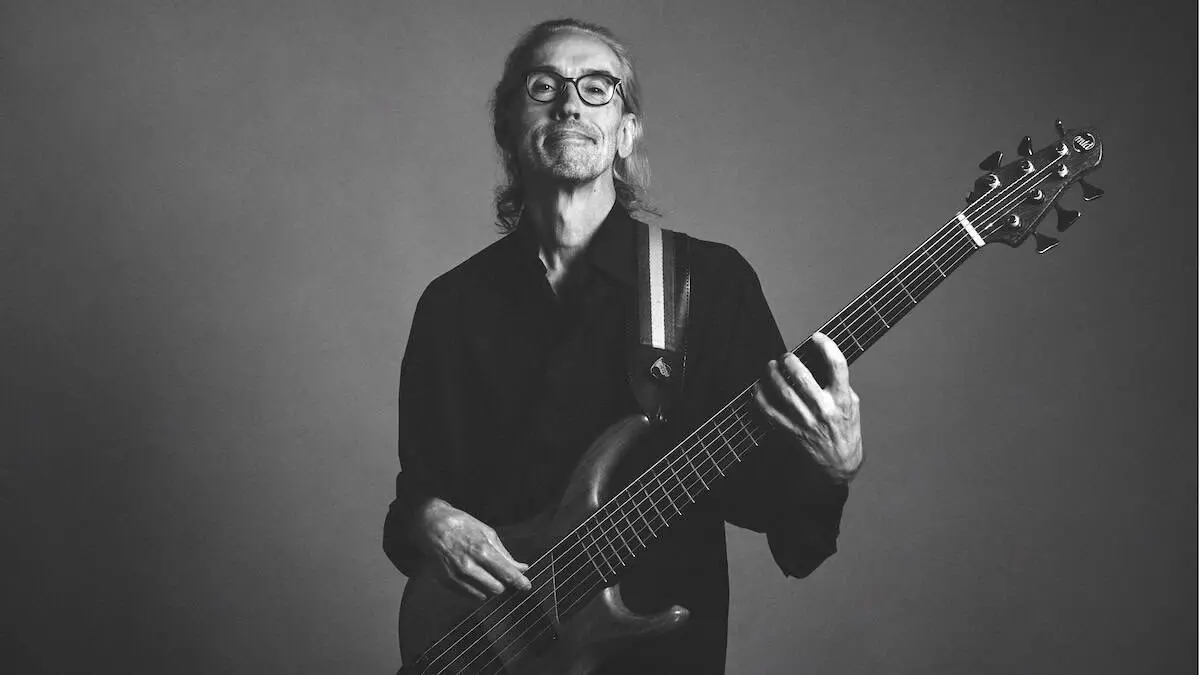
By Guest Contributor, Joe Barth
Joe Barth talks to Bjorn Meyer about his new album and exploring new musical territories with the electric bass.
Above photo courtesy: Björn Meyer © Fredrik Gille / ECM Records
Bjorn Meyer was born in Stockholm, Sweden in 1965 and has lived in Switzerland since 1996.
Starting on the piano, trumpet, and guitar, he turned to the electric bass at age eighteen. In 1996, the Nyckelharpa player Johan Herdin, percussionist Bazar Bia, and Bjorn formed the trio Bazar Bia. Since then, he has worked with Persian harpist Asita Hamidi, oud player Anouar Brahem, and pianist Nik Bartsch. Convergence is Bjorn’s second album on the ECM label.
JB: Before I ask about the new Convergence album, tell me about yourself. You grew up in Stockholm, Sweden. During your teenage years, you played guitar in punk-rock bands, then, at age eighteen, switched to bass. What was musically most helpful in your personal development as a bassist?
BM: My first encounter with the electric bass was pure luck and changed my life in an instant. Music had been an important part of my life from childhood, but always as one of many things I was interested in, like a very rewarding hobby. The bass changed all that. I had finally found my voice, and all the sounds I had heard and accumulated for so long without knowing how to make them real could finally burst out. I gladly spent every free minute of every day exploring this new universe, and that gave me a focused motivation that was hugely important.
Two important things helped me on my way and shaped me a lot at that time:
First of all, I realized that so much music that I was really interested in, as a guitar player, had resonated with me mainly because of the bass players involved! As a newly emerged bass player, I had a big library of music I could revisit. I learnt many important lessons by figuring out what made the music I loved work.
Second and definitely not less important: at the time I lived close to a house where many great musicians from Stockholm had their rehearsal spaces, jam sessions, and a general meeting point. Often there was a bassplayer missing — and I was five minutes away — so from the very early days as a bassist I could play with fantastic, experienced musicians from many different styles. From the very beginning, I was surrounded by role models and mentors who later on became colleagues and bandmates.
JB: Bjorn, to learn more about what shaped your musical values on the bass, to you, what are the three most influential bassists, and please give us a particular album they appeared on that you really connected with?
BM: There could obviously be many more than three, but – and this connects to the answer above! (Bass players “behind” guitar players)
Bass player: Jimmy Johnson
Album: Alan Holdsworth – Metal Fatigue.
I was (and still am) absolutely fascinated by Alan’s playing and compositions but the real magic was when I realized what Jimmy was doing to keep it all together, weaving fully logical basslines through “impossible” chord changes! And then there are these two very short fills at around 2:55 in the title track. 2 times 2 bars that I still remember the very first time I heard on Swedish radio. Time stopped, and I found myself trying to understand how to create such bass parts and how to adapt Alan’s unique chord voicings for the bass.
Bass player: Carles Benavent
Album: Paco De Lucia Sextet – Live One Summer Night
I had been intrigued by flamenco and the work of Paco De Lucia for a long time. My sister gave me the LP for Christmas, and this sextet redefined anything I had imagined possible. It taught me a lot about how to approach strong musical traditions with deep respect and still find my own space within and make the music even stronger.
It is absolutely incredible how Carles takes part in every function in the group – from rhythm and chords to melody and harmony – without ever losing the bass function of keeping all the sounds together and allowing the others to shine.
The bass solo in “Alta Mar”, the comping — if you can call it that — in Solo Qiero Caminar”.
Also, the studio album Solo Qiero Caminar was a game changer, just listen to the duo version of “Monasterio de sal.”
Bass player: Anthony Jackson
Album: (for once not a guitar player) Michel Camillo – Why Not!
I had been a fan from hearing Live In Central Park by Simon & Garfunkel but his playing with Michel Camillo was another ear-opener for me. Maybe also because my main working band at the time was a Latin-jazz band, so I guess it was a good match.
Having said that, Anthony was a huge inspiration across styles and genres over all the years we were fortunate enough to have him with us!
… that was already three … and I didn’t even get to mention Steve Swallow, Marcus Miller, Aston Barrett, Jaco Pastorius, Skuli Sverrison, Meshell N’Degeocello, Carol Kaye, Pino Palladino, and all the fabulous upright players that have inspired me so much – Charlie Haden, Palle Danielsson, Scott La Faro, Miroslav Vitous, and Eberhard Weber.
.. but the three I mentioned were definitely very important at the time!
JB: Convergence is you recording alone with your six-string bass. Your music has (for lack of better words) a very ethereal sound. How do you describe your music?
BM: The idea of an electric bass as a solo instrument triggers very diverse and often contradictory expectations. Many people have some idea of what a bass can do, and they expect anything from “root notes and fifths” to fast, equilibristic slapping frenzies with the comment, “How can you do that for more than three minutes per show?”
If I were to describe this program, I tend to use a few different approaches depending on who I am talking to:
Electric bass in acoustic space — I think it sums it up very well and gives some idea of what to expect without putting the music in a certain genre. For me, it is very important to share the music’s acoustic experience rather than focusing on the instrument’s electric character.
This music is also a mirror of my musical and personal journey through this life. The bass allows me to express myself without the risk of having my words misunderstood, and everything has a place in this music. Even though there are compositions, performing solo allows a unique freedom of interpretation depending on my state of mind that day.
Generally, I would be very happy to just say – new music for electric bass guitar!
JB: The album opens with “Convergence,” a song with deep textures, loops, and very staccato melodic figures. Talk about this.
BM: The album starts with a distorted chord progression – somewhat inspired by Alan Holdsworth – that I simultaneously feed into a loop through a shimmer reverb that I slowly fade in, played backwards. I find this texture very inspiring, and since it is all created live, it always turns out a bit different.
A pattern in 14/8 is presented – like a teaser – before an improvised part takes off in another direction. The pattern comes back in two versions: the original 14/8 (28/16) and a shortened 27/16 version. I loop the shorter version and play the original one on top, creating the rhythmical displacements you hear at the end.
I find such layering of patterns of different lengths very interesting, and it is a natural part of my vocabulary after many years of playing various kinds of minimal music with Don Li’s Tonus, Nik Bärtsch’s Ronin, NEN, and many others.
JB: The album consists of nine of your compositions. Were these songs all composed for this project? Talk about that process.
BM: Yes and no. I didn’t sit down to deliberately compose a fully new repertoire with this album in mind.
However, from the very first concert I played to release my first solo album, Provenance, in 2017, I noticed that the material and my playing were already shifting. Creative accidents happened, and new ideas emerged during concerts, soundchecks, and travels. After almost six years and many concerts, I had a tour in Japan and realized that there was nothing left of Provenance in the program. Then it took some time for Convergenceto emerge — during which the material continued to evolve.
In hindsight, I can see many stages of the development of Convergence that were definitely meant to become a new repertoire in its own right. One aspect of the name of the album reflects the convergence of ideas, moods, emotions, life, and time into this moment.
JB: Talk about the six-string bass you used in this recording. Did you use amplification, or was it mainly recorded directly?
BM: I play an MTD 635 (#160), an instrument that found its way to me by very lucky coincidence in New York in late 1995. I have played this very instrument on everything involving electric bass ever since.
As I mentioned earlier, the acoustic component is very important to me, and I am very lucky to have the support of producer Manfred Eicher for this approach. We recorded in a big, wonderful-sounding room that often hosts symphony orchestras and recordings of large film-music projects. The sound engineer Michael Hinreiner knows the room very well and was also very keen on the idea of making an acoustic-style recording.
I had a pair of Genelec 8030 Studio monitors and a small subwoofer behind me for the full signal (bass and effects) and a pair of satellite speakers further away, where I sent effects only (delays, reverbs, etc., but no direct bass signal) in order to fill the room and have a spatial experience.
This setup was then recorded using a lot of microphones to pick up all the aspects of the room, but also close miking on the instrument to pick up the acoustic sound. Much like you would approach a serious recording of any acoustic instrument, like a classical guitar or a cello.
Obviously, the line outputs of the bass and the effects were also recorded, but very little of that was used in the mix. I am very happy with the result, and I think you can really have the experience of sitting in the room with me when listening to the album.
JB: “Drift” is filled with harmonics. Tell us about that song.
BM: After Jaco’s “Portrait of Tracy,” anything involving harmonics on the bass is a bit sensitive. However, the range of the six-string and playing harmonics with a bit of a scraping sound with the plectrum does add another texture that I find very inspiring.
The piece started out as a reflection on the ice breaking on a river after a strong winter. Deep cracks forming, small pieces of ice breaking loose into the stream. Obviously, that is only my very personal picture. Some have said that it reminds them of northern lights, which is also a beautiful thought!
B: I love the sense of movement you create in the song “Motion.” Talk about this composition.
BM: Thanks! It took me a long time to become fluent in playing it and for the piece to develop to its current form. It started with the plucking pattern in 11/8 and the first two chords. For a long time, I couldn’t find a way out of this tonality, but the more my right hand started feeling comfortable in any tempo, I started hearing a harmonic development that the left hand was kind enough to accommodate.
“Motion” is a good example of two things that inspire me: I like it when odd meters still can have a dancing quality to them, and I often find this kind of incremental approach to harmony very interesting.
JB: This is your second ECM album. What do you appreciate about working with producer Manfred Eicher and ECM Records?
BM: It is my second solo album on ECM, but I have been lucky enough to work with Manfred on four albums with Nik Bärtsch’s Ronin and two albums with Anouar Brahem. All very different productions.
I am fascinated by his enormous dedication to music and very inspired by his way of listening. Knowing that he is listening changes my focus as a player. From being concerned with playing “right” it becomes all about playing in a way that allows for a deeper level of experience. Taking risks and adapting the performance so that the music translates well to someone who is attentively listening. He has the ability to ask or suggest things that allow me to shift focus away from the microcosm of “my composition” to the macrocosmic dramaturgy of the music.
This overview also applies to the full album, in how he balances the tracks and puts the track list together. For example, the idea of opening with “Convergence” was far from my original plan, but it turned out exactly right. Not to mention the choice of cover picture, a very unexpected but perfect match for me.
JB: Do you view the entire album as a kind of symphony or tone poem with multiple movements?
BM: I definitely see the album as a whole body of work in itself and a thoughtfully curated dramaturgical statement. But I still see it as a collection of separate compositions rather than multiple movements. The album has one sequence, but in a concert situation, I can freely choose another path to adapt the dramaturgy to the room, the audience, and the setting.
Having grown up listening to LPs, it is very important to me that listening to the full album adds an extra dimension to each song’s experience. Especially in this age of streaming and separate songs put together in more or less random playlists, I think it is more important than ever to at least try and compose as deep listening experiences as we possibly can.
JB: The album ends with the reflective “Nesodden.” Is there any connection with the peninsula in Norway?
BM: Yes – the song was written in a small cottage at Nesodden, overlooking the fjord running into Oslo. I was performing at the jazz festival there and arrived a day early due to travel issues. Sitting there, I saw a family of geese and two canoe paddlers in a beautifully respectful interaction. I guess it had something to do with who could land first or something, but all of a sudden, this whole tune had formed. I did rework some minor details over time, but the song was like a gift from Nesodden. It very seldom happens in that way.
JB: You moved to Switzerland a few years ago. Talk about the gigs you do in Europe and how you make a career in music work for you.
BM: You are kind – it has already been 30 years.
One thing I really appreciated coming from Sweden was how well-connected Switzerland is. In four to five hours, you reach Paris, Milano, Munich, and many other comparatively large cities by train or car! This makes touring so much easier than from Stockholm, where you either spend a full day just to reach the country’s border, or you have to fly all the time, which I don’t really like.
Interestingly, both Sweden and Switzerland are quite small countries, yet they have very strong, yet distinct and creative music scenes. There are also many interesting venues and festivals. Since I am involved in quite a few different projects all across Europe, Iran, and North Africa, my touring schedule will depend on which projects are active at the time. At the moment, my focus is on my large ensemble, Garden of Silence — 9 Musicians from 3 continents — on the one hand, and the solo project on the other.
I feel so very blessed to have the opportunity to present this music to so many fantastic audiences and to be part of so many inspiring collaborations.
Like everywhere, the economic situation for live music is changing quite rapidly, also here. However, I am confident that we will always need this form of human interaction, being in the same space at the same moment in time, sharing the same experience. Music is such a strong healing power, and we need it more than ever.

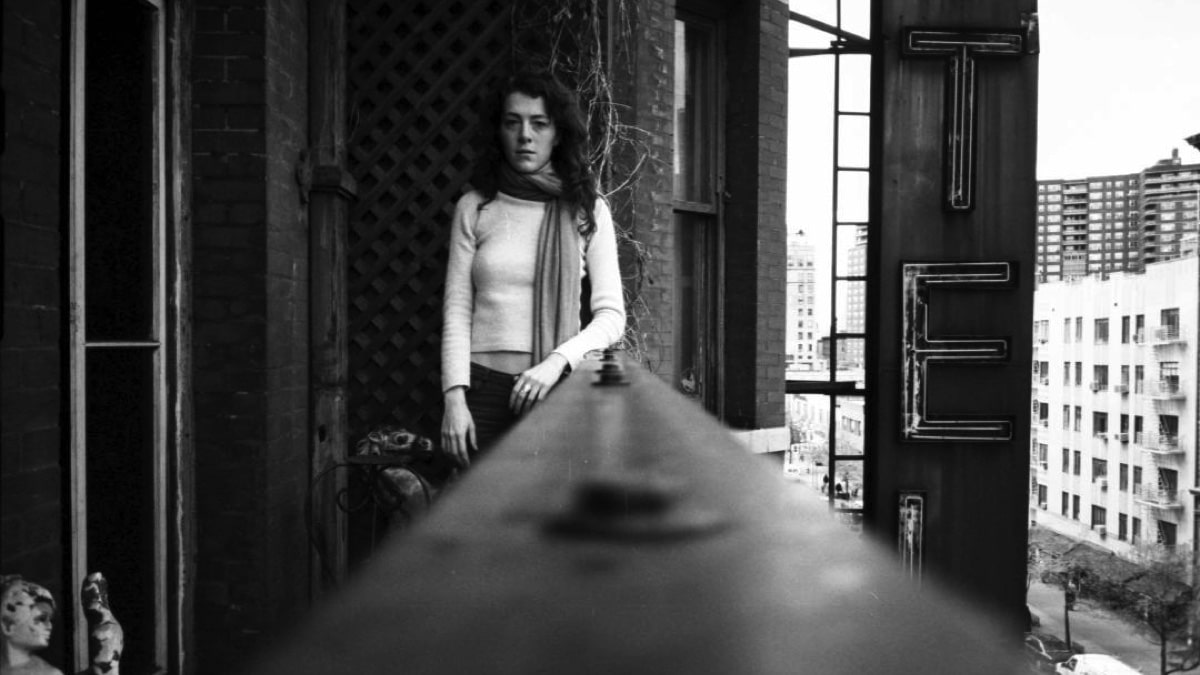
Photo: Self-portrait by Melissa Auf Der Maur
Melissa Auf Der Maur is a Canadian bassist who played with Tinker, Hole, and The Smashing Pumpkins. She released her own work and is a photographer with photos published in Nylon, Bust, and National Geographic. She released her ‘90s Rock Memoir “Even The Good Girls Will Cry” on 17 March 2026.
KB: Did you always want to be a singer-musician growing up?
I’ve played music my whole life. In school, I played trumpet and sang in a children’s choir, so music was always within me. My mother was the first female disc jockey on the Montreal airwaves; her record collection played a huge role in my inspiration and love of music.
KB: When did you start playing bass, and why this instrument?
When I was 19, the early 90s music explosion began to percolate in tiny clubs around the world. I was lucky to be a ticket girl at Montreal’s underground music club. In one year, I saw Hole, Sonic Youth, Smashing Pumpkins, White Zombie, and The Breeders – all had female bass players. That’s when the seed was planted. By the age of 22, I was the bass player of Hole.
KB: Which brands of basses have you used in your career, and which one are you using now?
The first bass that I learned on was a vintage Squier Precision. Hole was sponsored by Fender guitars, so I upgraded to Fender Custom Shop Precisions. That is all I play, but I have a cool vintage 8-string Greco that I use on recordings to thicken up guitar parts.
KB: What equipment do you use or have you used with your basses?
Ampeg SVT amps and cabinets, a couple of Sans-Amp pedals, and that is it.
KB: How did you become a member of Hole, and what is your fondest memory of that time?
Billy Corgan of the Smashing Pumpkins was helping scout a replacement for (RIP) Kristen Pfaff, Hole’s bass player. My band, Tinker, opened for them on the Siamese Dream tour, so Billy had seen me play and could vouch for me. Courtney trusted her talented friend, and that was it. I initially said “no thank you” due to my commitment to my photographic studies and the drama and chaos surrounding the band during the “Live Through This” album release. Courtney took it as a good sign that I said no, so convinced me to reconsider, and soon after, I accepted their invitation, in the name of helping put females in the male-dominated landscape of rock music. My fondest memory is every show we played as a mostly female band, symbolizing what a woman could do in a rock band. Every show had a purpose: get more women to play music.
KB: You are a photographer as well. What makes a great picture? Do you shoot in color or b/w?
I started shooting photographs at age 15. Initially only shot black & white and worked in the art school darkroom. In university, I took a color photography course, and shifted mostly and forever to that, because it was easier to process film on the road when I joined a rock band. I experimented with many cameras, point and shoots, manual, polaroids, medium format, and vintage finds. The trick to a good photograph is to shoot many and all the time – the magic is in the edit and selection process.
KB: Are there artists you would love to collaborate with or wish you had?
??I’ve been lucky to collaborate with some of my favorite musicians in my career. I would still love to collaborate with a new generation heavy electronic artist on an analog bass, heavy electronic drums, and synths collaboration project. Take me out of my usual zone, merging the past and future: my love of 80s dark new wave and new artists exploring that genre. It was very futuristic back then, and we are now, after all, living in the future. I am in the mood to play bass to heavy beats I want to dance to.
KB: What are your 7 favorite bass lines in music across all genres? And why these 7?
“Mountain Song” – Jane’s Addiction (love a rambling, rolling bass line – feels like the ocean waves)
“Black Top – Helmet” (was the first bass line I taught myself)
“Gold Dust Woman” – Hole from “The Crow 2” Soundtrack (it was my first bass line contribution to the band)
“Get Ready” – The Temptations (Motown just feels so good, because of the bass)
“Lucretia My Reflection” – Sisters of Mercy (makes me want to hit the dance floor and play bass simultaneously)
“Be My Druidess” – Type O Negative (full chord bass playing at its best by iconic, demonic, Peter Steele, RIP)
“Romantic Rights” – Death from Above (1979 – unique distorted overdriven tone, combined dance rhythm and melodic intelligence, all in one shot – also! Shout out to a bass & drum only band, which is awesome, and we should have more of, but the bass player needs to be a killer to fill that role.
KB: What are you currently up to?
Releasing my ‘90s Rock Memoir “EVEN THE GOOD GIRLS WILL CRY”. Visceral healing process, it was to get it out of me and write it, but I suspect the real magic will begin by putting it into the world and reflecting with others on what the magic of the ‘90s was all about. Powerful music decade that carried us into what is now a brave new world of digital corporate weirdness – may the past shed a light on our future. That’s my hope for this book release and tour.
Visit online:
Official Website
Facebook
Instagram
YouTube
Spotify
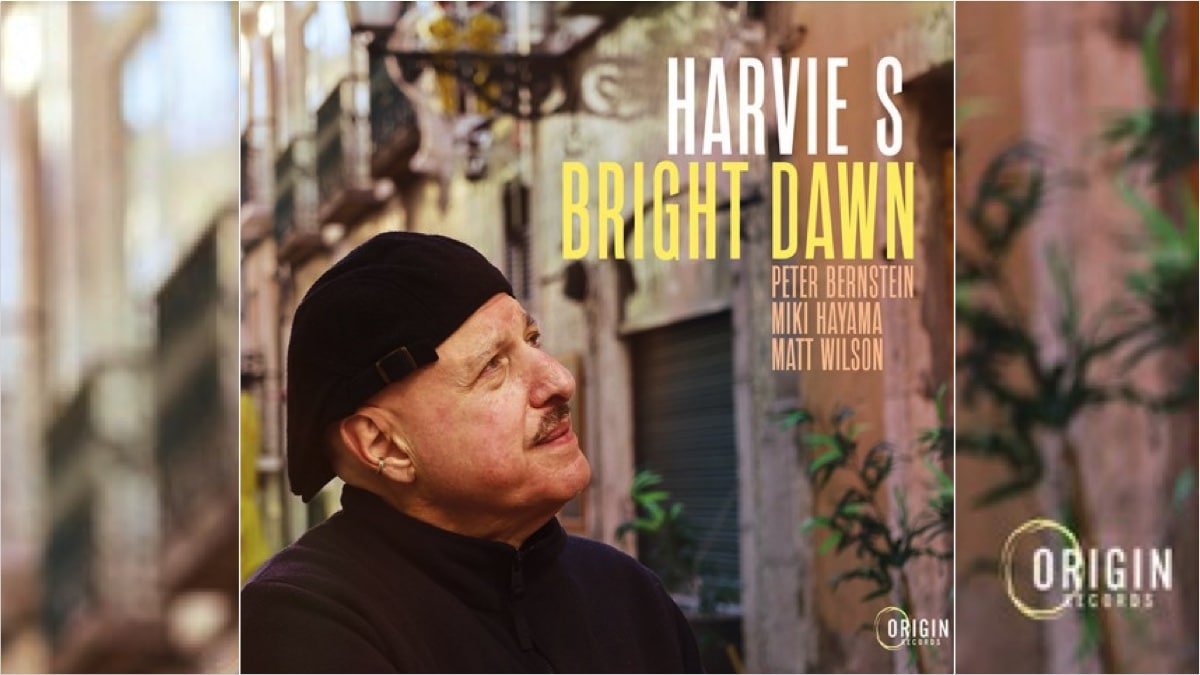
Harvie S is an American jazz double-bassist. He recorded numerous albums as a leader and co-leader, with over 400 recordings as a sideman. He has been a professor of jazz bass and ensembles at the Manhattan School of Music since 1984. He has a new album coming out on 20 March: “Bright Dawn”, where he features the bass as a melodic instrument.
KB: Did you always want to be a musician growing up?
In my childhood days, I wanted to be a professional football player. When I hit my early teens, I didn’t know what I wanted to do, but I finally decided that music was calling me. No one supported my decision, especially my guidance counselor at my High School. I decided to go to Berklee College and enrolled as a pianist.
KB: Why did you pick the double bass?
I was always listening to Jazz in High School, but I had a cheap stereo and the bass never came through, so I was not into the bass. I bought the Riverside Bill Evans “Waltz for Debby” recording and could hear the bass on that. Scott LaFaro made a huge impact on me. I realized what you could do on the bass through that.
In my first year at Berklee, I made the decision to get a bass and give it a try. No lessons, but I started working immediately and took to the instrument fast, even though I really didn’t quite know what I was doing. Berklee at the time didn’t really have much of a bass department (they do now), so I stayed as a composition major and piano minor. I was doing gigs on both instruments, but leaning towards the bass. In my senior year, my hero, George Mraz, graduated, and I was chosen to replace him. I was amazed by that, but it inspired me to do better.
KB: What double basses have you used over the years? Which one are you using now?
Good question. I have owned over 30 basses in my life. I would buy and sell a lot, and quite truthfully, I let some great basses go. About 12 years ago, I got a Jusek bass made in the 1920’s that Barrie Kolstein had completely restored after it was in an accident. He made it better than it ever was. I love this bass. He then turned me onto a Prague 100-year-old bass. I decided on this bass to use a gut G string and added a C-extention. This is my power bass, and my Jusek is great for trio work I do with Alan Broadbent and others. It bows really nicely. I used it on my new recording. I also have a Busetto bass, which is kind of a travel bass with a small body, and I use it around town and can take it on the bus. It sounds so real. Probably isn’t made anymore.
KB: What equipment do you use with your double bass?
I am very concerned about equipment. So concerned that I invented a bass amp called the “Upshot”. It is a completely different design where the sound goes up rather than straight out. For some reason, it projects perfectly and sounds like there is no amp, but has plenty of volume.
I also designed it to fit in a backpack which frees your arms when you carry the bass. It only weighs about 13 pounds. Acoustic Image was making it, but unfortunately, the owner, Rick Jones, passed away, and the company disappeared. I have some spares, so I can still use it. I use Heritage strings because I was involved with the development. Great strings, but maybe hard to get now. I use the Planet Wing pick-up, which, in my estimation, is the best there is, and it is such a simple design.
I use Weidoeft rosin, which Barrie Kolstein invented. Best rosin I ever used.
KB: You are teaching bass at Manhattan School of Music: What is the first thing you teach someone who is new to bass playing?
I really spend a lot of time working on how to get a sound. After that, timing and intonation.Then a lot more.
KB: Are there people you would love to collaborate with or wish you had?
I never got to play with Billy Higgins or Jack DeJohnette. I would have really liked that. I’ve been blessed and have gotten to play with many of my heroes. On my website, you can see the list.
KB: What are your 7 favorite bass lines in all music genres, and why these?
Hard question to answer, but I love the bass lines Ron Carter played on the Miles Davis recordings.
Israel Crosby with Ahmad Jamal
Ray Brown with Oscar Peterson and others
Luizão Maia & Elis Regina
Bobby Rodriguez with Tito Puente and Alegre All Stars
Scott LaFaro with Bill Evans
James Jamerson with everybody
Gene Taylor with Blue Mitchell
Butch Warren with Herbie Hancock
Thelonius Monk (with Wilbur Ware) on everything he ever did
I know I left out a lot, but it’s a good start.
KB: You have a new CD coming out in March… What can you tell me about it? How excited are you?
I’ve made over 20 recordings as a leader and over 20 recordings as a co-leader, but I never did a bass feature project. On “Bright Dawn,” I decided to feature the bass as a melodic instrument. I don’t play all the melodies, but more than in the past. That’s for sure. I wrote all but 2 compositions. I carefully picked the band and was able to get Peter Bernstein, Matt Wilson, and Miki Hayama for the date. I know their playing and have recorded separately with them in the past. I tried to make the music fit with their style so they could shine (and they did).
I am very happy with the result, and I was involved with the mix. Actually, in the past 10 years, I have assisted many musicians in mixing their recordings. I believe the mix to be essential in getting the message across. I have also been doing recordings, and I have recorded over 12 CDs as a recording engineer, mixing assistant, and producer. I enjoy the process so much. I like a hands-on approach to music that I record, and it has been working very well.
The importance of music to me is to tell a story and inspire others to fulfill their potential. Just playing notes is not the way for me. I’ve had a hard road to travel all my life, but I wouldn’t want it any other way. I’ve had a blessed life.
Visit Online:
Official Website
Facebook
Instagram
YouTube
Spotify

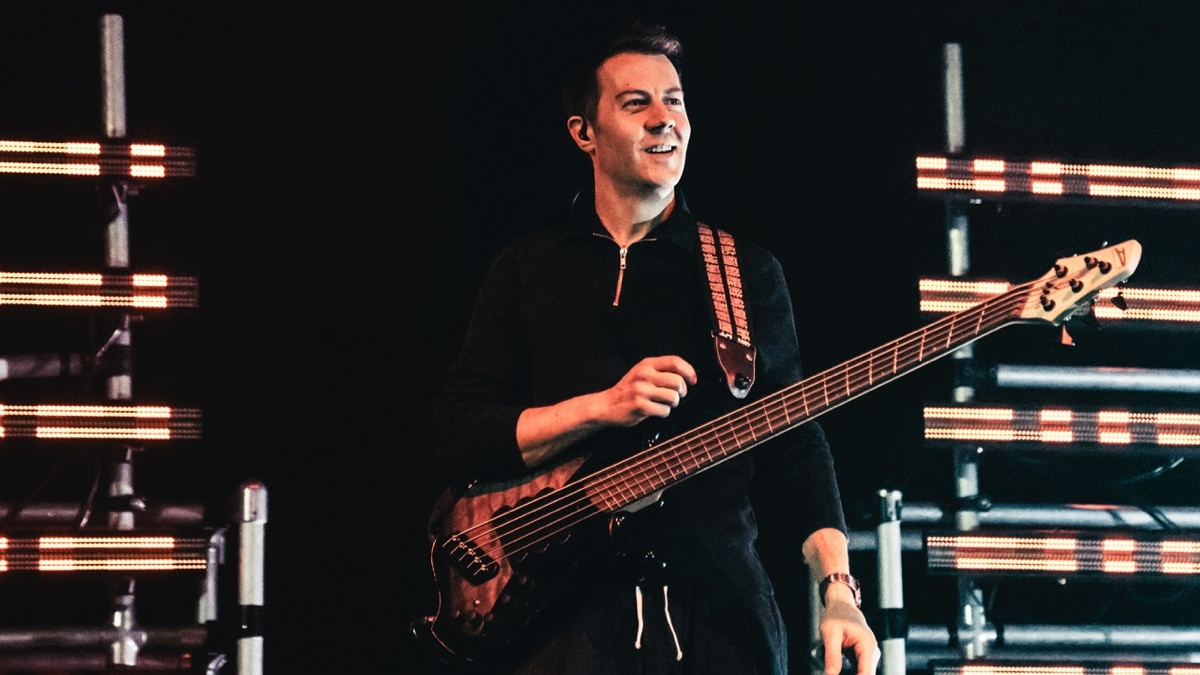
Since 2012, Tom Doyle has been holding down the low end for UK alt-rock heavyweights Don Broco, helping to shape the band’s groove-driven, genre-blurring sound into one of the most distinctive in modern British rock. With thunderous tone, razor-sharp precision, and an instinct for hooks that hit just as hard as the riffs, Doyle has become a crucial force behind the band’s ever-evolving sonic identity.
As Don Broco gear up to unleash their highly anticipated new album, Nightmare Tripping, this feels like the perfect moment to dive into the mind of the man anchoring the chaos. From his musical roots and influences to the gear and techniques that craft his signature sound, Doyle opens up about the journey so far and what lies ahead.
Join me as we explore Tom’s evolution as a musician, the creative process behind Nightmare Tripping, and his vision for the future in a band that refuses to stand still.
Here is Tom Doyle.
Photos by Ton Pullen
Featured Videos:
Follow Online:
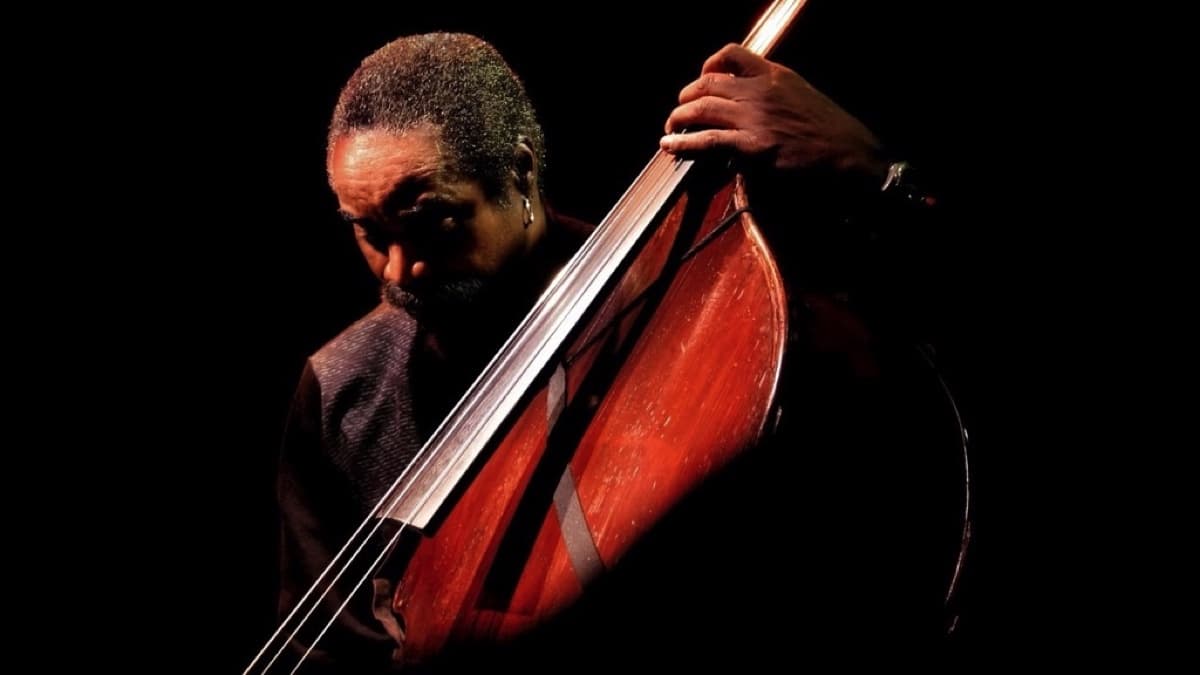
Originally from Panama, bassist Alex Blake arrived in the United States at a young age and, under the guidance of his father, found his lifelong voice in the bass. What began as an early immersion in Latin music grew into a career that has now spanned more than 45 years of exploration, evolution, and excellence.
As opportunities expanded, so did Blake’s musical reach. His journey has taken him across countless genres, collaborating with a remarkable list of world-class musicians, far too many to name here. Today, he stands as a formidable presence in the fusion scene, known for both his unmistakable sound and deep musicality.
Join us as Alex Blake shares the story of his musical journey, breaks down how he crafts his signature tone, and looks ahead to what the future holds.
Here is Alex Blake.
Photos, Willie Bruno & William Thomas
Featured Videos:

Nathan East, Echoes of a Lineage – April/May 2026 Issue

Gear Review: Italia Leather Straps

New Album: Oteil Burbridge & Lamar Williams, The Offering

Interview With Bassist Tom Doyle

Interview With Bassist Alex Blake

Feb 16 Edition – This Week’s Top 10 Basses on Instagram
Feb 23 Edition – This Week’s Top 10 Basses on Instagram
Mar 2 Edition – This Week’s Top 10 Basses on Instagram
Mar 9 Edition – This Week’s Top 10 Basses on Instagram