
Gear
Phil Jones Bass H850 Headphones: Review

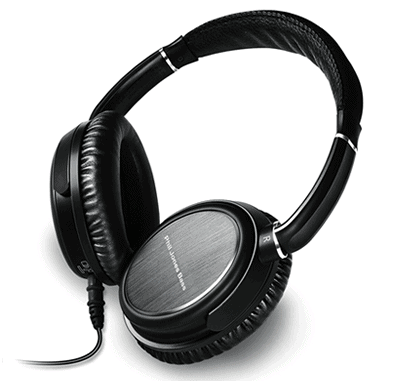

H850 Headphones from Phil Jones Bass
As musicians, we’re always looking for the best quality sound, whether that’s in our rig or in something as simple as a pair of headphones. And as bass players, we’ve amassed quite a collection of headphones that may work in some environments (like casual listening), but fail at others (private practicing). Thankfully, Phil Jones Bass has released the World’s First Pair of Headphones Dedicated to Bass Players with the H850 Headphones. Combining style with the trademark PJB high standard of quality, these headphones are an ideal addition to your equipment, at an enticing price point.
You can head over to the PJB Website and read about the specs of the H850 headphones, as well as some of the background of them. Upon receiving them, I took a good look at the aesthetics. They are well made and look very sleek; if you didn’t know it, you’d think they cost a lot more than the $99.95 pricetag that these command. They feature a removable cord (which I find incredibly helpful) and excellent acoustic isolation, which I noticed right away as I put these on. I also noticed how comfortable this pair of headphones was to wear. Oftentimes, the ones that look good don’t always feel good, especially when you’re using them for an extended period of time.
Okay, so they feel good. But how do they sound? According to the PJB Website, the H850 are the “first pair designed specifically to bridge the gap between high-quality music and deep and clear bass,” and I found that to be incredibly accurate. Upon using them for casual listening, I found the response to be excellent across the board, especially in keeping the bass frequencies focused and tight. You could hear everything, and in true PJB fashion, it sounded amazing. First test was a success.
The second test I ran the H850 headphones through was to use them with the PJB BigHead Mobile Headphone Amp for some late night practicing. Again, the headphones excelled in the application that they were designed for. My bass was clear, present and punchy with a focused low end. Adding in an auxiliary sound (either the metronome or something from the playlist on my iPhone) didn’t muddy up the sound at all, or cause any distortion. They made practicing in this type of environment enjoyable.
If you’re just looking for a great sounding set of headphones that you can also use as a practice tool, the PJB H850 Headphones will do it. But, after taking the call to sub on a couple of theatre gigs where you’re relying on headphones for personal monitors, I felt this was the ideal final test to not only hear how they’d handle this gig, but also find out how comfortable the headphones would be after a two and a half hour show.
In the theatre pit, these headphones once again excelled and exceeded my expectations. The clarity that I already knew was there was still dependable; voices from a couple doors down were clear and audible, and all the other instruments sounded great. Usually the problem with using a regular pair of headphones in this application is that everything starts to sound muddy and compressed; not so with the H850. I have used a number of different headphones and in-ear monitors in this exact setting, and the H850 are the one set that have sounded the best. The comfort level with the H850 was also well above expectations; even with really nice monitors, after a while they start to become uncomfortable.
The PJB H850 Headphones are an indispensable piece of equipment for ANY bass player. They are ideal for those practice sessions where using headphones is required, provide excellent reproduction for studio and theatre work, and are great for just casual listening. They also retail for around $99.95, which make these one of the cheaper gear purchases you’ll have to make.


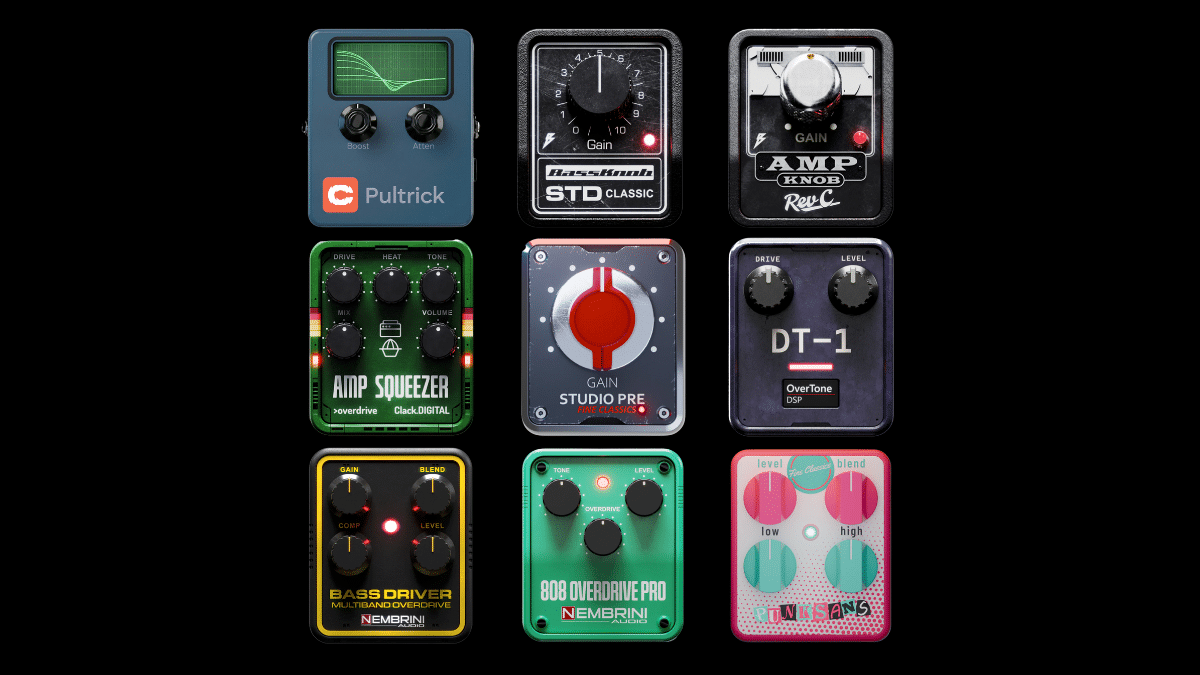
Darkglass® Electronics announces the launch of the Anagram Marketplace, a significant expansion of its Anagram™ bass platform, introducing a growing ecosystem of third-party plugins and tools. Designed to extend the capabilities of Anagram beyond its original feature set, the Anagram Marketplace enables users to access, share, and integrate new sounds and processing tools while opening the platform to trusted developers, engineers, producers, and sound designers. By bridging the gap between studio-based workflows and real-world performance environments, the Anagram Marketplace positions Anagram as an evolving platform shaped by its user community.
Think of it like an App Store. Building on Anagram’s core processing architecture, including its hexacore processor and 32-bit/48kHz audio engine, the Anagram Marketplace expands the system’s functional scope by enabling support for external plugins that were previously limited to desktop environments. At the time of launch, the Anagram Marketplace has already partnered with some established plug-in developers like Nembrini Audio, Bogren Digital, and DoGood Sounds.
The Anagram Marketplace complements Anagram’s existing blocks-based architecture, where users can construct signal chains in series or parallel configurations. With the addition of partner-developed plugins and processing blocks, users gain access to an expanding library of tools that can be incorporated into their existing signal paths. This approach extends the platform’s flexibility over time, allowing workflows and signal chains to evolve as new tools and ideas are introduced.
From a user experience perspective, the Anagram Marketplace integrates into the broader Anagram ecosystem, where its high-resolution touch display and control modes – Preset, Scene, and Stomp -continue to provide direct access to signal chains and parameter control. As new plugins and blocks become available, users can incorporate them into familiar control structures without disrupting established workflows, supporting a streamlined approach to exploration and implementation.
The introduction of the Anagram Marketplace also reinforces Anagram’s integration with the wider Darkglass ecosystem. Alongside access to partner-created plugins, Darkglass will continue to deliver free software updates, including new blocks, features, and ongoing performance improvements. Together, these updates and the Anagram Marketplace ecosystem create a platform that continuously expands, ensuring users have access to new tools and capabilities without requiring added hardware.
In practical use, the Anagram Marketplace enables musicians, producers, and content creators to extend their setups with new processing tools while keeping a consistent workflow across studio, rehearsal, and live environments. By enabling access to a broader range of plugins and community-driven development, the platform supports faster iteration, expanded creative options, and a more connected approach to sound design and performance.
The Anagram Marketplace is available now to Anagram users. For more information, visit www.darkglass.com.
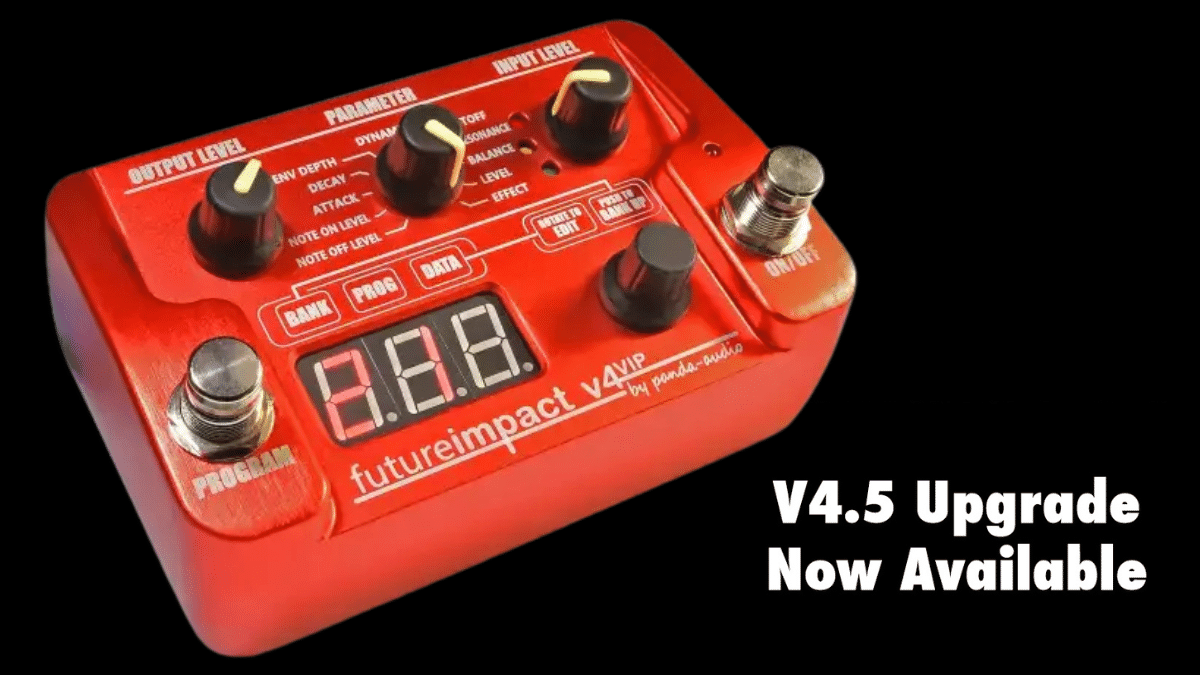
The Future Impact V4 and V4 VIP are already incredibly versatile bass synth pedals –designed for players rather than programmers. The V4.5 upgrade offers even greater value while retaining the same simplicity of operation. Some of the new features include:
• 99 DX7 FM song-ready presets have been added to the existing 99 Virtual Analogue presets library
• Setlist Mode to easily program a performance list without a computer
• Zero Latency has been added as a third mode to the existing Speed and Accuracy modes
The FM library draws heavily from iconic ‘80s and ‘90s recordings made with the Yamaha DX7 bass: “Take on Me,” “Smooth Criminal,” “Take My Breath Away,” “Broken Wings,” and many more. There are also funky bass, smooth bass, double bass, Stratocaster emulation, and a selection of classic DX7 sounds —church organ, tubular bells, pan pipe, and harmonica, to name a few.
You can also explore the tens of thousands of other FM patches out in the world and upload them using the 4.5 Editor software for Windows or Mac. The only caveat is to not to get too lost down that rabbit trail!
While fully loaded with presets galore, you can still add and edit your own so you’re not locked into someone else’s palette choices.
In addition to producing synthesizer sounds such as basses, leads, and pads, the Future Impact can also function as an octaver, chorus, flanger, phaser, distortion, envelope filter, traditional wah-wah, tremolo, reverb, etc. Plus, there’s a built-in tuner. With so much functionality, you can potentially replace an entire pedalboard of dedicated single-effect pedals.
The Future Impact is brought to you by Andras Szalay, the original designer of the legendary Akai Deep Impact pedal. It is the world’s fastest and most reliable tracking platform for professionals and hobbyists alike.
For full details, head over here: www.panda-audio.com/future-impact-v4-vip
For an overview and sound samples: www.youtube.com/watch?v=pLJSdy3Wf8c
Exclusive U.S. distribution by Tech 21 USA, Inc.

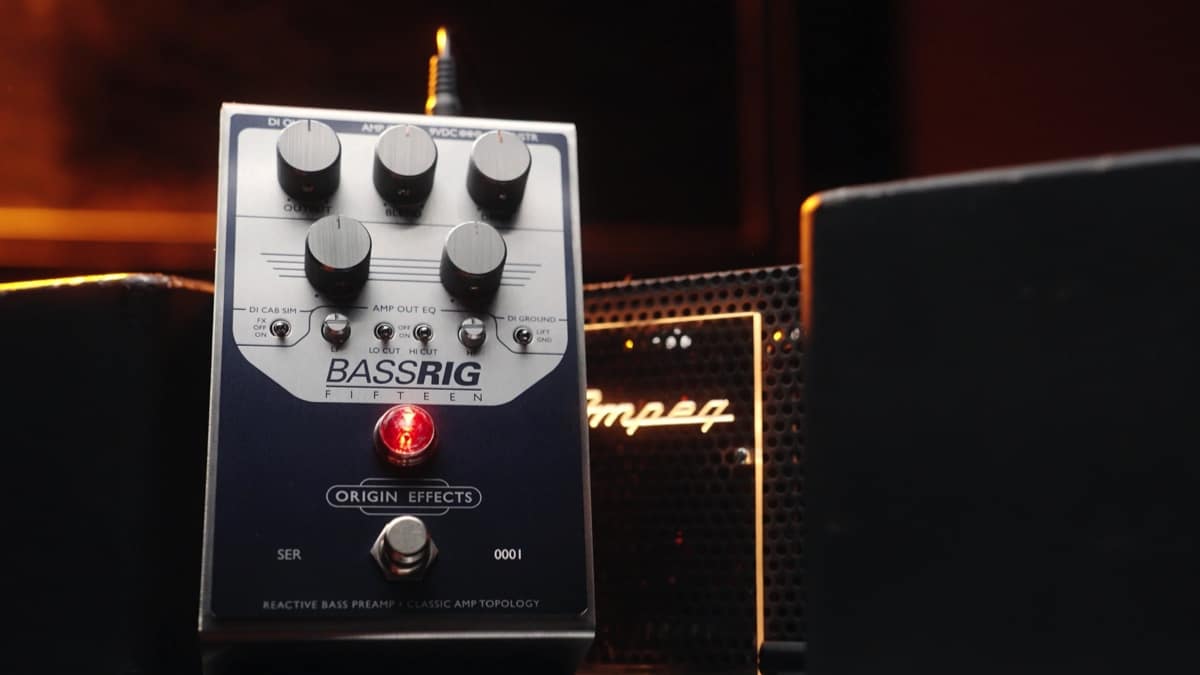
Disclaimer: This pedal was kindly provided by Origin Effects for the purpose of this review. However, this does not influence our opinions or the content of our reviews. We strive to provide honest, unbiased, and accurate assessments to ensure that our readers receive truthful and helpful information.
There’s a certain kind of bass tone that doesn’t shout for attention, yet somehow defines the entire track. You hear it on records where everything just sits, where the low end feels effortless, supportive, and impossibly musical. It’s rarely about aggression. More often, it’s about control, warmth, and a sense that the instrument is breathing alongside the band.
That’s the space the BassRig Fifteen occupies.
Origin Effects has built a reputation around precision gear that doesn’t just approximate vintage equipment, but attempts to understand it at a deeper level. With the BassRig Fifteen, they’ve turned their attention to one of the most recorded bass amp sounds in history and distilled it into a compact, all-analogue format.
But this isn’t a nostalgia piece. It’s a tool designed for modern players who need that sound without the complications that usually come with it.
From the first few notes, what stands out isn’t a specific frequency or EQ curve; it’s the way the pedal responds. There’s a softness to the transient, a subtle compression that feels organic rather than imposed. Notes bloom rather than snap, and even simple lines take on a sense of weight and intention.
It doesn’t behave like a typical pedal. In fact, thinking of it as an “effect” feels slightly misleading. The BassRig Fifteen is closer to a front-end, something that reshapes the entire way your instrument interacts with the rest of your signal chain.
Push it gently, and it rewards you with rounded, articulate lows and a smooth top end that never gets brittle. Dig in harder, and the texture thickens, introducing harmonic complexity without tipping into anything that feels overly saturated. It’s a very specific kind of drive, more studio saturation than stage distortion.
One of the most impressive aspects is how easy it is to maintain clarity. Bass players are used to compromise when adding gain, losing low-end definition, or watching their sound disappear in a mix. Here, that trade-off feels largely absent. The core of your tone remains intact, even as the character evolves around it.
This makes the pedal particularly compelling in recording scenarios. Plugging directly into an interface via the built-in DI yields a sound that already feels “finished.” There’s a natural sense of space and balance, as though a cabinet has already been carefully mic’d and placed. It doesn’t require much in the way of corrective EQ or additional processing to sit correctly.
Live, that same consistency becomes a different kind of advantage. Engineers get a predictable, mix-ready signal. Players get the reassurance that their tone isn’t being left to chance night after night.
What’s interesting is how restrained the whole experience feels. In an era where many pedals compete on extremes, more gain, more options, more everything, the BassRig Fifteen takes a narrower path. It focuses on doing one thing exceptionally well, and trusts that players will understand the value in that.
That doesn’t mean it’s limited. There’s enough flexibility to adapt to different instruments, playing styles, and rigs. But the boundaries are intentional. This isn’t about radically transforming your sound; it’s about refining it.
And that distinction matters.
For players chasing vintage-inspired tones, the appeal is obvious. But even outside of that world, there’s something to be said for a piece of gear that prioritises feel over spectacle. The BassRig Fifteen doesn’t demand attention; it earns it over time, through consistency and musicality.
It’s not the kind of pedal that reveals everything in the first five minutes. Instead, it gradually integrates itself into your playing, shaping your touch and subtly influencing how you approach the instrument.
In the end, that might be its greatest strength.
Because while there are plenty of pedals that can impress, far fewer can disappear into your sound in a way that makes you forget they’re even there.
Available online at Amazon.com
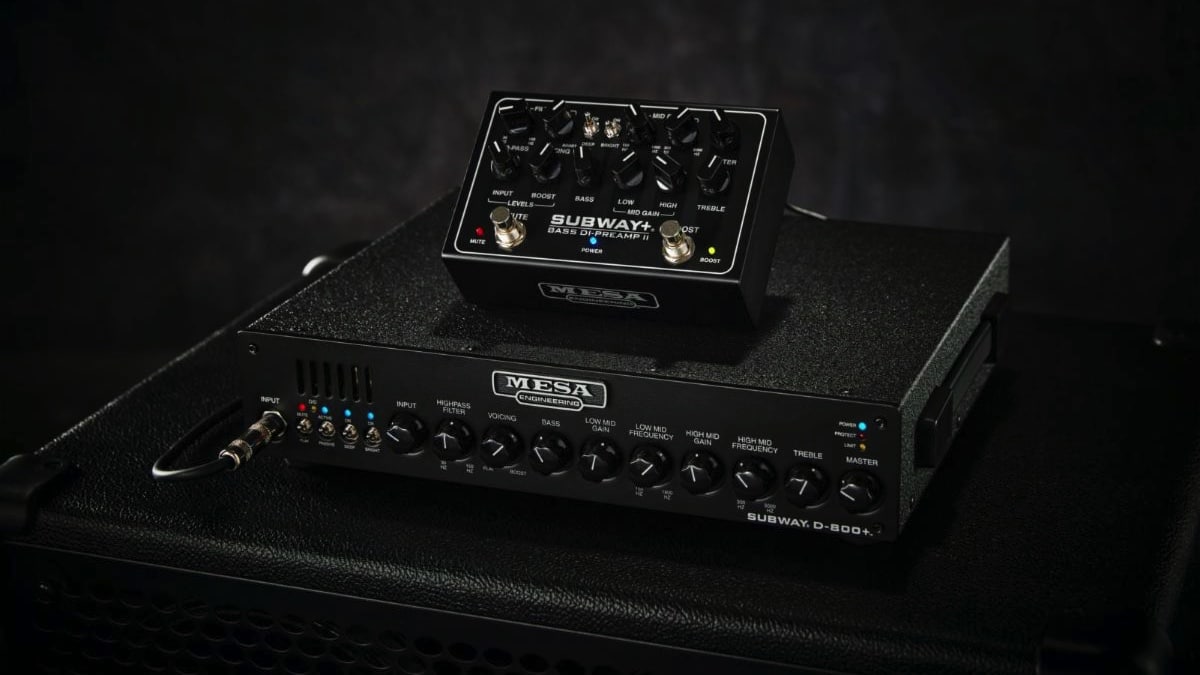
MESA/Boogie unveils the new Subway®+ Bass DI Preamp II, a compact, full-featured follow-up to its highly acclaimed first-generation Subway bass preamp pedals. Consolidating the strengths of the original two preamp models into a single, streamlined unit, the Subway+ Bass DI Preamp II adds smart refinements that give bassists all the tone-shaping tools they need to capture the sound, feel, and response that have made the Subway Series market leaders in premium bass tone. The new Subway+ Bass DI Preamp II is now available worldwide at authorized MESA/Boogie dealers, at Gibson Garage locations, and at www.mesaboogie.com.
Building on the foundation laid by the celebrated Subway® D 800™, Subway® D 800+, and Subway® D350 preamps, the new model delivers world-class?class MESA bass tone in a format that is approximately 40% smaller than the previous Subway+ design. The result is a road-ready, studio-savvy preamp that’s equally at home on a tight pedalboard, a desktop, or riding along as a micro-sized gig-bag solution.
Designed for power without complexity, the Subway+ Bass DI Preamp II features an extended-range JFET preamp that plays beautifully with both active and passive instruments, plus an Input Mute footswitch for silent tuning. A Deep switch adds roundness and low-end weight, while a Bright switch lends bite and top-end sparkle. MESA’s award-winning variable Hi-Pass Filter (30 Hz–150 Hz) removes headroom, robbing subsonic content so players can precisely tune their low end to the musical style, ensemble, or venue.
Independent Gain, Boost (footswitchable with dedicated level control), and Master Volume controls unlock a wide palette—from warm, rounded cleans to mix-ready drive. The Variable Voicing control sweeps the overall character from a flatter, modern response to a more vintage-inspired contour by intelligently adjusting multiple frequency regions with a single knob. For deeper sculpting, a fully active 4-band Baxandall EQ provides ±12 dB of Bass, Low Mid, High Mid, and Treble, with sweepable Low-Mid (150 Hz–1.8 kHz) and High-Mid (300 Hz–5 kHz) frequency controls for surgical precision.
Flexible connectivity makes the Subway+ Bass DI Preamp II a natural fit for practice, stage, and studio. Aux In and Headphone Out allow players to blend a media source with their bass for quiet, on-the-go rehearsal. The Preamp Output supports ¼” (6.35 mm) TS unbalanced or ¼” (6.35 mm) TRS fully balanced connections and delivers ample level to drive any pro audio power amp. A mic-level balanced XLR DI with Pre/Post EQ and Ground Lift routes iconic MESA tone directly to front-of-house, monitors, or recording interfaces with ease.
With its ideal mix of compact size—just 2.25” (57 mm) H × 6” (152 mm) W × 4.25” (108 mm) D—light weight, 9–18 VDC (either polarity) power flexibility, and stellar tonal control, the Subway+ Bass DI Preamp II is a powerful solution for silent or live practice, studio sessions, and touring. Whether feeding PA and/or backline in small to midsize venues or standing by as a trusted emergency rig, it brings unmistakable MESA authority to any bass setup.
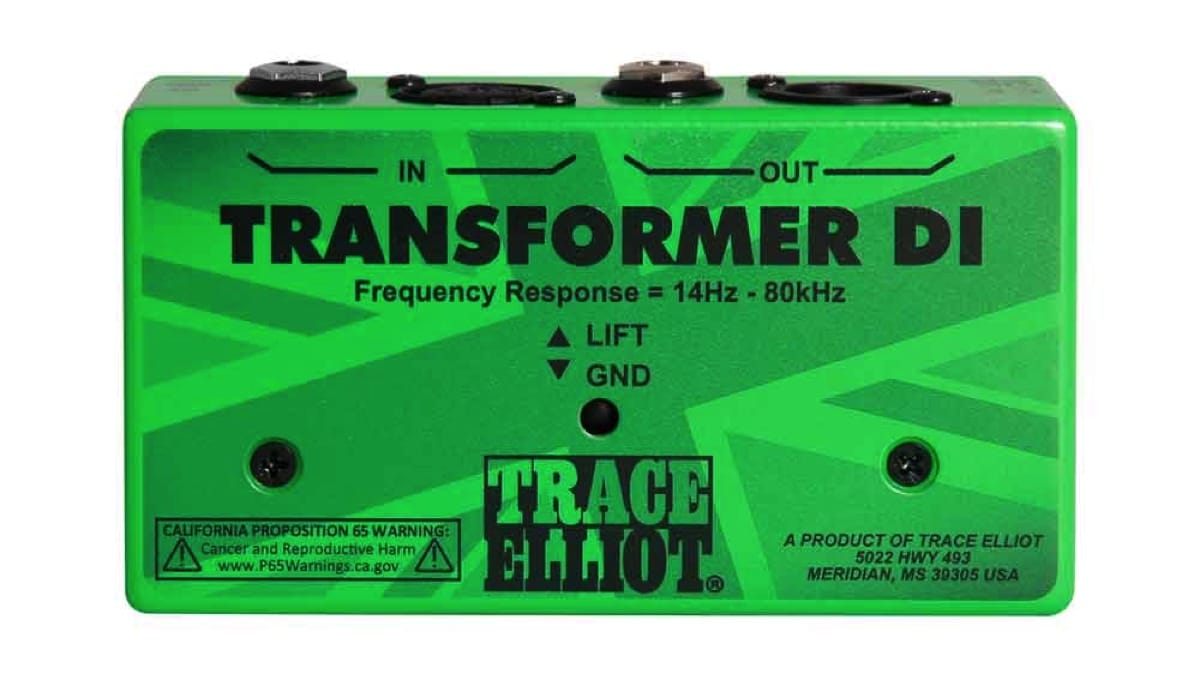
Trace Elliot® debuts the new Transformer DI. Designed for all musical instrument applications, using a new proprietary transformer design, the DI converts between balanced and unbalanced signals at a perfect 1-to-1 ratio with audiophile quality and total transparency. With a frequency response between 14Hz and 80kHz, this unit is essential for five-string bassists, other drop-tuned instruments, and artists wanting the sound of their instruments uncolored by the PA interface. The new transformer DI is now available worldwide via online and local retailers.
A transformer DI (direct-interface) box is a 100% passive impedance conversion device that converts unbalanced signals into balanced signals for direct connection to mixing consoles and recording devices. The Trace Elliot Transformer DI sets itself apart from active DI boxes by providing a pristine signal path that will never suffer clipping or distortion between the source and the balanced input. Furthermore, it outperforms other passive DI boxes by its ability to do so far beyond the range of human hearing. By balancing the signal, the transformer DI reduces noise and interference while keeping signal integrity. Its durable die-cast enclosure and high-quality parts provide steady signal performance for both live and studio environments.
With individual ¼” and XLR jacks for both inputs and outputs, and a recessed GROUND LIFT button, this unit is an essential must-have for any professional musician or audio engineer.
For more information, please visit www.traceelliot.com
Retail: $229.99 USD

Gear News: Fender Unveils Highly Anticipated Vintera III Series

New Music: Oteil Burbridge & Lamar Williams Jr. New Single, Hush

Interview With Bassist Virginia Franks

Nathan East, Echoes of a Lineage – April/May 2026 Issue

Gear Review: Italia Leather Straps

Feb 23 Edition – This Week’s Top 10 Basses on Instagram
Mar 2 Edition – This Week’s Top 10 Basses on Instagram
Mar 9 Edition – This Week’s Top 10 Basses on Instagram
Mar 16 Edition – This Week’s Top 10 Basses on Instagram