
Bass Amplification Spotlight
Year of Bass Amplification: Eden Amplification

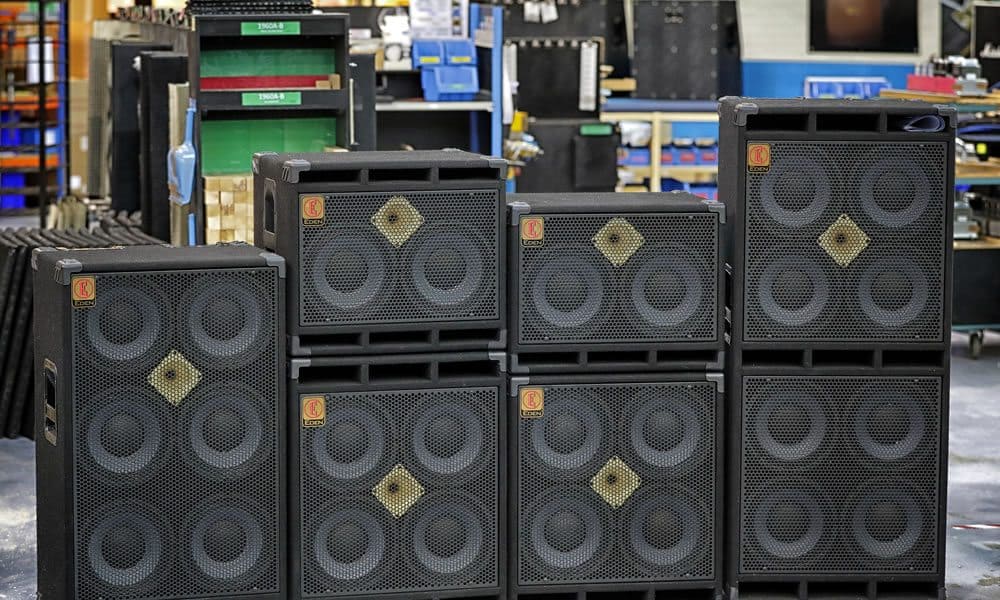
Continuing with our Year of Bass Amplification, we are honored to bring you Eden Amplification, including a Q&A with the team…

The Eden Amplification Team
- Luke Green – Brand Director
- Elise Robinson – Creative Designer / Marketing
- Jon Langstaff – Research & Development Manager
- Kevin Sharp – Production Engineering Assistant & R&D Engineer
- Tom Fanning – R&D Engineer
Website:
How did Eden get to where it is today?
When Marshall Amplification bought Eden Amplification in 2012, Brand Director Luke Green hand-picked a small and dedicated team to re-build the brand. “I simply couldn’t turn down such an exciting opportunity. We built the team around what we thought would be the most important elements to make the best bass brand in the industry and it seems to be working. Everyone in the team is passionate about music and passionate about their role in the company, that is far more important than being a wannabe rockstar.”
Beginning as a small PA enclosure company in the 1970s, Eden focused on the needs of bass players, and grew to be one of the top brands in bass amplification in the early 1990s. Today it is one of the few high fidelity, super-clean amp companies that exists from back then. “The whole story has come full circle from manufacturing on our own premises in Minnesota back in the late 1970’s to now being able once again to manufacture cabinets at our HQ in the UK. Marshall have provided so much support since buying the brand. Their support has allowed us to grow back into a leading light in the bass world. Many people know stories of the creation of the company and over its 40 years. Of course, over time the names and faces have changed but the hi-fidelity philosophy and the sound we strive for has never altered.”

Do any of you play bass? If so, are you still active players?
There are basses in every office and every room at Eden. Everyone in the team owns at least one bass guitar and all play to different levels. Research & Development Manager Jon Langstaff comes from a strong background in music and electronics design and has been designing amps and audio gear since he was a teenager.
While the R&D department are skilled players, Creative Designer Elise Robinson took it upon herself to start learning bass when she joined the team. “It’s important that we understand the language and the needs of bass players. That started for me picking up a bass guitar for the first time two years ago.”
While everyone is encouraged to be familiar with playing bass, from the business’ point of view it’s also important to remain one step removed. Valuable feedback from artists, producers and techs helps us develop and test products. Without external feedback it is too easy to make something too specific and too tailored to one person’s taste.
What does your company build? Do you limit your efforts to bass amplification exclusively? If so why?
Eden’s product development focuses on the bass market, but we also see how the hi-fidelity Eden sound benefits other instruments. Explaining Eden’s approach, Luke comments “We build amplifiers, cabinets and pedals, all purely for bass. We have made some other products such as a Ukulele amplifier but our core passion has always been bass equipment. With our sister company Marshall being the number 1 guitar amplifier manufacturer in the world, we are lucky that we don’t have to think about anything other than bass products, making us bass specialists.”
Jon Langstaff explains “When we designed the pedals, we were in a pretty lucky position. There was no need to make them work for guitar (or piccolo bass – as I call it) as well. This meant all the focus was on bass guitar only. We’ve all played pedals that are compromised because they ‘work with guitar’, or worse, they are slightly modified guitar pedals without a real understanding of the needs of bass players. We purposely never tried any of the pedals with guitars, and focused solely on bass, this allowed us to voice the tones and scale the controls so they felt good all the way round.”

Luke adds “We also try and keep a creative balance. For example, we have Friday afternoon project time where people can go off script and come up with new ideas and play with concepts. We have a 3D printer and access to some exceptionally skilled fabricators, carpenters and engineers in the Marshall factory which really allow us to experiment on new things. We are all big believers that accidents and creativity are heavily linked and that if you don’t make mistakes you will never create new things.”
How did you learn electronics/acoustics? Did you have a mentor?
Eden’s head office can be found at the famous Marshall Amplification factory in England. Luke explains, “I think if you ask anyone who has been lucky enough to have met Jim Marshall, they will tell you that Jim is the inspiration for many amp designers. He listened to the customer and delivered what they wanted. Today, for myself and the whole team at Eden our philosophy is the same.”
Jon adds, “Electronics can be studied, and mentors can come from all walks of life. Like with many professions, an engineer is something you Are, not something you Do. I’ve often thought Teaching is the same. You need to start with a good grounding in electronics, but it’s just a start for musical instrument amplifiers, which crosses a divide between art and science that makes it a thoroughly enjoyable – if a little eclectic, area of study. You never stop learning in this profession, which makes it very interesting and requires total commitment.”

How do you select the materials you choose to build with? Do you prefer an old-school approach or a modern, high-tech incorporation?
“It’s a matter of what will give us the best product.” Explains Luke. “I have great confidence in the Engineers in our team and they always are quick to point out the reason they want to use particular solutions, invariably the choice comes down to audio quality, speed or effectiveness of a feature.”
Jon explains further, “We use all kinds of different materials and techniques. The project usually dictates the possible solutions, based on target retail price and the capabilities of the production facility, however some solutions we use go back as far as the 1950’s, some electronics techniques come from as early as 1940/50 and often a project will incorporate techniques from every decade from the latter part of the 20th century, and all the way to the present day. Every decade brings something new to use.”
Elise gives two examples, “Our D-Series cabinets stand the test of time, so why would we change the winning formula? However, our newest amplifiers are lighter, smaller, and more flexible and reliable than ever before, and part of that progression is down to new technology.”

What do you personally feel are the most important characteristics in a bass amp/cab?
Jon describes his personal preference, “For me, raw power (I want to shake the stage floor) and the root tone of the brand itself. For instance, what I expect from an Eden cabinet is high output efficiency (more sound output per watt put in), clarity (I want to hear not just bass, but that it’s me playing and which bass I’m playing) and good upper middle ‘cut through’. This wouldn’t be what I looked for in another brand, I’d be looking for a different core tone, it’s not to say one is ‘right’ or one is ‘wrong’.”
Luke agrees, “Clarity. When you are playing with a band keeping an edge and clarity in the overall sound is critical, or it’s easy to get lost.”
Elise jokes, “For me, as a beginner and a bedroom-bassist, I’m more concerned about whether it’s easy to carry!”

What are a few things you would consider that make your amps/cabs so unique?
Eden’s tagline and focus is “Hi-fidelity for low frequency”, but what does that mean in practice? Elise explains what makes Eden gear different to other brands. “What’s the best way to explain our hi-fidelity approach? The rig is doing its job if all the choices you make a musician, from the instrument, the strings, the EQ and the way you physically play each note, are faithfully produced by the amp and the cabinet. You’re in control – an Eden rig lets you refine your sound by making all those choices – rather than making you sound one way because that was one engineer’s opinion of how you should sound.”
Luke goes in to some more detail, “A key feature that Eden amplifiers have had for a long time is our Enhance control. It is an EQ sweep that helps the bass cut through without losing its definition. More recently, new ideas like our illuminated speaker outputs, 2-tube preamp and super-fast adjustable compressor in the World Tour Pro amps are all things that set us apart. I think for at least two decades the “Enhance” feature was the thing that Eden sold itself on. But with the team now developing so many new ideas, there are more and more features that set us apart from other manufacturers.”

Who were some of the first well-known musicians who started playing through your amps/cabs?
Elise reflects on Eden’s roots, “Primarily, Eden was an important studio tool for performers, session guys and engineers because of the clarity. In our 40-year history, Eden amps have been used on albums across all genres. From Tool to Justin Timberlake, from Genesis to Incubus. It’s difficult to keep track!”
“In the past, there were a lot of jazz and pop guys that were cited as Eden players, but when you listen to every style of music there are Eden players in each one, from top reggae stars like Family Man (Wailers) and modern Metal players such as Johny Chow,” explains Luke.
Elise points out that the growth of the brand around the world has resulted in a more diverse artist roster. “In the last few years, we have improved the distribution of Eden products outside of the USA, and that includes worldwide artist support too. So now more than ever before, our artist roster is truly international and spans all styles, and its growing all the time.”
What advice would you give a young musician trying to find their perfect amp/cab?
Jon emphasizes the importance of listening to gear and hearing it for yourself. “Go to a store and try gear. Play it, listen to it, test it with your own bass. Don’t read about it – go and play it. Make a huge effort to get around the country as much as you need to try everything. One person’s idea of perfection is rarely another’s, so don’t be surprised by what you find.”
Elise adds, “With bass gear in particular there’s a lot of interest in numbers and specifications, but in reality, can you make the decision based on that? As a player, you need to select the gear that sounds and feels right when you play it, in the situations you need to play it in.”
“Try gear with your band, if you intend to play with one,” Luke adds. “Some amps and cabinets sound great in isolation but when combined with the rest of the band simply don’t cut through. Testing things for yourself is really the only way to make sure you are getting what you want.”

Can you give us a word of advice to young electronics fans who are considering designing their own amp/cab?
Luke sets briefs for the Eden R&D team to build upon. “Start by thinking about what you are trying to achieve. Set yourself a brief, and keep checking that the decisions you make match that ideal. Design things people want, ask lots of questions and question every choice you make in your design. Focus on solving problems that others haven’t, that will lead to good things!”
Jon and his team, electronics engineers Kevin Sharp and Tom Fanning, develop the electronics and mechanics to make the product vision a reality. “Study electronics first, there is no way round it. Once you understand the engineering behind it, open your ears and the emotive side of your brain to the sound. Ask yourself how it makes you feel, and work out how to change how you feel using the engineering behind it. Once those are matched up – you can design any sound you want, or any sound anyone else wants. When you open up the emotive side, DO NOT fill it with other people’s words or thoughts – make the effort and invest the time to form your own thoughts otherwise it won’t work. You need your own language to describe sonic things, for instance, I make a hilarious number of facial expressions and noises when trying to describe what wrong with the sound of something to someone else. Take the time to learn to be playful again. As adults, we often lose this wonderful tool for learning and expanding. Be playful, make mistakes and keep pushing for what you want.”
What is the biggest success for you and for your company?
“I think the biggest success we have had is really in putting the Eden brand back on the map as a current and relevant brand for bass players,” says Elise. “Back in 2012 we had people telling us that they thought the company had closed. In 4 short years, we have really worked hard to turn that perception around. Our small team do everything from product design, marketing, sales and customer support. It is not that many, but it is such a tight knit group of likeminded people, it works. Together, we have brought manufacturing into our own facilities in England and in Vietnam instead of relying on other companies and now everything we do is internal, right down to our merchandise and website. So I would say our biggest achievement is making Eden, Eden again. It is really exciting to thing that we can focus on moving forward and developing exciting new things and building on the successes of the last 40 years.”
Visit Online:
- edenamps.com
- facebook.com/edenamplification
- twitter.com/edenamps
- instagram.com/edenamps
- youtube.com/user/edenamplification


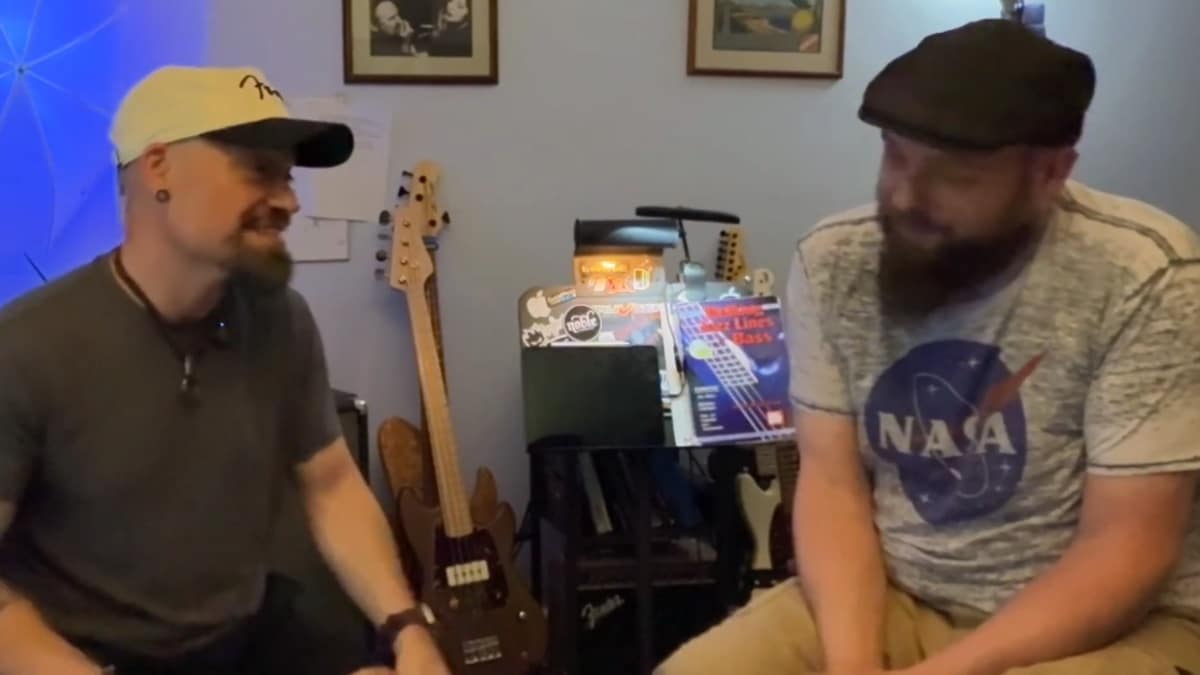
Meet the amp maker is an opportunity to sit down with builders and designers and talk about their experiences and work in the music business.
In this issue, I sit down with Jamie Simpson of Booya! Amplification.
A focus of our conversation centers around the Filament, a dual 12AX7, high-voltage vacuum tube preamp.
With a vintage-style tone stack, capacitor-coupled transformer-less DI, and preamp voicing tailored specifically for the type of model purchased, Filament blends vintage tones with modern reliability.

Filament features fully independent DI and Amp/Stage outputs for full control over sound levels presented to the front of house and those on stage, the ability to drive a power amp to full signal, and a handy -30dB pad on the Amp/Stage output to allow daisy chaining into the front end of your favorite amplifier.
Visit online at booyaamps.com


Genzler Amplification introduces the KINETIX™ 800 – the latest revolution in lightweight, high-output, versatile bass amplification.
With years of research, design, and manufacturing expertise in tube circuit designs, the company states this model has been developed utilizing stringent design parameters for form, function, fit, and finish. This latest design blends the warmth and harmonic content of a CLASS A, all-tube preamp – offering three 12AX7 tubes running at a full 300 Volt plate voltage – with a high-output, Class D, 800-Watt power amp module, delivering a professional, high-powered, touring-class bass guitar amplifier, that weighs just over 7 lbs.

The KINETIX™ 800 was designed to be that responsive, kinetic connection of interactive energy between the player’s expressiveness, their technique, and the tonal response coming back to them from the amplifier and speaker system – engaging with big, full notes, quickness, and snap when pushed, or slow harmonic bloom when sustained. It is a simple-to-use, very musical amplifier, and is what a high-voltage tube preamp brings to the player’s dynamic interaction with their instrument through a world-class bass amplifier.
FEATURES INCLUDE:
• SIX STAGE, CLASS A, TUBE PREAMP (3 x 12AX7 Tubes running at 300 Volts)
• CLASS D, 800-WATT POWER AMP
• MUTE / ON / BOOST GAIN SWITCH
• LEAN / FAT / THICK, TONAL FOUNDATION SWITCH
• 5 BAND FIXED EQUALIZATION NETWORK
• TUBE DRIVEN, XLR DIRECT OUTPUT, w/PRE or POST EQ SETTINGS
• AUX INPUT
• HEADPHONE OUTPUT
• TUNER OUTPUT
• DUAL SPEAKON CONNECTORS
• POWER RATING: 400W @ 8 ohms, 800W @ 4 ohms and 2.67 ohms
• DIMENSIONS: 3.25”H x 11.25”W x 11.375”D
• WEIGHT: 7.20 LBS

The KINETIX™ 800 is the latest innovative product from Genzler Amplification. This newest design is a departure from Gentler Amplification’s current lineup of popular bass heads, the MAGELLAN® 350 and MAGELLAN® 800 solid-state platforms. All Genzler bass heads are an ideal match to their line of speaker enclosures, like the BASS ARRAY® SERIES 2, NU CLASSIC®, and MAGELLAN® series of cabinets.
The KINETIX™ 800 is now available and shipping throughout the company’s global network of dealers and online. USA MAP $1,299.99.
Interview with Dariush Rad…
Dariush Rad knows a LOT about the science of signal transmission. He is the President and CEO of Asterope Premium Audio Cables, who fabricate cables that are designed to carry our electronic signal with the highest fidelity possible.

Bass Players put a lot of effort into finding their sound.
Starting with our hands, we create a signal that is influenced by our choice of strings, our instrument with its particular characteristics, and the amplification chain. It is essential that this signal is carried as cleanly and truly as possible for it to represent our unique sonic signature.
Join us as we learn more about Dariush Rad, signal optimization, and the scientific details that go into the Asterope line.
Visit online at asterope.com
Bass Amplification Spotlight
Bass Amplification Spotlight: EBS Sweden AB’s Bo Engberg and Mats Kristoffersson
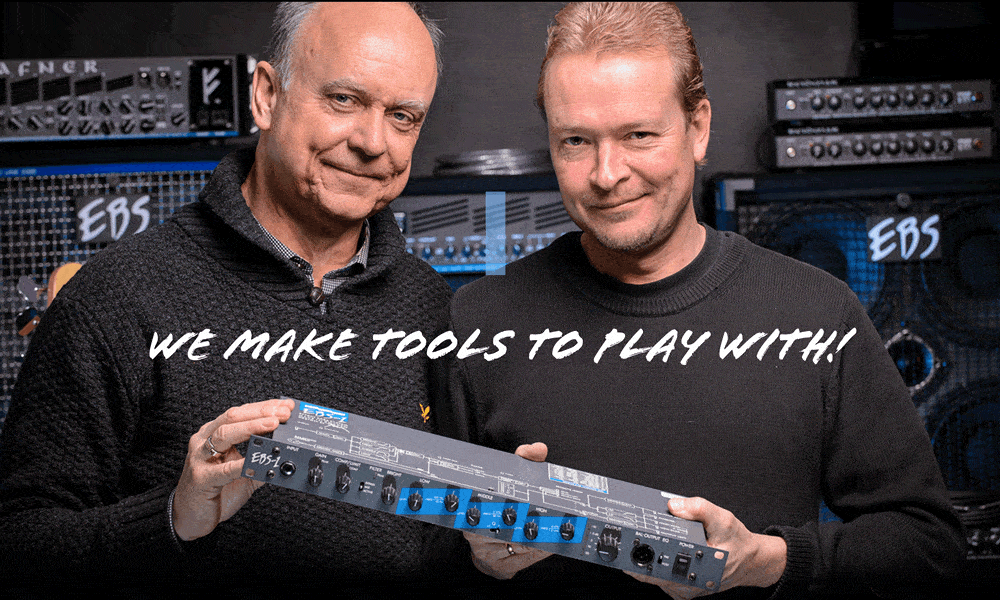
Bass Amplification Spotlight: Get to know EBS Sweden AB’s CEO, Bo Engberg and Tech Director, Mats Kristoffersson…
How did you each get your start in music?
Bo: As a little kid, I had three big interests: Music, Electronics and Business. That led me to an education in music in Stockholm, Sweden. Before I knew it, I was playing bass in various pop, rock and jazz bands.
Mats: As a youngster, at 9 years of age, I started playing music in school. I started with drums, then after a year I added bass as well.
Are you still active bass players?
Bo: I started playing Bass when I was 13. Today I don’t play actively as a musician, but it happens.
Mats: Yes, of course. I kept playing actively for about 20 years before the job commitments took more and more time. These days I don’t have the time to play on stage, but I always grab the instrument while working on the designs.
What does EBS Sweden AB build?
Today EBS Professional Bass Equipment produces Heads, Cabs, Combos, Pedals, Strings and Accessories. All our products are developed and designed entirely by EBS in Sweden. We are a brand focused on bass, but we have customers, and even endorsed artists that use our pedals and accessories with guitar as well. Even violin, horn and keyboard players use EBS effects.
How did you get started building bass amps/cabs?
Soon after we first met, we discovered we both carried the same vision of one day making the best bass amplifier the world had seen. Our first project resulted in the launch of a 19” rack mounted preamp called the EBS-1. This was in 1988, and we still hear from bass players that think it is the best preamp ever made for bass. We were lucky to have several top musicians, including Flea, Jimmy Earl and Billy Talbot, picking up that unit, which gave us the confidence to continue and develop our business. To start with a product like that also helped us stay focused on making the best equipment we can and to design gear for professional musicians. If they love it, many others will approve as well.
How did you learn electronics/acoustics?
Bo: As a matter of fact, Mats is an unbeatable designer and technician with a natural born talent so I have concentrated most of my efforts to business and marketing strategies.
Mats: Basically, when I started playing the bass the interest in electronics arose and I was fortunate in finding a mentor, an electronics component distributor that guided me in the right direction. He also gave me my first designing jobs. At a young age I had managed to put together a lot of kit projects for home electronics involving power amps, FM tuners, clock radios, computer monitors and I even put together my own synthesizer just for fun.
Later, at around 20 years age, I worked as first maintenance engineer at one of the largest recording studios complexes in Stockholm. That task involved service of high end mixing consoles as well as magnetic “old-style” tape recorders. I did maintenance on tube amps and other musical equipment as well.
How do you select the materials you choose to build with?
This depends on what we want to achieve, of course. We are working closely with a wide range of suppliers of raw materials directly in order to pinpoint what an appliance would need. The lowest cost, lowest range components have never been on our radar and not suitable for our products. However, when we have scanned the market for components that are critical for the functionality of a product, such as electromechanical components (switches, potentiometers and so on), it is not always the most expensive ones that have proved to perform the best. So, when we make products we always try to find the perfect balance that offers reliable quality, outstanding performance and at an optimal cost.
What do you feel are the most important characteristics in a bass amp/cab?
The natural uncolored response in sound is the ultimate and absolute most important goal when designing an amplifier or cabinet for bass. If it can provide that, you can create all kinds of sounds with it – but it has to have that fundamental quality.
The build quality is very important, since we build products for professional use. So, long life length with a minimum of maintenance needed is our aim. Note the fact that people are still using gear we released back in the late 80s. No recycling and no waste, just occasional maintenance when needed.
What are a few things you would consider that make your amp/cab so unique?
No compromise, no hassle with facts and performance and easy-to-use gear! Our products must fulfill the highest demands of the top bass players, while still being user friendly. If it’s not easy to operate, it will cause frustration, so it’s a big deal actually. We make tools, not toys, to play with. It sounds simple, or a bit cliché, but not many brands live up to that promise like EBS does.
Who were some of the first well-known musicians who started playing through your amps/cabs?
Our three first international customers back in 1988, were Flea from Red Hot Chili Peppers, Billy Talbot from Crazy Horse / Neal Young and Jimmy “finger licking” Earl (with Chick Corea at the time).
In the 90’s artists like Stanley Clarke, Marcus Miller and Victor Bailey begin to use and enjoy the excellent craftsmanship of EBS Professional Bass Equipment. It helped a lot to establish the name, so we are forever thankful for them trusting and using our designs.
Have you develop a signature product for an artist?
We have never made a signature amp or cabinet with an artist, but we have designed signature pedals with Billy Sheehan and Stanley Clarke. Based on that experience, the initial input has come from the artist. In other words, they have come to EBS with some sort of need and asked if we think we could help them develop a product that will meet their request. From that we try to find a functional design from the players’ “point of view” that can also benefit the regular customer. In the process, we come up with prototypes to be evaluated and modified before the launch of the signature product. A process that may be repeated several times before finished. In all, this means a tight development communication between the artist and us. We would never put an artist’s name on a product just as a marketing gimmick, it has to have real substance that is closely connected to the artists demand, and the artist must be fully satisfied with the result before it is being released.
What advice would you give a young musician trying to find their perfect amp/cab?
Do not just look for as much power as possible or as many features as possible. Think carefully about the features you really need in the long run and make sure your choice is the one that does that job best for you.
A bass rig is an investment for your career or at least something you should be able to use for several years to come. So, it may be better to save up some money or otherwise finance the rig of your dreams than go with what you can afford at the moment. Unlike a great vintage bass guitar, amps and cabinets usually don’t increase in value over time, so you will save money at the end of the day by making the right choice from the beginning instead of trading gear several times until you get there.
When you play your bass through an amp and cab that do justice to all the work you have done to learn how to play, when YOUR sound is what you hear through the speakers, then you know it was money well spent.
Can you give a word of advice to electronics fans that are considering designing their own amp/cab?
Try to find your own way of thinking instead of watching what all the others do. Only in this way will you be able to do something that could be new and unique.
What is the biggest success for you and for your company?
Success is relative. But to see famous players play our brand and enjoy it… that makes it worth all the hard work. That is also what gives your brand a place on the musical scene.
What are your future plans?
We are always planning for and working on new stuff. Keep your eyes and ears open, and make sure to check us out at the NAMM Show, where we always have our latest creations on display, and sometimes even offer a little preview on what’s next to come. A good way to make sure to get the news first is also visiting www.ebssweden.com and sign up for our newsletter.
Anything else you would like to share?
EBS Professional Bass Equipment has always been about SOUND – QUALITY – SERVICE!
A lot has changed in the World since the company started 30 years ago, but World-class sound, quality and service is still at the core of our business.
Just remember, EBS make great tools to play with – so, ‘Don’t Play Without It!’
Check out EBS Sweden AB online at ebssweden.com

Continuing with our Year of Bass Amplification, we are honored to bring you Teegarden Audio, LLC, including an in-depth interview with Bret Teegarden…

How did you get your start in music?
I began piano lessons in the 1st grade. Music was important to my family and my uncle was a very talented jazz musician. My grandfather was an accomplished guitar player and played professionally in the Tulsa, OK area. While continuing piano lessons, I began playing trumpet in the 5th grade and played all the way through college.
In my middle school years, my father had an acoustic guitar that he would let me tinker with. He wasn’t a professional, but, he did show me how to play a few chords and riffs. I would sit in my bedroom, spinning my favorite LP vinyl records, trying to play along. For some reason, I was drawn to the bass lines. Maybe it was just easier! One day I took the two highest strings off the acoustic guitar, spread the remaining four out and proceeded to follow along with the bass lines of my favorite bands like Chicago, Blood Sweat & Tears, Grand Funk Railroad, ZZ Top, America, Yes, The Beatles, and even Barry Manilow! (did I just say that?)
Do you play bass? If so, are you still an active player?
I play bass every time a new Fatboy Tube DI comes off our production line and I test it to meet my sonic expectations, but, that’s about all I play anymore.
 Shortly after I started learning bass lines using my father’s modified acoustic guitar, he felt compelled to buy me a real bass. One of the best days of my life. I started playing bass with my church youth choir back in the small town of Sapulpa, close to Tulsa, Oklahoma. This eventually led to playing in real garage bands with friends from school. We even landed gigs playing elementary school dances or parties while we were still in junior high. We were terrible but as long as the drummer was going, the kids were dancing!
I still carried on with my participation in marching and concert band as a trumpet player but our high school jazz band/pep band afforded me the opportunity to spread my wings on bass. It quickly became the instrument I spent most of my time with.
Between the jazz band and accompanying the pop portions of high school choir concerts to playing in bands with friends, I had a bass around my neck most every day of the week.
My bass playing took me on to college where I played on a nationally syndicated television show which helped pay for school. My time there also provided me an outlet to work on the technical side of things within the television department. I spent many hours learning to wire patch bays and modifying gear. I left college early to pursue my music career playing professionally with a few Christian artists (I’ll spare you all the name dropping!). I also became involved in the Tulsa music and recording scene as a bass player and later as a recording engineer. I continued to play bass on numerous independent artist records, commercial and corporate film scores while engineering and mixing many of those projects.
My touring and recording work led to my move to Nashville in 1988 where I worked as an engineer/producer, primarily in the Contemporary Christian Music field (again, I’ll spare the name dropping). I spent 25 years in Nashville as a recording engineer until I decided to start Teegarden Audio. I became so immersed as a recording engineer that I pretty much laid down my desire to be a session/touring bassist. It can happen pretty quickly when you get an opportunity to record so many of the top bass players in Music City. I never lost my love for the bass guitar as an instrument though.
What does your company build? Do you limit your efforts to bass amplification exclusively? If so why?
Teegarden Audio builds (and plans to build) numerous devices for all of the recording process. From mic preamps & DI boxes to microphones, speakers, EQs and compressors.
Our very first product was The Fatboy Tube DI and though it doesn’t fall under the category of “Bass Amplification” it is related. Many players these days are moving away from large clunky stage rigs and prefer a more direct based approach. Mark Clay, bassist for the CCM supergroup Newsong, walks on stage every night, during their packed Winter Jam concerts, with nothing but a Bluesman Vintage Bass and a Teegarden Audio Fatboy Tube DI. His sound is massive, fills the arena, yet doesn’t get in the way of anything. No amps on stage. He needed a DI that didn’t just match the impedance of his guitar to the sound system but actually offered him the tone of an amp for the FOH as well as their in-ear monitors.
The Fatboy Tube DI can be used for any instrument but bass players seem to be drawn to it the most. Maybe it’s because I am a bass player and used a bass during the R&D process to fine tune the unit to what I wanted to hear as a recording engineer and former player.
How did you get started building? Tell us about your first build… what prompted you to do it? What were the challenges or lessons learned?
I’ve met a lot of people though my 35+ year career in the music business. I’ve use almost every piece of recording equipment made from the 50s to date and I’ve owned quite a bit of it over the years as well. We, as recording engineers and musicians, are always striving to be better with sound, even though the music industry as a whole is satisfied with the quality of phone/computer speakers and compressed MP3 files. Some say it doesn’t matter, but to me, the best sound you can start with is paramount, no matter how it ends up in the end. The better your beginning, the better the final result. It’s a law of nature that can’t be broken. You can’t recreate what is not there.
I got started building equipment through friendships with two gentlemen that spent many years designing and building custom audio recording gear in Hollywood through the 60s, 70s and 80s. Their creations were used on so many hit records that there would not be room to list here.
As you will recall, I had experience in college working with soldering irons and tinkering inside gear. I also spent time working for a company that installed sound systems in churches, schools and corporate meeting rooms. I had built and maintained a few recording studios over the years so it was a natural fit to begin building gear. The music business is evolving and changing. For older professionals I highly recommend being open to reinventing yourself. It’s OK if your role and contributions to the industry change with age. I saw my own career changing with the proliferation of home studios and the decline of physical music product sales. I still use my engineering skills every week but not to the extent I did in the 90s. The biggest challenge for me has been figuring out how to channel all my experience and skill sets into something that will benefit others. I feel I have found that with Teegarden Audio. I don’t necessarily have decades of experience working in the pro audio gear manufacturing business but I do feel I have contributions I can still make.
How did you learn electronics/acoustics? Did you have a mentor?
After meeting the gentlemen I mentioned above and after about 2 years of get-togethers, talking about their history of recording and gear, these gentlemen began teaching me the intricacies of their design philosophy and gear building methods. After I successfully built my first simple tube gain block I felt it was only a short matter of time (and money) until they would share a design of a product for me to begin building and selling. I expected I would be given schematics and blueprints to build some of the same awesome gear they had been telling and teaching me about, some of the same gear I had had the occasional opportunity to use throughout my recording career. Boy was I wrong! They forced me to go through the arduous process of learning how to draw schematics, learning the math behind circuits and component selection, learning to layout PCB boards, learning how to work with metal fabricators, learning the business side of ordering parts and inventory control. Nothing was handed to me by them. They wanted me to “own” my work. They instilled the importance of making my circuits and gear perform to MY standards, to MY ear, and my experience. I am truly thankful for their guidance.
How do you select the materials you choose to build with? Do you prefer an old-school approach or a modern, high-tech incorporation?
Part of my mentoring and education was about the importance of selecting the right parts for the sound you are after. Also, because of my mentors’ long time involvement in the industry, they had spent countless R&D hours selecting components for their builds. Hours were spent researching the best metals to use in enclosures, etc. That was one benefit they did hand to me. However, they did not allow me to take their word for it. I had to prove the sonic advantages to myself through my own listening tests. I had to use the prototypes in my own recording sessions.
A lot of what we do at Teegarden Audio has it’s roots in old-school and vintage design. We also incorporate many modern techniques as well. One aspect of our approach we are most excited about is our designs are not copies or clones of other gear whose parts have been unobtainable for decades. They are not inspired by adaptations of vintage gear that were mainstays in the market. We are finding new ways to bring the principles of Vintage sound into our new era of recording.
What do you feel are the most important characteristics in bass sound?
Sound and reliability are the only characteristics that are important. Like in a car race, the only important things are how well the car stays together and how fast it runs. The number of gages and paint color don’t matter at the finish line.
What are a few things you would consider that make your products unique?
Simplicity and character are what make the Fatboy Tube DI so unique. Sometimes I say it’s what it doesn’t have that makes it a favorite among session players and touring musicians. We don’t add feature for marketing purposes because more often than not, those features diminish the sound a device is capable of.
Who were some of the first well-known musicians using your products?
Since I have spent so many years of my career in Nashville, our local community was a fertile ground for the Fatboy Tube DI. As a recording engineer, I had worked with a good number of top bassists and other musicians. When I would call them to try out my prototypes, they didn’t hesitate. Session players like Gary Lunn, Matthew Pierson, Mark Hill, Jimmie Lee Sloas, Craig Nelson, Luis Espalliat, Danny O’Langherty and Jay Demarcus were early users and clients. You can hear the Fatboy Tube DI in concerts of Carrie Underwood, Reba, Rascal Flatts, Dylan Scott, Trace Adkins and many others. Keyboard players like Blair Masters, Christian Cullen and Chris Carver are using the Fatboy Tube DI on their keyboard rigs and analog synths. Some notable players and producers from the west coast like Jay Graydon, Todd Homme and Tony Espinoza have also added the Fatboy Tube DI to their arsenal.
What advice would you give a young musician trying to find their perfect sound?
Listen, listen, listen. Then listen again.
Can you give us a word of advice to young electronics fans who are considering designing their own amp/cab?
The costs and time commitments will be more than you could ever imagine. My mentors constantly remind me, “If it were easy, everybody would be doing it.”
What is the biggest success for you and for your company?
Hearing reports back from users about how the Fatboy Tube DI has affected their playing and career are the best we could ever ask for. It was pretty fun to win the Vintage King Nashville Bass DI Shootout in 2016 where we were up against 18 other top level devices.
Are you preparing a new model/new designs?
 We have a new solid state Active DI coming out this fall, called The Magic DI, which will sell at a more affordable price point of under $250. We have reimagined the 48v powered Active DI and feel it will be a game changer for many players and sound engineers. It is especially tailored for acoustic instrument pickups but sounds great on electric bass too. It would be perfect for bass players who desire a more hi-fi sound than they get with tube devices or are looking for the perfect complement for their upright basses. Our prototypes have been out on the road this summer with Kenny Loggins. He and his guitar player, Scott Bernard, are using them on their acoustic guitars. They love them and are saying they have solved their long time struggle with getting a great acoustic guitar sound live. I’ve tested it side by side with the Fatboy Tube DI and I have to say, while different, the new Magic DI is on par.
Is there anything else you would like to share that we have not included?
Green is my favorite color.
Visit online at teegardenaudio.com