
Latest
Worship Bass With Steve Gregory: Bass Blessings

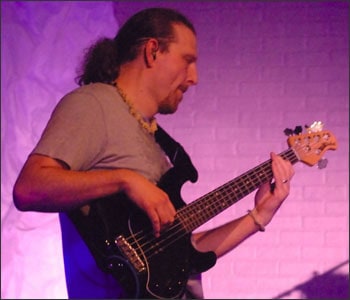
 Meet Steve Gregory
When I was younger, I had a very cynical view of worship bassists. I imagined that playing bass in a worship setting meant sitting stoically on a stool, playing whole notes from a page in a hymnal. I was convinced that playing for worship was possibly the most boring fate a bass player could face!
I kept this attitude until my girlfriend, now my wife, challenged me to actually go to church. I explained that, while I would go to church with her, I knew that the music would be painful to listen to, at best.
Have I mentioned that in our relationship, my wife is the smart one?
My wife took me to Highlands Fellowship Church in Abingdon, VA and thoroughly enjoyed watching my arrogant attitude turn upside down. Her “I told you so” look went unnoticed as first, because I was immersed in the music! From that one experience, my opinion of worship music changed 180 degrees and I found my calling as a bassist.
After my initial wake up call, I went on a mission to learn all I could about worship music. I listened to Lincoln Brewster, Jeremy Camp, Francesca Battistelli, Tommy Walker, and others and was amazed to discover that, yes, worship music could be hip. I also realized that the mythical “stoic stool sitters” were nowhere to be found. Instead, bassists including Norm Stockton, Abraham Laboriel, and Matthew Tennikoff were playing grooving bass lines that would silence even the most anti-worship music critics.
While on this discovery mission, I was blessed with the opportunity to play worship music on a weekly basis. What I immediately realized was that there is a distinct role for the worship bassist. This role can be summed up in one sentence:
“The role of the worship bassist is to aid in the creation of a special musical environment in which people can worship, praise, and prepare for the message.”
This may seem to be a bit “touchy feely” and am I certain that some of you are worried that I’ll be presenting a solo bass arrangement of “Kumbaya”, but there are sound musical principles to use in fulfilling this role. Let’s explore these concepts and see how to create the worship environment from the bottom up.
You Have to Love the Drummer
Bassists learn a basic rule soon after they pick up the bass: create a pocket with the drummer. In worship music, the drums and bass provide the immediate feel that determines the fullness and depth of the worship environment. I’ve heard several worship performances where the “spark” was missing and almost every time, the problem can be traced to the bassist and drummer not locking in a groove together.
I am unbelievably lucky to play with a great drummer who has an impeccable sense of time, listens incredibly well, and has chops to spare. When we first began to play together, building a bond was the first order of business. To do this, a return to basics was necessary: I listened to the kick drum and locked in as tightly as possible with that drum alone. The result? We immediately felt a connection. I then allowed my lines to interact with the kick, snare, and hi-hat. I made it my goal that, when a bass note and drum hit coincided, the drummer felt as if the drum actually triggered the bass note. By doing this, we felt as if we had been playing together for years! Now that we have been playing together for some time, we are “brothers in groove” and together form the foundation for the worship experience.
Victor Says…
In a recent clinic I attended, Victor Wooten made a fantastic and often overlooked point. Victor pointed out that while the bassist-drummer relationship is an absolute necessity, you have to listen to each and every player you are with in order to create a complete groove. This is entirely true in the worship setting, where you may find yourself on stage with any number, and any combination, of instruments. In my setting, it is not unusual to be playing with drums, acoustic rhythm guitar, electric rhythm guitar, electric lead guitar, keyboards, and even a saxophone on occasion. With so much sonic space being occupied, it is important to play bass lines that support, not weaken, the worship experience.
Case in point: Highlands Fellowship Church features the best keyboardist I’ve had the pleasure of joining on stage. In particular, his Hammond organ work is phenomenal; however, the Hammond organ has a range that overlaps the range of my bass. In order to play together, the keyboardist and I have to listen to each other and develop a “conversation” together. Decisions I face in this conversation include what range on the bass I will choose for a given section, whether to play the root of a chord or create an inversion, and whether or not it would be beneficial to play a lick or passage together. Being a successful worship bassist requires having huge ears and the willingness to play what is needed for the worship experience. At times there is room for a flashy run down the fingerboard and other times a half note on the root is the perfect choice.
Follow the Leader
Here’s an important question to consider: how many people leave a church service singing the bass line to their favorite song? I’m willing to bet that the answer is, “not many, if any”. People are singing the words to the song! The worship leader singing these words and leading the experience must be listened to and supported, above all. This is where the worship bassist gets to truly exhibit a “servant’s heart”. If the vocalist needs space instead of a busy bass line, the space should be given to them. If the worship leader wants to have a sense of propulsion, a driving bass line is needed. What about when things don’t go the same way they did in rehearsal? If the worship leader decides to repeat a chorus where there wasn’t one in rehearsal, the change should be seamless. If the worship leader feels a connection and begins to vamp, be prepared to play that groove as long as is needed. Connecting with the worship experience often means “follow the leader”!
Be a Servant With a Groove
For the worship bassist, building the worship environment is everything. If you are willing to be a servant to worship, the musical and spiritual experience cannot be explained in words. I can say that if you stay strong on your spiritual walk, consistent in your musical walk, and keep the role of the worship bassist in your heart, you will have some of the most incredible adventures you have ever had playing your bass!
Until next time, I hope that your bass playing is blessed and that you can bless others through your bass playing!
PS – In case anyone is wondering, some of the most amazing worship experiences I’ve had were done sitting on a stool, playing whole notes.


Check out our top 10 favorite basses on Instagram this week…
Click to follow Bass Musician on Instagram @bassmusicianmag
FEATURED @kilianduartebass @meridian_guitars @adamovicbasses @marleaux_bassguitars @jcrluthier @sandbergguitars @ibanezuk_official @dingwallguitars @torzalguitars @ariaguitars
Check out our top 10 favorite basses on Instagram this week…
Click to follow Bass Musician on Instagram @bassmusicianmag
FEATURED @bacchusguitars @franz.bassguitars @mendesluthieria @ramabass.ok @meridian_guitars @adamovicbasses @shukerbassguitars @fantabass.it @andys_vintage_guitars @valdesbasses
Check out our top 10 favorite basses on Instagram this week…
Click to follow Bass Musician on Instagram @bassmusicianmag
FEATURED @murraykuun_guitars @ja.guitars @combe_luthier @overloadguitars @kevinhidebass @franz.bassguitars @indra_guitars @petercrowdesign @baboomin_bass @jcrluthier
Check out our top 10 favorite basses on Instagram this week…
Click to follow Bass Musician on Instagram @bassmusicianmag
FEATURED @sandbergguitars @benevolent_basses @rayriendeau @olintobass @wonkorbasses @bite.guitars @adamovicbasses @maruszczyk_instruments @skervesenguitars @ramabass.ok

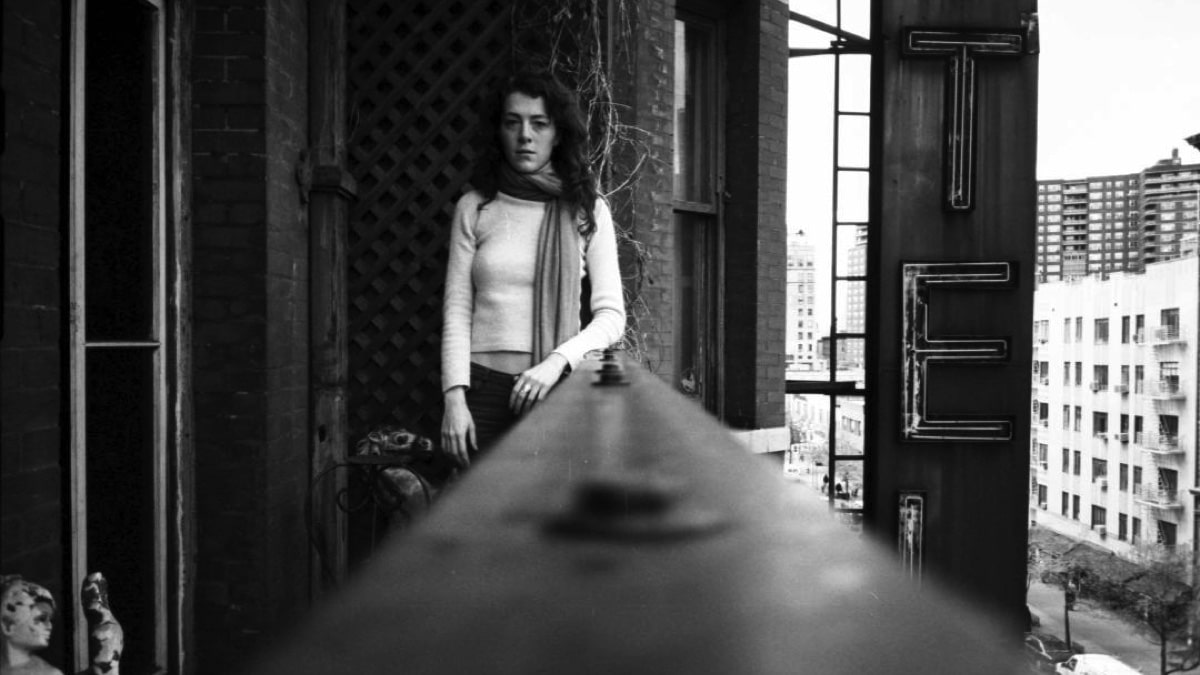
Photo: Self-portrait by Melissa Auf Der Maur
Melissa Auf Der Maur is a Canadian bassist who played with Tinker, Hole, and The Smashing Pumpkins. She released her own work and is a photographer with photos published in Nylon, Bust, and National Geographic. She released her ‘90s Rock Memoir “Even The Good Girls Will Cry” on 17 March 2026.
KB: Did you always want to be a singer-musician growing up?
I’ve played music my whole life. In school, I played trumpet and sang in a children’s choir, so music was always within me. My mother was the first female disc jockey on the Montreal airwaves; her record collection played a huge role in my inspiration and love of music.
KB: When did you start playing bass, and why this instrument?
When I was 19, the early 90s music explosion began to percolate in tiny clubs around the world. I was lucky to be a ticket girl at Montreal’s underground music club. In one year, I saw Hole, Sonic Youth, Smashing Pumpkins, White Zombie, and The Breeders – all had female bass players. That’s when the seed was planted. By the age of 22, I was the bass player of Hole.
KB: Which brands of basses have you used in your career, and which one are you using now?
The first bass that I learned on was a vintage Squier Precision. Hole was sponsored by Fender guitars, so I upgraded to Fender Custom Shop Precisions. That is all I play, but I have a cool vintage 8-string Greco that I use on recordings to thicken up guitar parts.
KB: What equipment do you use or have you used with your basses?
Ampeg SVT amps and cabinets, a couple of Sans-Amp pedals, and that is it.
KB: How did you become a member of Hole, and what is your fondest memory of that time?
Billy Corgan of the Smashing Pumpkins was helping scout a replacement for (RIP) Kristen Pfaff, Hole’s bass player. My band, Tinker, opened for them on the Siamese Dream tour, so Billy had seen me play and could vouch for me. Courtney trusted her talented friend, and that was it. I initially said “no thank you” due to my commitment to my photographic studies and the drama and chaos surrounding the band during the “Live Through This” album release. Courtney took it as a good sign that I said no, so convinced me to reconsider, and soon after, I accepted their invitation, in the name of helping put females in the male-dominated landscape of rock music. My fondest memory is every show we played as a mostly female band, symbolizing what a woman could do in a rock band. Every show had a purpose: get more women to play music.
KB: You are a photographer as well. What makes a great picture? Do you shoot in color or b/w?
I started shooting photographs at age 15. Initially only shot black & white and worked in the art school darkroom. In university, I took a color photography course, and shifted mostly and forever to that, because it was easier to process film on the road when I joined a rock band. I experimented with many cameras, point and shoots, manual, polaroids, medium format, and vintage finds. The trick to a good photograph is to shoot many and all the time – the magic is in the edit and selection process.
KB: Are there artists you would love to collaborate with or wish you had?
??I’ve been lucky to collaborate with some of my favorite musicians in my career. I would still love to collaborate with a new generation heavy electronic artist on an analog bass, heavy electronic drums, and synths collaboration project. Take me out of my usual zone, merging the past and future: my love of 80s dark new wave and new artists exploring that genre. It was very futuristic back then, and we are now, after all, living in the future. I am in the mood to play bass to heavy beats I want to dance to.
KB: What are your 7 favorite bass lines in music across all genres? And why these 7?
“Mountain Song” – Jane’s Addiction (love a rambling, rolling bass line – feels like the ocean waves)
“Black Top – Helmet” (was the first bass line I taught myself)
“Gold Dust Woman” – Hole from “The Crow 2” Soundtrack (it was my first bass line contribution to the band)
“Get Ready” – The Temptations (Motown just feels so good, because of the bass)
“Lucretia My Reflection” – Sisters of Mercy (makes me want to hit the dance floor and play bass simultaneously)
“Be My Druidess” – Type O Negative (full chord bass playing at its best by iconic, demonic, Peter Steele, RIP)
“Romantic Rights” – Death from Above (1979 – unique distorted overdriven tone, combined dance rhythm and melodic intelligence, all in one shot – also! Shout out to a bass & drum only band, which is awesome, and we should have more of, but the bass player needs to be a killer to fill that role.
KB: What are you currently up to?
Releasing my ‘90s Rock Memoir “EVEN THE GOOD GIRLS WILL CRY”. Visceral healing process, it was to get it out of me and write it, but I suspect the real magic will begin by putting it into the world and reflecting with others on what the magic of the ‘90s was all about. Powerful music decade that carried us into what is now a brave new world of digital corporate weirdness – may the past shed a light on our future. That’s my hope for this book release and tour.
Visit online:
Official Website
Facebook
Instagram
YouTube
Spotify

Gear News: Fender Unveils Highly Anticipated Vintera III Series

New Music: Oteil Burbridge & Lamar Williams Jr. New Single, Hush

Interview With Bassist Virginia Franks

Nathan East, Echoes of a Lineage – April/May 2026 Issue

Gear Review: Italia Leather Straps

Feb 23 Edition – This Week’s Top 10 Basses on Instagram
Mar 2 Edition – This Week’s Top 10 Basses on Instagram
Mar 9 Edition – This Week’s Top 10 Basses on Instagram
Mar 16 Edition – This Week’s Top 10 Basses on Instagram