
Bass CDs
New Album: Bjorn Meyer, Convergence

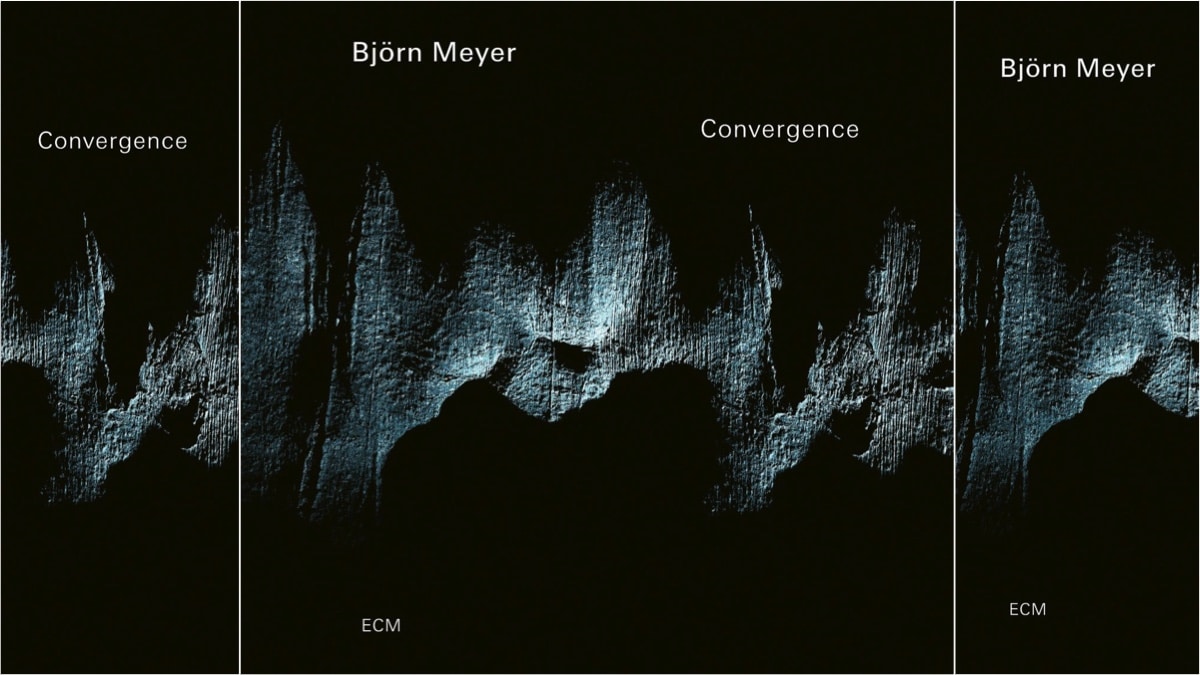
With Convergence, his second solo album, Swedish-born bassist Björn Meyer further develops music on the blueprint established with his recording Provenance (2017), making use of the technical potential of the bass guitar to establish striking sonorities and grained textures while also being acutely aware of the acoustic space in which his sounds emerge. In its review of Björn’s previous solo statement, London Jazz News found the bassist demonstrating “that melodic high-jinks and emotional intensity aren’t just for those who inhabit the treble stave. Meyer’s bass sings.” Here the bass player’s atmospheric explorations conjure images in the mind. His technical innovations appear expanded in a programme of songful quality. In brief it feels complete in itself, more than a document of instrumental prowess.
Meyer’s musical material is realized in real time, played ‘live’ in the studio, with effects and delays and reverbs – colours of the modern bassist’s palette – integrated in the moment. The pieces heard on Convergence came together gradually: “In the first few tours after the release of Provenance I played mostly material from that album. However, new inspirations, ideas and ‘accidents’ started finding their ways into the performances. In a quite slow but steady way these new directions stayed with me, developed over time, and grew up to become a fully new repertoire. Experiences gathered in the last few years of more intense solo playing have converged into this album. The many solo performances have also allowed me to go deeper in my research of the six-string electric bass. New playing techniques, sounds and ways of improvising and composing for and with this instrument have found direct ways into my musical practice, and not only in a solo context.”
This journey to the heart of the bass guitar has sometimes involved oblique approaches and ‘preparations’ akin to Cagean experimental tradition. On the improvisation called “Rewired”, for instance, Meyer uses magnets and metal bars to change the vibration of the strings, going further on “Magnétique” whose muted and metallic sound is achieved “thanks to a special construction of magnets, a spring, and some drops of superglue.” The tapping style deployed on “Magnétique”, moreover, makes it seem almost like a percussion piece, suggestive of the cross-rhythms of mbira music. Meyer is continually exploring the possibilities of his instrument, whether emphasising that this is a bass guitar – see the elegant polymetric plucking of “Gravity” – or setting free broad swaths of ambient sound as on “Drift”. Each piece becomes an episode in an unfolding narrative.
“At some point in the mixing and sequencing process Manfred Eicher made a boldly wonderful suggestion to rearrange the tracks, and made ‘Convergence’ the opening track. That decision set in motion a very strong dramaturgical flow that ends beautifully with ‘Nesodden’,” Meyer notes. “It became a story that could best be told in this way, one that I find sparks imagination and is full of surprises while still allowing for contemplation.”
Convergence is launched with a release concert on January 24 in the context of the Sparks and Vision Festival in Regensburg, Germany.
*
Born in 1965 in Stockholm, Björn Meyer began his musical life playing piano and trombone, transitioning to the electric bass at 18. Active on the international music scene since 1989, and based in Switzerland since 1996, he has collaborated with artists and ensembles across multiple genres, and received awards including the Canton Bern Music Prize and the Swiss Music Prize.
He has worked extensively with Tunisian oud master Anouar Brahem and appears on Brahem’s albums The Astounding Eyes of Rita and Souvenance. Other ECM appearances include recordings with Nik Bärtsch; Meyer’s bass was effectively a lead voice in Bärtsch’s Ronin group for a decade, as documented on albums including Stoa, Holon, and Llyria.
Björn Meyer continues to lead the intercultural ensemble Garden of Silence, a project begun with the late harpist Asita Hamidi in 2009. For 30 years he has also been a member of Swedish contemporary folk trio Bazar Blå. Further biographical and other details at https://www.bjornmeyer.com/
Convergence was recorded at Bavaria Musikstudios, Munich, in September 2024, and produced by Manfred Eicher.
Visit online at bjornmeyer.com/


Bass CDs
New Album: Zev Feldman’s Time Traveler Recordings’ Buster Williams ‘Pinnacle’ Muse Catalog Reissue
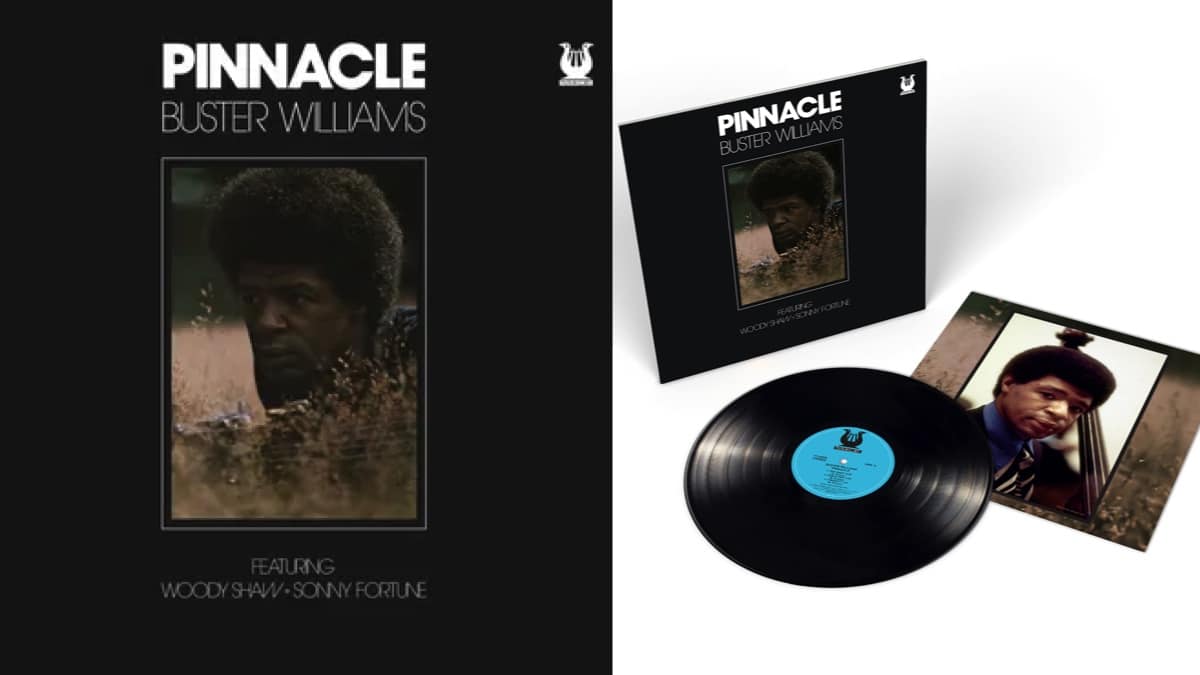
A precious, but previously elusive gem by the brilliant bass player Buster Williams will re-enter the jazz firmament with Time Traveler Recordings’ April 18 reissue of Pinnacle, the NEA Jazz Master’s celebrated 1975 debut album as a leader.
The package, an exclusive RSD release on LP, is being reissued for the very first time since its original release. It is the latest installment in TTR’s Muse Master Edition Series, unearthing the long-lost masterworks from the catalog of the historic Muse Records. The series is a collaboration with Virgin Music Group and Craft Recordings, spearheaded by TTR co-founder, producer and “Jazz Detective” Zev Feldman.
Remastered AAA directly from the original analog tapes by Matthew Lutthans at the Mastering Lab in Salina, Kansas, Pinnacle is pressed on 180-gram vinyl by Optimal. It will be issued in a hand-numbered, high-gloss tip-on sleeve, featuring a new liner essay by journalist Mike Flynn and a rare period photograph of Williams by Raymond Ross. The package also includes the original 1975 notes by Elliot Meadow who produced the original session which was recorded at Blue Rock Studios in NYC.
Thirty-three years old at the time of these August 1975 sessions, Camden, New Jersey native Charles Anthony “Buster” Williams was already an acclaimed and in-demand jazz bassist. He’d spent most of the 1960s touring and recording with Nancy Wilson, also freelancing for the likes of the Jazz Crusaders, Harold Land, and the Miles Davis Quintet—substituting for Ron Carter for several months in 1967—where he met and worked with Herbie Hancock. Williams joined Hancock’s Mwandishi band in 1971, placing him on the cutting edge of the new jazz fusion movement.
Pinnacle, recorded after Mwandishi’s breakup, finds Williams still very much informed by that idiom of funky, experimental jazz. The band includes fellow Mwandishi alum Billy Hart on drums and fellow Miles veteran Sonny Fortune on soprano saxophone and flute, along with legendary trumpeter Woody Shaw and a venturesome crew including saxophonist Earl Turbinton, keyboardist Onaje Allan Gumbs and percussionist Guilherme Franco. (Vocalists Suzanne Klewan and Marcus also join on two tracks.)
Williams blazed new trails in the use of electric bass in jazz: “A pioneer among jazz doublers—musicians equally adept on upright and electric bass,” notes Flynn in his new essay. But, while he features his Fender electric bass on the thumping opener “The Hump,” on most of the album Williams plays the acoustic upright bass that had always been his first love. It anchors the darker, funkier journeys the band takes on “Pinnacle” and “Batuki” and sets the swinging tone for the acoustic numbers, the deep spiritual jazz “Noble Eagle” and the breezy, playful “Tayamisha.”
“What I love about the acoustic bass is what I have to do to get music out of it,” Williams muses. “The sound I get depends all on me, not the help of an amp. The instrument relates to my heart; it’s alive, it has emotion, it’s not just a piece of wood.”
“Bass players are often described—perhaps unfairly—as the anchor of the band,” writes Flynn. “But in the hands of a master like Buster Williams, the bass becomes something much more: the engine, the heartbeat, the mellifluous core driving the music forward.”
Williams composed four of the album’s five tracks, making Pinnacle a brilliant first showcase for his writing as well as his playing and bandleading. “Buster’s writing abilities have not gone unnoticed in the past,” observes Meadows in his original liner notes for the album. “The writing for this date is fresh and varied. ‘The Hump,’ which should make you get up and do something, contrasts with the haunting serenity of the title song. Then ‘Tayamisha’ (named for Buster’s daughter) is light and airy as opposed to the intensity of ‘Noble Ego.’”
A prophetic release, Pinnacle forecasts the subsequent 50 years that Williams has spent balancing forward-looking musical adventures with the bounty and rigor of the tradition. “The title says it all,” writes Flynn. “Pinnacle wasn’t just a debut. It was a statement of arrival—an artist stepping forward from a prolific past into a fearless, unbounded future.” And, under the curation of Time Traveler’s Muse Master Edition Series, it now sounds better than ever.
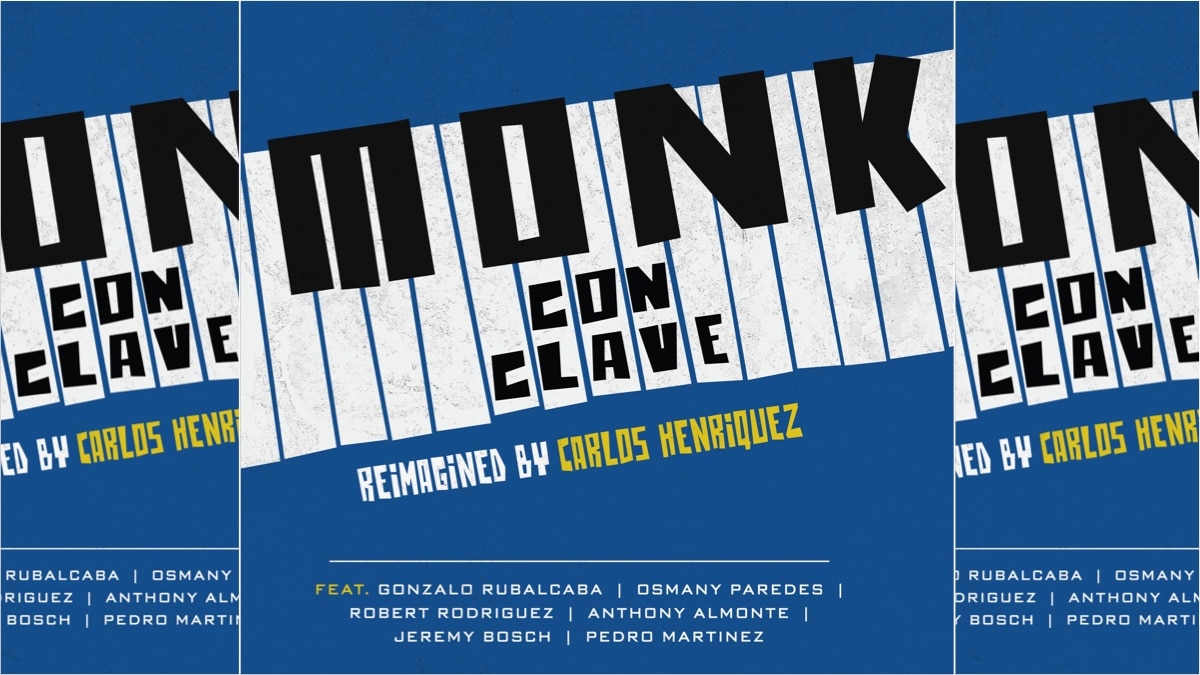
Monk con Clave is the new album from the Carlos Henriquez Big Band, out now! Therein, bassist and bandleader Carlos Henriquez roots the large-ensemble recording in his long relationship with the work of Thelonious Monk and the cultural history of San Juan Hill.
He brings together a multigenerational band drawn from members of the Jazz at Lincoln Center Orchestra and its extended community, including percussionist Pedrito Martínez, trumpeter Mike Rodriguez, pianists Gonzalo Rubalcaba, Osmany Paredes, and Robert Rodriguez, vocalist Anthony Almonte, flutist and vocalist Jeremy Bosch. The project places Monk’s compositions beside original works shaped by Bronx memory and Nuyorican identity.
Few figures in modern art carry the singular presence of Thelonious Monk. His unmistakable melodic contours, harmonic tensions, and rhythmic logic continue to define the jazz repertoire, with musicians reinterpreting his work across generations. Monk lived in Manhattan’s San Juan Hill neighborhood before its disappearance during the construction of Lincoln Center, and his sound still carries the imprint of that vanished New York community.
Henriquez’s work as a bassist, composer, and bandleader has drawn sustained critical recognition across the jazz world. JazzTimes has praised his playing as “clean, crisp and to-the-point…jet fuel for the Jazz at Lincoln Center Orchestra,” while noting that “anyone surprised by the depth and breadth of Henriquez’s talents simply hasn’t been paying attention.” DownBeat has described him as “an emerging master in the Latin jazz idiom,” and WRTI has called his Grammy-nominated album The South Bronx Story “a terrific album,” highlighting his rare ability to unite Afro-Latin clave and jazz swing with few peers.
Henriquez built his artistic life through decades at Jazz at Lincoln Center. He joined the organization in the late 1990s as a teenager performing with Wynton Marsalis, became a full-time orchestra member, and spent years touring, recording, arranging, curating, and directing performances. “It’s almost like a mini Wynton Marsalis throughout those 30 years,” he says. “My participation there has been basically my whole life. It’s my home and a place where I’m gonna continue to develop and to lead.”
Monk’s voice has remained central to that life. “Something stood out,” Henriquez says. “It made me feel comfortable. It made me feel like I also had a voice in this music.” He hears Monk’s rhythmic language through his own identity as “a Nuyorican — somebody born in New York City whose parents are from Puerto Rico.” The music on Monk con Clave grew from that connection because he “was already listening to his music and very attracted to his uniqueness and him being himself.”
Henriquez assembled the band for what he calls “a great moment for me, especially for this project.” The session carried humor and familiarity. “Everybody’s on point. If you mess up a note, everybody starts jumping on you. That’s the fun part… all the talking amongst friends to keep our spirits and our attention span as high as possible.” During one solo, Rubalcaba stunned the room so completely that the musicians looked around “like they saw a ghost, like they saw an alien.”
The album opens with “Round Midnight,” where, Henriquez says, Rubalcaba’s playing “becomes water and takes the shape of whatever he wants to do.” “I Mean You” captures what Henriquez calls “the vibe of Afro-Cuban music at its best.”
“El Son De Teo” unfolds through a slow Son atmosphere connecting the homage to Teo Macero, creating “a real Son vibe.” His original composition “San Juan Hill” reflects “the ups and downs of being Black American and Puerto Rican Latino during the transition period, with Robert Moses having to move people out of their locations.” On “Ugly Beauty,” Henriquez shifts Monk’s triple meter into four and draws on the ballad language of Beny Moré, while a vocal performance by Anthony Almonte delivers what he describes as “luscious sounds.”
“Evidence of Four and One” references Monk’s classic compositions “Evidence,” first recorded in 1948, and “Four in One,” a formally unusual work from 1951. Here Henriquez manages to combine both tunes as if it were one. Built on rapid sixteenth-note with both melodic lines overlapping. “Raise Four” follows the lineage of Machito and Chico O’Farrill through a six-eight pulse and the explosion of Pedro Martinez & Jesus Ricardo.
“Green Chimneys” carries a Mozambique feel that features piccolo flute and bass on the melody. “Who Knows” stands as “a reflection of people I look up to — Tito Puente, Machito, Chico O’Farrill — Afro-Cuban and Afro-Puerto Rican.” The closing “Plena Azul Blue Monk” draws on Puerto Rican plena tradition, where “the trombone just playing the melody” evokes figures such as Papa Vázquez, William Cepeda, and Rafael Hernández.
For Henriquez, the music returns to the place that shaped him.
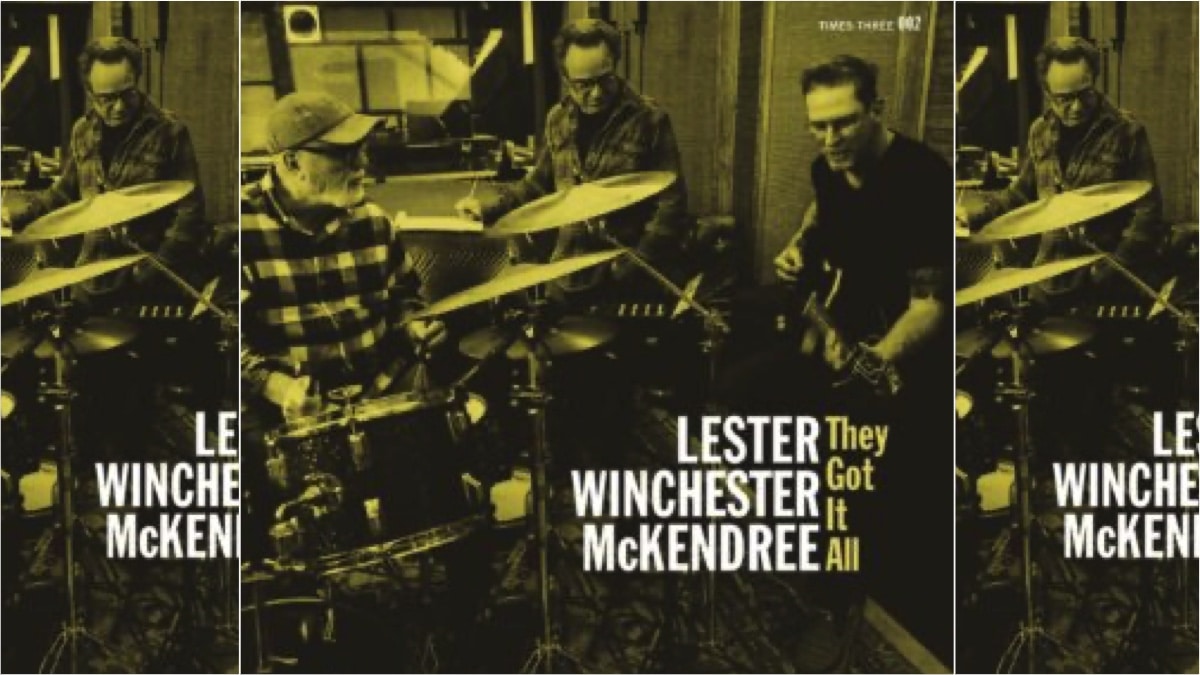
Well-respected roots rock/Americana sidemen; drummer JIMMY LESTER (Billy Joe Shaver, Webb Wilder, Los Straitjackets), bass player/songwriter/singer/bandleader MARK W. WINCHESTER (Planet Rockers, EmmyLou Harris, Brian Setzer), and keyboard player KEVIN MCKENDREE (Lee Roy Parnell, Delbert McClinton, Brian Setzer) form super-groove-group LESTER WINCHESTER MCKENDREE to go it alone, together, on their debut collaborative release, THEY GOT IT ALL (Times Three Records/MAY 29, 2026).
The drum, bass and piano (with vocal) trio recorded over two “live” days at McKendree’s Rock House studio in Franklin, TN early this year, focusing on a collection of Winchester’s original songs the three had been performing together on local club dates, brand new material (the unique origins of which we’ll get to), as well as two instrumentals collaboratively conjured in the studio.
Originally feeling the power of their locked-in, feel-based natural groove while backing E. Street Band bassist Garry Tallent on his solo album and brief tour in 2017, Winchester says he wanted to feel that again. “On that tour, Garry would let his musicians do an original song or two of their own, and I never forgot how great it felt and sounded to sing my songs with Kevin and Jimmy, or how Jimmy and I backed Kevin’s instrumental piano romps.”
In recent years, as Lester Winchester McKendree began performing live, an evolution began taking place with regard to Winchester’s instrument of choice. “I was changing strings one day and started thinking about the band Morphine, and how their frontman Mark Sandman, rest in peace, played a 2-string bass. So I took a YouTube deep dive, got inspired, and only put two strings back on my own bass”, Winchester explains. The sonically unique, melodically interesting result made the decision for the band to record an album a no-brainer.
Songwriters will often say a guitar new to them will “have songs in it”, or that writing on an instrument one is not totally familiar with can open up new creative possibilities. Winchester described it this way: “Songs just started falling out of that thing. Sandman played with a slide, but I just used my long fingers. The 2-String is tuned in fifths, and I started finding melodies and riffs, and for the first time ever, really, wrote all the music to pieces before any lyrics came.”
About a year after stringing his own bass with only two, Eastwood Guitars serendipitously (for Winchester) brought to market a replica “Sandman Model” 2-String bass. Winchester immediately ordered one. “When I got it, it was tuned in a different key than my Silvertone, but sure enough, songs started falling outta that thing too.” The songs that ‘fell out’ of that Sandman Model 2-String bass, by way of Winchester’s creative mind, make up the bulk of THEY GOT IT ALL, and the sparse fire and crisp energy that McKendree’s piano and Lester’s drumming bring to these tunes infuses them with, well, ‘cool’. The 2-String bass running separately, but simultaneously through bass and guitar amps, gives the trio a guitarish crunchiness you wouldn’t expect with no 6-stringer in the fold.
All three of these accomplished musicians’ careers started commingling in Nashville in the late 1980s.
JIMMY LESTER, a Nashville, TN native, moved from Billy Joe Shaver’s band to the original drum chair for Webb Wilder and the Beatnecks. Lester also established himself as a master of surf-rock drum style as a founding member of Los Straightjackets, which coincided with the
formation of roots rock cult hero band The Planet Rockers, of which Winchester was a founding member on upright bass.
Originally from Monroe, NC, MARK W. WINCHESTER moved to Nashville in 1988. He went on to join Emmylou Harris’ Nash Ramblers, before a stint as a Music Row staff songwriter, where he penned a hit for Randy Travis (‘Would I?’). He later joined the Brian Setzer Orchestra, and has had several of his songs recorded by Setzer, including ‘Rooster Rock’ on which Setzer had Winchester sing lead vocal.
KEVIN McKENDREE, from the Washington D.C. area, came to Nashville as the piano man for Lee Roy Parnell and quickly established himself as a real-deal roots and blues keyboardist, eventually playing on multiple Grammy-winning albums. McKendree (as well as Winchester) played with blues mastermind Mike Henderson, Brian Setzer’s Rock-A-Billy Riot, and The Brian Setzer Orchestra. McKendree’s 20+ year partnership with Delbert McClinton, as musician/co-writer/producer/engineer, led to the 2020 Grammy-winning McClinton album TALL, DARK, & HANDSOME -recorded by McKendree at his Rock House studio.
It was there at the Rock House, with McKendree on keys and control board, that he, Lester, and Winchester, with no bosses, no agenda, and no pressure, laid down the live, loose, properly boned, expertly fleshed, lyrically interesting, groovy aural document that is THEY GOT IT ALL.
Maybe they do.
Visit online at www.markwwinchester.com
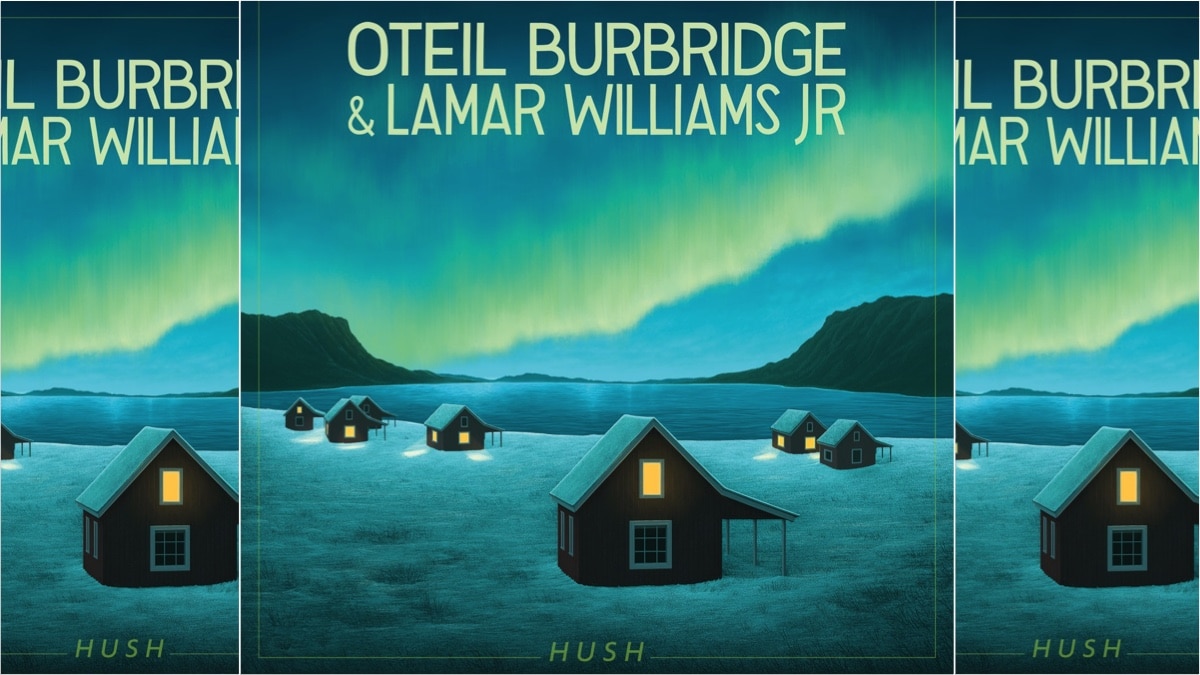
Oteil Burbridge & Lamar Williams Jr. Champion Love Over Hate in New Single “Hush” | New Album ‘The Offering’ Out May 1.
Bassist Oteil Burbridge and vocalist Lamar Williams Jr. continue the rollout of their forthcoming collaborative album The Offering, with the release of its second single, “Hush”. A slow-burning Southern soul meditation rooted in love, peace, and emotional clarity, the track is a centerpiece on the album with a potent, thematic statement, in Williams’ words to “block out all of that nonsense” and “remember that there is more love in the world than hate.” The full-length album arrives May 1 via Flóki Studios, recorded on Iceland’s northern coast and produced by drummer, engineer, and Soulive co-founder Alan Evans.
While much of The Offering grew out of Burbridge’s banjo-based writing, “Hush” emerged from he and Williams’ shaping a deliberate sonic vision. Burbridge says they were “trying to capture a more old school Memphis, Macon, Muscle Shoals vibe,” leaning into a Southern soul feel that fits Williams’s phrasing. The end result is a song that is unhurried with a deep pocket that allows the groove and the song’s message breathe and stand at the forefront.
The album features an all-star lineup of drummer John Morgan Kimock, percussionist Weedie Braimah, organist Melvin Seals of the Jerry Garcia Band, pianist and violinist Jason Crosby, guitarists Tom Guarna and Jaden Lehman — musicians whose overlapping histories connect the Allman Brothers Band, Dead & Company, the Jerry Garcia Band, Soulive, and West African percussion traditions.
CONNECT WITH OTEIL BURBRIDGE
Website // YouTube // Instagram // Facebook
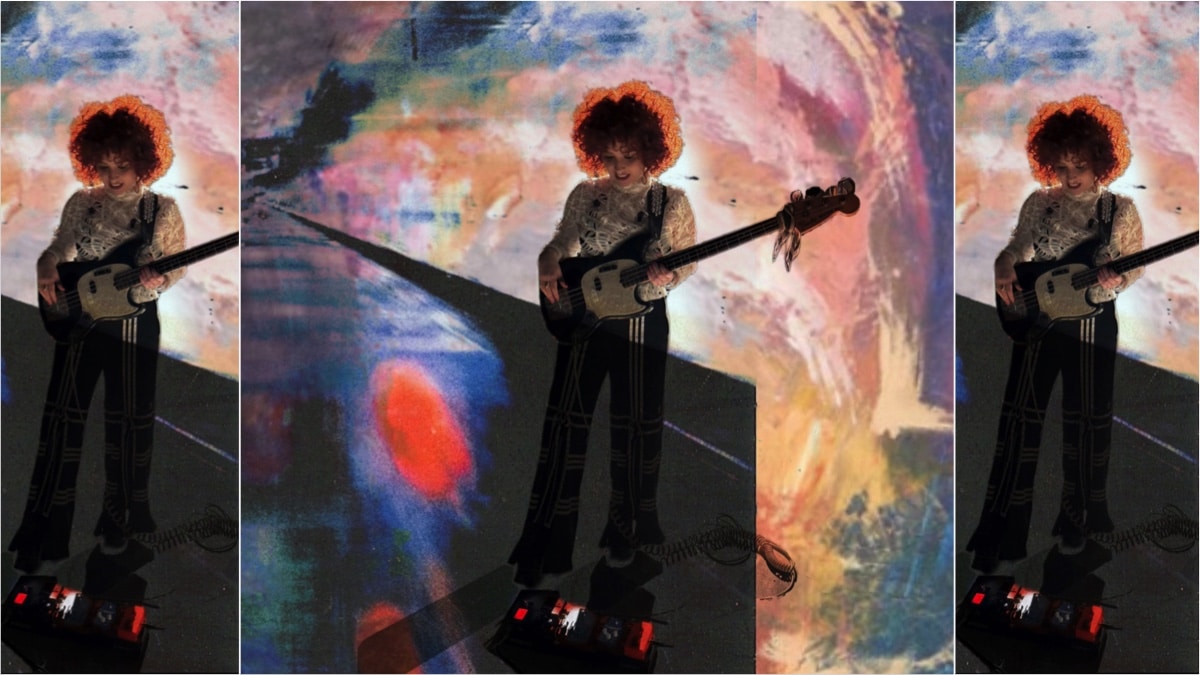
Pops Magellan unveils her debut live EP, DAMAGE (Live at EastWest Studios), a three-track performance project recorded at the legendary EastWest Studios. Captured in Studio One using one-take camera performance, the session offers a raw and intentional introduction to Magellan’s artistic world as a solo artist, bandleader, and producer.
The live EP features three compositions from her DAMAGE era:
“Misunderstood,” featuring Taylor Graves and Robert Sput Searight
“Deep Thoughts,” featuring Noa Kahn
“Drive Complaining,” featuring Robert Sput Searight and Artur Menezes
Originally released as a series of live performance videos on YouTube, the session now lives as a body of work, highlighting Magellan’s ability to merge high-level musicianship with groove-driven, emotionally resonant compositions. Each track unfolds as a conversation between players, balancing technical precision with spontaneity.
Recorded in a single day at EastWest, the session reflects Magellan’s commitment to capturing music in its most honest form. With a focus on raw live interplay, DAMAGE (Live at EastWest Studios) sets a clear tone: this is an artist building her identity in real time.
The session features a handpicked group of collaborators. Robert Searight, founding member of Ghost-Note, brings his signature groove, alongside virtuoso Noa Kahn, acclaimed guitarist Artur Menezes, and Grammy winner Taylor Graves, who co-produced two songs on the original EP.
“It was a way to start a strong foundation for the world I’m building.” says Pops. “I wanted to make something beautiful, strong, and honest, something I’d be proud of looking back.”
Pops leads every aspect of the project, from curating collaborators to shaping the sonic and visual identity. The result is a refined yet powerful debut live statement that positions her at the intersection of musicianship, artistry, and modern performance culture.
With more music on the way and live shows to be announced soon, DAMAGE (Live at EastWest Studios) marks the beginning of a larger vision still unfolding.
Stream DAMAGE (Live at EastWest Studios) HERE
Watch the Live Session HERE

Gear News: Fender Unveils Highly Anticipated Vintera III Series

New Music: Oteil Burbridge & Lamar Williams Jr. New Single, Hush

Interview With Bassist Virginia Franks

Nathan East, Echoes of a Lineage – April/May 2026 Issue

Gear Review: Italia Leather Straps

Mar 2 Edition – This Week’s Top 10 Basses on Instagram
Mar 9 Edition – This Week’s Top 10 Basses on Instagram
Mar 16 Edition – This Week’s Top 10 Basses on Instagram
Mar 23 Edition – This Week’s Top 10 Basses on Instagram