
Bass Edu
You Got A Blues Shuffle, Right?

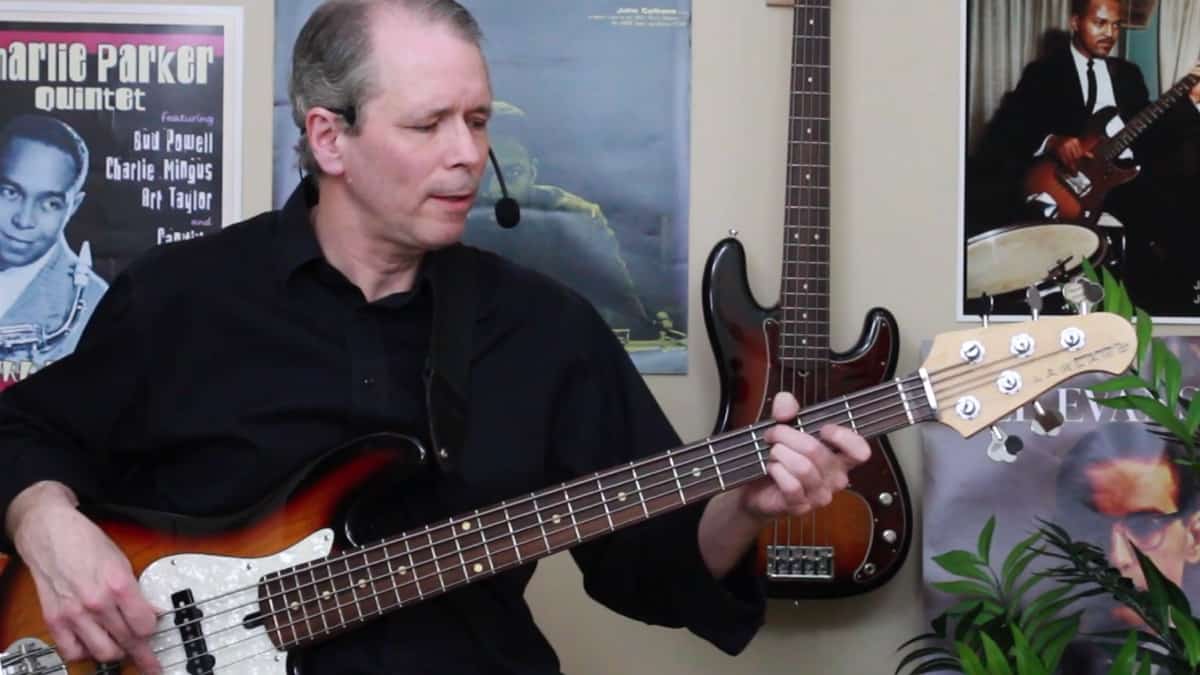
It would be hard to think of a bass groove that is kicked to the curb more often than a blues shuffle.
At the same time, you could also say that if you can’t play that blues shuffle then you’re going to get some cold, hard stares!
A blues shuffle is a slippery and demanding groove to master.
It would seem to be a simpler formula than other grooves because of its repetitive nature. To be sure, though, the many possible interpretations of the bass line along with the insistent pulsing of the shuffle require a well-seasoned grip on the fingerboard and a stout heart.
The purpose of the lesson today is to provide an example of a classic blues shuffle, to show effective ways to interpret this noble bass groove, and to also give some smart, helpful advice on how to supercharge your shuffle fingerstyle with massive amounts of bass expression.
The introduction playing clip in the video lesson is a rather fast tempo if you are just now starting out with playing blues shuffles.
In the lesson, however, you will find the tempo to be much more approachable. The two main elements that are demonstrated are the shorter, sharper shuffle notes and the longer, “greasier” notes. Please pardon the street language, but it fits the situation!
Learning to maintain the blues shuffle with the shorter, bouncier notes is definitely a challenge for the uninitiated.
Sometimes I think of those types of notes as old-timey (in a good way). But in other instances, I feel that they are perfect for the heads of the tunes. It leaves more space and therefore more room for vocal expression to occur.
When you feel free to use longer notes and fill out the measure you get a more modern sound that is perfect for when the guitarist starts to pour on the heat. You provide a fat, wide platform for all of that blues mayhem that rages in the upper registers.
The point that I would try to make is that when you become familiar enough and skilled enough to mix these two basic interpretations of the shuffle at will, you are getting close to the time when you can put your own personal stamp on this classic bass line.
Again, a blues shuffle is an extremely insistent groove due to the short “period” of the basic pulse. It’s not a two-measure or even a one-measure bass line. A shuffle is more like a constant pulse – a heartbeat that keeps the blues band alive.
I have added to the video lesson one of my favorite exercises in dynamics to help supercharge your fingerstyle skills.
The purpose of these accent studies will become clear to you in only a few weeks of consistent practice. It is a fantastic bang for your buck, so to speak.
Click to download the lesson materials – any questions, please visit me online at basslessonswithkevin.com
The main point of accent exercises is for you to become completely aware of exactly how you are playing your bass notes.
Are you bashing incessantly without any thought of the dynamics? Does every note have the same tone as a jackhammer down at the worksite?
By developing a wide kinetic range (how hard and how soft you are striking the strings), you will start to develop a similar skill for dynamics that orchestral players have. By learning to randomly place accents you quickly become aware of how you are playing. And as long as you learn to set up your instrument volume and room dynamics, you will be setting the stage for a wide range of bass expression and better musicianship in general.
I truly hope you can take your time with these blues shuffle materials and learn how to enjoy your practicing.
Want 2 Free Online Bass Lessons? Click Below:
Thanks for stopping in.
-Kevin
Remember… if you have any questions, you can always contact me online at basslessonswithkevin.com | View more of my Bass Musician Magazine Lessons | And check out my Try Before You Buy


In the world of bass playing, technique is often misunderstood. Some musicians see it as a display of speed, flashy finger movements, or endless exercises disconnected from real music. But true technique is much deeper than that. Technique is not about showing off; it is about freedom, control, expression, and longevity.
A bassist with solid technique can communicate ideas more clearly, perform with confidence, and adapt to virtually any musical situation. Whether playing gospel, jazz, rock, funk, Latin music, worship, or fusion, technique becomes the bridge between musical imagination and physical execution.
Technique Serves the Music
The ultimate purpose of technique is not perfection; it is expression. Every groove, every note, every articulation depends on the player’s ability to execute ideas naturally and consistently. Good technique allows the bassist to focus less on physical struggle and more on musical storytelling.
When technique is underdeveloped, the body becomes tense. Timing suffers. Tone becomes inconsistent. Fatigue appears quickly. Over time, poor habits can even lead to injuries that limit a musician’s growth and career.
On the other hand, an efficient technique creates relaxation. Relaxation creates control. Control creates confidence. And confidence allows the music to flow naturally.
Consistency Creates Identity
One of the most overlooked aspects of technique is consistency. Great bassists are recognizable not only because of what they play, but because of how they play it. Their touch, articulation, muting, dynamics, and timing become part of their musical identity.
Technique shapes tone.
The way a player attacks the strings, controls muting, positions the hands, and manages dynamics all contribute to a unique sonic fingerprint. Two bassists can play the exact same line and sound completely different because technique influences every detail of sound production.
Slow Practice Builds Great Players
Many musicians want immediate results, but strong technique is built patiently. Slow, intentional practice remains one of the most powerful tools for improvement.
Practicing slowly develops:
• Accuracy
• Muscle memory
• Relaxation
• Timing
• Endurance
• Consistency
Speed should always be the result of control, never the opposite.
Some of the world’s greatest bassists spent years refining fundamentals before developing the advanced vocabulary they are known for today. Scales, arpeggios, muting exercises, rhythmic studies, and finger independence may not seem exciting at first, but they form the foundation that supports creativity.
Technique and Musical Longevity
Proper technique is also an investment in a musician’s future. Many professional players perform for hours every day, travel constantly, and maintain demanding schedules. Without healthy mechanics, physical strain becomes inevitable.
Good posture, relaxed shoulders, proper thumb positioning, efficient finger movement, and balanced hand mechanics help prevent unnecessary tension and injury. Technique is not only about sounding better but also about protecting the body that makes the music possible.
Beyond Exercises
Real technique goes beyond exercises and enters real musical situations. A bassist should practice applying technical concepts directly into grooves, fills, improvisation, and live performance settings.
The goal is never robotic playing. The goal is musical freedom.
When technique becomes internalized, the bassist no longer thinks about mechanics. The hands simply respond to the musical ideas in real time. That is when technique disappears and artistry begins.
Every bassist develops their own voice, but technique is what allows that voice to be heard clearly.
It is the invisible foundation behind confidence, groove, tone, creativity, and expression. Technique is not the destination. It is the vehicle that carries the music further. And in the end, the greatest technique is the one that allows the listener to feel something unforgettable.

Ready to take your rhythm section from good to unforgettable? It’s time to dive into bass and drums practice exercises that actually work.
If you and your drummer have been jamming for a while but still feel like something’s “off,” the missing ingredient is likely structured groove practice. Playing songs is fun, but real groove is forged in the fire of repetition, timing drills, and trust-building exercises.
So grab your drummer (or a drum machine), warm up your fingers, and get ready to go deeper than ever into the pocket.
Why Groove Practice Matters More Than Rehearsal
There’s a big difference between rehearsing a set list and actually practicing groove. Rehearsals are about song structure, transitions, and cues. But bass and drums practice exercises are all about feel.
Here’s why it matters:
- You develop musical chemistry
- You improve your internal timing
- You learn to communicate nonverbally
- You build consistency that carries into live shows
These exercises will help you achieve that, one locked-in groove at a time.
Exercise 1: The 2-Bar Loop Challenge
This is one of the simplest, most effective bass and drums practice exercises out there, and it’s addictively fun.
How to do it:
- Choose a simple 2-bar drum groove.
- As the bassist, play a simple line that locks into the kick and supports the snare.
- Loop those two bars… again and again… for at least 5 minutes straight.
- Focus on micro-adjustments: tone, dynamics, feel.
Why it works:
Repetition builds groove memory. This exercise strengthens your timing and teaches you to feel slight variations in the drummer’s pocket.
Exercise 2: Play With and Without a Click
Drummers and bassists both benefit from click practice, but here’s the twist: learn to feel the groove with the click, then test it without.
How to do it:
- Set a metronome to 70–80 BPM.
- Play a 4-bar groove with the click for a minute.
- Mute the click, and keep playing for another 2–3 minutes.
- Bring the click back in. Are you still in time?
Why it works:
This tests your internal clock as a unit. A tight rhythm section should be able to stay locked, even when the external reference disappears.
Exercise 3: Trade Eighths and Sixteenths
This one boosts your responsiveness and strengthens your groove vocabulary.
How to do it:
- Drummer starts with a basic beat.
- You play eighth notes for two bars.
- Switch to sixteenth notes for the next two bars.
- Go back and forth for 5+ minutes.
Optional twist: Have the drummer switch up their pattern too… ghost notes, syncopated hi-hats, rim shots. You adapt.
Why it works:
It trains you to adapt rhythmically while staying glued to the groove.
Exercise 4: Groove Call and Response
Think of this like a musical conversation.
How to do it:
- Drummer plays a 1- or 2-bar groove.
- You “respond” with a groove that complements or mirrors it.
- Switch… now you play first, and the drummer answers.
- Keep the phrases short and groovy.
Why it works:
It develops groove intuition and trains you to hear rhythmic ideas and respond with intention.
Exercise 5: The Ghost Note Sync-Up
This one’s a deeper dive. Ghost notes are subtle, so this is about listening and matching energy, not just rhythm.
How to do it:
- Drummer plays a groove with ghost notes on the snare.
- You add subtle ghost notes (muted plucks, low-volume notes) in between your main bass notes.
- Try to mirror the drummer’s energy, not necessarily their exact pattern.
Why it works:
Subtlety = groove mastery. Matching ghost note dynamics helps you blend and groove like pros.
Exercise 6: Dynamic Drops
Playing tight isn’t just about time, it’s about touch. This exercise sharpens your control.
How to do it:
- Groove at medium intensity.
- At random intervals, drop to whisper-quiet playing.
- Then build back up to full volume, together.
- Do it without talking or cueing—just eye contact or feel.
Why it works:
Real rhythm sections control the emotional flow of a song. This teaches dynamic awareness and builds musical trust.
Bonus: Record Yourself
No matter which bass and drums practice exercises you do, always record yourselves, even on a phone.
Listen back. What worked? What felt stiff? Where did the groove pop?
You’ll improve twice as fast when you can hear where you’re tight (or not) as a rhythm section.
How Often Should You Practice Together?
Ideally:
- Once a week for 30–60 minutes of groove-specific practice
- Rehearsals are separate… this is groove-only time
- Consistency is more important than length
You’ll start to notice the groove showing up in rehearsals, gigs, and recordings.
Remember… Groove Isn’t Luck, It’s Built
A tight rhythm section doesn’t happen by accident. It’s built on intention, sweat, patience, and yes, plenty of mistakes. The more bass and drums practice exercises you do together, the more effortless the groove will feel.
Remember: the audience may not know exactly what you’re doing, but they’ll feel it. That’s the power of a locked-in groove.
So next time you and your drummer get together, skip the set list. Start with the groove. The music will thank you for it.

My next series of lessons using the pentatonic scale will continue exploring several sequence variations and the ideas they generate. After working on these sequences as strict exercises, melodic ideas should begin to creep into your playing. Spend enough time on each exercise until they become muscle memory. Make a conscious effort to apply these ideas to your groove and solo repertoire.
The first exercise follows a pattern starting with the second scale degree, third, fifth, and root. Follow the pattern up and back through the scale.

The second exercise starts with the pattern– root, 3rd, second scale degree, and fifth. Follow the pattern up and back, respectively.

The third exercise starts with the pattern—root, 5th, second scale degree, and the third. Follow the pattern up and back, respectively.

It will take more than one practice session to commit the ideas to memory. Make a commitment to making these exercises a normal part of your practice routine. Good luck!
Being a great bassist isn’t just about scales, chops, or playing complex lines. At a certain point, you realize the real difference between a solid player and a true professional comes down to one thing: how you think about the music.
Thinking like a professional bassist means developing a deeper level of awareness, where every note has a purpose, every space is intentional, and every decision supports the music.
1. Know Your Role
The bass sits right between harmony and rhythm. We’re not just there to “hold it down”, we help shape the feel and direction of the groove.
A professional bassist is always asking:
- What does this song really need?
- Do I need to lay back, push forward, or stay out of the way?
It’s not about playing more—it’s about playing with purpose.
2. Listen First, Then Play
One of the biggest mistakes players make is thinking about what to play before actually listening.
Real listening means:
- Locking in with the drummer
- Following the harmonic movement
- Being aware of the band’s dynamics
Pro bassists don’t just react, they anticipate what’s coming next.
3. Groove Comes First
Technique matters… but groove is everything.
You can play all the right notes, but if the feel isn’t there, it won’t connect. On the flip side, a simple bass line with great time and feel can make the entire band sound better.
At the professional level, the priorities are clear:
- Time
- Tone
- Feel
Everything else comes after that.
4. Leave Space
Silence is part of the music.
Knowing when not to play is a skill that separates experienced players from mature musicians. Space gives the groove clarity and lets the music breathe.
You don’t have to fill every bar.
Sometimes the best note is the one you don’t play.
5. Serve the Music
The ego can get in the way of great playing.
Professional bassists aren’t trying to impress; they’re trying to make the music feel right. That means making choices that support the song, even if they’re not flashy.
That’s real musical maturity: doing what the music needs, not what your ego wants.
Thinking like a professional bassist is a lifelong process.
It’s about constantly growing in how you listen, how you feel, and how you respond in the moment.
At the end of the day, it’s not just about the notes you play; it’s about how you support, connect, and elevate the music.
“Play less. Listen more. Serve the music… always.”
— Jaime David Vázquez

Hello bass players and fans of bass playing! This month, we’re going to talk about The Art of Playing Live! ARE YOU READY TO GROOVE?
There’s a powerful shift that happens the moment you step on stage.
Practicing at home is about control.
Playing live is about connection.
And as bass players, we live right in the center of that transformation.
We are not just supporting the band… we are anchoring the entire musical experience.
Groove Over Everything
In a live setting, perfection is overrated.
The audience won’t remember how many notes you played… but they will remember how you made them feel. The way your bass locks in with the kick drum can move an entire room without saying a word.
Playing less, with intention, often creates more impact than filling every space.
Great bass players understand this: Space is part of the groove.
Listening is Your Superpower
One of the most underrated skills on stage is deep listening.
Your connection with the drummer defines your foundation.
Your awareness of the vocalist shapes your dynamics.
Your sensitivity to the band creates cohesion.
When you truly listen, you don’t just play your part, you become part of the conversation.
And that’s when live music stops being structured… and starts being alive.
Presence Speaks Louder Than Notes
You don’t need to be front and center to command attention.
Presence is not about position—it’s about energy.
A bass player who is engaged, expressive, and connected elevates the entire performance. Your body language, your movement, your eye contact—it all communicates something beyond the instrument.
If you feel the music, the audience will feel it too.
Preparation Creates Freedom
The best live moments often feel spontaneous—but they are built on preparation.
Knowing the structure, transitions, and dynamics of each song gives you the confidence to explore without losing control.
When you’re prepared, you don’t overthink.
You react. You adapt. You create.
And that’s where the magic lives.
Adaptability is the Real Skill
No two stages are the same.
Different rooms. Different sound systems. Different audiences.
Sometimes, even different band dynamics.
A strong bass player reads the room and adjusts.
Maybe you simplify.
Maybe you dig in harder.
Maybe you leave more space.
Live performance is a living organism, and your role is to keep it grounded while allowing it to breathe.
Playing live is not just a performance… it’s a responsibility.
As bass players, we don’t just play notes… we shape the feel, the pulse, the emotional core of the music.
So the next time you step on stage, remember:
You are not in the background.
You are the foundation.
And everything moves because you do.
Stay tuned for more great stuff in the next issue and keep in touch with #bassmusicianmag,
#basslines, #bmmbasslines, #keepgrooving, #keepthegroovealive&kicking, #jdvinstrumental, #groovewars, #fullbassattack, #jdv, #boricuabass, #groovingtheworld, #bassgrooves, #groovemaniac, #6stringbass, #goodpracticemakesperfect #theartofplayinglive, #livemusic

Artist Updated With The Revivalists’ Bassist George Gekas

Maestro Ron Carter, Sharing the Spirit – June/July 2026 Issue

New Music: Danielle Nicole, Tug Of War

Right Hand Technique Strategies with Dr. Randy Kertz

New Music: Golden Flower, Are You Even Awake?
Right Hand Technique Strategies with Dr. Randy Kertz

April 13 Edition – This Week’s Top 10 Basses on Instagram
April 27 Edition – This Week’s Top 10 Basses on Instagram
20 April Edition – This Week’s Top 10 Basses on Instagram