
Gear Reviews
Interview with Lior Koren of LK Straps


Get to know Lior Koren of LK Straps…
I am always on the hunt for new and interesting pedals, amps, books, and accessories. Recently I saw a picture of a spray-painted bass strap that looked fantastic and I wanted to find out more about it.
The straps are created, one of a kind, in Brooklyn, and I tracked down the owner of LK Straps, Lior Koren, and asked him if he would send me a strap to review. I received it and was very impressed! It was both easy on the eyes and easy on the back. Created with repurposed leather, it is soft and durable.

I sat down with the owner and here is a brief interview of that meeting.
What got you interested in creating straps?
When I was 17 years old, I bought a 1979 Fender Precision bass that weighed almost 13 lbs. It sounded incredible but was way too heavy for me to play with on stage. My grandfather used to work in leather so having a few old leather scraps laying around wasn’t uncommon.
I took two pieces and glued them together the best I could to create a makeshift strap. The second I wore it with my bass I was shocked to see how it completely took the weight out of my bass, allowing me to play the instrument comfortably.
A few days later at a local rehearsal studio, I ran into a bass player friend of mine and he saw the strap I made and said to me, “Cool strap! where did you get it”? I replied that I actually made it myself, so he asked me to make him one and that’s how it all began.
What is repurposed leather and where do you find it?
To repurpose something is to take material from an item and reuse it to create something new. I get my leather only from secondhand goods, such as old couches, chairs, and vintage clothing. My leather is never sourced directly from tanneries or other leather manufacturers.
Do you have different widths and lengths?
Yes absolutely. LK Straps is a 100% custom made leather strap company. Every customer has absolute freedom to customize their strap to match their instrument, choosing the length, width, color of the thread, and color of the LK logo, thus giving every strap a complete one-of-a-kind look; If you can imagine it, I can make it happen.
You have an interesting roster of artists endorsing your straps… what do you attribute it to?
I am truly grateful for every single person that decides to be part of our beautiful and growing LK Straps family. I’d like to believe that the wide variety of artists who endorse LK Straps do so because of my unique ability to provide such an individualized product that feels like an extension of their instrument and self, which creates room for every artist to truly feel connected to the brand.
Each strap is 100% custom-made and personalized, and I work with every musician to design exactly what they’re looking for in a strap, both aesthetically and in feel. Additionally, building a personal relationship with each person I make a strap for is a top priority. I feel that the warm, considerate, and welcoming treatment given to every person upon beginning their ordering process to receiving their strap is definitely something that draws so many different kinds of people to LK Straps.
You have a variety of designs… could you tell us about them and how you do them?
I have a variety of designs but I feel my two signature looks are the Distressed series and the Spray Paint series. As an artist, I’m intrigued and fascinated by color combinations, different textures, and I am always looking for ways to improve and stretch the limits of creation. To me, making a strap is making art. Every strap is completely hand-made and customized for every artist, so naturally, each strap is unique and different, from the type of leather and color combination to the size, shape, and feel.
Finding the perfect match for each customer’s instrument is truly a privilege. Some artists have really unique instruments and creating a strap for them always keeps me on my toes. What really makes things interesting is that you can mix and blend between different designs, which unleashes endless possibilities for strap designs.
When you go to my website, you’ll find a few different categories:
- Solid Colors
- Solid colors with paint splatter
- Distressed series
- Spray Paint series
- Artist models
- Quarantine series
- Limited Edition series
The Solid Colors Series offers a wide variety of solid color options from the more traditional colors like black, brown and white, to more popping colors like green, blue, orange, red, teal, yellow, silver and many more.
The Solid colors with paint splatter offer a solid color of your choosing topped with a beautiful and soft color splatter. I find that this series works best for artists who want a little “pop” to their strap. It’s amazing what a difference a few splashes of paint can make!
The Distressed series is one of the most desired models I offer. Like I said before, all the leather I use is repurposed leather, which mainly comes from 30+ year old couches. It’s truly fascinating to strip a couch and see how every piece of leather looks and feels different from the other. The back part of the couch is almost always in perfect condition, with no wear, scratches, or dents on it. The sides usually have some light signs of use, and depending on the age and use of the couch itself, the cushions (where people sit and lay down) have the most distressed look. A couch can tell a lot about its owner.
The Spray Paint series is where things get real crazy! Talk about unique – the options are absolutely limitless. In this series, you can choose any color combination you dream of and I will make it fit your instrument like nothing you’ve ever seen. I usually ask the artist to send me a picture of their instrument and a picture of them playing live. Working with paint is very personal and I feel that because of that, every strap contains the energy and vibe of its owner. Mixing colors and seeing how every strap comes out slightly different from the next never stops to amaze me. One artist can ask for a blue, yellow, gold and black color combination and the other blue, yellow, gold, black and pink and those straps won’t even be close to looking alike.
Finding the perfect strap can be difficult sometimes and is always a dialogue between the artist and myself. It’s a beautiful process, where we inspire each other to create the vision we both see.
The Artist models: Endorsed artists, that usually own a number of straps, have the option of creating their own Artist Model, Like Michael League from Snarky Puppy, Tim Lefebvre, Eric Fortaleza, Richard Bona, Felix Pastorius and many more.
Quarantine series: This series was my wife’s brilliant idea. Leah has a beautiful and unique perspective into the world of colors, which is extremely useful. Like most artists, sometimes I get stuck with a vision I’m trying to translate into a strap design, and in those moments, having another set of eyes can really be helpful. We came up with the names with her siblings and started to work.
The beautiful thing about this series is the unique names of the straps like “Orange You Glad I washed My Hands?” and ” Not Just The Flu Blue”, as well as the more affordable price tag on these straps during the pandemic. We’re hoping this has brought a little laughter and financial ease to our dear customers.
The Limited Edition series: Most of the leather colors I get are traditional like black, and all shades of brown, but every now and then I run across unique leather colors and textures that usually were created by many years of use, a thing that you simply cannot replicate by any means. This is where the Limited Edition comes in, getting a truly one of a kind strap with texture and color you will never see anywhere else.
What makes these LK Straps so comfortable?
There are many things that make my straps comfortable the way they are, but I think the main thing is the quality and accurate combination of the leather I’m using.
I’ve been working for a long time to find the perfect formula that delivers a slick and unique look that feels sturdy but also soft as butter on your shoulders. Unfortunately, I find that most artists really underestimate the importance and essence of having a good solid strap. I’ve talked to the biggest bass players in the world that perform every single night and when asking them, “So how do you like your strap? Is it comfortable?”, most of them answer that they either hate their strap and that it gives them a terrible backache or sometimes they just admit to never really caring about it and that’s absurd to me.
People invest a lot of money in expensive instruments and when it comes to a strap, some of them are oblivious to the fact that their nylon strap causes them damage every time they wear it. After trying my straps, the most common reaction is the disbelief of how light-weight their instrument feels now. Having the right balance is essential and critical for every musician of every age.
When you get a leather strap, it usually feels stiff and it takes a few years of sweat and frequently performing with it, bending, molding and shaping it to fit you perfectly, My straps give you the “broken in” feeling the second you wear them. Once you try LK Straps, you simply can’t wear anything else.
On your website, you say that you have played all over the world. Can you share some of your credits?
I’ve been a professional bass player for about 15 years. and am originally from Israel, which is where my music career started. I’ve been living in the US for the past 8 years touring with various groups around the country.
Some well-known Israeli artists who I’ve played with include Dudu Tassa, A-WA, Shiri Maimon, Mosh Ben-Ari and many others. I also write and perform my original music under my stage name, LyO. Currently, I am mixing my second EP called “Terms Of Conditions”, stay tuned for the release date.
I am thrilled with LK Straps and can recommend them highly to anyone interested in a custom, one of a kind strap.
Two things… you can go to the website and pick out any of the straps that Lior has available or you can have him make one to your exact specifications and colors.
One of my basses has DR Pink Neon strings on it and I want a spray-painted strap with a neon pink format. I will be interested in seeing what Lior comes up with.
Visit online at lkstraps.com
David C Gross has been the bassist for a lot of folks. He has written 14 bass books and 3 instructional videos, hosts “The Notes From An Artist Radio Show” on www.cygnusradio.com Monday nights 8 PM EDT, and the “Notes From An Artist” podcast available on iTunes, Spotify and all podcast platforms.
NFAA brings you behind the scenes with individuals who forged a timeless musical canon – spanning rock, jazz, funk, blues, folk, country, and permutations thereof. Listen to stories and anecdotes hitherto untold and relive more than a few chronicles that have become lore with a fresh vision. It’s the soundtrack of our lives. Celebrate the past, live in the present, and anticipate the future – take Notes From An Artist
You can contact David @ www.thebassguitarchannel.com/contact for more information regarding his online lessons and world-renown correspondence course.


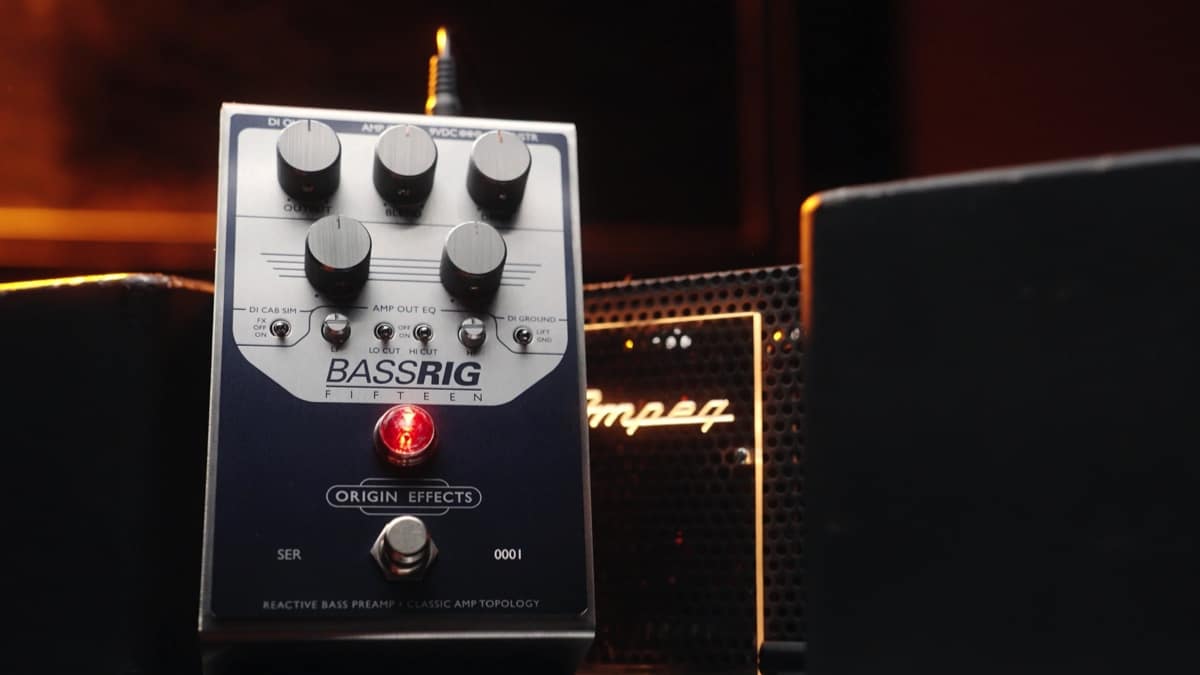
Disclaimer: This pedal was kindly provided by Origin Effects for the purpose of this review. However, this does not influence our opinions or the content of our reviews. We strive to provide honest, unbiased, and accurate assessments to ensure that our readers receive truthful and helpful information.
There’s a certain kind of bass tone that doesn’t shout for attention, yet somehow defines the entire track. You hear it on records where everything just sits, where the low end feels effortless, supportive, and impossibly musical. It’s rarely about aggression. More often, it’s about control, warmth, and a sense that the instrument is breathing alongside the band.
That’s the space the BassRig Fifteen occupies.
Origin Effects has built a reputation around precision gear that doesn’t just approximate vintage equipment, but attempts to understand it at a deeper level. With the BassRig Fifteen, they’ve turned their attention to one of the most recorded bass amp sounds in history and distilled it into a compact, all-analogue format.
But this isn’t a nostalgia piece. It’s a tool designed for modern players who need that sound without the complications that usually come with it.
From the first few notes, what stands out isn’t a specific frequency or EQ curve; it’s the way the pedal responds. There’s a softness to the transient, a subtle compression that feels organic rather than imposed. Notes bloom rather than snap, and even simple lines take on a sense of weight and intention.
It doesn’t behave like a typical pedal. In fact, thinking of it as an “effect” feels slightly misleading. The BassRig Fifteen is closer to a front-end, something that reshapes the entire way your instrument interacts with the rest of your signal chain.
Push it gently, and it rewards you with rounded, articulate lows and a smooth top end that never gets brittle. Dig in harder, and the texture thickens, introducing harmonic complexity without tipping into anything that feels overly saturated. It’s a very specific kind of drive, more studio saturation than stage distortion.
One of the most impressive aspects is how easy it is to maintain clarity. Bass players are used to compromise when adding gain, losing low-end definition, or watching their sound disappear in a mix. Here, that trade-off feels largely absent. The core of your tone remains intact, even as the character evolves around it.
This makes the pedal particularly compelling in recording scenarios. Plugging directly into an interface via the built-in DI yields a sound that already feels “finished.” There’s a natural sense of space and balance, as though a cabinet has already been carefully mic’d and placed. It doesn’t require much in the way of corrective EQ or additional processing to sit correctly.
Live, that same consistency becomes a different kind of advantage. Engineers get a predictable, mix-ready signal. Players get the reassurance that their tone isn’t being left to chance night after night.
What’s interesting is how restrained the whole experience feels. In an era where many pedals compete on extremes, more gain, more options, more everything, the BassRig Fifteen takes a narrower path. It focuses on doing one thing exceptionally well, and trusts that players will understand the value in that.
That doesn’t mean it’s limited. There’s enough flexibility to adapt to different instruments, playing styles, and rigs. But the boundaries are intentional. This isn’t about radically transforming your sound; it’s about refining it.
And that distinction matters.
For players chasing vintage-inspired tones, the appeal is obvious. But even outside of that world, there’s something to be said for a piece of gear that prioritises feel over spectacle. The BassRig Fifteen doesn’t demand attention; it earns it over time, through consistency and musicality.
It’s not the kind of pedal that reveals everything in the first five minutes. Instead, it gradually integrates itself into your playing, shaping your touch and subtly influencing how you approach the instrument.
In the end, that might be its greatest strength.
Because while there are plenty of pedals that can impress, far fewer can disappear into your sound in a way that makes you forget they’re even there.
Available online at Amazon.com
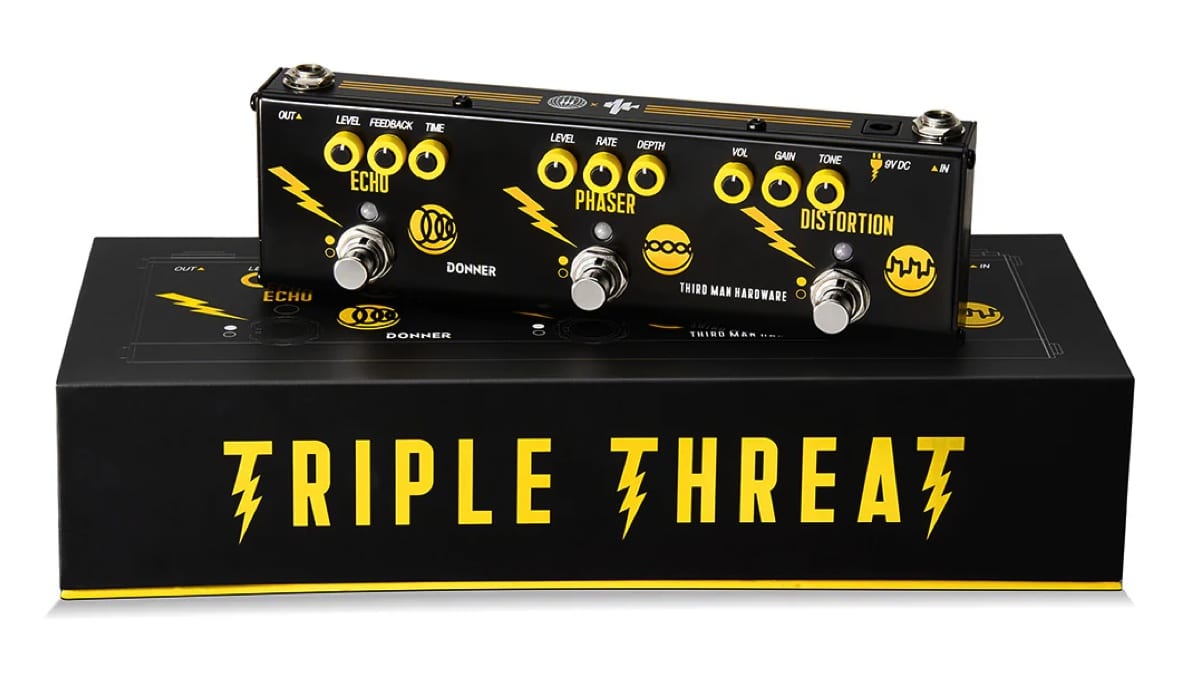
Disclaimer: This pedal was kindly provided by Donner Music for the purpose of this review. However, this does not influence our opinions or the content of our reviews. We strive to provide honest, unbiased, and accurate assessments to ensure that our readers receive truthful and helpful information.
Triple Threat… A compact burst of analog attitude with unexpected appeal for bass players.
Multi-effects pedals are not usually the first stop for bassists. Most of us build our rigs piece by piece, choosing pedals that preserve low end and offer precise control. The Donner Triple Threat Pedal, created in collaboration with Jack White’s Third Man Hardware, takes a very different approach. It keeps things simple: distortion, phaser, and echo, all in one compact unit, with no menus or deep editing, just knobs and footswitches.
At first glance, it feels like a guitar pedal through and through. But spend a little time with it on bass, and it starts to reveal a different kind of usefulness, less about precision, more about character.
Built around simplicity
The Triple Threat is all about immediacy. Each effect has its own dedicated controls and footswitch, making it easy to dial in sounds quickly without overthinking the process. There’s something refreshing about plugging in and getting straight to experimenting, especially for bass players who are used to more complex signal chains.
The compact enclosure makes it easy to fit onto almost any pedalboard or even use as a standalone unit for rehearsals and smaller gigs. That said, the small size does mean the knobs are quite tight and not the easiest to adjust mid-performance. It’s a minor compromise, but one that becomes noticeable on a dark stage.
Analog character
Rather than aiming for clean, studio-like tones, the Triple Threat leans into a more raw and expressive sound. This becomes particularly apparent in the distortion section. It delivers a gritty, garage-inspired voice that can add real personality to a bass line, especially in indie or lo-fi contexts.
On bass, the key is restraint. Lower gain settings bring out a nice edge without sacrificing too much low end, while higher settings can start to thin things out. Without a blend control, there’s no easy way to bring back the fundamentals once it’s gone, so it rewards a lighter touch.
The phaser is more immediately cooperative. With slower rates and moderate depth, it adds movement without overwhelming the core tone. It’s the kind of effect that works best when you don’t notice it right away, but feel it sitting underneath the groove.
The echo section stands out as the most naturally suited for bass. It’s warm, slightly dark repeats sit comfortably behind the dry signal, adding space without clutter. Whether used subtly or pushed into more ambient territory, it complements the instrument rather than competing with it.
Real-world perspective
The Triple Threat has also found its way onto the pedalboard of Dominic John Davis, bass player for Jack White, which gives some insight into how it functions in a professional setting.
Looking at his broader setup, typically including tools like the Boss TU-3 Chromatic Tuner, MXR M108 Ten Band Graphic EQ, and boutique pedals such as the Mantic Effects Vitriol and Mantic Effects Isaiah Delay, it becomes clear that the Triple Threat isn’t a centerpiece. Instead, it serves as a flexible addition, a way to access a few extra textures without expanding the pedalboard further.
That context is important. For bass players, this isn’t about replacing carefully chosen pedals, but about adding something a little different to the mix.
Versatility in practice
In practical use, the strength of the Triple Threat lies in how quickly it lets you shift between sounds. Having three effects available at your feet without needing multiple pedals can be surprisingly useful, especially in stripped-down setups.
It’s easy to imagine it being used in rehearsals, smaller gigs, or situations where portability matters. It also lends itself well to experimentation, encouraging players to step outside their usual tonal comfort zones.
At the same time, its limitations remain part of the experience. The distortion’s guitar-oriented voicing and the absence of a blend control mean it won’t satisfy players looking for a fully optimized bass overdrive. Instead, it offers something a bit less predictable, and that’s part of its charm.
The Donner Triple Threat Pedal isn’t trying to be a precision tool, and it doesn’t need to be. What it offers is a straightforward, character-driven set of effects that invite exploration.
For bass players willing to approach it on those terms, it can be a surprisingly inspiring addition. It won’t replace a dedicated pedalboard, but it can add texture, movement, and a bit of unpredictability in a way that feels immediate and fun.
For more information, visit online at donnermusic.com
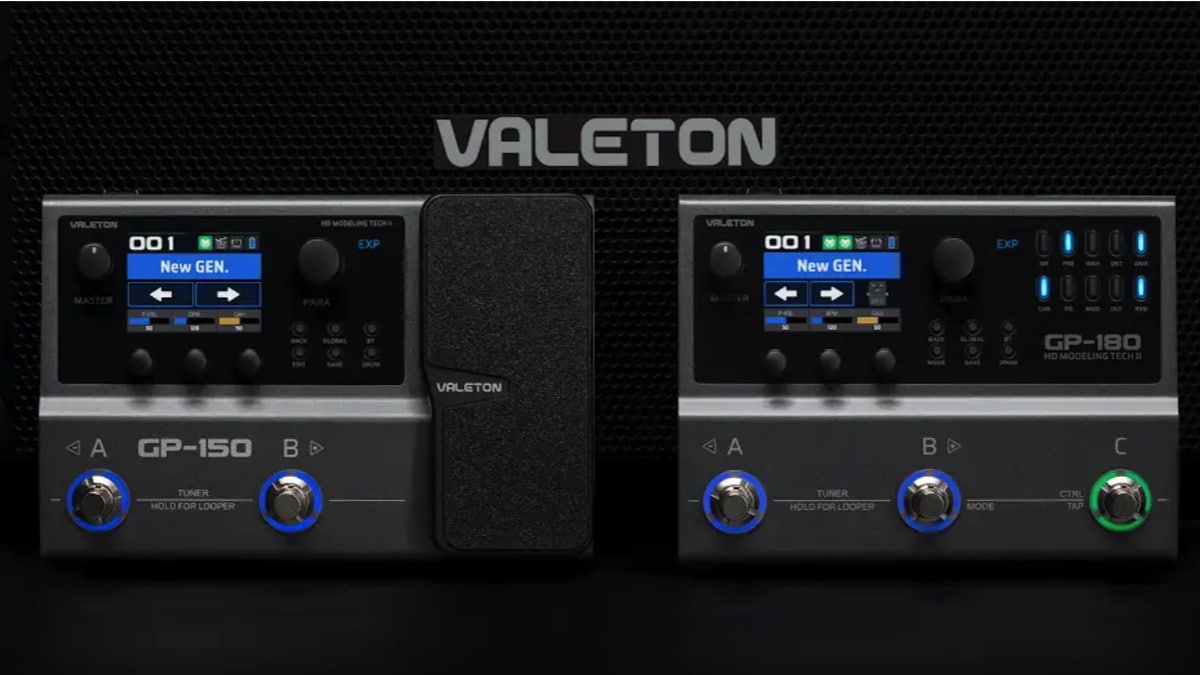
Disclaimer: This pedal was kindly provided by Valeton for the purpose of this review. However, this does not influence our opinions or the content of our reviews. We strive to provide honest, unbiased, and accurate assessments to ensure that our readers receive truthful and helpful information.
Two Paths to the Same Goal: Better Workflow, Real Control
Valeton’s GP series has followed a clear and consistent trajectory. The GP-5 introduced the core sound engine in an ultra-compact, app-driven format, proving that solid tones could exist in a minimal footprint, but at the cost of hands-on control. The GP-50 took a major step forward by adding onboard editing and a second footswitch, making the platform far more usable without relying on external devices.
With the GP-150 and GP-180, Valeton shifts the focus again, this time toward how players actually interact with their sound while playing.
These aren’t about reinventing the tone engine. They’re about making it more accessible, more flexible, and ultimately more musical in real-world use.
It’s also worth noting that while these pedals build on workflow ideas introduced in smaller GP units like the GP-5 and GP-50, the GP-150 and GP-180 are more closely related to the GP-100 platform, positioned as more complete, floorboard-style solutions rather than compact multi FX.
The Big Picture
Both the GP-150 and GP-180 share the same core foundation:
- 200+ effects
- NAM (Neural Amp Modeler) support
- IR loading (up to 20 files)
- 12-module fully flexible signal chain
- Looper (180 seconds) and drum machine
- USB audio interface and Bluetooth connectivity
- Built-in rechargeable battery
So in terms of sound and raw capability, they’re very similar.
The real difference comes down to workflow and control.
GP-150: Compact Rig with Real Expression

The GP-150 is where the platform starts to feel like a proper, self-contained rig.
The standout feature here is the built-in expression pedal. That alone changes how you use the unit. Instead of just switching presets or toggling effects, you can actively shape your sound in real time… volume swells, wah, parameter control… it’s all immediately available.
Combined with dual footswitches and onboard editing, the GP-150 strikes a strong balance
between portability and control. It carries forward the independence introduced in the GP-50,
but expands it into something more expressive and complete.
It’s especially appealing for players who want a minimal setup that still feels dynamic and
responsive.
GP-180: Hands-On Control, Pedalboard Feel

The GP-180 takes a different approach. Instead of adding expression, it doubles down on direct
control.
The addition of a third footswitch already makes navigation more natural, but the real shift
comes from the dedicated effect block buttons.
Each block has its own button, which lights up when active and can be toggled instantly. That
means you can turn distortion, delay, modulation, or reverb on and off with a single press—no
menu diving, no reassignment needed.
In practice, this makes the GP-180 feel much closer to a traditional pedalboard. You’re not just
switching presets, you’re interacting directly with your signal chain, something that wasn’t really possible with the more minimal GP-5 or even the GP-50.
For live use, that immediacy makes a big difference.
Tone & Real-World Use
Both units share the same sound engine lineage, and overall quality remains strong.
There are more effects available compared to earlier models, and the addition of NAM support
opens the door to more realistic amp tones and modern workflows.
One of the most noticeable improvements, particularly for bass players, is the octave tracking. Lower octave sounds are significantly tighter and more usable than in earlier GP units like the GP-5, making them far more practical in a mix. Higher octaves still feel a bit clunky, but the improvement where it matters most is clear.
In terms of real-world use, both pedals are flexible enough to cover practice, recording via USB, direct-to-PA live setups, and compact fly rigs.
That said, they cater to slightly different players.
Which One Should You Choose?
Go for the GP-150 if:
- You want a compact, all-in-one unit
- Expression control is important to your playing
- You prefer a streamlined setup with minimal footprint
Go for the GP-180 if:
- You play live and need faster, more direct control
- You prefer a pedalboard-style workflow
- You want to toggle effects individually rather than relying on presets
The GP-150 and GP-180 aren’t competing pedals; they’re two different interpretations of the same idea.
The GP-150 focuses on expression and portability, giving you a compact rig that still feels
dynamic and interactive, something that builds directly on the usability improvements
introduced after the GP-5.
The GP-180 focuses on control and immediacy, turning the GP platform into something that
feels much closer to a traditional pedalboard.
Both share the same solid tonal foundation, but they approach usability in different ways.
And that’s really what this generation of the GP series is about, not just sounding good, but
feeling right under your hands and feet.
Visit online at valeton.net/

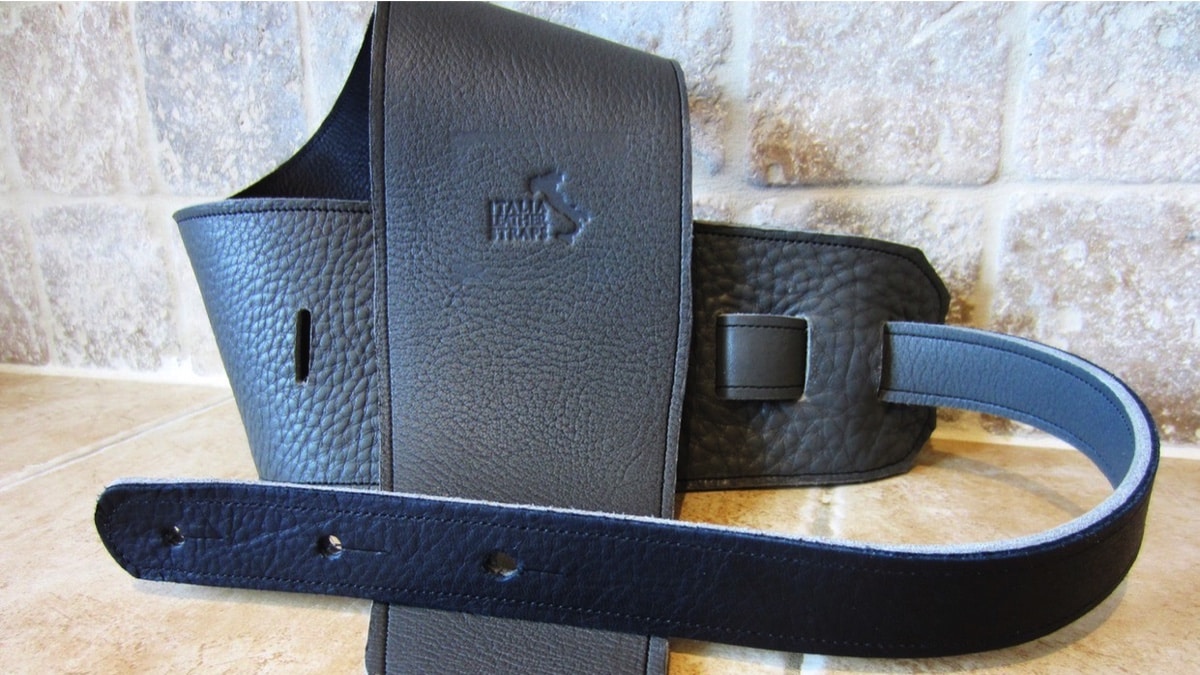
Disclaimer: This bass strap was kindly provided by Italia Leather Straps for the purpose of this review. However, this does not influence our opinions or the content of our reviews. We strive to provide honest, unbiased, and accurate assessments to ensure that our readers receive truthful and helpful information.
I’ve spent years searching for the perfect wide bass strap, something that delivers both comfort and durability without compromising on style. That search ended nearly two decades ago when I discovered Italia Leather Straps.
Handcrafted in the USA from premium Italian leather, Italia Straps offers an impressive range of straps for both bass and guitar players. What immediately stood out to me was the exceptional craftsmanship; every detail, from stitching to material selection, reflects a commitment to quality. These aren’t just accessories… they’re long-term investments for serious musicians.
After more than 19 years of consistent use with my original strap, I can confidently speak to its longevity and comfort. Even under the demands of extended performances, the support provided by a 4” wide strap makes a noticeable difference.
In this review, I’m taking a closer look at the 4” Elite Series Leather Backed Bass Strap, now available in a sleek new Slate Black finish. It’s a refined addition to an already outstanding lineup, combining aesthetic appeal with the same trusted performance.
For more information, visit www.italiastraps.com.
Disclaimer: This pedal was kindly provided by Empress Effects for the purpose of this review. However, this does not influence our opinions or the content of our reviews. We strive to provide honest, unbiased, and accurate assessments to ensure that our readers receive truthful and helpful information.
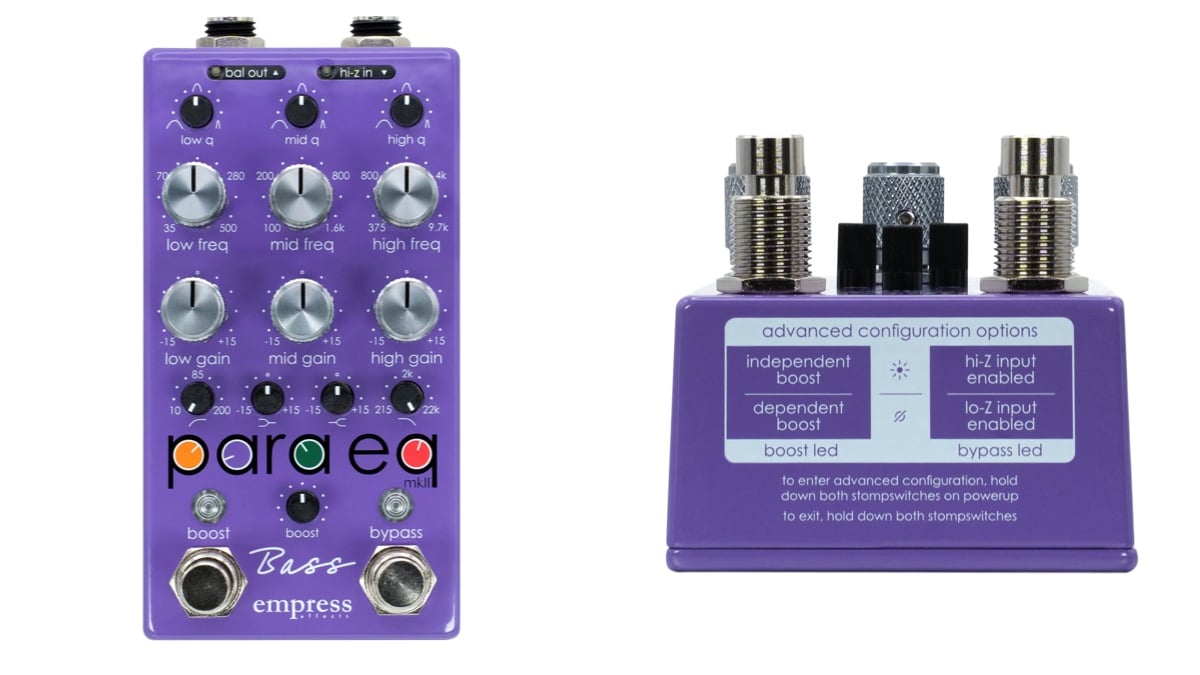
ParaEQ… Precision tone shaping in a pedalboard-friendly format.
EQ pedals are often the unsung heroes of a bass rig. While overdrives and compressors tend to get most of the attention, a good EQ can completely transform how a bass sits in a mix. The Empress Effects Bass ParaEQ takes that idea much further, offering studio-style tone shaping in a rugged pedal designed specifically for bass players.
Based on the company’s well-known ParaEQ MKII Deluxe, the Bass ParaEQ adapts the concept for low-frequency instruments, delivering a powerful and flexible tool for dialing in everything from subtle tonal tweaks to major corrective EQ.
Built for bass
At its core, the Bass ParaEQ is a three-band parametric equalizer, meaning each band allows you to select the frequency you want to adjust, how much you want to boost or cut it, and how wide the adjustment should be. For bass players, this level of control can make a huge difference when trying to solve real-world tone problems.
In addition to the three parametric bands, the pedal includes a low-shelf and high-shelf EQ, along with high-pass and low-pass filters. Together, these controls allow you to shape everything from deep sub-bass to the upper harmonics of the instrument.
The controls are laid out clearly on the pedal, and while there are quite a few knobs, the layout remains intuitive once you spend a little time with it. Each parametric band offers frequency selection, boost or cut of up to ±15 dB, and a Q control that adjusts the bandwidth of the EQ band.
Another thoughtful feature is the selectable input impedance. The standard 1M? input works perfectly with most electric basses, while a 10M? high-impedance mode is available for instruments with piezo pickups, making the pedal particularly useful for upright bass players.
Massive headroom and clean performance
One of the technical highlights of the Bass ParaEQ is its 27-volt internal operation. Although the pedal runs on a standard 9-volt power supply, the internal circuitry steps that voltage up to 27 volts, providing enormous headroom. In practical terms, this means the pedal remains exceptionally clean even when applying large EQ boosts.
This extra headroom is especially noticeable when boosting low frequencies, where many EQ pedals can start to sound strained or compressed. The Bass ParaEQ handles these boosts effortlessly, maintaining clarity and punch across the entire frequency range.
The pedal also includes a foot-switchable boost capable of delivering up to 30 dB of clean level increase. This feature turns the ParaEQ into more than just a tone-shaping tool. It can also function as a volume boost for solos, a way to match output levels between instruments, or even a clean gain stage to push an amplifier slightly harder.
Real-world performance
In real-world playing situations, the Bass ParaEQ quickly proves its value. One of its biggest strengths is how easily it can adapt to different instruments and environments.
For example, during a recent gig, I used the pedal while switching between an active Jazz bass and a passive bass with flatwound strings. The active bass had a fairly aggressive top end that tended to jump out in the mix. With the ParaEQ, it was easy to smooth that out by slightly trimming the upper mids and rolling off some of the extreme highs.
The passive bass, on the other hand, benefited from a small boost in the presence range, helping it cut through the band without losing its warm character. Instead of constantly adjusting the amp between songs, the ParaEQ handled those changes instantly.
The pedal is equally useful for addressing common live sound issues. A quick adjustment can tighten up muddy low mids, add clarity to a dull stage tone, or remove problematic resonances that appear in certain venues.
Versatility for stage and studio
While the Bass ParaEQ is incredibly useful in live settings, it also shines in the studio. Engineers frequently use parametric EQ to shape bass tones during mixing, and having this level of control directly on the pedalboard allows players to dial in a more refined sound before the signal even reaches the recording chain.
The combination of parametric bands, shelving filters, and high-pass and low-pass filters makes the pedal capable of handling a wide range of tonal adjustments. Whether the goal is tightening the low end, adding articulation, or smoothing out harsh frequencies, the ParaEQ delivers precise results without altering the natural character of the instrument.
Final thoughts
The Empress Effects Bass ParaEQ is not your typical EQ pedal. With its parametric controls, extensive filtering options, and massive internal headroom, it offers a level of precision more commonly found in studio equipment than on a pedalboard.
For bassists who want deeper control over their tone—or simply a reliable way to handle the tonal challenges of different rooms, instruments, and mixes—the Bass ParaEQ is an incredibly powerful tool. It may require a little more understanding than a simple three-band EQ, but the payoff in flexibility and sound quality makes it one of the most capable EQ pedals available today.
Visit online at empresseffects.com/