
Latest
The Right Hand Rasgueo of The Lesson by Rhayn Jooste


 The song/lesson for this month is The Lesson. It’s inspiration is taken from Victor Wooten’s Palmystery album (2008). The key is Bb major; however beginning with G minor, it means we are in Aeolian mode. The technique you are aiming for is to play a percussion accompaniment, taken from flamenco guitar, with your right hand and called rasgueo – while still knocking out a bass line. Your goal is to master the basic pattern and then slowly add in various rhythmic percussive strikes to make it your own. This piece will require a 4 string bass guitar.
DOWNLOAD The Right Hand Rasgueo of The Lesson by Rhayn Jooste
Listen to The Lesson – Backing Track
The main riff is a flamenco style bass line in 6/8 which uses two types of percussive strikes in the right hand. The primer (bar 1) should be used to get yourself acquainted with the off beat rhythmic placement of the double stops and then adding in a descending bass line over a static chord/harmonics in bars 4 -5. Learn to count with the main pattern – master that before moving onto the percussion part. Bar 7 deals with the right hand strike that pushes the strings down into the frets (almost like a slap except it’s with your finger tips). Bar 8 onwards deals with the right hand index (and other fingers) playing across the muted strings in a strumming motion called rasgueo. This may take some time to get right so go slow and concentrate on each part separately. The percussion is open to interpretation.
Things to note off the original are Victor’s strong pocket playing and his use of dynamics. An idea to steal off the record is his perceptive use of right hand slides, string noises and subtle off beat patterns to outline the rhythm in between notes.
Technical bits.
To begin it’s worth saying that to play percussion and still solo a bass line while staying in time is going to be challenging. So a few hints: play the descending bass and double stops while just tapping the rests of the 6/8 beat on the strings. Some of the stretches and finger positions are unorthodox, esp. the arpeggio section at bar 35, which uses barre technique. Make sure your left hand thumb is directly behind the first finger to execute this properly. This section imitates classical/flamenco guitar where there is a melody with chordal accompaniment. Aim to get the melody separate and clear. The use of rest strokes in the right hand will aid this. Take this slow and let your left hand get used to the chords, distinction between fatigue and pain is fine so be careful and don’t do permanent damage. The runs are made up of two tetra chords (scale fragments) and are phrased using legato techniques (hammer ons and pull offs) practise these separately and aim for clarity. The tab (and hence the fingering) can be altered. Victor also uses left hand thumb over the top to keep the harmony with these runs. This is not for everybody, hence the reason there are two variations of those runs in the music – the choice is yours.
That aside this technique will not sound authentic without the right sound, think Victor Wooten. His sound is unique and a lot of that is down to his attack on the instrument however the use of active pick ups, and Eq (added treble and bass) will help. For further listening check out Vicente Amigo.
Backing Track.
This is a bass line that grooves and has the possibilities for many extra nuances. The track is made up of Latin percussion stalwarts: claves (sticks), shaker, cajon and udo with claps outlining the full 6/8 beat (with some typical Flamenco off beats added). The primer starts out simply and then adds in more complex right hand movements, listen to the clave to position the 1st right hand strike in time. The main groove starts one bar after the primer and is led in by the claves. Near the end there is an arpeggio section, technically in 2/4, however Victor’s phrasing lends itself to 4/4. Most importantly have fun with the groove and percussion and check out Victor’s Groove Workshop DVD for inspiration.


Check out our top 10 favorite basses on Instagram this week…
Click to follow Bass Musician on Instagram @bassmusicianmag
FEATURED @kilianduartebass @meridian_guitars @adamovicbasses @marleaux_bassguitars @jcrluthier @sandbergguitars @ibanezuk_official @dingwallguitars @torzalguitars @ariaguitars
Check out our top 10 favorite basses on Instagram this week…
Click to follow Bass Musician on Instagram @bassmusicianmag
FEATURED @bacchusguitars @franz.bassguitars @mendesluthieria @ramabass.ok @meridian_guitars @adamovicbasses @shukerbassguitars @fantabass.it @andys_vintage_guitars @valdesbasses
Check out our top 10 favorite basses on Instagram this week…
Click to follow Bass Musician on Instagram @bassmusicianmag
FEATURED @murraykuun_guitars @ja.guitars @combe_luthier @overloadguitars @kevinhidebass @franz.bassguitars @indra_guitars @petercrowdesign @baboomin_bass @jcrluthier
Check out our top 10 favorite basses on Instagram this week…
Click to follow Bass Musician on Instagram @bassmusicianmag
FEATURED @sandbergguitars @benevolent_basses @rayriendeau @olintobass @wonkorbasses @bite.guitars @adamovicbasses @maruszczyk_instruments @skervesenguitars @ramabass.ok

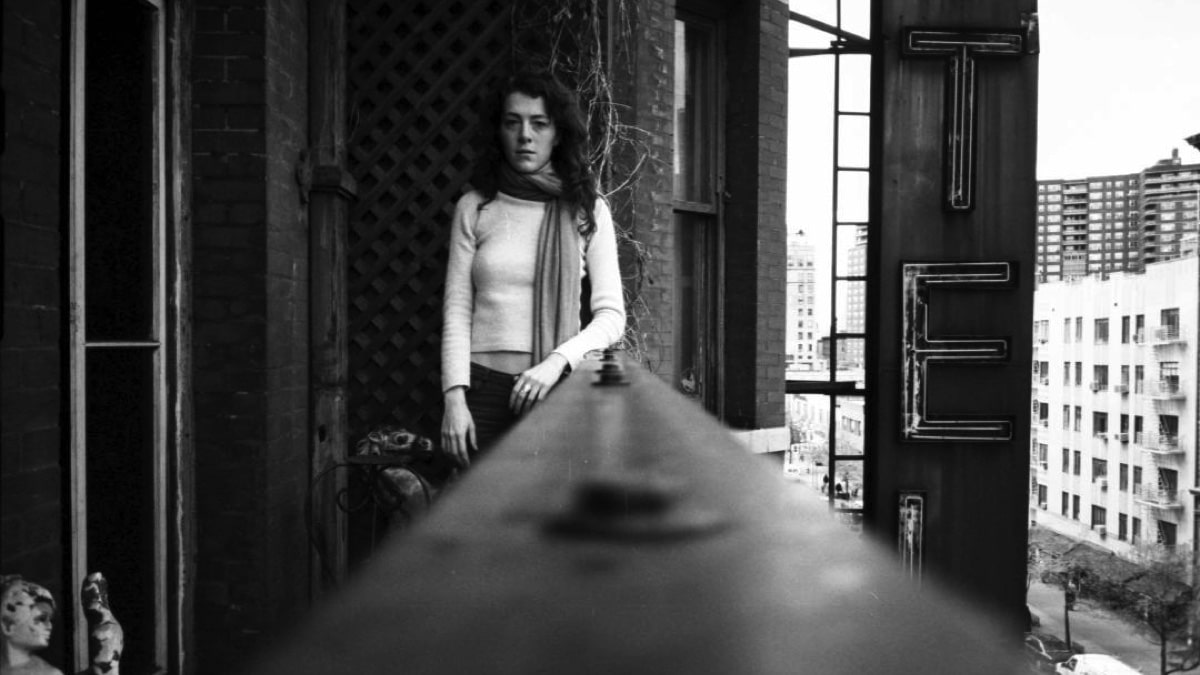
Photo: Self-portrait by Melissa Auf Der Maur
Melissa Auf Der Maur is a Canadian bassist who played with Tinker, Hole, and The Smashing Pumpkins. She released her own work and is a photographer with photos published in Nylon, Bust, and National Geographic. She released her ‘90s Rock Memoir “Even The Good Girls Will Cry” on 17 March 2026.
KB: Did you always want to be a singer-musician growing up?
I’ve played music my whole life. In school, I played trumpet and sang in a children’s choir, so music was always within me. My mother was the first female disc jockey on the Montreal airwaves; her record collection played a huge role in my inspiration and love of music.
KB: When did you start playing bass, and why this instrument?
When I was 19, the early 90s music explosion began to percolate in tiny clubs around the world. I was lucky to be a ticket girl at Montreal’s underground music club. In one year, I saw Hole, Sonic Youth, Smashing Pumpkins, White Zombie, and The Breeders – all had female bass players. That’s when the seed was planted. By the age of 22, I was the bass player of Hole.
KB: Which brands of basses have you used in your career, and which one are you using now?
The first bass that I learned on was a vintage Squier Precision. Hole was sponsored by Fender guitars, so I upgraded to Fender Custom Shop Precisions. That is all I play, but I have a cool vintage 8-string Greco that I use on recordings to thicken up guitar parts.
KB: What equipment do you use or have you used with your basses?
Ampeg SVT amps and cabinets, a couple of Sans-Amp pedals, and that is it.
KB: How did you become a member of Hole, and what is your fondest memory of that time?
Billy Corgan of the Smashing Pumpkins was helping scout a replacement for (RIP) Kristen Pfaff, Hole’s bass player. My band, Tinker, opened for them on the Siamese Dream tour, so Billy had seen me play and could vouch for me. Courtney trusted her talented friend, and that was it. I initially said “no thank you” due to my commitment to my photographic studies and the drama and chaos surrounding the band during the “Live Through This” album release. Courtney took it as a good sign that I said no, so convinced me to reconsider, and soon after, I accepted their invitation, in the name of helping put females in the male-dominated landscape of rock music. My fondest memory is every show we played as a mostly female band, symbolizing what a woman could do in a rock band. Every show had a purpose: get more women to play music.
KB: You are a photographer as well. What makes a great picture? Do you shoot in color or b/w?
I started shooting photographs at age 15. Initially only shot black & white and worked in the art school darkroom. In university, I took a color photography course, and shifted mostly and forever to that, because it was easier to process film on the road when I joined a rock band. I experimented with many cameras, point and shoots, manual, polaroids, medium format, and vintage finds. The trick to a good photograph is to shoot many and all the time – the magic is in the edit and selection process.
KB: Are there artists you would love to collaborate with or wish you had?
??I’ve been lucky to collaborate with some of my favorite musicians in my career. I would still love to collaborate with a new generation heavy electronic artist on an analog bass, heavy electronic drums, and synths collaboration project. Take me out of my usual zone, merging the past and future: my love of 80s dark new wave and new artists exploring that genre. It was very futuristic back then, and we are now, after all, living in the future. I am in the mood to play bass to heavy beats I want to dance to.
KB: What are your 7 favorite bass lines in music across all genres? And why these 7?
“Mountain Song” – Jane’s Addiction (love a rambling, rolling bass line – feels like the ocean waves)
“Black Top – Helmet” (was the first bass line I taught myself)
“Gold Dust Woman” – Hole from “The Crow 2” Soundtrack (it was my first bass line contribution to the band)
“Get Ready” – The Temptations (Motown just feels so good, because of the bass)
“Lucretia My Reflection” – Sisters of Mercy (makes me want to hit the dance floor and play bass simultaneously)
“Be My Druidess” – Type O Negative (full chord bass playing at its best by iconic, demonic, Peter Steele, RIP)
“Romantic Rights” – Death from Above (1979 – unique distorted overdriven tone, combined dance rhythm and melodic intelligence, all in one shot – also! Shout out to a bass & drum only band, which is awesome, and we should have more of, but the bass player needs to be a killer to fill that role.
KB: What are you currently up to?
Releasing my ‘90s Rock Memoir “EVEN THE GOOD GIRLS WILL CRY”. Visceral healing process, it was to get it out of me and write it, but I suspect the real magic will begin by putting it into the world and reflecting with others on what the magic of the ‘90s was all about. Powerful music decade that carried us into what is now a brave new world of digital corporate weirdness – may the past shed a light on our future. That’s my hope for this book release and tour.
Visit online:
Official Website
Facebook
Instagram
YouTube
Spotify

Gear News: Fender Unveils Highly Anticipated Vintera III Series

New Music: Oteil Burbridge & Lamar Williams Jr. New Single, Hush

Interview With Bassist Virginia Franks

Nathan East, Echoes of a Lineage – April/May 2026 Issue

Gear Review: Italia Leather Straps

Feb 23 Edition – This Week’s Top 10 Basses on Instagram
Mar 2 Edition – This Week’s Top 10 Basses on Instagram
Mar 9 Edition – This Week’s Top 10 Basses on Instagram
Mar 16 Edition – This Week’s Top 10 Basses on Instagram