
Gear
Funkulator Combines Simplicity and Great Tone

 Slap bass is a love/hate thing. We all love the fact that it’s fairly easy to pick up and sound somewhat proficient on. We hate the fact that as soon as you start playing slap, your tone falls short. Suddenly, it’s lost in the mix with no definition and everyone is wondering “what is THAT guy doing?!” So we try to compensate for that by trying out filters, equalizers, compressors, limiters, etc.. with varying levels of success. But we’re still left wanting a simple, easy to use solution that will bring the funk each and every time with a minimum of effort.
Enter the Funkulator, by Creation Audio. Based upon decades of firsthand experience on the road and in the studio, it features a preset EQ designed to give you “Marcus Miller in a box,” with the simple flexibility that one knob can provide. Dial in as much or as little of the preset as you need to keep your slap sound shaking the floor and supporting the band.
First thing I noticed when plugging the pedal in is that the logo lights up. THE LOGO LIGHTS UP. That, in and of itself, makes this probably my favorite pedal to date. Then I turned it on and started working with it. The beauty of the Funkulator is in the sheer simplicity of it. Immediately, that elusive slap tone that I’d been hunting for but rarely been successful at finding was right there (and for me, it’s between 11 o’clock and 2 o’clock, depending on mood). And because it’s only one knob, you can throw this in your gigbag, take it out and get that same sound over and over again. It’s easy to dial in, easy to get a great tone, and easy to recall that tone consistently.
However, don’t think that the Funkulator is just limited to our slap bass brethren, oh no. When playing fingerstyle, I was able to get some nice, thick tones. With the pedal cranked completely clockwise, I could grab some heavy dub tones. Whatever the style you want to play, the Funkulator is ready to help you sculpt the sound, quickly and easily.
The Funkulator from Creation Audio is one of those “Wow! I wish I’d have thought of that!” type ideas. Take a great EQ preset, make it simple to use and dial in, and put it in a stomp box. And with a street price of $149 for a handmade in the USA pedal, you really can’t go wrong. So go ahead, make your funk playing that much easier and more fun with the Funkulator.


Disclaimer: This pedal was kindly provided by Jad Freer for the purpose of this review. However, this does not influence our opinions or the content of our reviews. We strive to provide honest, unbiased, and accurate assessments to ensure that our readers receive truthful and helpful information.
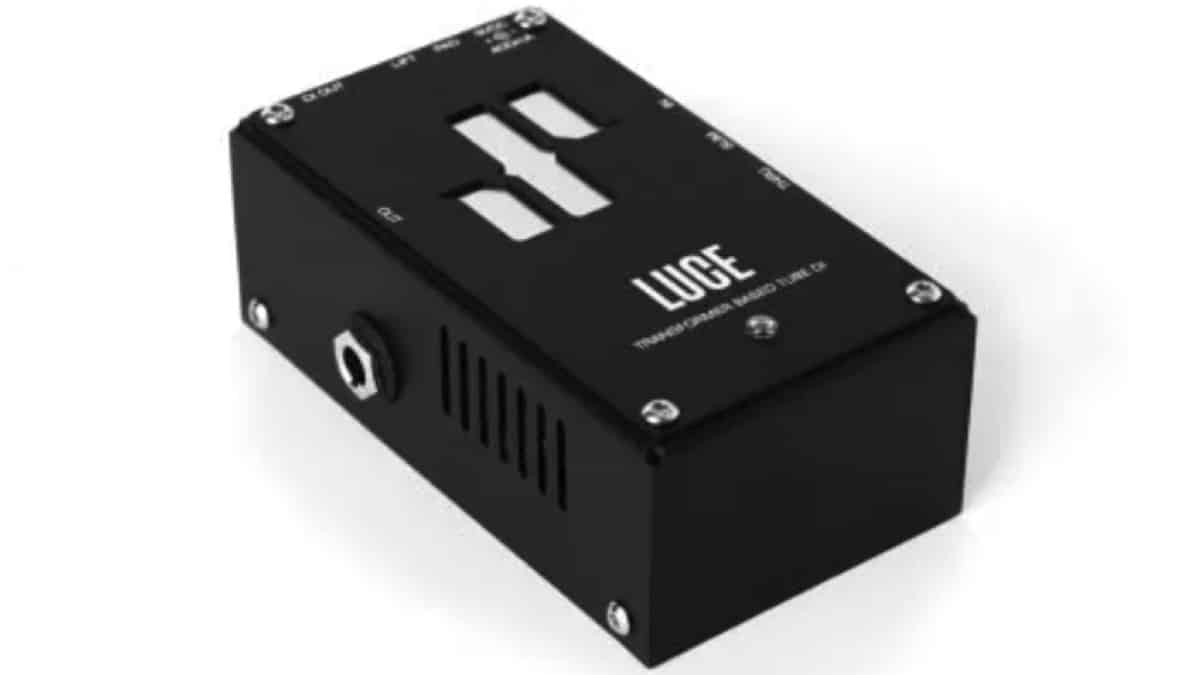
Jad Freer Audio first caught the attention of the bass world with the highly acclaimed Capo DI, a feature-rich preamp that quickly became a favorite among modern bass players and content creators, including bassist Ian Martin Allison. The Capo earned its reputation through flexibility, deep tone shaping, and studio-grade performance packed into a pedalboard-friendly format.
The new LUCE DI, however, takes a very different approach.
Where the Capo is about control and versatility, the LUCE is about refinement. There are no EQ sections, drive channels, or extensive controls here. Instead, Jad Freer focused on creating a high-end, studio-quality DI designed to enhance your bass tone without fundamentally changing it.
As the company describes it:
“Luce — light in Italian — is a studio-quality, transformer-based tube DI (Direct Injection) box: a unity gain (1:1) tube preamplifier and active summing unit.”
That may sound technical at first, but the philosophy behind the LUCE is actually quite simple: preserve the integrity of the instrument while adding the subtle warmth, depth, and dimensionality associated with premium analog studio gear.
Classic Studio Design in a Compact Format
At the core of the LUCE is a carefully selected ECC88/6922 tube paired with an OEP/Carnhill transformer, components inspired by the same design traditions found in legendary British recording consoles.
For bass players, this translates into a tone that feels naturally polished rather than heavily processed. The low end becomes slightly tighter and more authoritative, the highs smoother, and the overall signal takes on a subtle sense of depth that is difficult to describe until you experience it firsthand.
Importantly, the LUCE does not impose a strong tonal signature of its own. It is not a distortion pedal, amp simulator, or aggressive tone shaper. Instead, it enhances what is already there.
Players who already have a sound they love will likely appreciate the LUCE the most, as it acts more like a studio-quality finishing stage than a traditional bass preamp.
On Stage and in the Studio
Although the LUCE comes in pedal format, its personality feels deeply rooted in studio workflow.
Live, it provides an exceptionally clean and mix-ready DI signal, helping bass sit naturally in the front-of-house mix with minimal corrective EQ. Notes feel defined, low frequencies remain controlled, and the overall signal has a polished quality that sound engineers will immediately appreciate.
In the studio, however, the LUCE truly shines.
The combination of tube harmonics and transformer coloration gives direct bass tracks a sense of analog richness and musicality before any plugins or additional processing are added. The result is a DI tone that already feels closer to a finished record.
This makes the LUCE especially appealing for session players, producers, and bassists working in home recording environments who want a professional-grade front end without carrying around a full rack of studio equipment.
The Jad Freer LUCE is not designed to impress through flashy controls or dramatic tonal transformations. In fact, its greatest strength is restraint.
Rather than reshaping your sound, it refines it.
For players seeking a pedal that delivers studio-quality warmth, clarity, and feel while preserving the natural voice of their instrument, the LUCE offers a sophisticated and deeply musical solution. It may be compact enough for a pedalboard, but its mindset is unmistakably studio-oriented.
For more information, visit online at jadfreeraudio.com/

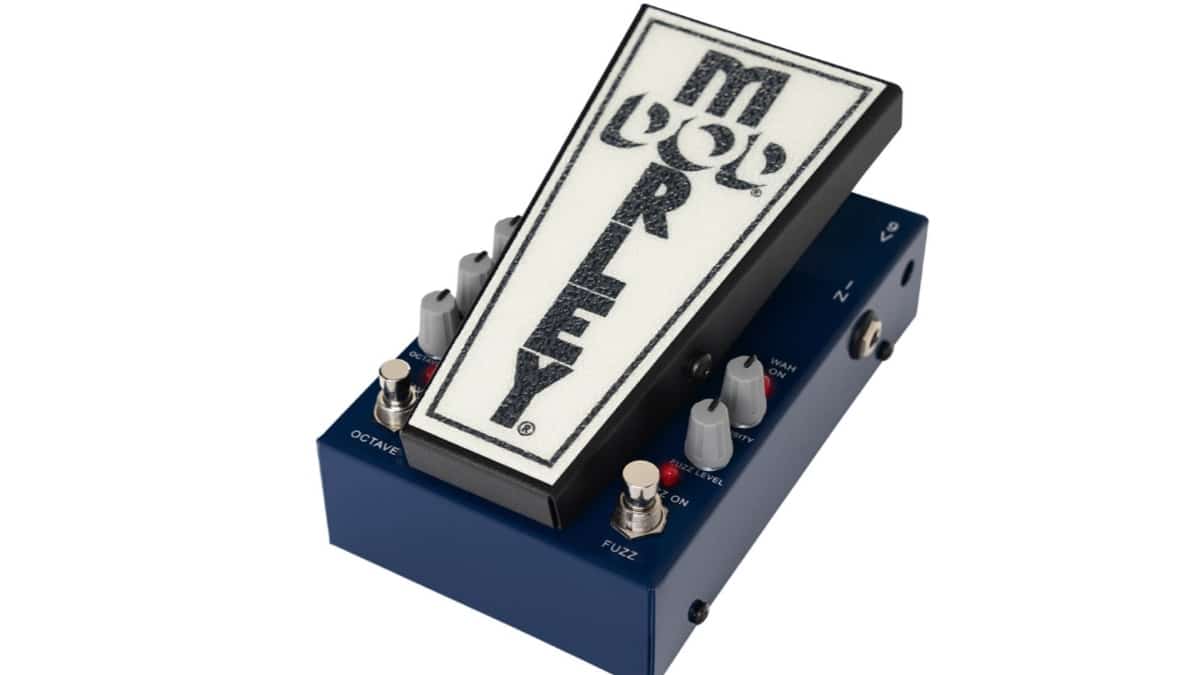
Legendary effects manufacturers DOD and Morley have united to create something truly remarkable: the Wah-ocTo-Fuzz™ pedal. Available now worldwide through local retailers and online, this innovative device answers the call of musicians looking to combine classic sounds by masterfully harmonizing three distinct effects into one unit. The pedal achieves this by blending DOD’s iconic 80’s FX35 Octoplus circuit with Morley’s timeless 70’s wah and fuzz circuits. The result is a pedal that simply leaves players saying, “WTF!”.
Designed to ignite creativity for guitar, bass, and keyboard players alike, the Wah-ocTo-Fuzz™ empowers musicians to use a singular effect or combine one, two, or all three simultaneously. The octave section utilizes the DOD FX35 Octoplus circuit to produce a classic analog octave blend that channels the captivating, glitchy essence of the 1980s. Players can easily sculpt this sound using the Direct Level to control the dry signal output, the Tone Control to adjust the overall brightness, and the Octave Level to dictate the lower octave signal.
The wah section boasts Morley’s classic Electro-Optical design and features convenient switchless operation; users simply step on the glow-in-the-dark treadle grip to instantly engage the wah effect. Finally, the fuzz circuit draws inspiration from the timeless sounds of Morley’s 1970s era, offering an Intensity Level knob to control the gain of the fuzz effect and a Fuzz Level knob to manage your overall signal when the fuzz is activated.
Built for maximum protection, the WTF pedal is housed in a rugged and lightweight Cold-Rolled Steel chassis. It also features a premium Morley buffer circuit designed to protect your tone from any mischief in your signal chain.
The new Wah-ocTo-Fuzz pedal features standard 1/4″ instrument jacks for both its input and output connections. For power, the unit operates using a standard 9VDC 300 mA center negative power supply, utilizing a standard +9V DC tip-negative barrel jack. Alternatively, it supports standard 9V battery operation that is easily accessible via a quick-clip battery door. Physically, the pedal measures 6.86 inches in length, 4.23 inches in width, and 3.88 inches in height, with a total weight of 2.27 lbs. (1.03kg). Finally, the Wah-ocTo-Fuzz is backed by a 1-year warranty.
For more information on the new DOD and Morley Wah-ocTo-Fuzz, please visit www.digitech.com.
Street Price: $249.99 USD
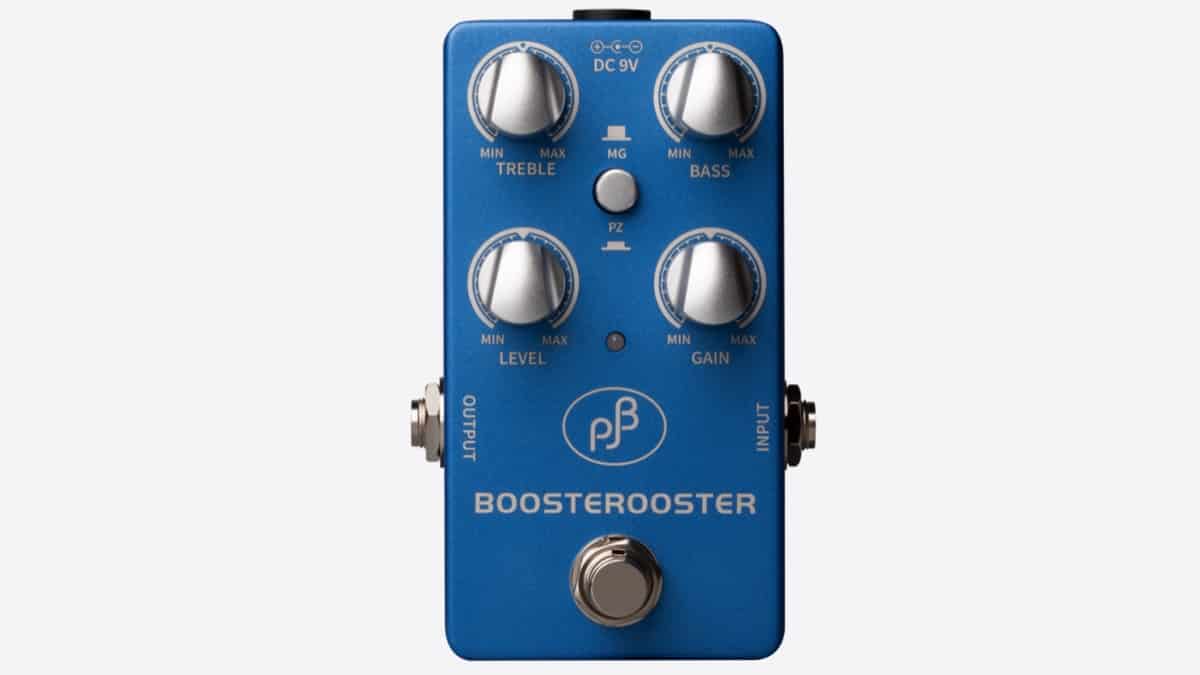
Phil Jones Bass announces the BOOSTEROOSTER Model PE-2, A precision 2-band EQ, preamp, and clean booster for bass. Packing a boost of 18dB of 2-band clean gain, the PE-2 is a compact preamp and EQ pedal engineered specifically for electric and upright bass. It has been engineered to restore tonal control in any environment and delivers consistent, authoritative bass tone when connecting to PAs, recording interfaces, or unfamiliar backline — where bass tone is most often compromised.
The BOOSTEROOSTER’S +18dB of clean gain will drive amplifiers into their optimal operating range, compensating for passive or low-output instruments, and maintaining signal strength through long cable runs or complex pedalboards with no distortion, no compression, no coloration.
Features of its precision EQ include Bass Control (±12dB @ 60Hz) — targets true fundamentals, adding weight and authority without boom or speaker overload.
Treble Control (±12dB @ 6kHz) — adds clarity and articulation without harshness.
For more features and information, visit online at www.pjbworld.com
Disclaimer:This pedal was kindly provided by Hotone for the purpose of this review. However, this does not influence our opinions or the content of our reviews. We strive to provide honest, unbiased, and accurate assessments to ensure that our readers receive truthful and helpful information.
Compact Design, Serious Bass Capability
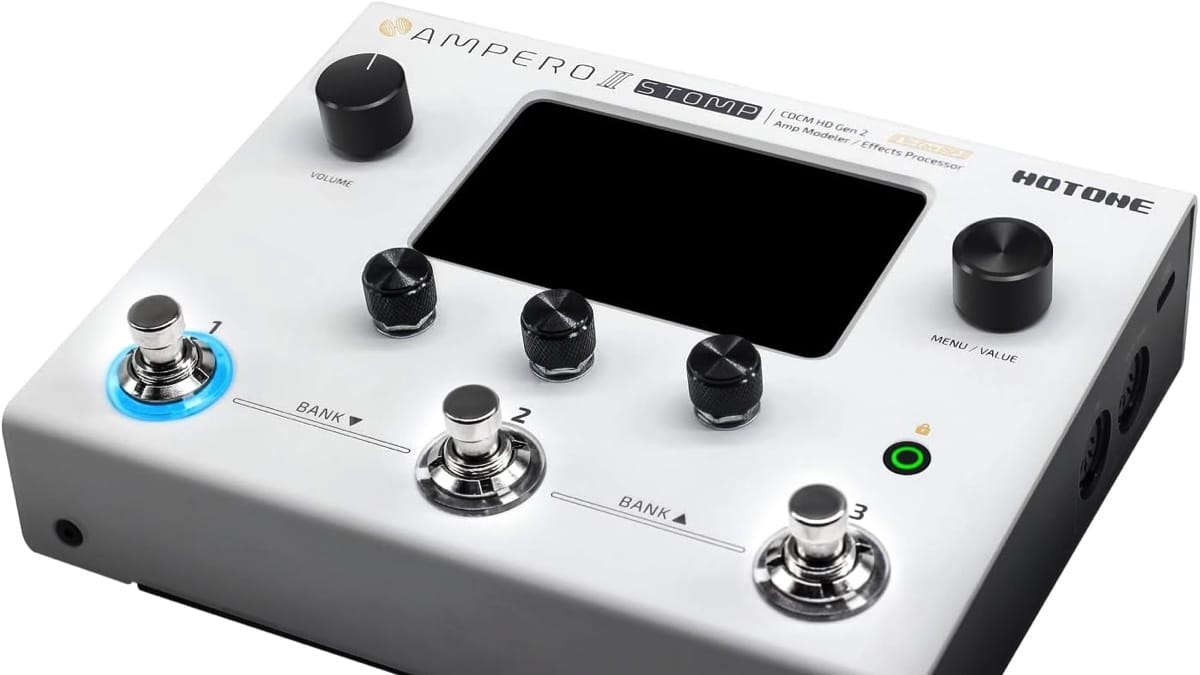
The Hotone Ampero II Stomp sits in an interesting space for bass players. It is compact enough to replace a pedalboard, powerful enough to function as a full DI rig, and flexible enough to cover everything from clean studio tones to aggressive modern drive setups. While it is often marketed primarily toward guitar players, it actually reveals a surprising amount of depth when approached from a bass workflow perspective. For modern bassists balancing live performance, silent stages, recording sessions, and fly-date practicality, the Ampero II Stomp feels increasingly relevant.
At its core, the unit is built around Hotone’s CDCM HD and F.I.R.E. modeling engine, offering amp modeling, cabinet simulation, extensive effects, IR loading, and flexible routing in a compact stompbox format. You get over 80 amp models, a large effects library, stereo operation, parallel routing, MIDI support, USB audio interface functionality, and up to 12 simultaneous effect blocks. For a device this small, the feature set is substantial and immediately practical in real-world bass applications.
Routing Flexibility Built for Modern Bass Rigs
What makes the Ampero II Stomp particularly compelling for bass players is its routing flexibility. Parallel signal paths allow you to preserve low-end clarity while introducing distortion, compression, modulation, or saturation on a separate chain, a critical feature for contemporary bass tones. This makes it easy to create clean/dirty blends, bi-amped textures, wet/dry ambient rigs, or heavily processed atmospheric sounds without sacrificing punch and articulation.
Players working in progressive metal, worship, fusion, or modern pop contexts will especially appreciate how naturally the unit adapts to layered and dynamic signal chains. The touchscreen interface also deserves more credit than it often receives. In practice, editing feels faster and more immediate than many menu-heavy modelers in the same price range. Dragging blocks, adjusting routing, and building presets become intuitive after only a short learning curve.
That matters because bass rigs often require more nuanced signal management than guitar setups, particularly when preserving transient response and low-frequency integrity. The visual workflow encourages experimentation instead of slowing it down.
Amp Models and IR Performance
The amp models themselves are solid and musically usable, with the Ampeg-inspired options standing out as the most immediately convincing for bass. Vintage-style tube warmth, modern clean headroom, and slightly driven SVT-style grit are all accessible with minimal tweaking.
However, the unit noticeably improves when paired with high-quality third-party impulse responses. Good bass IRs add depth, air, and realism that elevate the direct tones from “good digital modeler” territory into something that sits naturally in a live mix or recorded production. This is particularly noticeable in in-ear monitor environments where cabinet realism becomes more exposed.
Compression performance is another underrated aspect of the unit. Bass players rely heavily on compression not only for sustain, but also for consistency and dynamic control. The Ampero II Stomp offers enough flexibility to cover subtle leveling, punchy slap compression, and more aggressive limiting for modern rock and metal applications. Combined with EQ blocks and parallel routing, it becomes possible to sculpt highly polished, mix-ready tones directly inside the unit without relying heavily on external processing.
Effects and Sound Design Possibilities
Effects quality is generally strong, especially in the modulation and ambient categories. Delays, reverbs, and chorus effects sound spacious and musical, making the unit particularly effective for cinematic bass textures, post-rock soundscapes, and worship-style ambient playing.
Octave and synth-style effects are also surprisingly usable when dialed in carefully, adding further versatility for experimental players. Drive and distortion models are slightly more inconsistent, with some patches requiring additional EQ shaping to maintain low-end authority. Fortunately, the routing options make it relatively easy to compensate by blending unaffected low frequencies back into the signal.
Live Performance and Recording Workflow
In live situations, the Ampero II Stomp performs convincingly as a direct-to-FOH solution, backup rig, or complete ampless touring setup. Balanced outputs, stereo capability, MIDI implementation, and compact dimensions make it practical for professional stage environments where portability matters.
For touring bassists or session players carrying multiple instruments and limited luggage, the ability to fit an entire rig into a backpack-sized footprint is a significant advantage. The onboard footswitches are responsive and functional, though players requiring extensive real-time scene switching or expression control may still prefer adding an external MIDI controller.
As a recording interface, the unit continues to impress. USB audio support allows direct tracking, reamping, and mobile production workflows without additional hardware. Latency performance is stable enough for home studio use, and the ability to move seamlessly between practice, songwriting, demo recording, and professional tracking adds to the unit’s overall value.
For content creators and remote session musicians, the all-in-one workflow is particularly appealing.
Limitations and Final Verdict
There are still limitations. The bass-specific ecosystem surrounding the platform is smaller than what players may find with systems from Line 6 or Fractal Audio Systems, and some factory presets clearly lean toward guitar-oriented use cases. Certain effects also reveal DSP limitations when running highly demanding patches involving dual amps, pitch shifting, and extensive ambient processing simultaneously.
While the processing power is more than adequate for most practical scenarios, power users may eventually encounter those ceilings.
Even so, the overall value proposition remains impressive. The Ampero II Stomp succeeds because it balances portability, flexibility, and sound quality exceptionally well for its size and price range. It may not have the ecosystem depth or market dominance of larger competitors, but it consistently delivers professional-level results in compact form.
For bass players building modern direct rigs, simplifying touring setups, or entering the world of ampless performance without sacrificing tonal control, the Hotone Ampero II Stomp stands out as one of the more underrated and genuinely capable compact modelers currently available.
Available online at Amazon.com
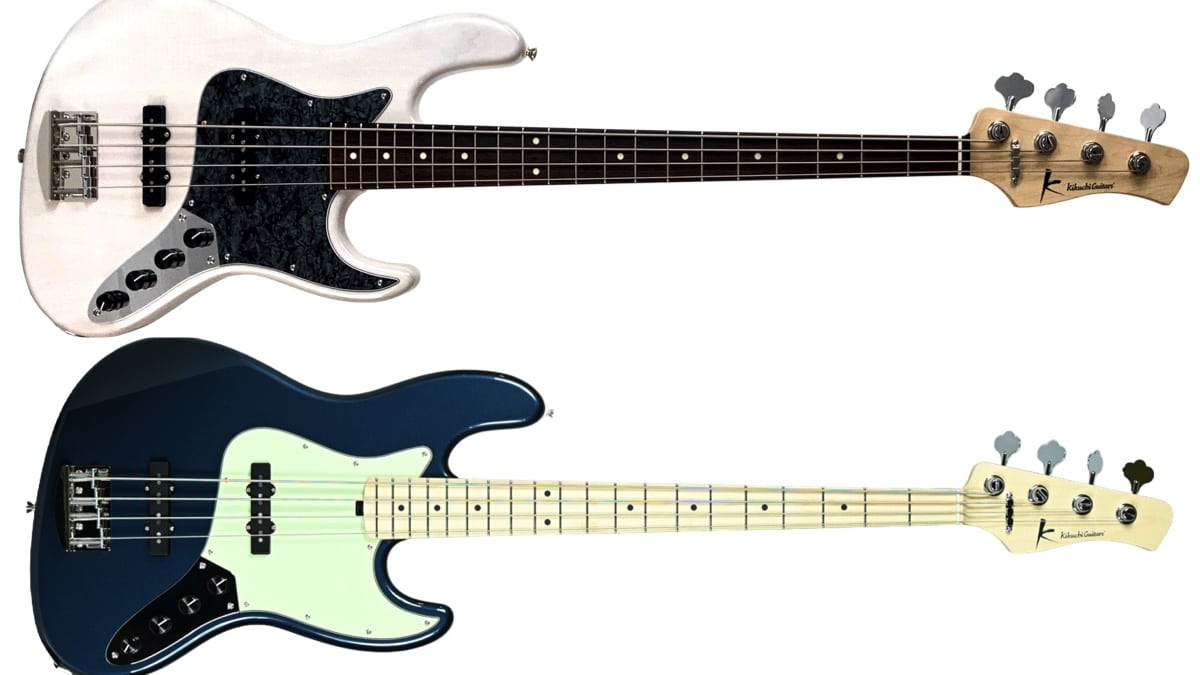
Kikuchi Guitars, Japanese boutique craftsmanship with a legacy behind it…
A new name has entered the international bass guitar scene, though the story behind it reaches back decades.
Kikuchi Guitars is the work of Japanese master luthier Yoshiyuki “Yoshi” Kikuchi, a respected builder whose career includes work connected to renowned Japanese and American bass brands and artists. During his career, Kikuchi has been associated with Atelier Z, John Suhr and Roger Sadowsky. In the early 1990s, he moved to New York to work alongside Roger Sadowsky and further refine his craft, later contributing to the development of Sadowsky’s Japanese production.
Today, decades of experience in design, setup and refinement come together in Kikuchi Guitars: instruments built around musicality, balance, smooth playability and immediate response.
The philosophy behind Kikuchi Guitars is simple: evolve the classic electric bass by improving feel, balance, response, consistency and musicality, without losing the soul players fell in love with in the first place.
“A legacy, made personal.”
The basses are manufactured in small batches in Japan and combine inspiration from classic 60’s and 70’s bass designs with carefully considered modern refinements. Features such as graphite-reinforced necks, lightweight hardware, transparent custom electronics, carefully selected woods and exceptionally low, even setups all contribute to instruments known for their comfort, balance and responsiveness.
The current lineup includes the Hermes Series, featuring models inspired by vintage configurations of Jazz Basses and available in both active and passive versions. Rather than custom shop instruments built to order, these basses are produced in limited batches with fixed specifications, allowing Kikuchi to offer boutique-level craftsmanship at a more accessible price point.
Tonally, Kikuchi basses are known for articulate lows, textured mids, crisp highs and a highly dynamic response. Whether played fingerstyle, slapped aggressively or used in subtle studio work, the instruments remain musical, balanced and expressive.
Kikuchi basses are already attracting attention from players looking for a refined boutique instrument that blends vintage familiarity with Japanese precision, detail and feel.
In addition to the bass lineup, Yoshi Kikuchi is also building a small number of handcrafted archtop guitars. At present, it has not yet been determined whether these instruments will become available outside Japan.
Kikuchi Guitars Europe, based in Hilversum, The Netherlands, is the official European distributor and showroom location for the brand. In the United States, players can connect through Kikuchi Guitars USA. Players are welcome to book private demo sessions in person or online.
Visit online at kikuchiguitars.com

Maestro Ron Carter, Sharing the Spirit – June/July 2026 Issue

New Music: Danielle Nicole, Tug Of War

Right Hand Technique Strategies with Dr. Randy Kertz

New Music: Golden Flower, Are You Even Awake?

Interview With Bassist Adam Russell
Right Hand Technique Strategies with Dr. Randy Kertz

April 6 Edition – This Week’s Top 10 Basses on Instagram
April 13 Edition – This Week’s Top 10 Basses on Instagram
20 April Edition – This Week’s Top 10 Basses on Instagram