
Bass CDs
Out Now: Mark Dresser Solo Album, Tines of Change

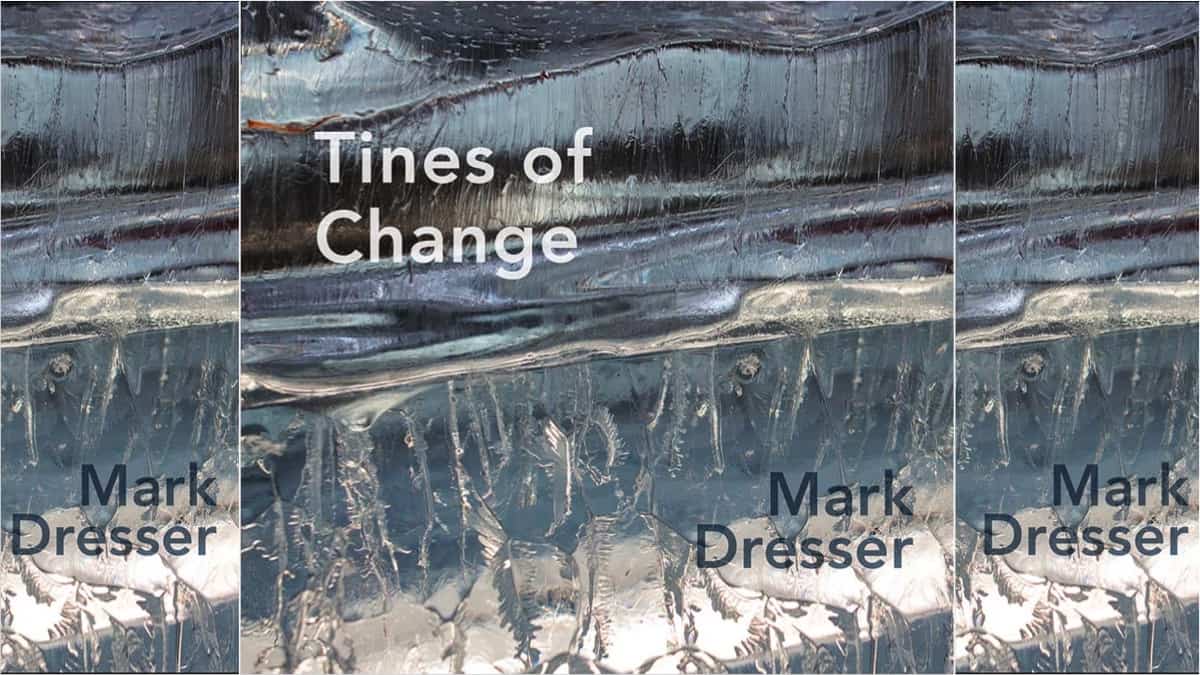
Tines of Change, via Pyroclastic Records, features custom-designed 4- and 5-string basses with fingerboard-embedded pickups and a set of metal tines that offer stunning new possibilities that Dresser vividly explores…
“[Mark Dresser is] a bassist who is one of the great instrumental forces in recent American jazz outside the mainstream.” – Ben Ratliff,The New York Times
” Dresser uses the bow like Picasso used the brush: to refract and recast certain realities and to create completely new ones.”– Robert Bush, San Diego Reader
“I think of the bass as an orchestra,” writes bassist/composer Mark Dresser in the liner notes for his breathtaking new solo album, Tines of Change. If anything, this is an understatement in regards to the multi-dimensional sonic possibilities that Dresser conjures from the instrument. Through his singular combination of improvisational artistry and innovative adaptations, Dresser seems to discover orchestras within orchestras, crosscurrents of harmonic and multiphonic inspiration that engage in captivating and entrancingly beautiful dialogues.
Dresser has devoted a lifetime of research and performance to expanding the vocabulary of the bass, experimenting with extended techniques as well as with the physical properties of the instrument itself. Intensive though these studies have been, the results are always far from esoteric. He is renowned as one of creative music’s most expressive and inventive artists, whether in his expansive solo playing or in collaboration with such acclaimed collaborators as John Zorn, Henry Threadgill, Gerry Hemingway, Myra Melford, Joe Lovano, Dave Douglas, Tim Berne, Jane Ira Bloom, Dawn Upshaw, Ray Anderson, and countless others. His trio with “hyperpiano” player Denman Maroney and flutist Matthias Ziegler features three musicians who take similarly expansive approaches to their instruments.
Tines of Change features a dozen new explorations performed on unconventional four- and five-string basses crafted for Dresser by the Colorado-based bassist and luthier Kent McLagan. The album’s title refers to those basses’ most striking feature, an array of metal tines affixed to a secondary bridge. Like the strings these tines can be plucked or bowed, offering a variety of sounds from the percussive to the ethereal that adds sounds resembling both an African mbira and the stroked rods invented by composer Robert Erickson that Dresser employed on his 2017 release Modicana.
But that’s just one of the modifications that McLagan has made to translate Dresser’s sonic imaginings into reality. In 2001 he embedded hand-wound individual magnetic pickups into the fingerboard of the bass, one set below the nut and the other at the octave. These additional pickups allow Dresser to sound up to three different pitches on each string, as well as amplify subtle tones and pitches that might otherwise go unheard in a live or collaborative setting.
“I heard micro-details of the instrument when I practiced alone, that got lost once I played with others,” Dresser explains. “That led to a lot of time thinking about how I could make these exciting soft sounds louder. As a bass player, you’re relegated to what the realities of the acoustics allow. I realized that I could access the sonic details I was hearing by amplifying the bass differently.”
In large part that desire stemmed from the diverse influences that caught Dresser’s ear early in his development. Three figures stand out as hugely influential, each from a different point on the musical spectrum: Charles Mingus, whose expressive and fervent playing drew a prismatic rage of colors from the bass; Jimi Hendrix, whose ability to sculpt feedback encouraged Dresser to attempt to wield the most unpredictable aspects of his instrument; and Bertram Turetzky, the unparalleled experimental and new music solo bassist whose dynamic virtuosity, eclectic stylistic range and mentorship were crucial to Dresser early on.
“As a young musician, it was as if I had conflicting musical agendas,” Dresser recalls. “I set out to learn how to embrace and integrate them, and make them speak to one another as a single musical identity. Ultimately everything feeds into one another. It’s all music.”
“Prolotine,” the opening track on Tines of Change, is that effort in microcosm, a polyphonic dialogue between the disparate voices of Dresser’s bass. Arco moans give way to pizzicato hammering, shimmering overtones resound from deep, echoing scrapes. “Tynalogue” plunges into the sub-audio range of the tines, resonating below the range of hearing with percussive beats that are felt deep in the body.
Each piece reveals new potentialities, profound riches unearthed from bold explorations – from the deep harmonic sonorities of “Harmonity” to the stark, crystalline elegance of “Melodine.” On “Gregoratyne” Dresser bows the tines, conjuring auroral patterns that evoke the preternatural singing of Gregorian monks. “Narratone” delves into guttural sounds that at times evoke the overtone-rich tradition of throat singing.
Though it arrives as the result of a significant period of reflection and invention, Tines of Change can’t be considered the “culmination” of Dresser’s solo explorations. As always, he continues to evolve and broaden his musical possibilities and compel open-eared listeners with previously unimagined, deeply felt invocations.
“I realized that the bass has so many different and distinct voices,” he says. “I wanted to be able to access them and make them speak to one another. What I’m trying to do with all of these techniques is expand what I hear and feel. It’s always about trying to find something that registers to me as musical and expressive and something that I want to listen to. I’m driven by the larger impulses of what is musical.”
Visit online at mark-dresser.com


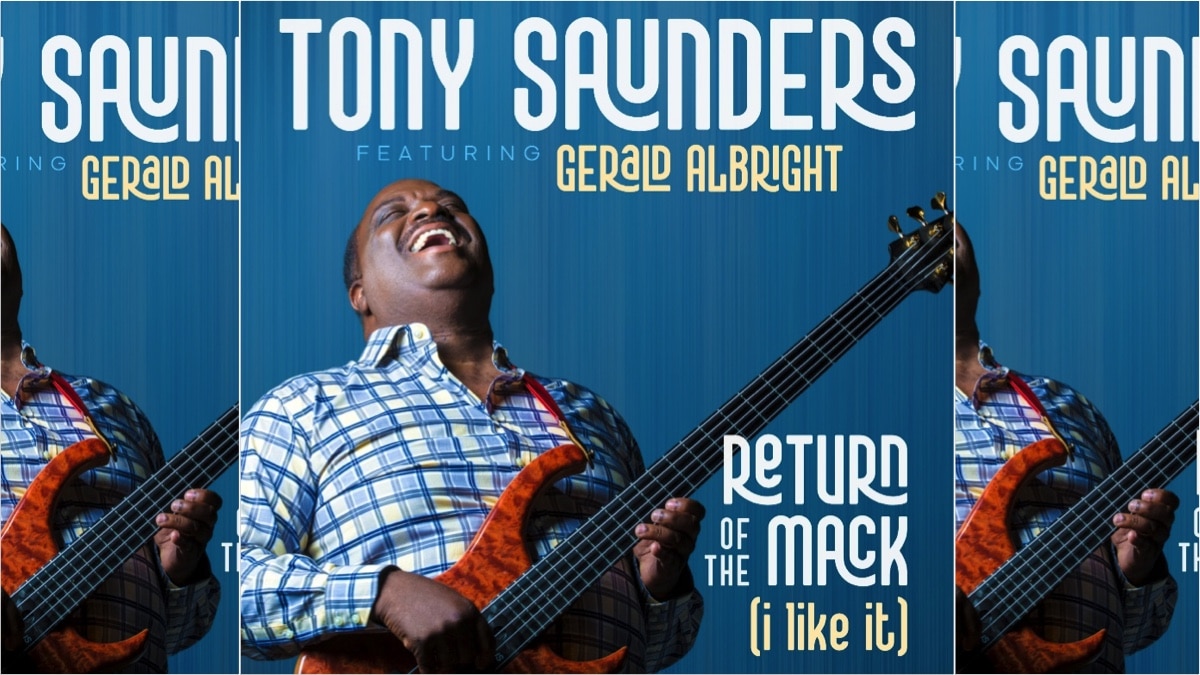
Bassist Tony Saunders Reimagines Two R&B Classics on “Return of the Mack (I Like It)” with GRAMMY® Nominee Gerald Albright
During January’s NAMM Show, two?time EMMY?winning bassist Tony Saunders played a demo mashup of Mark Morrison’s “Return of the Mack” that weaves in El DeBarge’s “I Like It” for 9?time GRAMMY® nominee Gerald Albright. The saxophonist instantly heard its radio potential and agreed to play on the recording. The newly released single is now climbing the Billboard and Mediabase charts.
Joining Saunders and Albright on the track is GRAMMY®-winning keyboardist Michael Mani (Carlos Santana, Eric Clapton, Tori Kelly), who produced the single with Saunders along with playing keyboards, synths, key bass, vocal processing, drum programming, and guitar synths. John Mitchell added live drums to anchor the rhythm track.
“I’ve always loved ‘Return of the Mack’ — the groove is off the hook — and I knew I’d record it someday. ‘I Like It’ has also been one of my favorites, and because it’s in the same key, the mashup came together naturally. The reaction from fans when we play it live is incredible,” said Saunders, who records for the Baja/TSR label and received clearance to release the single on his own imprint.
Saunders dedicates the new single to the memory of two of his cousins, Kurt Kaywood and Oliver Rodgers. They passed away two weeks apart as Saunders was finishing up work on the track. “They played an important part of my life, always introducing me to new things.”
“Return of the Mack” peaked at No. 2 on the Billboard Hot 100 in 1996. El DeBarge’s “I Like It” was the group’s breakthrough hit, peaking at No. 2 on Billboard’s R&B chart in 1982.
Last week, Saunders was on-set in Sacramento shooting a cameo appearance in the Belton Mouras Entertainment film Fingers: The Vegan Zombie Musical, which is expected this Halloween. In addition to scoring several films, Saunders made his big screen debut in 1986 in the Francis Ford Coppola blockbuster Peggy Sue Got Married playing in a scene as a band member of Nicolas Cage.
Saunders’ musical path began with taking piano lessons from Herbie Hancock. He was gifted with an organ by Sly Stone and received his first bass from Creedence Clearwater Revival’s Tom Fogerty. His professional career began when he was invited to play in his father’s band. His father was Merl Saunders, and the co-band’s leader was Grateful Dead legend Jerry Garcia. Tony Saunders’ diverse musical journey spans jazz, funk, rock, R&B, and Latin music. He also composed the musical Rock Justice with Jefferson Starship’s Marty Balin.
Saunders debuted as a solo artist with 2011’s Romancing the Bass. His latest collection, 2024’s The Romance Continues, spawned multiple Billboard Top 10 hits. Over the years, Saunders has collaborated with contemporary jazz luminaries Jeff Lorber,Paul Brown, Paul Jackson Jr., Nils, Jeff Ryan, Randy Crawford, Blake Aaron, and Adam Hawley.
In addition to releasing more new music this year, Saunders is eager to perform with his new band: Mitchell on drums, bassist Vernon Hall (Tony! Toni! Tone!), guitarist Tim Landis, and keyboardist Ray Roland.
“I have played with a lot of musicians in my life, but this group really gets the Tony Saunders vibe!”
For more information, please visit www.tonysaunders.com.

VIDEO: “Who Are the People?” – Composed by Brandon Kyle Miller, Performed by Golden Flower
Golden Flower is an improvising quintet from Orlando, Florida… violin, trumpet/flugelhorn, Rhodes/piano, upright and electric bass, and drums, whose debut studio album “Are You Even Awake?” releases June 12, 2026, on Romantic Poker Records.
Brandon Kyle Miller handles both upright and electric bass with effects throughout the record, navigating everything from deep funk grooves to Indian classical-inspired rhythmic structures to post-rock textures, often in the same song. The album was recorded live at Phat Planet Studios and mixed and mastered by Aaron Gandia, and represents five years of development from a band that has clearly found its voice.
Standout bass moments include the deeply grooving “Piecemeal” and “Distant Glow,” the slow-burn intensity of “Intrasomatic” (composed by Brandon) and “The Search Goes On,” and the album’s epic closing triptych “Perihelion I, Interlude, & Perihelion II,” which moves through funk, African 12/8, and metric modulation with purpose and power.
The band also cites Roy Hargrove, The Bad Plus, Kneebody, and Vijay Iyer among their touchstones, a lineage that should resonate with Bass Musician readers.
Pre-order: goldenflower.bandcamp.com/album/are-you-even-awake and visit online at goldenflowermusic.com

This 8-song collection by Linc Bloomfield (also known as Ambassador Lincoln Bloomfield Jr.), longtime bass player for Kelakos, showcases his songwriting, singing and overall musicianship, along with his studio engineering skills. After remixing and re-releasing the 1978 Kelakos album in 2015 as Kelakos Uncorked, Linc produced Kelakos’ second album, the 2023 Deko double LP release Hurtling Towards Extinction, in which the collection of accompanying videos have racked up over one million views.
Echoes of Dreamwold is a true solo project. With the skillful studio work of two great drummers, Carl Canedy and Andy Hamburger, a sweet country pedal steel track by Billy Cooper on ‘No Second Chances’, and a classic lead guitar track by George Haberstroh on ‘(Got to) Save the World’, Linc sang all the vocals, played all the guitar, bass, keyboard and percussion tracks, and mixed every song, before they were mastered by Blaine Misner.
Listen to Echoes of Dreamwold here: https://push.fm/fl/nhz0a3fg
This album is meant to be played over and over, in the tradition of the sixties’ and seventies’ legends who inspired and influenced LB JUNIOR’s own songwriting. No two songs are in the same genre. As he explains the origins of each of the songs
“Walk Away My Girl” is a soft-rock tale of heartbreak, originally written on his dad’s 1917 Steinway baby grand piano, on which he recorded this smooth, melodic track.
“Alive” explores the insecurity that holds many people back. Against a lively track derived from the reggae sounds heard on local radio on the island of Kauai, the lyrics are about coming to terms with self-doubts.
“Shot Down”, the first song Linc wrote after leaving Kelakos, in 1978, is a lively pop song featuring bright acoustic guitar harmonics and chords, and a story about how not to try and meet women.
“Greedy Child”, also written years ago, captures the sadness as the giants from the golden age of rock and pop music pass from the scene and along with it, a generation for whom their music was the soundtrack of their lives.
“(Got to) Save the World” reflects Linc’s life’s work promoting international security. This fast-paced rocker featuring George Haberstroh’s lead guitar and Andy Hamburger’s relentless backbeat, is a wake-up call to do something about armed conflict, mass shootings, and environmental destruction, and realize what is at stake.
“The (2nd) Fiddler’s Song” is a personal message set to a soft acoustic track, in which LB JUNIOR explains why contributing to something worthy and necessary is more satisfying than chasing personal glory.
“No Second Chances” is a country song, pure and simple, featuring Billy Cooper’s pedal steel licks and the distinctive rich tone of Linc’s 1955 Gretsch Country Club guitar.
“Sand in My Hourglass” completes the 8-song set with a blues song, inspired by the recent pandemic, and showing LB JUNIOR’s chops on his 60s Les Paul guitar – inspired long ago, in 1968, when teenage Linc saw a memorable performance by bluesman Mike Bloomfield accompanied by Al Kooper and his whipping Hammond organ sound. This one is a real ‘echo’ of late sixties’ Dreamwold, as Linc’s earlier band Emergency Exit used to perform Kooper’s classic tune with Blood, Sweat, and Tears, ‘I Love You More than You’ll Ever Know.’
Dreamwold was a grand estate built in 1901–1902 by financier Thomas W. Lawson in Scituate, Massachusetts. By the late 1960s, the ballroom had become a popular venue for live music. One of the regular performers was Emergency Exit, from nearby Cohasset, that included Linc, George Haberstroh, and Mark Sisson, who would later join Carl Canedy to form Kelakos. The band had a homemade light show, black lights, and a vintage Kustom P.A. system wrapped in sparkling Naugahyde. The Dreamwold estate was eventually redeveloped into condominium residences.
Order the vinyl of Echoes of Dreamwold: dekoentertainment.com/inthesquare/lb-junior

The double bassist Alon Near presents his first album of compositions, “Names, Places”, a musical travel journal, written over five years of touring, traveling, and hiking. Available
May 22nd, 2026. Each composition reflects a place and a meaningful encounter that left a melody behind. Alon Near’s debut album moves between city and village, complexity and simplicity, tracing a personal journey shaped by movement, memory and human connection.
“Names, Places” starts with Alon’s first composition from years ago, Breathe, which he carried through years and changing landscapes. The music unfolds with openness and release, followed by Missing, written on a small keyboard after hiking Mount St. Catherine in Egypt with his grandfather, which inspired a melody searching for steadiness between distance and memory. The Same Story reflects the awareness of an old pattern repeating itself and the quiet decision to turn away from it. Strength of Repetition is a solo bass reflection on repetition as a quiet virtue: The piece unfolds through gradual development, suggesting that consistency and patience can shape one’s voice more deeply than sudden inspiration. The fifth song, Shiguim, a playful yet intricate composition, moves through shifting phases and rhythmic turns. Lichi centers on clarity and warmth, as Yotam Silberstein’s classical guitar meets a string quartet, creating a lingering and intimate musical landscape. Tokyo carries a light and affectionate spirit while Coral is structured in the spirit of a Bach chorale, leading to the outro, a quiet gesture of closure.
About Alon:
Based between Europe and New York, he began playing at 14. After winning 1st Prize at the Rostov International Jazz Competition in 2013 and earning scholarships to Berklee College of Music and The New School in 2015, he moved to New York City, where he performed with Grammy Award-winning Billy Childs, saxophonist Eli Degibri, piano virtuoso Joey Alexander, and WDR Big Band alongside Chris Potter. Awarded 3rd Prize at the International Society of Bassists competition in 2021, Alon’s ensemble features pianist Tom Oren, winner of the Thelonious Monk Institute of Jazz competition, alongside trumpeter Itamar Borochov and drummer Ofri Nehemya.
Visit online at alonnear.com/
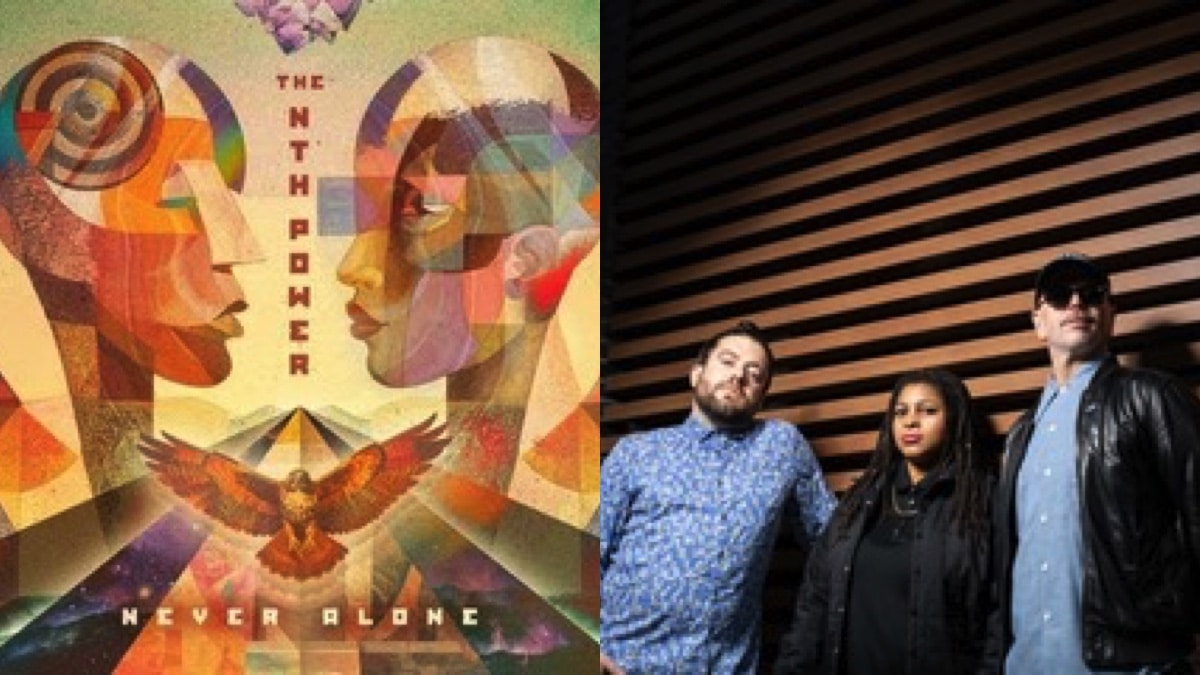
The healing power of music is more than just a mantra for The Nth Power, it’s an energy that drummer Nikki Glaspie, guitarist Nick Cassarino and bassist Nate Edgar harness with intent in the recording studio. When preparing to bring their fourth studio album ‘Never Alone’ to life, the trio converged on a remote farmhouse studio in Colchester, Vermont at the personal invitation of Phish bassist Mike Gordon. Over the course of two weeklong sessions overlooking a quiet bay of Lake Champlain, they tapped into what Cassarino calls “The Great Spirit” – a creative, driving force behind their genre-defying, soulful music.
“Vermont has an energy, there’s something special in the air,” Cassarino explains. “We were there recording late into the early morning hours one night during a lunar eclipse, and it was like the whole atmosphere changed. The creative force and beauty of where we were was just ridiculous.” Each band member brought raw demos and ideas into the recording space and collectively tracked songs that would become the final eight tracks on ‘Never Alone’.
Glaspie shares, “We created this album with the intention of sharing love back into the world, with the understanding that all people deserve love. You don’t have to know someone to love them. It’s about inspiring others to have more compassion for your fellow man, and mankind as a whole. We’re only here for a speck of time, so be nice. Time is precious.”
Throughout their individual careers, The Nth Power have used their time wisely, creating and performing with some of music’s most recognizable names. Notably, Nikki Glaspie was hand-picked by Beyoncé to join her all-female touring ensemble the Suga Mamas for many years, before expanding her chops with legendary saxophonist Maceo Parker, New Orleans funk torchbearers Dumpstaphunk, and most recently with Grammy-winning jazz ensemble Snarky Puppy. A longtime member of John Brown’s Body, Nate Edgar’s signature reggae-forward bass stylings have been tapped by Sister Nancy, G. Love & Special Sauce and Rubblebucket. And Nick Cassarino has been called upon by Christian McBride, Big Daddy Kane and Babyface along the way. But no matter where individual ventures take them, they always find their way back to each other, and the higher vibrations discovered in the music they create together as The Nth Power.
The album’s lead track “Dream Alive” delivers a transcendent first taste of the new record, with driving rhythms and colorful musicianship that captures The Nth Power’s raw and unapologetic musical approach as a power trio. “It’s a song about rolling with your crew, the chosen family we get to spend our lives with,” shares Cassarino. “The chorus says it all. We’re just happy to be creating, learning and riding together.” The closeness of their bond as friends, musicians and leaders is reinforced in the accompanying video for “Dream Alive”. Recorded in San Francisco during the group’s 2025 fall tour, visuals capture scenes from a spirited performance at the historic Glide Memorial Church, where the band led a musical worship of love one Sunday morning in between tour dates on the West Coast.
Love has always been a central theme of The Nth Power, ever since the group first coalesced during a late night New Orleans Jazz Fest showcase in 2011. The new album dives into a spectrum of sexy songs – “Crave You” speaks to the deliciously addicting nuances of a relationship with its sweet, irreverent country-funk groove; while “Thirsty” calls out more carnal elements of desire with early 80s R&B undertones. “Could It Be ‘74 Remix” – a 70s-esque revamp of a song originally heard on their 2015 album ‘Abundance’ – calls upon the band’s deep roots in soulful R&B and their collective love of Leon Ware. Former bandmate Courtney Smith delivers a powerful vocal performance in the final verse to round out the song’s smooth, soulful presence.
The title track “Never Alone” ushers in a more experimental undertaking for the group. Glaspie brought a raw afro-beat demo to the Vermont farmhouse recording sessions. Inspired by musical stylings from multiple regions across the globe, the song embodies the group’s uncanny ability to transcend genres with depth, meaning and musicality. Edgar explains, “‘Never Alone’ really represents who we are as a band that can’t be defined by one musical genre,” while Glaspie adds of the lyrical inspiration, “We’re all out here doing the best we can, but we’re all in this together. You don’t have to feel alone because you aren’t.”
Embodying that same spirit of community, The Nth Power called upon a handful of special guests to lend their talents to the new album. One of the standout songs “Smile” is enriched with world-class horn arrangements provided by jazz trumpeter Nicholas Payton and master saxophonist Skerik. Recorded at Marigny Studios in the band’s spiritual hometown of New Orleans, “Smile” has been kicking around The Nth Power’s catalog ever since their initial recording session for their debut EP ‘Basic Minimum Skills Test’. A song about finding light in the darkness of drug addiction, its lyrics are pleading yet hopeful. “‘Smile’ has one of my favorite choruses we’ve ever created, and feeds my inner strengths with its message,” says Edgar. With building, layered instrumentation and exceptionally powerful horn solos, it’s a track that will give you chills.
‘Never Alone’ comes full circle with its final offering, “Simple Life” – a song about enjoying the simple pleasures and finding peace with what’s in front of you, whether that be solace in the woods or a Michelin-star meal. Edgar explains, “I came up with the groove and idea for the title when I was living in remote California during the pandemic and asking myself what it really was that I wanted from life.” The capstone song showcases duet-style vocals from Cassarino and Glaspie, while horn ensemble The Soul Rebels elevate the recording with a joyous, New Orleans-style celebration throughout.
To The Nth Power, ‘Never Alone’ continues a heartfelt mission now 13 years in the making. Glaspie explains. “We believe in the power of love, and exhibit that belief through our music. This album is a culmination of our calling as musicians and human beings on this planet. We want to take the message as far as it can go.”
Listen on all platforms HERE
Find Nate Edgar on Instagram @n8_bass
Find the Nth Power on Instagram @thenthpower

Right Hand Technique Strategies with Dr. Randy Kertz

New Music: Golden Flower, Are You Even Awake?

Interview With Bassist Adam Russell

Interview With Bassist Tim Neilsen

Gear News: Fender Unveils Highly Anticipated Vintera III Series
Right Hand Technique Strategies with Dr. Randy Kertz

Mar 30 Edition – This Week’s Top 10 Basses on Instagram
April 6 Edition – This Week’s Top 10 Basses on Instagram
April 13 Edition – This Week’s Top 10 Basses on Instagram