
Gear News
New Gear: Mariana… The Next Evolution of Moog Bass

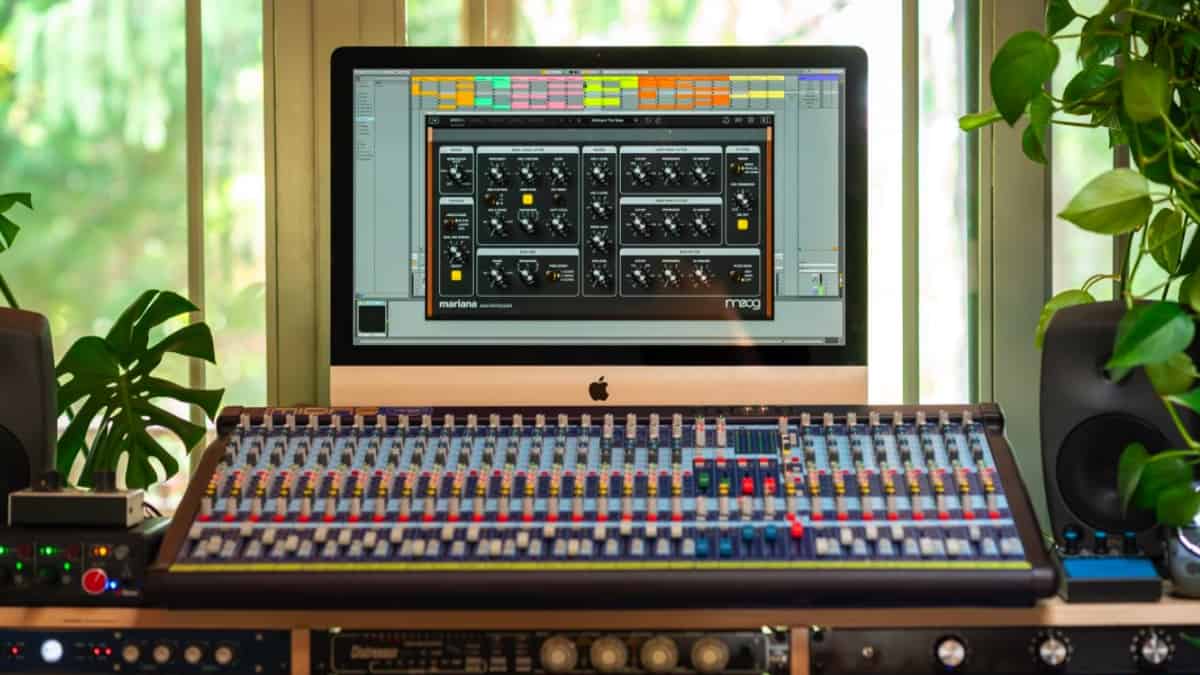
Moog Debuts New Bass Synthesizer for iOS, macOS & Windows – Dive deep into Mariana, the next evolution of Moog bass.
Mariana is a powerful new synthesizer is now available at software.moogmusic.com and inside the App Store.
Born from the depths of Moog Music’s legacy in bass synthesis, Mariana breathes new life into electronic sound design techniques for the modern player or producer.
A powerful creative companion, Mariana is designed for intuitive audio layering and processing, merging the soul of Moog bass with user-friendly technology for all digital creators. Optimized for vibrant bass sounds, Mariana invites users to dial in tones that span genres, easily form modulation pathways to create complex timbres, and sculpt distinct sounds that sit perfectly in any mix with built-in effects and compression.
Mariana: The Next Evolution of Moog Bass
Mariana is a dual-layer synthesizer, allowing you to mix together two completely different synthesizer sounds that can dynamically complement each other or be played duophonically. Each layer is built around two oscillators with precise and inventive controls to make your bass tone punch through a mix and stand out from the rest, with a sub-oscillator adding even more low-end weight. Two resonant Moog filters and a third filter specifically for the sub-oscillator let you shape your sound, adding warmth while rolling off high frequencies or pushing up the resonance for added bite. With stereo oscillators and crossover filter functionality, Mariana is optimized for quickly fine-tuning stereo content while simultaneously preserving a powerful mono bass foundation.
Warm tube, tape, and overdrive saturation and a tight compressor add heaviness and glue to your bass lines while an illuminating real-time metering section lets you monitor your sounds and dial them in to a professional standard. Flexible built-in delay and chorus effects operate on separate layers and can expand the stereo image of your sounds while preserving a solid mono signal with high-pass filters. Whether designing your own bass tones from scratch or using one of the 200 included presets as a starting point, Mariana is an accessible and versatile tool for any modern production environment. And although Mariana is optimized for bass, it is fully capable of producing strong leads, punchy percussion, and multidimensional effects, making it possible to craft an entire song using this single instrument.
Mariana’s intuitive user interface is designed for quick and efficient workflow while being fully equipped with three LFOs, three envelopes, and two random generators per layer. Combined with a creative and extremely deep modulation editor, Mariana excels at in-depth sound design and sounds that dynamically evolve over time. Nearly every parameter of Mariana can be modulated internally via MIDI, MPE, and virtual CV to build an interconnected ecosystem right in your DAW. With an optimized resizable user interface, expressive on-screen keyboard for iPad and standalone desktop versions, and seamless integration into any DAW (digital audio workstation), Mariana is the most accessible way to add the unmistakable Moog bass sound to your productions.
Get started with Mariana here.
Exploring Mariana’s Key Sound Design Features Mariana includes all the tools necessary for creating deep, pulsating, professional bass sounds and more. Tone layering, parallel filtering, cross-over control, doubling and detune, compression, dynamic saturation, and surgical stereo placement are all built into Mariana for streamlined, recallable access to your favorite bass chain—without needing to load up additional processors.
Modern Moog Bass: Mariana pulls from the lineage of classic Moog bass instruments (Minimoog Model D, Minitaur) to deliver a new bass synthesizer with cutting-edge features for sculpting powerful bass lines.
Dual Layers: Two separate synthesizer layers allow for complementary sound stacks or independent duophonic playing that can be mixed together.
Deep Modulation: A vast array of modulation sources, destinations, controllers, and functions with a deep mod matrix editor allow for complex modulation of nearly every parameter of Mariana.
Intuitive Interface: A beautiful, resizable, and user-friendly interface gives you effortless control over your bass sounds.
Metering and Compression: Built-in effects, compression, and metering let you add punch to your bass sounds and dial them in to a professional standard.
Interconnectivity: Mariana can interact with the Moogerfooger Effects Plug-ins via virtual CV, creating a modular Moog ecosystem right in your DAW.
Flexibility: Mariana can be used as a plug-in within your DAW, as a standalone app you can control via MIDI without the need for a DAW, and as an iPad app with an expressive on-screen keyboard controller.
Preset Library: A vast library of presets covering a wide range of musical styles and genres provides a starting point for users to dive right into musical creation—or transform stock presets into something completely unique.
For more about Mariana, visit Moog’s software website at software.moogmusic.com.
Moog’s History of Bass Synthesis in Electronic Music
Synthesized bass has transformed the way we hear and enjoy music for the better part of the last century.
Spanning genres and styles, Moog has been synonymous with electronic bass since the 1960s. Bernie Worrell’s Model D revolutionized funk music and paved the way for West Coast hip-hop. Giorgio Moroder’s use of Moog bass to craft “I Feel Love” by Donna Summer brought with it a defining moment in disco. Rush’s Geddy Lee established the archetypal sound of prog rock with the help of Model D and Taurus. Synthesized bass has been a fixture of Trent Reznor’s sound (solo and with Nine Inch Nails), thanks in large part to his personal connection with the Minimoog Voyager.
Bass has been the foundation for the sound and power of Moog instruments for decades. In a new video narrated by actor, writer, producer, and comedian H. Jon Benjamin, Moog invites you to journey through moments of the past and into the future of bass with a soundtrack built using all sounds from Mariana.
Experience the Sounds of Mariana
Whether using Mariana on iOS, macOS, or Windows, any player of any experience level can get started with the instrument by exploring its 200 included presets.
Spanning genres and styles suitable for any creator, these sounds were professionally designed by Moog’s in-house Product team and electronic artists like Kyle Hall, Erin Barra, Bad Snacks, and Lisa Bella Donna.
Listen to a selection of these sounds here.
Free Guided Tutorial Videos
Moog has teamed up with Thavius Beck, an experienced digital educational content creator, to demonstrate the depth and dynamic features of Mariana for users new to sound design in the software space. In this hour-long deep dive, Thavius breaks down specific aspects of the synth while making a full song exclusively using Mariana. This tutorial will provide Mariana users with a clear overview of the instrument, what makes it unique, how to approach sound design, and tips to build a complete track with this new synthesizer. Watch the video on Moog’s YouTube. Plus, Moog debuts four new guided walkthroughs to its informative Demo Library series on YouTube. Each demonstration highlights a unique way to use Mariana as either a standalone instrument or within a multi-effects environment inside commonly used DAWs like Ableton. Visit the Moog Demo Library to watch.
Developing a Modern Moog Bass Synthesizer
Moog Music has long been a pioneer in electronic bass, from the iconic Minimoog Model D to the Taurus Bass Pedals, Sub Phatty, and Minitaur. Mariana continues this tradition in the form of a groundbreaking software synthesizer for iOS, MacOS, and Windows.
Following the success of last year’s Moogerfooger Effects Plug-ins release, the Product team at Moog in Asheville, NC, has been hard at work on the next great-sounding Moog software synthesizer. Moog’s small group of software engineers brought this vision to life working closely alongside in-house industrial design, branding, and product experts to ensure Mariana looks, sounds, and behaves with the quality and character of every bass-forward Moog instrument before it.
Optimized for vibrant bass sound, Mariana is a powerful tool for artists and musicians across all genres and workflows. Explore this instrument here.
Limited-Time Introductory Pricing: Mariana Is Now 50% Off
Mariana is now available to download and explore on Moog’s website, through the App Store, and with trusted Moog partners worldwide. For a limited time, Mariana is only $14.99 USD (regularly $29.99) for iOS mobile devices and $49 USD (regularly $99) for macOS/Windows use.
To get started, visit software.moogmusic.com!


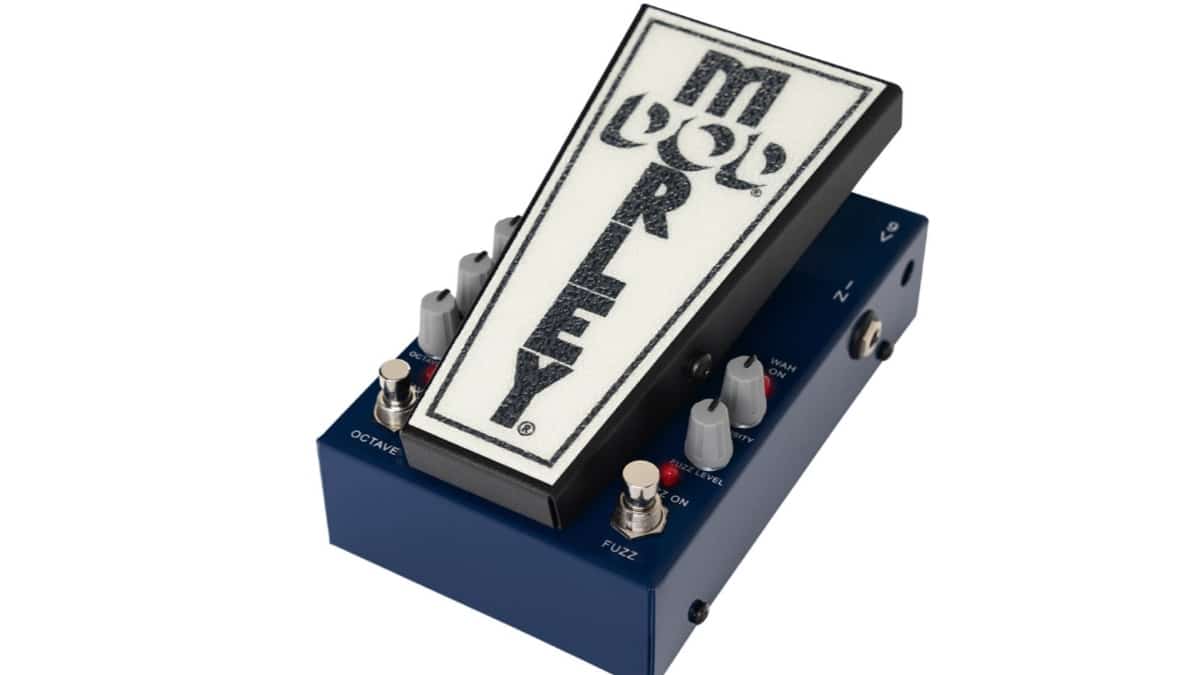
Legendary effects manufacturers DOD and Morley have united to create something truly remarkable: the Wah-ocTo-Fuzz™ pedal. Available now worldwide through local retailers and online, this innovative device answers the call of musicians looking to combine classic sounds by masterfully harmonizing three distinct effects into one unit. The pedal achieves this by blending DOD’s iconic 80’s FX35 Octoplus circuit with Morley’s timeless 70’s wah and fuzz circuits. The result is a pedal that simply leaves players saying, “WTF!”.
Designed to ignite creativity for guitar, bass, and keyboard players alike, the Wah-ocTo-Fuzz™ empowers musicians to use a singular effect or combine one, two, or all three simultaneously. The octave section utilizes the DOD FX35 Octoplus circuit to produce a classic analog octave blend that channels the captivating, glitchy essence of the 1980s. Players can easily sculpt this sound using the Direct Level to control the dry signal output, the Tone Control to adjust the overall brightness, and the Octave Level to dictate the lower octave signal.
The wah section boasts Morley’s classic Electro-Optical design and features convenient switchless operation; users simply step on the glow-in-the-dark treadle grip to instantly engage the wah effect. Finally, the fuzz circuit draws inspiration from the timeless sounds of Morley’s 1970s era, offering an Intensity Level knob to control the gain of the fuzz effect and a Fuzz Level knob to manage your overall signal when the fuzz is activated.
Built for maximum protection, the WTF pedal is housed in a rugged and lightweight Cold-Rolled Steel chassis. It also features a premium Morley buffer circuit designed to protect your tone from any mischief in your signal chain.
The new Wah-ocTo-Fuzz pedal features standard 1/4″ instrument jacks for both its input and output connections. For power, the unit operates using a standard 9VDC 300 mA center negative power supply, utilizing a standard +9V DC tip-negative barrel jack. Alternatively, it supports standard 9V battery operation that is easily accessible via a quick-clip battery door. Physically, the pedal measures 6.86 inches in length, 4.23 inches in width, and 3.88 inches in height, with a total weight of 2.27 lbs. (1.03kg). Finally, the Wah-ocTo-Fuzz is backed by a 1-year warranty.
For more information on the new DOD and Morley Wah-ocTo-Fuzz, please visit www.digitech.com.
Street Price: $249.99 USD
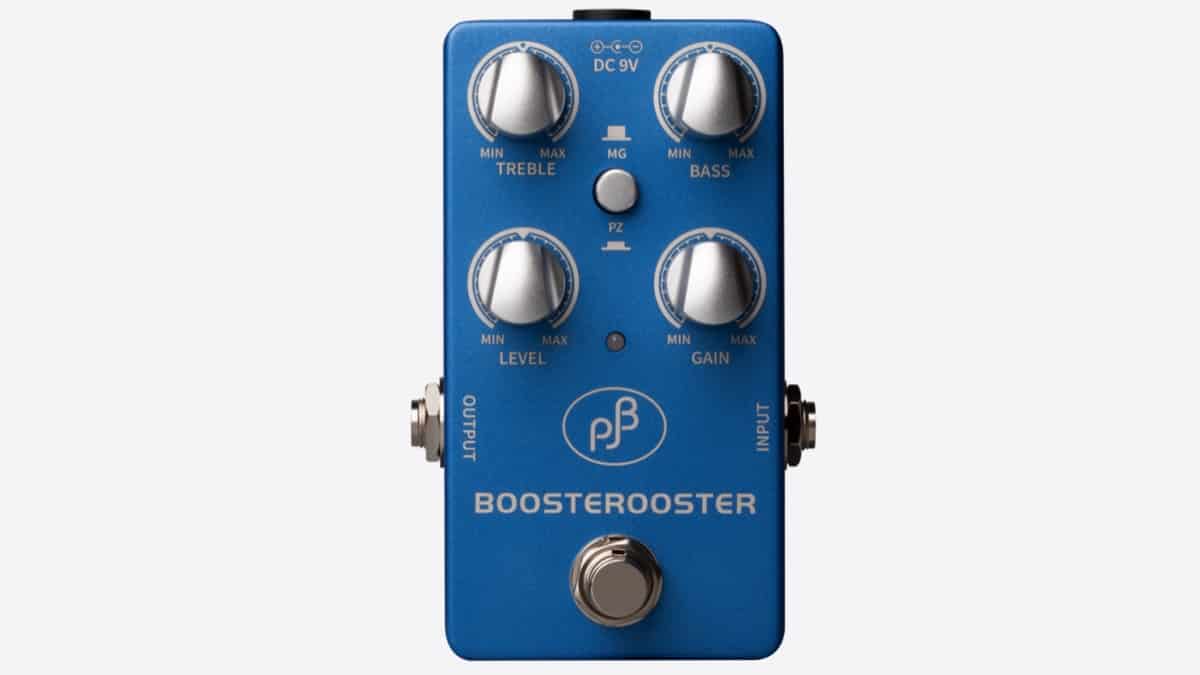
Phil Jones Bass announces the BOOSTEROOSTER Model PE-2, A precision 2-band EQ, preamp, and clean booster for bass. Packing a boost of 18dB of 2-band clean gain, the PE-2 is a compact preamp and EQ pedal engineered specifically for electric and upright bass. It has been engineered to restore tonal control in any environment and delivers consistent, authoritative bass tone when connecting to PAs, recording interfaces, or unfamiliar backline — where bass tone is most often compromised.
The BOOSTEROOSTER’S +18dB of clean gain will drive amplifiers into their optimal operating range, compensating for passive or low-output instruments, and maintaining signal strength through long cable runs or complex pedalboards with no distortion, no compression, no coloration.
Features of its precision EQ include Bass Control (±12dB @ 60Hz) — targets true fundamentals, adding weight and authority without boom or speaker overload.
Treble Control (±12dB @ 6kHz) — adds clarity and articulation without harshness.
For more features and information, visit online at www.pjbworld.com
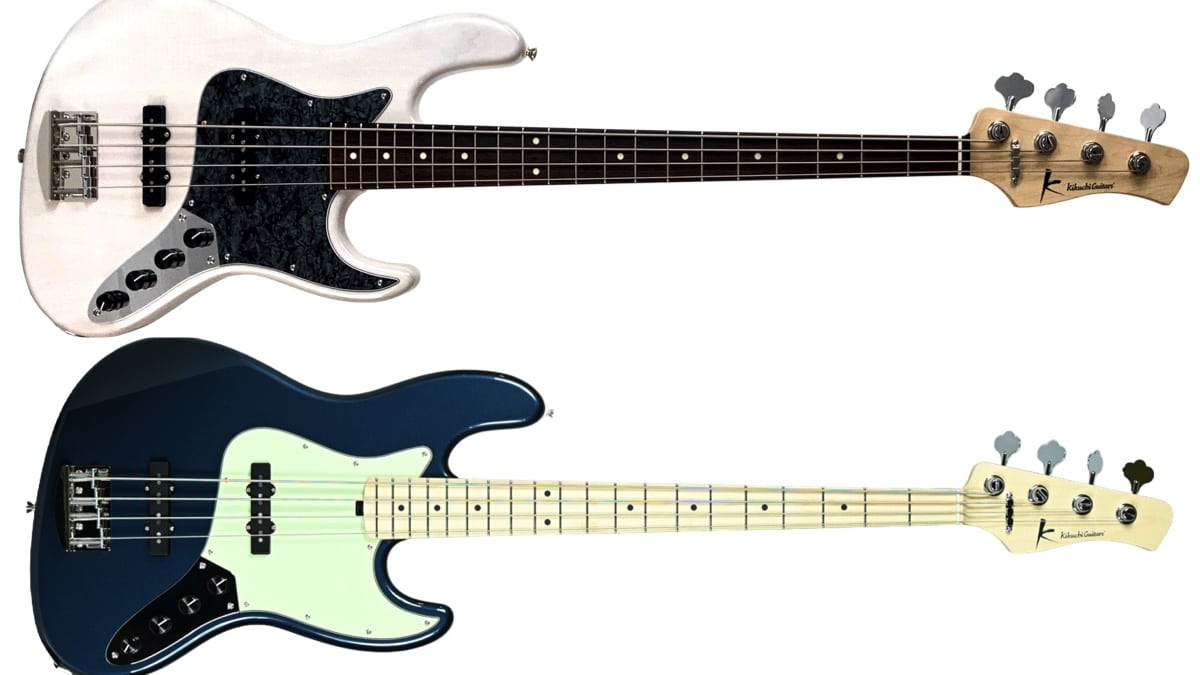
Kikuchi Guitars, Japanese boutique craftsmanship with a legacy behind it…
A new name has entered the international bass guitar scene, though the story behind it reaches back decades.
Kikuchi Guitars is the work of Japanese master luthier Yoshiyuki “Yoshi” Kikuchi, a respected builder whose career includes work connected to renowned Japanese and American bass brands and artists. During his career, Kikuchi has been associated with Atelier Z, John Suhr and Roger Sadowsky. In the early 1990s, he moved to New York to work alongside Roger Sadowsky and further refine his craft, later contributing to the development of Sadowsky’s Japanese production.
Today, decades of experience in design, setup and refinement come together in Kikuchi Guitars: instruments built around musicality, balance, smooth playability and immediate response.
The philosophy behind Kikuchi Guitars is simple: evolve the classic electric bass by improving feel, balance, response, consistency and musicality, without losing the soul players fell in love with in the first place.
“A legacy, made personal.”
The basses are manufactured in small batches in Japan and combine inspiration from classic 60’s and 70’s bass designs with carefully considered modern refinements. Features such as graphite-reinforced necks, lightweight hardware, transparent custom electronics, carefully selected woods and exceptionally low, even setups all contribute to instruments known for their comfort, balance and responsiveness.
The current lineup includes the Hermes Series, featuring models inspired by vintage configurations of Jazz Basses and available in both active and passive versions. Rather than custom shop instruments built to order, these basses are produced in limited batches with fixed specifications, allowing Kikuchi to offer boutique-level craftsmanship at a more accessible price point.
Tonally, Kikuchi basses are known for articulate lows, textured mids, crisp highs and a highly dynamic response. Whether played fingerstyle, slapped aggressively or used in subtle studio work, the instruments remain musical, balanced and expressive.
Kikuchi basses are already attracting attention from players looking for a refined boutique instrument that blends vintage familiarity with Japanese precision, detail and feel.
In addition to the bass lineup, Yoshi Kikuchi is also building a small number of handcrafted archtop guitars. At present, it has not yet been determined whether these instruments will become available outside Japan.
Kikuchi Guitars Europe, based in Hilversum, The Netherlands, is the official European distributor and showroom location for the brand. In the United States, players can connect through Kikuchi Guitars USA. Players are welcome to book private demo sessions in person or online.
Visit online at kikuchiguitars.com
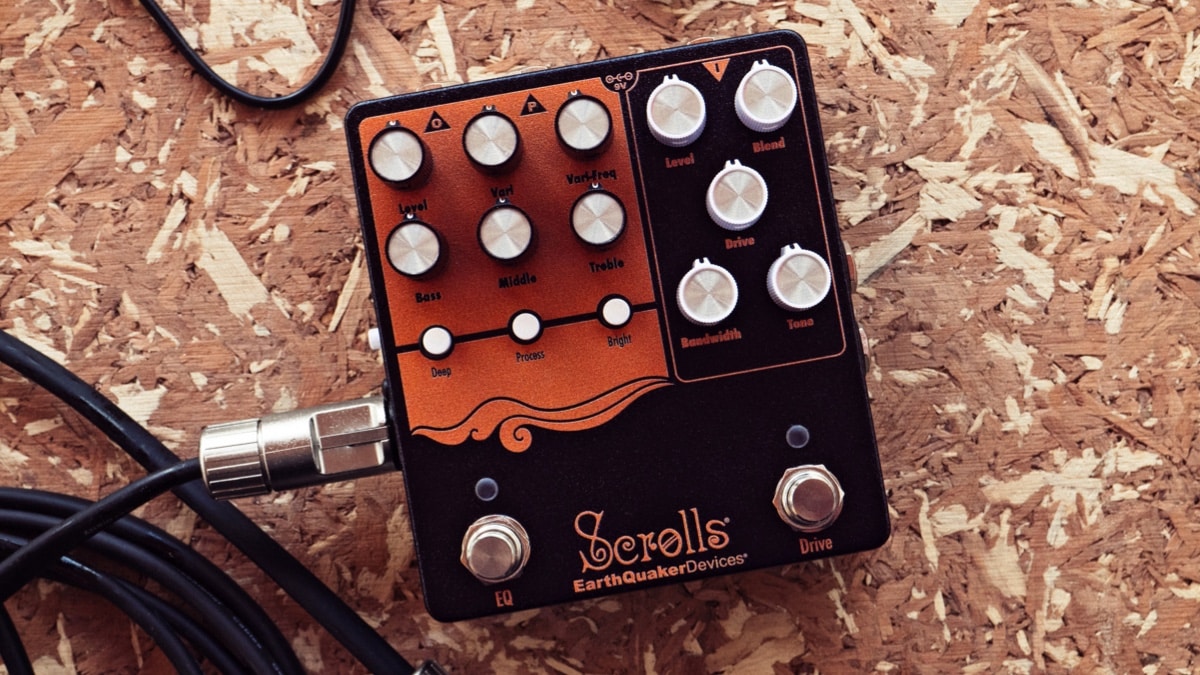
EarthQuaker Devices Announces the Scrolls Bass Odyssey, A Bass Rig in a Box That Takes Your Tone From Motown to Metal With the Click of a Button…
Bassists are historically a painfully underserved demographic when it comes to new pedal releases in general, let alone ones that are truly exciting and groundbreaking.
But even the bass players get lucky sometimes.
And today is their lucky day, because the insatiable tonesmiths at EarthQuaker Devices have released the Scrolls Bass Odyssey—a powerful, modern tool capable of shaping any bass signal to match virtually any bass and amp combination imaginable.
Essentially, Scrolls is a sonic pilgrimage through the entire universe of electric bass tone. From Motown to Metal and everywhere between and beyond.
It all started when legendary bassist Kentaro Nakao, best known for his work with ’90s Japanese rock band Number Girl, challenged EarthQuaker Devices to capture the vast history of vintage and modern bass tones in a single, portable form factor. Ultimately, Nakao wanted the ability to summon any bass sound he needed, no matter where in the world he was playing and regardless of the other gear at his disposal.
“I am constantly playing shows in every type of venue you can imagine, so having my sound in a portable rig is a must—that’s why I’ve been a big believer in preamps for a long time,” Nakao explained. “I’ve realized that what’s most important to me is a wide range of EQ control and the ability to shape overdriven tones.”
The pedal’s Drive is a rich, tube amp-like distortion that was inspired by a rare, little known pedal from Nakao’s personal collection. Key amongst the Drive channel’s features are the Blend and Bandwidth controls that are on tap to ensure the low-end response remains intact.
The EQ channel boasts a full suite of active, audiophile-quality controls. The secret weapon of the EQ is the Variable Frequency control—a feature that enables players to cut or boost frequencies from around 20 Hz to 10 kHz. It’s the perfect tool for cutting out the mud and boosting the high-end.
“When we were working on Scrolls, I wanted the EQ channel to be totally transparent when the knobs are set at 12 o’clock, so the output sounds exactly like the clean signal coming in,” Nakao revealed. “This keeps my bass sounding like my bass, while giving me the ability to enhance its natural tonal qualities and make adjustments across a full frequency spectrum.”
Additionally, the EQ side of Scrolls features three push buttons for one-click on-demand tone sculpting. The Deep button adds 80 Hz boost for booming, but clear low end. The Process button scoops the mids and instantly produces a modern tone that is punchy, dynamic, and defined. Finally, a quick press of the Bright button activates 5 kHz boost to add articulation and attack.
Ideal for use in complex setups with multiple signal paths, Scrolls features three outputs that all work simultaneously. There’s a buffered parallel out for sending clean signal to an external destination like an amp, tuner, DI, or other effects; a balanced XLR out to run Scrolls directly to front of house or into a recording interface; and finally a good-old fashioned ¼” output for your amp.
Scrolls also features an effects loop that lives between the Drive and EQ channels.
“The effects loop is really designed so that Scrolls can function as the brains of your pedalboard,” EarthQuaker Devices Founder & President Jamie Stillman explained. “Bassists can place modulation, time-based, or any other effects that they’d normally place after their dirt pedals (including more dirt pedals) after the Drive channel, while still retaining all the tone-shaping benefits the EQ channel offers.”
Much like the speaker cab simulations EarthQuaker has worked into their Easy Listening and ZEQD-Pre pedals, the signal from the XLR out on Scrolls includes just a splash of discrete analog filtering to give it some amp-like-character. No menu diving or digital modeling required.
“Most XLR outs tend to have a harsh top end that sounds nothing like what is coming out of the amp, especially when dirt is involved,” Stillman said. “I thought it would be useful to add a bit of natural filtering so what is sent to the front of house is much closer to what is coming out of the amp.”
If you’re wondering whether or not Scrolls is for you, here’s an easy way to tell. Ask yourself the following questions: Do you play bass? Would you like to have a pedal that can make your bass sound like virtually any bass/amp combo with the click of a button and the turn of a knob or two? Would you like a pedal that’s compact and versatile enough to be the only thing you need to play a session or show other than a bass if that’s all you wanted to bring?
If you answered yes to even just one of those questions, then you’re exactly who Scrolls is for.
Each and every Scrolls is all-analog, true bypass, and built one-at-a-time by credentialed professionals at the EarthQuaker Devices Tone Wellness Clinic under the malt gray skies of Akron, Ohio.
Scrolls Bass Odyssey is available now wherever EarthQuaker Devices are sold.

As an homage to classic single pickup basses of the past the V1 Acinonyx 5 features a solitary PolyVox “pickup” (technically pickupS – 6 total coils under the cover) placed for maximum versatility. A volume and a wide range tone offer a broad palette of rich passive sounds and the single asymmetrical aperture captures all the organic goodness that a soft maple body with a classic maple/EIR neck can bring. Anything from super dark synth-y sub vibes to clean and clear chime are all available with nary a blurry, undefined note to be found.
The fingerboard features a compound radius for optimal even playability up and down the neck and the profile fits the hand like an old, broken-in glove.
Technical Details:
• Body Finish: Polyester
• Neck Finish: Urethane Satin Satin Lacquer
• Weight: 6.90 lbs average 7 lbs
• Body Wood: soft maple
• Neck Wood: hard maple
• Neck Shape: Classic Medium Slim
• Neck Dimensions: ~.810” @ 1st fret – .910” @ 15th fret
• Fingerboard Wood: Indian Rosewood
• Fingerboard Radius: 7.5” – 14”
• Fingerboard Inlays: Dots
• Scale Length: 30.7”
• Width at Nut: 1.725”
• Nut Material: Bone
• Frets: StewMac #147 Fretwire (Narrow/Medium) – Nickel/Silver
• Pickups: 1 Nordstrand PolyVox 5
• Controls: 1 Volume, 1 wide range Tone
Price starting at $4995
For more information, visit online at nordstrandaudio.com/

Maestro Ron Carter, Sharing the Spirit – June/July 2026 Issue

New Music: Danielle Nicole, Tug Of War

Right Hand Technique Strategies with Dr. Randy Kertz

New Music: Golden Flower, Are You Even Awake?

Interview With Bassist Adam Russell
Right Hand Technique Strategies with Dr. Randy Kertz

April 6 Edition – This Week’s Top 10 Basses on Instagram
April 13 Edition – This Week’s Top 10 Basses on Instagram
20 April Edition – This Week’s Top 10 Basses on Instagram