
Bass Edu
Walking the Bass Line 3


If you happen to stumble across this article, it may be worth reading Walking the Bass Line #7 which is the first in my series for new bass players or checking out all the articles about my bass journey. All about bass guitar
Two more influences
I’ve never been a great fan of standard teaching approaches when it comes to developing my musicality and learning more about bass guitar. YouTube offers hundreds of seemingly quick routes but I wanted to go down the route of the old-school musician, pay my dues and stand on the shoulders of giants in the hope of finding my musical voice.
In last month’s Walking the Bass Line article, I talked about John Paul Jones and Andy Fraser, the first two badass bass players I studied when I first picked up my low-end love.
The other two are:
Jack Bruce | Cream
Carl Radle | Eric Clapton (and others as a session player)
Jack Bruce

Jack Bruce Photograph – used with permission from Marek Hofman Photography
When I was a teenager in the early ’80s, Cream was a band that wasn’t really on my radar – I was that bit too young and my older siblings preferred listening to a real mixed bag from the Jackson 5 to Fleetwood Mac, Steely Dan, ELO and Roxy Music.
Listening to music with a focus on what the bass was doing was a whole new experience for me and not something I’d ever consciously done before. I would only ever notice the bass if the groove or riff was insanely catchy and jumped out of the track.
Now, I was listening to music in a completely different way and this time I actually knew the name of the bassist – hehe – in this case that would be Jack Bruce.
Instead of reinventing the wheel, the about section on his website is a great overview of such an innovative and inspirational musician:
Hailed as one of the most powerful vocalists and greatest bassists of his time, his improvisational skill and utterly unique, free-spirited approach to composition and performance would forever change electric music.
He was inspired by jazz and classical bass, including James Jamerson and also loved Paul McCartney’s playing, especially on the song ‘Rain’.
This made me chuckle when I read an interview in Forbes magazine when Jack was chatting about guitarist Jimmy Page who started off on bass guitar when he joined The Yardbirds
Bruce: “Yeah, he used to play bass. Again, I remember Jimmy Page from being a session musician. That’s why I never took Zeppelin seriously. They were a bunch of session musicians that we kind of looked down on. We looked down on everybody [laughs]. We looked down on Mick Jagger and Keith Richards early on when they used to come along and try to sit in with us. We’d tell them to piss off: “Go away, learn to play and then come back” [laughs].

Jack Bruce and Butch Photograph – used with permission from Michael Antoniou Photography
It’s strange when you read about people’s stories and experiences many years later. How could you possibly tell who out of the people you knew in your 20s would go on to become mega-famous, or despite their insane talent, achieve zero commercial success?
Playing music is not just about talent, it’s very much connected to that moment in time – that’s when the magic happens!
Now Jack says that he avoided solos! It seems to me that in Cream Live Volume all the instrumental passages were improvised lines that changed from night to night in reaction to Baker and Clapton’s playing. Suspiciously like solos to me 🙂
If you read my previous article you will know that I learned my chops by playing twice a week for two years in a covers band with my husband and a selection of drummers on the Isle of Man. We even tackled three or four of the songs from Cream Live Volume II including White Room, Crossroads and Badge.
Rather than improvise, which at the time I wasn’t confident about, I learned all the songs by ear, note for note and attacked them with suitable ferocity utilising the Gretsch and HiWatt amp on #loud.
Bruce has a unique style and really puts you through your bass-paces and I love the energy he brings to the bass line – especially on Crossroads – he’s up and down the neck like a bride’s nightie.
Watch this video of Cream playing White Room!! Sensational!!
Carl Radle
They call him the musician’s musician – a role model of a classic multi-genre bassist.

Carl Radle photograph – used with permission from Dan Howard
Radle was the consummate sideman who has worked with an impressive list of artists including Leon Russel, Dr John, J.J.Cale, John Lee Hooker, Art Garfunkel, Bob Dylan, George Harrison and Joe Cocker.
It was his gig with Delaney & Bonnie opening for supergroup Blind Faith that changed things up for him when he first met Eric Clapton, which led to him playing on the Derek and the Dominos’s album Layla and Other Assorted Love Songs.

Carl Radle Photograph – used with permission from Dan Howard
I first heard Carl’s bass playing on Clapton’s E.C. Was ‘Ere and I had no idea how beautiful bass lines could be. The motifs and melodies he played were sublime and brought to mind a picture of dancing across rocks navigating your way downstream in the middle of a fast-flowing river. His tone also. Rich and deep, a real bass sound.
Sadly Carl died at the young age of 37 but you can find out more about him on Wikipedia
Watch this video of Eric Clapton, Carl Radle and George Terry on second guitar playing live on The Old Grey Whistle Test to get a feel of their vibe!
Another favourite of mine is Have You Ever Loved A Woman from E.C. Was Here.
Radle is so chilled back – the space – the melodic counterpoints – it’s simply brilliant. The feel… and his cheeky little runs.
Developing your skills
Session playing
There is nothing more terrifying than having to perform on someone else’s record. It’s their work and they are always passionate about it and how it sounds.
Apart from recording with my band, I had also done quite a bit of session work before providing backing vocals (BVs) on a number of sessions for my husband Simon’s solo record, Cartesian Jetstream, The Mighty Revelators and Joe Marshall.
Even though I had only been playing four strings for a few months I ended up playing bass and singing backing vocals for the soundtrack to Ground Pilots animated film ‘The Race – A Magical Boy’ – gasp. There is no doubt that this focuses the mind and steps up your game!
Watch the video they made of the recording session when our Supertone residential recording studio was in Spain (reopening in Portugal in January 2025).
I’m playing bass, changing things up on the fly in response to direction – and my husband Simon, who engineered the three-day session, played guitar – on his knees!
Endorsements #1
I am amazingly fortunate to have business relationships with various cool manufacturers which all started with Mike and Spencer Lull at Mike Lull Custom Guitars and Basses.
I have found the bass community to be supportive and appreciate the love I have been shown over the years. Getting to know the people who help you make the music is really cool and adds another layer of meaning to your artistic work.
Bass Guitar Magazine
In September 2018 I was featured in Bass Guitar Magazine with a front cover mention and in-depth interview about all things bass!
It was a bit of a shock as the magazine’s editor and prolific rock author, Joel Mciver emailed me out of the blue! There’s nothing like an interview to get you thinking about what matters and why you do stuff.
Sadly the magazine is no more.
Bass guitars (part two)
As you may recall from my first article in this series, my first two basses were the Gretsch ThunderJet short-scale and the Mike Lull M4V.
One more bass I definitely knew I needed for my low-end stable was an acoustic. There’s something quite beautiful when you play an acoustic bass with an acoustic guitar – the tonality is rich and authentic – like wisdom speaking through the wood.
I also wanted a guitar I could play that I didn’t have to plug in to make a sound out of as sometimes I just want to pick up a bass and play without any kerfuffle.
The Fylde Guitars King John bass

Fylde Guitars King John Bass photograph – used with permission from Simon Campbell
My King John bass guitar – it’s huge!
I have an acoustic folk-rock background touring the UK with my band Megiddo in the ’90s.
When I met Simon on the Isle of Man we started playing acoustic duo gigs together, playing our own original material. We were both songwriters and hadn’t started writing together at this point.
Double harmonies and two acoustic guitars; very much a case of I’ll bring the bread and you bring the cheese – a musical tapas of influences.
We moved to Spain and started touring as a duo after the release of Simon’s second solo album The Knife – a mix of Americana, blues and contemporary folk. The set-up consisted of acoustic guitars, electric bass, piano / Mellotron, harmonica and Cajon. Some of the songs really needed the touch of an acoustic bass but that was for another day… maybe.
Out of interest, Simon contacted Roger Bucknall MBE, an English luthier who owns Fylde Guitars which is now based in Penrith, England. You can’t get better than a Flyde hand-built instrument and can see Roger’s craftsmanship played by the hands of outstanding musicians such as Martin Simpson, Eric Bibb and Gordon Giltrap.
Simon wrote an article about his—and subsequently our—relationship with Fylde which is certainly worth a read.
Roger said there was a two-year waiting list for him to build a new bass guitar but mentioned that he knew of a second-hand King John Fylde acoustic bass for sale by musician Joss Clapp. What to do?
I called Joss about the guitar, really got on well and came up with an agreement; we would pay a deposit now and collect the guitar in a year’s time. Joss was willing to wait to give us enough time to save up the rest.
So twelve months later, true to our word, we rocked up at Tebay service station near Penrith in the UK and met up with Joss.
We had a lovely chat and it was clear he really loved this guitar; it had a lot of history: Sting had played it, Joss had toured with Kathryn Tickell and other bands (being a mighty fine player in his own right) and it had also graced the stage of the Royal Albert Hall.
I reassured him it was going to a good home where it would be well treated and that I was really looking forward ‘us’ getting to know each other (the bass that is).
We went to his van, collected the bass and drove off. It felt like a scene from a movie.
When I returned home I picked up the guitar and wow – what a sound… it is absolutely out of this world, like the echoes of an ancient civilization. Alive, full of history and wisdom, the wood feels like it sings stories of times gone by, of the earth, the people and the stars…
It also has to be noted here that my King John Fylde bass is huge; the neck is so long you have to take a taxi to the low F!

In Germany with my Fylde King John Bass! Look how big it is!! Photograph – used with permission from Simon Campbell
I tried playing it standing up with a guitar strap but that was an abject failure as we fell about laughing… the guitar sticks out so much I couldn’t see the front of the guitar and all that was missing was a sombrero!
I changed the strings to Thomastik-Infeld flat wounds and together with the Headway under-saddle pickup, my bass is the most enchanting of guitars. Yes, it’s a little battered by its many years on the road but that’s because it has travelled and been played – the reason guitars are made in the first place – not just to be hung up on someone’s living room wall looking perfect. Who wants that? That’s like being a bird and never singing.
When the old man John and I are together, something magical happens.
You can read more about the bass on my website via the button below.
When Simon and I wrote It Ain’t Right a track from our second studio album The Language of Curiosity it was a natural choice to play the King John acoustic. The bass line has a lot of movement in its melodic cycles and perfectly compliments the vocals.
Lyrically it is a protest song – listen out for the gigantic vocal harmonies – I envisaged hundreds of people gathered together on a hilltop singing in unison as the sun rose on the horizon.
My amps & cabs (part two)
I like to play loud on stage and at bigger venues using valve (tube) amps and big cabinets.
Shortly after I started playing I decided I needed a small amp as well and bought the Littel Mark III for my ‘practice rig’. Perhaps that is an unfair description as I do use it for small acoustic concerts when my valve/tube amps would be too much and overpowering.
Mark Bass // Little Mark III

My Little Mark III bass amp photograph – used with permission from Simon Campbell
I needed a practice amp which could also be used for smaller acoustic gigs. The MarkBass is on paper, more powerful and feature-rich than either of my valve heads and to call it a practice amp is a bit of an insult!
There is no doubt it’s a professional tool however I love that valve sound. It is very light with good EQ and fits in a small compartment under the speaker in its flight case known as R2D2!
My favourite feature is the speaker emulation control which rolls off the top end. FAT!
I may be upgrading my sound soon to the new Bergantino Forte’ HP2X amplifier with its rich harmonics as we are planning a Starlite & Campbell acoustic tour for 2025. I will need more versatility in my sound to suit the variety of music we will be playing.
Bergantino HD112

I needed a cabinet to match and there was really only one choice – the Bergantino HD112. Yes, it has a tweeter but there is an attenuation knob on the back of the cabinet which I have wound down to zero—see my previous article to understand why!
It’s small, relatively light with good power handling and sounds massive with a tight creamy low end, perfect for fingerstyle playing. The HD112 is my cabinet of choice for smaller gigs and has been used all over Europe; from outdoor concerts in Germany and Spain to intimate acoustic gigs in the UK – it’s simply a great piece of gear.

Starlite & Campbell outdoor concert featuring Bergantino HD112- Café Walkdkristal, Germany. Photo: Suzy Starlite
EHX POG 2 Polyphonic Octave Generator
Electro-harmonix (EHX) only came onto my radar when Simon started talking about the Big Muff, whose name I have always thought was a little saucy.
EHX always seem to have gear at a reasonable price point and at the time I was starting to explore the higher registers of the bass and thought it might be cool to buy an octave device.

I had no experience with these and looked into both analogue and digital pedals.
The EHX POG 2 Polyphonic Octave Generator is digital and seemed a good alternative as it has not only one or two octaves down but also an octave up and filters.
It tracks OK with flat-wound strings (that is how well it follows the original note) but is better using round-wounds. Naturally, your technique comes into play here – it’s essential to keep the notes ‘clean’ as any fluff will cause it some problems.
They have also just released a POG 3 which looks superb!
It hasn’t made it onto a recording at the moment as Simon tends to use a DBX subharmonic synthesiser—doesn’t that sound cool—or our Eventide Harmonizer H3000 for octave/harmonizer FX in the Supertone Sonic Laboratory. However, I do use it live which is great fun to change things up a bit.
I need a great analogue octave pedal. Any suggestions?
And finally
Next month I will feature my approach to two original songs from my band, a surprise gift from our son, another valve amp and more pedals.
Much love
Suzy


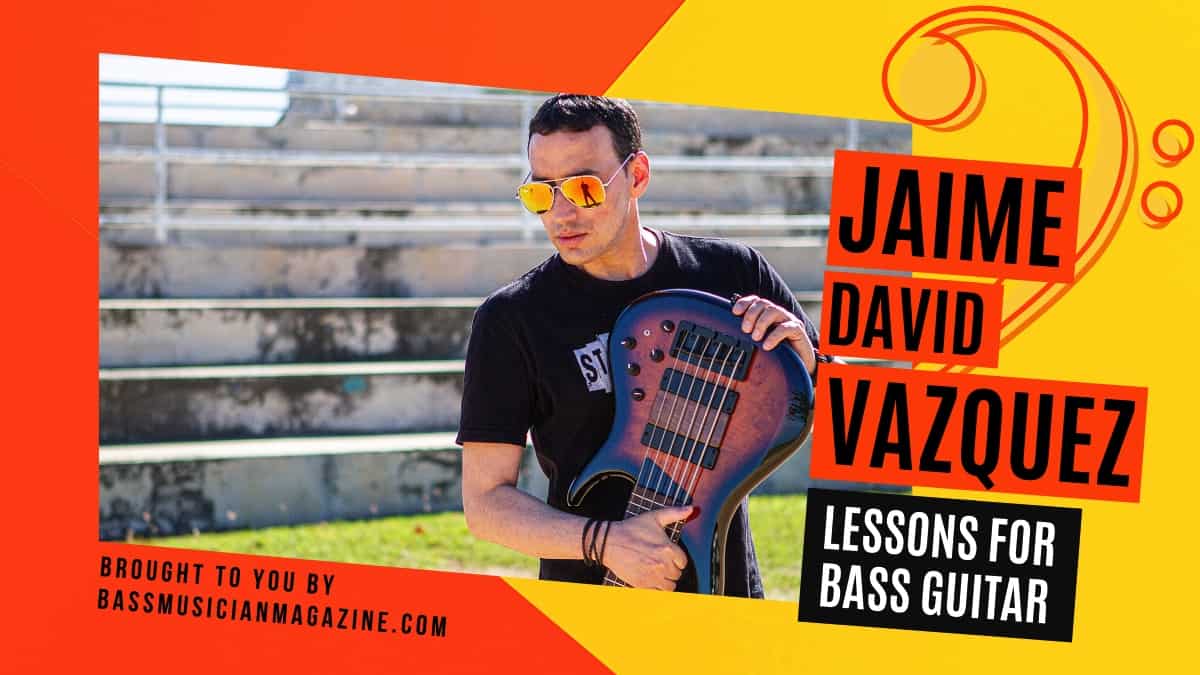
Hello bass players and fans of bass playing! This month, we’re going to talk about The Art of Playing Live! ARE YOU READY TO GROOVE?
There’s a powerful shift that happens the moment you step on stage.
Practicing at home is about control.
Playing live is about connection.
And as bass players, we live right in the center of that transformation.
We are not just supporting the band… we are anchoring the entire musical experience.
Groove Over Everything
In a live setting, perfection is overrated.
The audience won’t remember how many notes you played… but they will remember how you made them feel. The way your bass locks in with the kick drum can move an entire room without saying a word.
Playing less, with intention, often creates more impact than filling every space.
Great bass players understand this: Space is part of the groove.
Listening is Your Superpower
One of the most underrated skills on stage is deep listening.
Your connection with the drummer defines your foundation.
Your awareness of the vocalist shapes your dynamics.
Your sensitivity to the band creates cohesion.
When you truly listen, you don’t just play your part, you become part of the conversation.
And that’s when live music stops being structured… and starts being alive.
Presence Speaks Louder Than Notes
You don’t need to be front and center to command attention.
Presence is not about position—it’s about energy.
A bass player who is engaged, expressive, and connected elevates the entire performance. Your body language, your movement, your eye contact—it all communicates something beyond the instrument.
If you feel the music, the audience will feel it too.
Preparation Creates Freedom
The best live moments often feel spontaneous—but they are built on preparation.
Knowing the structure, transitions, and dynamics of each song gives you the confidence to explore without losing control.
When you’re prepared, you don’t overthink.
You react. You adapt. You create.
And that’s where the magic lives.
Adaptability is the Real Skill
No two stages are the same.
Different rooms. Different sound systems. Different audiences.
Sometimes, even different band dynamics.
A strong bass player reads the room and adjusts.
Maybe you simplify.
Maybe you dig in harder.
Maybe you leave more space.
Live performance is a living organism, and your role is to keep it grounded while allowing it to breathe.
Playing live is not just a performance… it’s a responsibility.
As bass players, we don’t just play notes… we shape the feel, the pulse, the emotional core of the music.
So the next time you step on stage, remember:
You are not in the background.
You are the foundation.
And everything moves because you do.
Stay tuned for more great stuff in the next issue and keep in touch with #bassmusicianmag,
#basslines, #bmmbasslines, #keepgrooving, #keepthegroovealive&kicking, #jdvinstrumental, #groovewars, #fullbassattack, #jdv, #boricuabass, #groovingtheworld, #bassgrooves, #groovemaniac, #6stringbass, #goodpracticemakesperfect #theartofplayinglive, #livemusic

The bass line is the heartbeat of modern music. It bridges rhythm and harmony, connecting the groove of the drums with the harmonic structure of the band. A well-crafted bass line does more than support; it defines the feel, direction, and emotional impact of a song. From Motown to rock, jazz to Latin music, the bass serves as both anchor and storyteller.
What Makes a Great Bass Line?
A great bass line balances time, tone, note choice, and space. While technical skill is valuable, musicality and intention are what truly elevate a bass performance.
1. Time and Groove
The primary responsibility of the bassist is to lock in with the drummer. This rhythmic unity creates the pocket, the groove that makes listeners move.
• Play slightly behind the beat for a laid-back feel
• Sit on top of the beat for energy and drive
• Maintain consistency to build trust within the band
Legendary players like James Jamerson demonstrated how groove can define an entire genre.
2. Note Choice and Harmony
Bass lines outline chord progressions and guide listeners through harmonic movement.
Essential tools include:
• Root notes to establish tonal center
• Fifths and octaves for strength and clarity
• Passing tones to create motion
• Chromatic approaches for tension and release
A strong bass line makes harmony audible even without chords.
3. Space: The Power of Restraint
One of the most overlooked aspects of bass playing is silence. Space allows the music to breathe and enhances the impact of each note.
Ask yourself:
• Does this note serve the song?
• Am I leaving room for other instruments?
Great bassists know that what you don’t play is just as important as what you do.
Styles of Bass Lines
Walking Bass
Common in jazz, walking bass lines use quarter notes to create forward motion while outlining chord changes.
Ostinato and Riffs
Repeated patterns, common in rock, funk, and Latin music, establish identity and groove. Think of iconic riffs that define entire songs.
Melodic Bass Lines
In modern genres, the bass often takes on a lyrical role, using phrasing and dynamics to create memorable melodies.
Tone: Your Sonic Signature
Your tone is your voice. Factors that shape tone include:
• Fingerstyle vs. pick vs. slap
• String type and gauge
• Instrument choice
• Amplification and EQ
A warm, round tone suits ballads, while a brighter tone can add articulation and presence in dense mixes.
The Bass in Contemporary Music
Today’s bassist must be versatile. In modern productions, bass lines may blend traditional playing with effects, extended range instruments, and melodic approaches. Six-string basses, looping, and chordal techniques are expanding the role of the instrument beyond its traditional boundaries.
The bass line is more than a supporting role, it is the foundation upon which music stands. Whether simple or complex, the best bass lines serve the song, connect the band, and move the listener.
As bassists, our mission is clear: support, enhance, and inspire through groove and musicality
Stay tuned for more great stuff in the next issue and keep in touch with #bassmusicianmag,
#basslines, #bmmbasslines, #keepgrooving, #keepthegroovealive&kicking, #jdvinstrumental, #groovewars, #fullbassattack, #jdv, #boricuabass, #groovingtheworld, #bassgrooves, #groovemaniac, #6stringbass, #goodpracticemakesperfect, #jdvbass, #jdvinstrumental

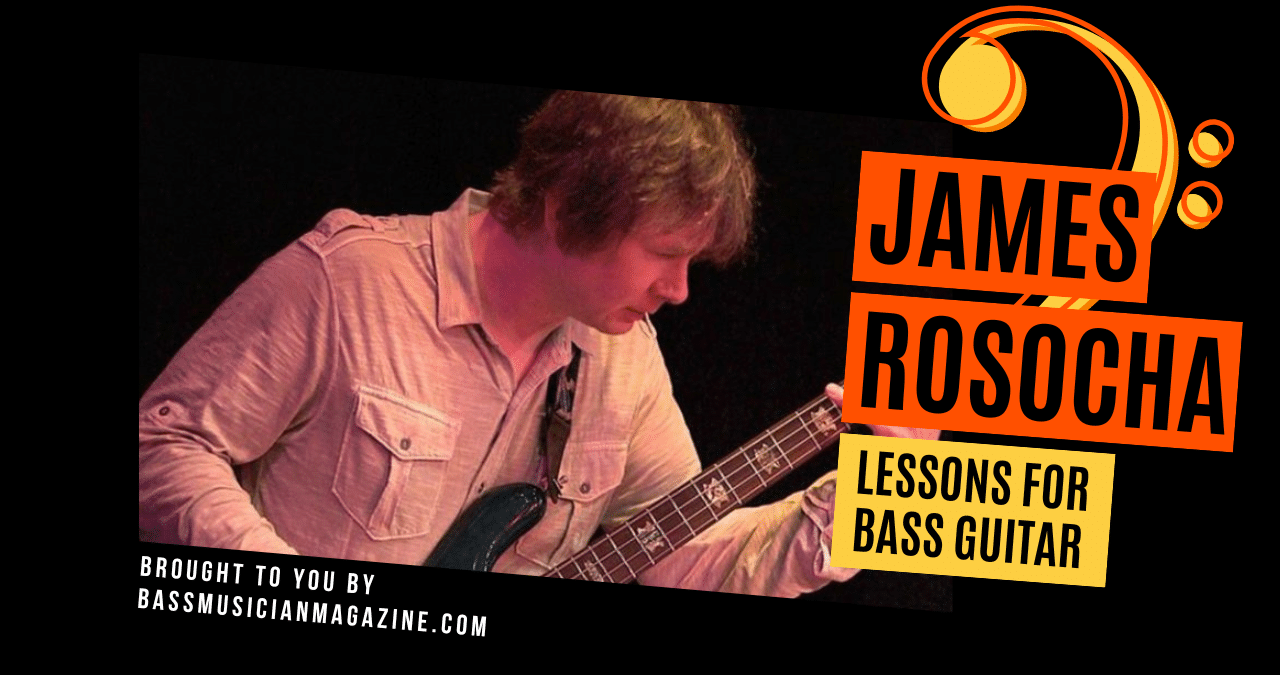
Practicing scales using sequence variations ignites the imagination and provides a wealth of new melodic ideas and concepts to choose from. My previous lesson on “Seeing Shapes and Patterns” introduced the basic pentatonic scale along with the five permutations that are derived from the scale. Review this lesson before proceeding.
The first exercise breaks the scale into ascending groups of four. Practice the patterns up and back, respectively.

The second exercise follows a pattern starting with the root, second scale degree, fifth, and third. Practice and follow the pattern up and back through the scale.

The third exercise starts with the pattern—root, third, fifth, and second scale degree. Follow the pattern up and back, respectively.

As with many scale exercises, don’t make the mistake of only learning them in root position. Take them through all five permutations, in all 12 keys. Good Luck!
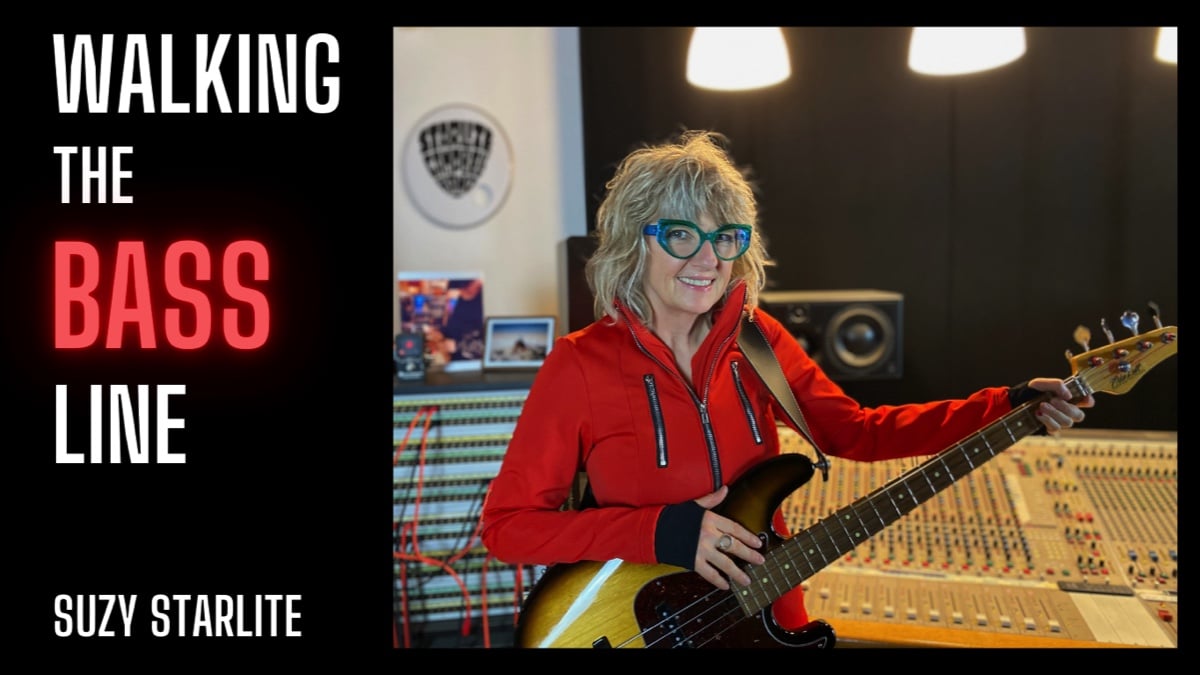
The news…
It’s been a while, but it’s good to be back. Last year was a bit of a steep climb, and I had to step back for a while to focus on the essentials. Thankfully, things have calmed down, the coffee’s hot, the beer is cold, and we are officially back in the saddle.
2026 is looking like a cracker—I’m releasing my first solo album, and there’s a lot more in the works from Starlite & Campbell, the VIBRATIONISTS, and my session work for the lovely Trent Chapa.
I’ll be getting stuck into the bass side of things shortly, but first, in case you missed it, here’s a New Year’s greeting to celebrate a brand new chapter with you all.
All about the bass…
If you happen to stumble across this article, and to understand where it all started, it may be worth reading Walking the Bass Line #7, which is the first in my series for new bass players, or, if you want to deep dive, check out all the articles about my bass journey.
Let’s start a little theory
Before we continue the chronological journey through my bass career to date, we need to confront a little theory, whilst not trying to fry your head.
Track breakdown | Blow Them All To Pieces
As I mentioned in my previous article, I was hoping to do a full breakdown of two tracks for you this time, but things have been a bit of a squeeze with our current workload. Instead, I’ve dug out a video from a couple of years back where I’m playing Blow Them All To Pieces from Starlite.One. I’ll be sure to do the full ‘behind-the-scenes’ talk soon—stay tuned for that!
Working with the chords
The most important thing about the bass part in Blow Them All To Pieces is the melody and how it works with the chords, which I will be covering in the next edition. For now, let’s look at the basis—I was going to say bassis, but that would be far too cheesy—of my thinking.
I’m all about the melody—as soon as I hear a few chords, a tune pops into my head straight away. It’s how I write everything, from the songs themselves down to the bass lines.
To be honest, it can be a bit of a nightmare technically, especially when I’m doing session work. You haven’t got the luxury of sitting around for hours treading water and ‘finding the vibe’. You’ve got to be sharp, get stuck in, and nail the part right then and there. No hanging about.
When I first started playing bass, I had a bit of an epiphany: you’ve got to master the ‘safe’ notes within a chord and wrap your head around scale harmonisation. It sounds like academic heavy lifting, but once it clicks, it’s a total game-changer for your playing.
Take a piece in G Major. The major scale is G, A, B, C, D, E, F?, and these are the likely root notes of chords you will find in the song.
When you stack these into triads (three-note chords), the landscape reveals itself: G, Am, Bm, C, D, Em, F?m?5 (that lovely, bruised half-diminished sound we’ll dive into next time), and back home to the G major octave.
If a song is in G major, these are the chords most likely to show up. Your ‘safe harbour’ notes for each chord are the root, the third (major or minor), and the fifth. Now, you could just stick to the root and fifth—it’s the ‘reliable’ choice, but frankly, it’s a bit pedestrian. We’ve all heard a million country tracks that don’t dare to stray further.
Make your bass lines cool
The real trick I picked up early on? You aren’t tethered to the root. It’s far more evocative to lean into the third, the fifth, or even a cheeky seventh—which I will discuss next time. It adds a bit of grit and character to the line.
For example, take God Only Knows by The Beach Boys.
The bass line is famous for avoiding the root notes. Brian Wilson (who composed the part exactly as played) used two bassists, Ray Pohlman (electric bass) & Lyle Ritz (upright), to highlight inversions (putting the third or fifth in the bass). This creates that famous sense of ‘suspended’ emotion, where the song never quite feels like it’s landing on solid ground until the very end.
Fun fact. While many associate bass on the Pet Sounds sessions exclusively with the legendary Carol Kaye, on this track she played 12 string guitar!
If you want to try something more straightforward, try While My Guitar Gently Weeps, by The Beatles.
Remember, when playing the line, look at the underlying chords and understand which note from the chord they are using in the bass!
Caveat – many interesting and great songs—including the ones mentioned above—change key within the song structure and therefore unexpected chords appear! Play what sounds right to you, don’t be shackled by theory.
But that’s quite enough theory for one session.
Before we leave though, take a look at what Kid Anderson has to say about George Porter’s much-discussed note in The Meters’ track, Cissy Strut. Very, very funny and always makes me laugh…
Endorsements #2
As mentioned in my previous article, I endorse several products, but in the real world, what does that mean?
Firstly, I only endorse products I love and use. In exchange for the endorsement, I receive discounts on the products, ranging from modest to mind-bogglingly great!
Currently, I am lucky enough to be working with Curt Mangan Strings, Matamp, Scott Dixon Cases (which have saved my basses more time than you can believe), HiWatt, Fylde Guitars, Bergantino Audio Systems, TWS Pedals, Radial Engineering, ACS, Sequential, Hipshot, Mike Lull Guitars & Basses, Hudson Electronics, Headway Music Audio, Supertone, Lehle and our wonderful friend Jez Levy of Eyes on St Albans.
So, how do you do it?
You always have to remember that a commercial organisation will want something in exchange for preferential discounts, and therefore, you must have something to offer them.
If you are a famous session musician like Guy Pratt, Pino Palladino, Gail Ann Dorsey or Rhonda Smith, it’s easy. Even easier if you are a world-famous artist: I am sure companies are falling over themselves to encourage the likes of Justin Chancellor (Tool), Joe Dart (Vulfpeck), Paz Lenchantin (Pixies) and the wonderful Laura Lee (Khruangbin) to use their products!
For me, it’s just about loving the product, then contacting them. If they think you can help their brand, they will come back with an offer of some type, which usually includes promotion of the products at live gigs, social media and…
Interviews
Over the years, I have been interviewed many times, first by Joel McIver for the now-defunct Bass Guitar Magazine (Bass Guitar) in November 2018 and July 2022, I was featured on the Wonderwoman section of the ‘No Treble’ website with a feature-length article and 60-minute video interview with the wonderful Britanny Frompovitch.
2025 saw me becoming a writer for Bass Musician Magazine and the editor, Raul Amado, interviewed me. Take a look!
It’s this type of thing that encourages suppliers to work with you.
Take a deep dive by visiting the equipment section of my website here >>> VIEW
A big surprise
I haven’t given birth to children, but on marrying my musical and life partner Simon Campbell, I inherited two fully grown and well-trained sons, James (Jim) and Joseph (Joe). In the 13 years since we have been together, they have both married, and we now have three grandchildren: who’d have thought it, eh…
We have always lived in Europe together, but visit them as much as we can.
Several years ago, the band were staying in Brixton, London, hanging out with Jim for a couple of days after playing a gig at The Half Moon in Putney.
We had just opened our first adventurous beer of the day when in walks Jim carrying his 1974 Fender Precision and proceeds to place it in my hands, saying that he would like me to have his bass as he doesn’t play anymore, and I will make more use of it! What an amazing gift!
Here is a detailed piece on my website
My amps & cabs (part three)
As mentioned in my last article, I like to play loud on stage using valve (tube) amps and big cabinets. The funny thing is—which I haven’t gotten my head around yet—is that a 200W valve amp sounds louder and more present than a more powerful, solid state (transistor) based amp.
Over the past few years I have seen the resurgence of lower powered valve amps, such as vintage 100W Fender Bassman stacks on stage replacing the ubiquitous—but still wonderful—Ampeg SVT. Perhaps it’s because stages are getting quieter, I don’t know.
Sunn have rereleased the legendary 60W 200S and no Nashville studio is complete without a vintage 25W Ampeg B15N Portaflex.
Bass players still love the sound of the mighty valve!!
A little history about British valve (tube) amps
In the early days, British amps were trying to be ‘clean.’ You had brands like Selmer and Watkins (WEM) popping up, but the real game-changer was Vox. Dick Denney at Jennings Musical Instruments (JMI) created the AC15 in 1958. When bands needed more volume to be heard over screaming fans, they doubled it to create the AC30 championed by The Shadows and The Beatles.
As the decade progressed, players needed more grunt. Remember, this was in the days before great PA systems, with bands relying on guitar and bass amps on stage to be heard.
Jim Marshall, a drum shop owner, started building amps because American imports like the Fender Bassman were too pricey. He took the Bassman circuit, tweaked it for British components (like the KT66 and later EL34 valves), and created the JTM45 and later SuperLead/SuperBass 100W and Major 200W models as demand for more power became prevalent.
While Marshall was all about saturation, other builders focused on clarity and military-grade construction. Enter Sound City—known as the proto HiWatt and HiWatt.
Dave Reeves’ Hiwatt amps were the ‘Rolls-Royce’ of the amp world. Used heavily by guitar and bass players of the time, they offered massive headroom—they stayed clean and punchy even at ear-splitting volumes. Yes, that’s why I own a HiWatt DR201 (200W) from the 70s and wrote about it in edition #8 of this series.
Matamp & Orange
Matamp has one of those classic British origin stories that starts in a garden shed and ends up on the world stage.
The foundation was laid by Mat Mathias, a German-born engineer who moved to the UK during WWII. Around 1945 or 1946, he started a business called RadioCraft in Huddersfield. At first, he was basically the “Radio Doctor,” fixing anything electronic, but by the late 50s, he’d opened a recording studio and was experimenting with his own amplifier circuits because he wanted a different sound from the ubiquitous Vox amps of the era.
The name we know today appeared in 1964. Mat partnered with a hi-fi engineer named Tony Emerson. This is when things got serious. They released the Series 2000, which caught the ear of a young Peter Green. Green used his Matamp to record much of the early Fleetwood Mac catalogue, giving the brand instant ‘holy grail’ status among blues-rockers.
In 1968, Mat teamed up with Cliff Cooper, who owned the Orange music shop in London. For a few years, Matamp actually manufactured the amplifiers for Orange (the legendary Orange-Matamp units) used by Wishbone Ash, Free and Led Zeppelin, amongst others.
By 1971, the partnership split because Orange wanted to move to mass production, while Mat wanted to keep things small, hand-built, and high-quality.
The Supertone Matamp 200
I love my HiWatt but it’s 42 years old, and although ultra-reliable, touring with just one amp is a dangerous business. I also needed a new sound, something bigger at the bottom end and a more prominent mid-range.
Simon has known the current owner of Matamp, Jeff Lewis, for many years. He is a troublesome Yorkshireman, in a very cool kind of way and always swayed by a pack of chocolate biscuits! Simon was having a customised 120W amp made for him, and when we met, I asked him if he could build me an old-school Matamp 200. Their current model is the Green / Matamp GT200 mkII, which features a mid-cut control, but I really wanted the original preamp circuit with a few personal tweaks.

Jeff and his amp tech Hayden Minett, built this for me under our Supertone brand, and it is available to buy 🙂
It’s built like a tank, totally beautiful and can be played at any level—but beware, it can tear your head off…
Another couple of pedals
If you delve into the previous articles, you will see that at this point in my career, I was using a Sonic Research ST-300 TurboTuner, Supertone Custom Bass FUZZ, Ernie Ball Volume Pedal Jr., and ElectroHarmonix POG2 polyphonic octave generator running through a Lehle RMI BassSwitch IQ DI.
Grit…
Listening to Lemmy (Motörhead), Geezer Butler (Black Sabbath), and Chris Wolstenholme (Muse), motivated me to explore ‘edge’.
Loud is one thing, but getting the amp to the point of breakup is quite another. As discussed in edition #8, I have a Supertone Fuzz, which is fantastic for solos and specific parts, but I did need something for grit that would not have my band members and the audience being sonically disembowelled.
Enter the…
Hudson Broadcast
I have never played through a classic British broadcast console of the 60s, but we do have a similar type of preamp in the studio: the H2 Audio 2120. This is a faithful recreation of the preamps found in the first Helios consoles, probably best known for the installation in Olympic Studios, London and the recording of Led Zeppelin 1 along with many others including the Rolling Stones, The Who and David Bowie.

When you plug in and raise the gain, the transformer saturates, and components start to overload, giving a fabulous, gritty tone.
The Broadcast is similar but uses a discrete Class-A germanium pre-amplifier (I am not a tech head and know nothing of this; it’s straight from the Hudson Broadcast website).
They go on to say:
“In the low-gain setting, the Broadcast can cover everything from sparkling clean boost through to transparent overdrive, all with a healthy dose of volume available to push your amp. The Broadcast features a specially selected Triad steel-core transformer and a Germanium transistor. Advancing the gain on the Broadcast starts to saturate the transformer and the pedal’s discrete circuitry, giving rise to a gentle and dynamic compression coupled with subtle thickening of the mid-range. With the gain switch in the high setting and the trim control wound up, the Broadcast starts to deliver heavier distorted sounds with a warm and fuzzy edge to them.”
It’s all Japanese to me. All I know is you plug it in, turn it up, mess with the controls and hear the beauty. It’s featured right from the start of Saving Me from our latest studio album Starlite.One.
https://starlite-campbell.bandcamp.com/track/saving-me
Compression
99% of every recorded track you hear featuring bass guitar or upright bass will feature compression, to a greater or lesser extent.
But what the hell is compression, and why do we need it??
To explain it in the simplest way possible: imagine you have a tiny, super-fast sound engineer living inside your amp with their hand on the volume knob. Think of a compressor as an automatic volume smoother.
When you play the bass hard and cross a certain line (the Threshold), the ‘engineer’ quickly turns the volume down. When the music gets quiet again, they turn it back up.
So basically, it squashes the difference between your loudest notes and your quietest notes. It makes your playing sound more consistent, allowing it to ‘sit in the mix’. It also adds sustain to a bass or guitar because, as the note naturally fades out, the compressor is effectively ‘turning up’ the tail of the note.
Warning: compression also make any ringing notes, pops, squeaks, or thumps louder, so your technique has to be spot on.
Origin Effects Cali76 Bass Compressor
In the studio, we tend to use rack-mounted studio compressors. Simon favours our vintage DBX 165 and Urei 1176, but there are plethora of pedals available for use in a live scenario. After testing many of them, the Origin Effects Cali76 Bass came out on top.
As you would expect from the name, the Cali76 is inspired by the world-famous Urei 1176.
They are a bit tricky to set up, and not wishing to go over old ground, there are plenty of YouTube videos out there that can help, but as far as I’m concerned its a very usable effect that really tightens up the sound.
There are two very useful controls in addition to those found on many more basic compressors.
The ‘dry’ knob varies the amount of uncompressed signal through the pedal (known as parallel compression). So, you can compress the bass heavily then add some of the original signal which allows the dynamics to shine through! It’s very useful and often used in studio as compression is like a drug; you always want more, but overuse can take the dynamics out of your tone.
The other is the ‘High Pass Filter’ (HPF), which allows you to vary the amount of bass frequencies (0-400Hz) that is allowed through the pedal without compression.
If you think about it, it’s usually the transients—god help me like those created by slap bass techniques—pick attack, and increase in volume and thinness of tone/increase in volume as you move up the neck (especially on the D and G strings) that need controlling. You want the lows to breathe!
Again, I plug it in and mess with the controls until is sounds the way I want it, but you do need to know some technical stuff to get the best out of it! Watch the video.
I always have this on and adjust the amount of signal going into it using my GigRig ATOM switching unit to accommodate my different basses, which have a huge variety of outputs. But more of that next time.

Headroom
The unit allows a power supply to deliver from 9-18V DC. The higher the voltage you give it the more headroom (the amount of level you can put in before distortion) you have. This got me thinking about power supplies: time to speak to Simon, who has been using pedalboards for most of his career. I run this at 12V, as that’s what I have.
And finally
Next month, I will feature my approach to session playing, a new big speaker cabinet, my own signature bass and of course, more pedals.
Please comment below. I look forward to hearing from you!
Much love
Suzy
One of the most common sources of confusion for bassists studying harmony is the melodic minor scale.
You may have encountered two different definitions that seem to contradict each other: the traditional (classical) melodic minor and the jazz melodic minor. Understanding the difference between these two is essential, not only for theory exams, but for real-world application on the bass.
In this column, we’ll break down both concepts clearly and, most importantly, explain how and why jazz bassists use the melodic minor scale the way they do.
The Traditional (Classical) Melodic Minor Scale
In classical theory, the melodic minor scale is directional, meaning it changes depending on whether you are ascending or descending.

Why does this happen?

When descending, those alterations are removed, reverting back to the natural minor scale. This approach makes sense in a classical, melodic context, but it presents challenges for improvisers and rhythm section players.
For bassists, a scale that changes depending on direction is impractical for spontaneous improvisation and harmonic analysis.
The Jazz Melodic Minor Scale
Jazz musicians simplified the concept.
In jazz, the melodic minor scale is:
The major scale with a flat 3rd — used the same ascending and descending.

This consistency makes the scale extremely useful for:
• Improvisation
• Chord–scale relationships
• Modern harmonic vocabulary
For bassists, this is the version that truly matters in jazz, fusion, gospel, and contemporary music.
Why Jazz Uses This Version
Jazz harmony is vertical and functional. Chords do not exist in isolation—they imply scales.
From the jazz melodic minor scale come seven powerful modes, each associated with specific chord qualities.

These sounds define modern jazz language. Without the jazz melodic minor scale, much of contemporary harmony simply doesn’t exist.
Practical Application for Bassists
Here’s how bassists should approach the melodic minor scale in real playing situations:
• Forget directionality — use one form up and down.
• Associate the scale with chords, not keys.
• Practice modes from chord roots, not scale roots.
• Apply it to walking bass lines, not just solos.
For example:
• Use Lydian Dominant on a V7 chord resolving to a major tonic.
• Use the Altered Scale on a dominant chord with tensions.
• Outline minor-major 7 chords with confidence instead of avoiding them.
The melodic minor scale is not just a “soloist’s tool.” It’s a harmonic roadmap that allows bassists to support, color, and drive the music forward.
Final Thoughts
The traditional melodic minor scale belongs to classical voice-leading and composition. The jazz melodic minor scale, however, belongs to the language of modern music.
As bassists, our job is clarity, foundation, and intention. Understanding the jazz melodic minor scale equips us to navigate complex harmony while remaining grounded in the groove.
Learn it. Internalize it. Apply it musically.
Stay tuned for more great stuff in the next issue and keep in touch with #bassmusicianmag,
#basslines, #bmmbasslines, #keepgrooving, #keepthegroovealive&kicking, #jdvinstrumental, #groovewars, #fullbassattack, #jdv, #boricuabass, #groovingtheworld, #bassgrooves, #groovemaniac, #6stringbass, #goodpracticemakesperfect

Gear News: Fender Unveils Highly Anticipated Vintera III Series

New Music: Oteil Burbridge & Lamar Williams Jr. New Single, Hush

Interview With Bassist Virginia Franks

Nathan East, Echoes of a Lineage – April/May 2026 Issue

Gear Review: Italia Leather Straps

Feb 23 Edition – This Week’s Top 10 Basses on Instagram
Mar 2 Edition – This Week’s Top 10 Basses on Instagram
Mar 9 Edition – This Week’s Top 10 Basses on Instagram
Mar 16 Edition – This Week’s Top 10 Basses on Instagram