
Latest
From Amateur to Pro: A Discussion with Steve Lawson by John Kuhlman



Photo: Steve Brown / stevebrownphoto.co.uk
The fourth featured artist in this series, “From Amateur to Pro” is solo bassist, looper, improvisor and self-described sound-scapist, Steve Lawson. Primarily known for his solo and duet works on his Pillow Mountain label, he has also toured with groups supporting Level 42 and 21st Century Schizoid Band as a solo artist. He has also shared the stage with other solo artists like Michael Manring and as a duo with the vocalist Lobelia.
Lawson also manages and teaches a master class series in Birmingham, UK, known as Beyond Bass Camp. The camp is an intensive one-day workshop for bass player who want to explore the technical, theoretical and mechanical aspects of making music with a bass.
Bass Musician Magazine: Based on your experience as a working musician, what are the one or two musical skills that you consistently see are lacking in bassists trying to make the transition from playing at home to gigging for pay?
Steve Lawson: I think “trying to make the transition” is perhaps the biggest mistake. Making money from music — the notion of a career in anything is becoming increasingly tenuous — happens because people want to listen to you and are willing to pay money. They are paying that money either to you, or for something else you’re attracting them to where you are being paid to be the bait. For example, if you are playing in a pub, you are the bait for beer.
The skills required to do that are the same as those needed to make meaningful music anywhere else. Specifically, the skills to know what’s required for the music to sound as good as you can make it, and to develop the physical ability to make that happen.
I guess the main thing that people get wrong in relation to it being professional is they get hung up on money and not on respecting music enough to play it with people who care as much about playing great music as you do. So anything that gets in the way of that is a bad thing, whether it’s punctuality or an inappropriate bass tone, getting drunk on the gig, or not being able to work with the drummer to make whatever groove the song requires happen in the best possible way. Whether it’s you or the other guys you’re working with that make those mistakes, it’ll be costly to any future ambitions you might have of working to a high standard…paid or not.
Most of the people I know who play music professionally do so because they were already playing to a very high standard of skill and attentiveness before they started getting paid for it. Do it because the music matters more than the money. If you happen to find that you’re making enough from music to slow down on the day gig, brilliant. But it’s worth remembering that if what you really want to do is play your own music, playing in a wedding band is a day gig.

Photo: Steve Brown / stevebrownphoto.co.uk
BMM: Following that theme, what about personal or business skills that bassists should have, but many don’t bother developing?
Lawson: Personal skills are such a huge area, and are more about being fully human than anything specifically professional. We all like being around people who are nice, keen, excited about music, who know when not to talk, who do their job with a degree of humility, who want the best for everyone involved in whichever one of life’s great projects we happen to be engaged in. No one wants to hang out with someone who thinks they’re a rock star, whether or not they are actually a rock star or a van driver. Either way, being nice is as important as being a musical badass.
Most of the bass skills required for the majority of music gigs that end up with you getting paid are simple, repetitive and focused. They’re the things that make everyone else sound great. If that’s at odds with your personality, it might be worth sticking with the over the top originals band and enjoying whatever non-musical stuff you fill your time without outside of the two hours of bass-shredding on stage each weekend!
BMM: When it comes to gigs, there seem to be two schools of thought: Take every gig you can to build your experience and network; or be very selective and cultivate your music credentials and reputation. What are your thoughts on building a successful gigging resume?
Lawson: I don’t think there’s a right or wrong answer here. I think the key is to act deliberately, with an outcome in mind. Too many people’s musical part seems to be defined by desperation, but with very little idea of what the outcome of that desperation is supposed to be. So they chase whatever vision of success has most recently and forcefully been impressed upon them. Instead, if we think about what we’re interested in, about what kind of music making is important to us, then we can pursue that.
I think taking new gigs is a really good learning path. Every new gig with good musicians is worth roughly 10 lessons of learning if you do it right: new material, new people, new environment, new styles, and new challenges. Wonderful.
But the preparation for gigs playing music that you have no interest in or attachment to can sometimes act as a huge distraction from the music you feel called to make. So a balance needs to be struck between the value of learning and the dangers of distraction.
BMM: Based on your experience as a solo artist, what are some of the challenges facing the soloist vs the band member or studio musician and is there a particular skill set that you were surprised was required of you?
Lawson: As a solo artist you’re in charge of everything. You own the success. You own the failure. You’re the draw at the show, the name on the poster, the entertainer, the between-song talker. Most of the time you’re also the sound guy, roadie and manager. That’s a lot of responsibility to carry!
 It’s both lonely and liberating. You have no one to fall out with musically, but also no one on stage to bounce ideas off of defer to when you run out of inspiration. So it’s a particular kind of enterprise with a unique set of musical and organizational challenges. It’s less of a party, generally, but the connections you can make are deeper because your music is you. There’s no aggregate message from the combined personalities in the band. It’s just you and the audience, and your music is doing the talking. That’s a massive privilege but also a responsibility. You either relish it or you don’t do it!
The skills I struggle with more than any are organizational. Whether its booking shows, following up on logistical stuff, or chasing contacts. I’m terrible at that stuff, and sometimes wish I could afford to have someone else help me with it. But if I did, I’d probably end up telling them what I wanted them to do, which wouldn’t be any fun for them. So perhaps I need a co-worker that I can split tasks with!
BMM: With your experience leading Beyond Bass Camp, let’s ratchet that experience up a bit, cross mediums and several million light years and put you in the role of Yoda teaching a young Luke Skywalker the way of the bass and what it takes to survive as a gigging musician. What would you teach him?
Lawson: I’d tell him that surviving as a gigging musician was overrated as a pursuit in its own right. I’d tell him that being fully human, doing a good job, and making art that represents you well in the world are all deeply valuable pursuits with lessons attached, whether your succeed or fail in economic terms.
I’d suggest that sustainability is to be found in playing deliberately, spending as little money as possible, (though that may still require you to spend more on a bass than you would on a car) surrounding yourself with people who are open to the possibility that art is more important than commerce, and that money is just a pragmatic part of being able to do the things we love. It’s not an end in itself or a measure of anything meaningful.
It may be that failure as a gigging musician, in whatever terms you approach it at the start of your journey, may end up being success on a deeper more meaningful level. I’d share my own story of having my solo career quite effectively kill my session career, but open me up to a whole other way of thinking about and playing music that, while never making me rich, has put me in a pretty unique place in the musical landscape. And that is worth a thousand times more than a whole load of pro gigs as a sideman.


Check out our top 10 favorite basses on Instagram this week…
Click to follow Bass Musician on Instagram @bassmusicianmag
FEATURED @kilianduartebass @meridian_guitars @adamovicbasses @marleaux_bassguitars @jcrluthier @sandbergguitars @ibanezuk_official @dingwallguitars @torzalguitars @ariaguitars
Check out our top 10 favorite basses on Instagram this week…
Click to follow Bass Musician on Instagram @bassmusicianmag
FEATURED @bacchusguitars @franz.bassguitars @mendesluthieria @ramabass.ok @meridian_guitars @adamovicbasses @shukerbassguitars @fantabass.it @andys_vintage_guitars @valdesbasses
Check out our top 10 favorite basses on Instagram this week…
Click to follow Bass Musician on Instagram @bassmusicianmag
FEATURED @murraykuun_guitars @ja.guitars @combe_luthier @overloadguitars @kevinhidebass @franz.bassguitars @indra_guitars @petercrowdesign @baboomin_bass @jcrluthier
Check out our top 10 favorite basses on Instagram this week…
Click to follow Bass Musician on Instagram @bassmusicianmag
FEATURED @sandbergguitars @benevolent_basses @rayriendeau @olintobass @wonkorbasses @bite.guitars @adamovicbasses @maruszczyk_instruments @skervesenguitars @ramabass.ok

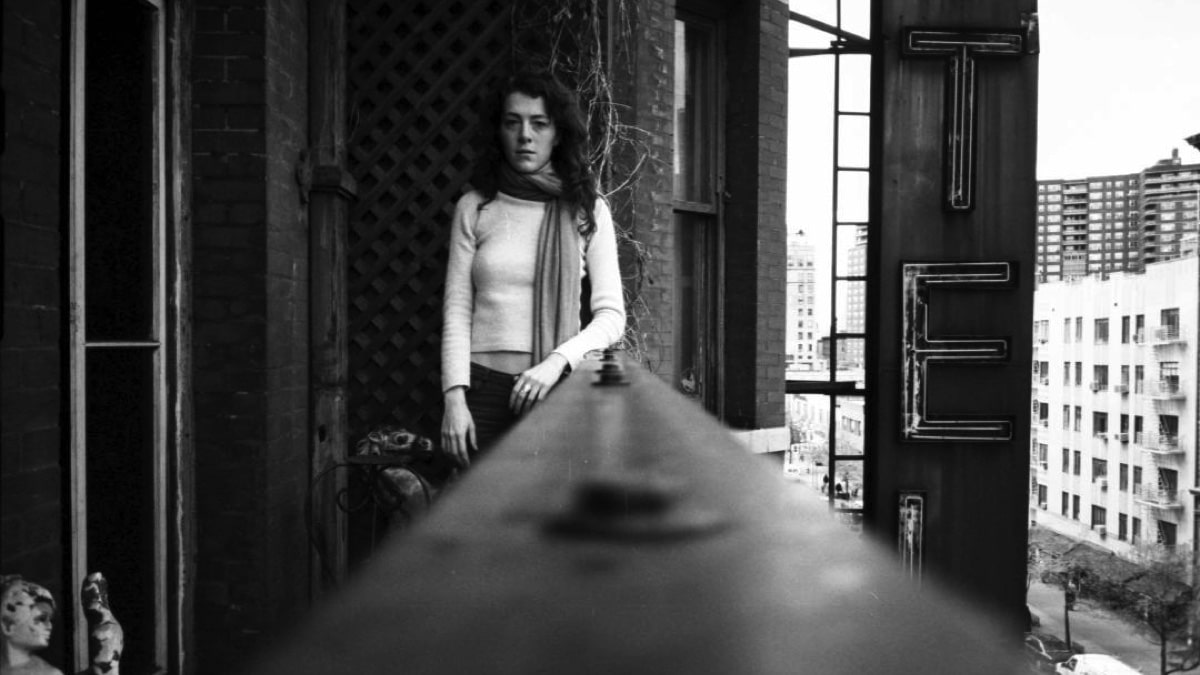
Photo: Self-portrait by Melissa Auf Der Maur
Melissa Auf Der Maur is a Canadian bassist who played with Tinker, Hole, and The Smashing Pumpkins. She released her own work and is a photographer with photos published in Nylon, Bust, and National Geographic. She released her ‘90s Rock Memoir “Even The Good Girls Will Cry” on 17 March 2026.
KB: Did you always want to be a singer-musician growing up?
I’ve played music my whole life. In school, I played trumpet and sang in a children’s choir, so music was always within me. My mother was the first female disc jockey on the Montreal airwaves; her record collection played a huge role in my inspiration and love of music.
KB: When did you start playing bass, and why this instrument?
When I was 19, the early 90s music explosion began to percolate in tiny clubs around the world. I was lucky to be a ticket girl at Montreal’s underground music club. In one year, I saw Hole, Sonic Youth, Smashing Pumpkins, White Zombie, and The Breeders – all had female bass players. That’s when the seed was planted. By the age of 22, I was the bass player of Hole.
KB: Which brands of basses have you used in your career, and which one are you using now?
The first bass that I learned on was a vintage Squier Precision. Hole was sponsored by Fender guitars, so I upgraded to Fender Custom Shop Precisions. That is all I play, but I have a cool vintage 8-string Greco that I use on recordings to thicken up guitar parts.
KB: What equipment do you use or have you used with your basses?
Ampeg SVT amps and cabinets, a couple of Sans-Amp pedals, and that is it.
KB: How did you become a member of Hole, and what is your fondest memory of that time?
Billy Corgan of the Smashing Pumpkins was helping scout a replacement for (RIP) Kristen Pfaff, Hole’s bass player. My band, Tinker, opened for them on the Siamese Dream tour, so Billy had seen me play and could vouch for me. Courtney trusted her talented friend, and that was it. I initially said “no thank you” due to my commitment to my photographic studies and the drama and chaos surrounding the band during the “Live Through This” album release. Courtney took it as a good sign that I said no, so convinced me to reconsider, and soon after, I accepted their invitation, in the name of helping put females in the male-dominated landscape of rock music. My fondest memory is every show we played as a mostly female band, symbolizing what a woman could do in a rock band. Every show had a purpose: get more women to play music.
KB: You are a photographer as well. What makes a great picture? Do you shoot in color or b/w?
I started shooting photographs at age 15. Initially only shot black & white and worked in the art school darkroom. In university, I took a color photography course, and shifted mostly and forever to that, because it was easier to process film on the road when I joined a rock band. I experimented with many cameras, point and shoots, manual, polaroids, medium format, and vintage finds. The trick to a good photograph is to shoot many and all the time – the magic is in the edit and selection process.
KB: Are there artists you would love to collaborate with or wish you had?
??I’ve been lucky to collaborate with some of my favorite musicians in my career. I would still love to collaborate with a new generation heavy electronic artist on an analog bass, heavy electronic drums, and synths collaboration project. Take me out of my usual zone, merging the past and future: my love of 80s dark new wave and new artists exploring that genre. It was very futuristic back then, and we are now, after all, living in the future. I am in the mood to play bass to heavy beats I want to dance to.
KB: What are your 7 favorite bass lines in music across all genres? And why these 7?
“Mountain Song” – Jane’s Addiction (love a rambling, rolling bass line – feels like the ocean waves)
“Black Top – Helmet” (was the first bass line I taught myself)
“Gold Dust Woman” – Hole from “The Crow 2” Soundtrack (it was my first bass line contribution to the band)
“Get Ready” – The Temptations (Motown just feels so good, because of the bass)
“Lucretia My Reflection” – Sisters of Mercy (makes me want to hit the dance floor and play bass simultaneously)
“Be My Druidess” – Type O Negative (full chord bass playing at its best by iconic, demonic, Peter Steele, RIP)
“Romantic Rights” – Death from Above (1979 – unique distorted overdriven tone, combined dance rhythm and melodic intelligence, all in one shot – also! Shout out to a bass & drum only band, which is awesome, and we should have more of, but the bass player needs to be a killer to fill that role.
KB: What are you currently up to?
Releasing my ‘90s Rock Memoir “EVEN THE GOOD GIRLS WILL CRY”. Visceral healing process, it was to get it out of me and write it, but I suspect the real magic will begin by putting it into the world and reflecting with others on what the magic of the ‘90s was all about. Powerful music decade that carried us into what is now a brave new world of digital corporate weirdness – may the past shed a light on our future. That’s my hope for this book release and tour.
Visit online:
Official Website
Facebook
Instagram
YouTube
Spotify

Gear News: Fender Unveils Highly Anticipated Vintera III Series

New Music: Oteil Burbridge & Lamar Williams Jr. New Single, Hush

Interview With Bassist Virginia Franks

Nathan East, Echoes of a Lineage – April/May 2026 Issue

Gear Review: Italia Leather Straps

Feb 23 Edition – This Week’s Top 10 Basses on Instagram
Mar 2 Edition – This Week’s Top 10 Basses on Instagram
Mar 9 Edition – This Week’s Top 10 Basses on Instagram
Mar 16 Edition – This Week’s Top 10 Basses on Instagram