
Latest
Applied Techniques: What About the Metronome

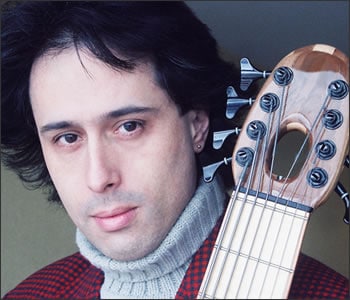
Applied Techniques With Igor Saavedra: What About the Metronome… is it Important for Developing Fundamental Abilities on an Electric Bass Student?

Meet Igor Saavedra –
Lately, this debate has gotten really very intense in the music world, so I think it’s very convenient to clarify many misunderstandings that “in my opinion” are very common regarding this matter. In fact, a couple of very well known and respected bass players on the scene are blaming and condemning this poor artifact in every place where they address their audiences.
They argue that studying with a Metronome will affect your capability to learn anything you are trying to incorporate to your brain because the Metronome will urge your process in an unnatural way… setting a learning speed that is not the one you are actually needing for that particular lesson or exercise… so really… you are the one entitled to manage that speed, “Not the Metronome”.
I share this opinion, but only in the moment when you are approaching a melody for the first time and trying to get the notes while placing them on the fingerboard in a logical way. Obviously the Metronome will become a nuisance on that process. The problem with that very understandable position is that teachers are going to the extreme with it and proposing that the Metronome should be BANNED from Music Schools and NEVER be used for studying bass and perhaps any other instrument, and that we should be throwing our metronomes literally to the garbage. So… that extreme and fundamentalist position is the one that I don’t share at all.
Everybody knows that 99% of the music that we play as bass players is based on the “Ontological Tempo”, that means the “Mathematic Pulse” or the commonly named “Beat”. So… Rock, Pop, Funk, Blues, Jazz, Fusion, Country, Vals, Salsa, Merengue, Songo, Tango, Latin American music such as the Candombe, Joropo, Landó, Huaino, Cueca, Bossa Nova, Samba, Zamba, Chacarera, Tonadas, etc., are fully based on that “Ontological Tempo”.
Also, is very important to consider that we as bass players are 99% of the time setting and establishing this Ontological Pulse along with the drummers, so that the other musicians can play comfortably and unload their ideas that are usually also expressed on mathematical divisions of the time.
So, which do you think is the most important rhythmical ability that a bass player should be developing to be able to offer that comfort to the other musicians that are relying on him to express their ideas and musicality? For me the answer is obvious, and that is “THE ONTOLOGICAL PULSE”.
As far as I know, the only reliable way to develop this ability is to get accustomed to follow and establishing a relationship with a device of unquestionable reliability. This innocent and hardworking device will always set a “Non Cartesian” or “Non Relative” sense of pulse for any musician that will rely on it (that’s so democratic indeed)… eventually allowing every musician to communicate in “Objective Time Terms” with each other. By the way, this device’s name is “THE METRONOME”.
I know that not everything in music is “measurable” and “quantifiable”, and that sometimes in music we have to follow our emotions and leave the mathematical aspects behind so to embrace for example the “Psychological Pulse” (Rubato, Ad Libitum, A Piaccere, etc.), as the ones to reign on some particular music pieces, but the “Real Life” of a bass player is not that, because in reality he will be 99% of the time playing or trying to play “Ahead of the Beat”, “Behind the Beat” or “On the Beat” closely with a drummer, and that means always closely related with the “Ontological Pulse”.
It is because of that simple fundament that I DO NOT AGREE with my respectable colleagues that think quite the opposite. I think that the first victim after this “Non Metronomical Approach to the Bass Rhythmics” will be our indefinable and intangible best friend “The Groove”.
Pulse needs for a bassist are first of all Ontological in real life, so I think Tempo must not be relativized. We should learn to “Construct” for later, being able to “Deconstruct”, so after we “The Bass Players” have been able to achieve the sufficient skills to “Master the Groove” thanks to, in my opinion, our reliable friend The Metronome. Perhaps we’ll be entitled and allowed to take that Metronome and grab a Hammer, Kerosene, Muriatic acid or whatever destruction device or substance that we may know about, and destroy that Metronome for good, so then being able to submerge ourselves into the fickle waters of the Psychological Expressions of the Pulse, which on my opinion is as the real musician’s life should be, “The derivation and deconstruction of the Ontological Pulse and not an entity in itself”.
Well, a slight detail that I forgot to mention… This process of construction and deconstruction might take about 15 years of hard work on average… so you better start right now if you haven’t yet.
Finally, it’s important to stress the fact that what I’m expressing here is circumscribed exclusively under the ambit of the IDEAS, and has nothing to do with personal issues. The colleagues that have a different opinion than mine have all my respect as musicians and as Human Beings which is far away more important.
¡¡Long live to the Metronome!!
See you on my next article.


Check out our top 10 favorite basses on Instagram this week…
Click to follow Bass Musician on Instagram @bassmusicianmag
FEATURED @hiltonguitars @olintobass @vortice.custom.guitars @cb_basses @belforti.instruments @acguitars.co.uk @basscentralofficial @michaeltobiasdesign @timsway1 @officialspector
Check out our top 10 favorite basses on Instagram this week…
Click to follow Bass Musician on Instagram @bassmusicianmag
FEATURED @didonatoguitars @brancoguitars @ja.guitars @lindoguitars @sawtooth_musical_instruments @pensacustomguitars @alpherinstruments @dtcbass @camazon_guitars @ebg_instruments
Check out our top 10 favorite basses on Instagram this week…
Click to follow Bass Musician on Instagram @bassmusicianmag
FEATURED @ja.guitars @mrrjackson @skjolddesign @karvanguitars @sireusaofficial @wonkorbasses @mihado_gs @odiengcustom @sirekorea @brute_bass_guitars
Check out our top 10 favorite basses on Instagram this week…
Click to follow Bass Musician on Instagram @bassmusicianmag
FEATURED @polarisbasses @daveswiftbass @ramabass.ok @officialibanezguitars @serek_basses @dacruzluthieria @alusonic @sadowskynyc @maruszczyk_instruments @pensacustomguitars
Check out our top 10 favorite basses on Instagram this week…
Click to follow Bass Musician on Instagram @bassmusicianmag
FEATURED @officialspector @alusonic @ariaguitars @stradiluthier @sandbergguitars @billysheehanonbass @offbeatguitar @colibriguitars @jens.ritter @overwaterbasses