
Gear
Stompblox Modular Pedalboards – Rethink Your Pedalboard


It’s time to rethink your pedalboard with Stompblox Modular Pedalboards
Get a 10% when you use the code BMMAG at the online checkout! Thanks to Stompblox Modular Pedalboard for this gracious offer!
Years ago when I started on this slippery slope of effects use (and for those that use effects, you’re already nodding your head), I spent hours thinking about how to lay out my pedals for optimum tonal use, laying the patch cables just so, running the wiring from the power supply and then using zipties to lock everything in place. I would then take it to a gig, and in five minutes find a major oversight that would render my pedalboard in its current incarnation completely worthless. But what could I do? I was at the mercy of my pedalboard; it was either far too big for my current application (making me throw a couple loose effects into my gigbag) or it was too small (making me throw an additional effect into my gigbag along with my pedalboard). I had thought about building my own board that I could make bigger or smaller, but didn’t have the time to fully realize that. And sadly, there weren’t any manufactured options like that available.
That is, until now. My friends, the Stompblox Modular Pedalboard is here, and it’s fantastic. I had talked with Andy (the developer of Stompblox and a fellow bass player) since seeing this on the website last year, so was elated when a box with two of them arrived at my office. I immediately opened it up, took them out and laughed the laugh of a mad scientist.

Two Stompblox Modular Pedalboards, offer two different configurations
First thing to note is that one of the Stompblox by itself is not very big; it measures a micro 12″ x 9″ at a slope that reaches 2″ at the back (but with the kickout feet, you can raise it to 3″ if you like). Like many pedalboards on the market, it is extremely tough and well made (and even a bit heavy for its size), but the magic in the Stompblox is the underside. There are a TON of anchor points which will allow you to fasten power cables, patch cables, etc.. underneath quickly and easily. And, remember those kickout feet I mentioned previously? If you utilize them, you can put one of the bigger power supplies under the board no problem. I don’t know if I’d ever use a Rocktron PowerTap underneath just one of the boards, but the fact that I have the OPTION to do so and not just rely on my Rocktron DC OnTap Universal Power Supply and daisy chain cable is a definite plus.
For me, just the one is a perfect size to carry my “must haves” that I use regularly at church. But for some others, one may not be enough. Thankfully, you can buy two and attach them together. That’s right, attach them; none of this “I’ll just put two boards next to each other and hope that they stay put.” You have two configurations available; a vertical (measuring 12″ x 18″) or horizontal (measuring 24″ x 9″) format. There are clips on each of the Stompblox that will let them lock together, and the attached thumb screws on the underside will allow you to screw them together for a more permanent solution.

Three Stompblox boards start to open up many different configurations, to fit your needs
It’s at this point I need to mention that every Stompblox comes with its own modular carrying bag (which measures 12″ x 12″ square, with a front pouch that is roughly the same size). What does “modular carrying bag” mean exactly? The zipper (that is around the perimeter of the bag) can come apart. This allows you to take two bags and zip them together, much like you would zip two sleeping bags together. For those musicians that will keep two Stompblox boards together, you can rest easy knowing that your larger pedalboard has a gigbag. And for those, like me, that will use two boards when necessary but usually take one, you can still just use the bags separately.
Stompblox Modular Pedalboards are currently available direct with a street price of $59.99 each. The guys have also very graciously given us a 10% discount code – BMMAG – to use at checkout.
There are plans for the RISE (which I’m assuming is a riser) and the CAGE (a 4-5″ add on to allow you to use any sized power supply) in the near future, building upon the modular aspect of these boards. All in all, this is an ingenious, well thought out idea whose time has come. If you’re a musician that has different effect pedal needs based on the gig, someone that wants a board that can grow with them, or even a musician looking for the smallest board that can fit just the “must haves” for the gig, I highly recommend you check these out.


Fender Musical Instruments Corporation (FMIC) announces the James Jamerson 1962 Precision Bass®, an era-correct tribute to the bass that was nearly as iconic as the Motown monolith who used it to redefine what the low end was capable of.
“From R&B, to Rock, to Jazz, Country, and Reggae music… everyone owes a debt to James Jamerson. What he did on the 1962 P Bass has never been done. I am so honored to acknowledge that Fender changed everything with the 1962 Precision Bass,” said Raphael Saadiq.
James Jamerson was a phenom in the studio and the stage all throughout the 60s and 70s but more importantly, he drew the blueprint for how a bass part should feel, groove and swagger in order to turn a song into a hit and thereby inspired generations of players to come. Such an indelible impact is impossible without the proper tools, and as far as Jamerson was concerned, none did the job quite like his trusty P Bass®. Its effortless playability, sleek design and undeniable low-end response was and is the path of least resistance between a killer idea and a polished, pitch-perfect bassline that can tie an entire song together. This signature instrument harnesses the magic of the Jamerson’s own Precision Bass and offers it to players everywhere, giving them the opportunity to develop a style and tone that is entirely their own.
Born in 1936, Jamerson was introduced to live music through his grandmother and aunt, both church performers. Captivated by the energy of gospel and jazz, he taught himself piano and trombone before moving to Detroit at 18, where the downtown club scene pulled him toward the upright bass. After graduating high school, he began touring with local groups and by 1959 had become a fixture at Hitsville U.S.A., the recording studio that birthed Motown. It was there that Jamerson truly came into his own, laying down bass tracks for Smokey Robinson, Stevie Wonder, Marvin Gaye, John Lee Hooker and countless others, recordings now regarded as the foundation of modern electric bass playing. As a As a cornerstone of the Funk Brothers and throughout this storied catalog, one thing remains constant – the warm, polished sound of the Fender P Bass that would come to inspire greats like Geddy Lee, Pino Palladino, John Entwistle, Raphael Saadiq, Bootsy Collins, Leland Sklar, Nate Mendel, Geezer Butler, Tal Wilkenfeld, Freddie Washington, Bob Glaub, Matt Freeman, and countless musicians across the globe to pick up a bass and embark on their own journey towards greatness.
“I recalled saying to James as a teenager that he would be great one day! I am excited and happy those words have become a reality. James has received many awards, but the “P-Bass” is a tangible one. I hope you feel the funk and let the music play on!” said Annie Jamerson. “Thank you Fender, from my family and I, You Rock!”
The James Jamerson 1962 Precision Bass offers players all of the dynamic response, low-end presence and stylish looks that helped elevate Jamerson to the top of his craft. This era-accurate instrument comes equipped with a custom split single-coil pickup that provides enough lush, low-end for any band but offers enough definition and punch so that fills, runs and embellishments won’t go unnoticed. The Heirloom sunburst nitro cellulose lacquer finish oozes with classic elegance and will patina gorgeously over time just like the real thing. A classic “C” shape neck, slab rosewood fingerboard, and chrome bridge and pickup cover all ensure that this bass plays, feels and looks like something that you would find in the live room at Hitsville circa 1963. This signature instrument gives players the unique opportunity to hold an integral piece of bass history in their hands and find the sound that speaks to them, just as Jamerson himself did nearly seventy years ago.
“Jamerson is the reason the bass is what it is today. His 1962 Precision Bass wasn’t just an instrument; it was the heartbeat of an era,” said Justin Norvell, Chief Product Officer, Fender Guitars. “As we continue celebrating 75 years of the P Bass, we wanted every player, from bedroom musicians to touring professionals, to be able to hold a piece of that legacy in their hands. From the Heirloom Nitrocellulose Lacquer finish to the custom James Jamerson ’62 Precision Bass pickup, every detail was obsessed over to put that same magic in your hands. This recreation is our love letter to the man who made the groove non-negotiable.”
For more information, visit fender.com/products/james-jamerson-1962-precision-bass


Disclaimer: This bass was kindly provided by Hartwood Guitars for the purpose of this review. However, this does not influence our opinions or the content of our reviews. We strive to provide honest, unbiased, and accurate assessments to ensure that our readers receive truthful and helpful information.
A Fresh Take on the Affordable Bass Market
The budget bass category is crowded with familiar designs, many of which follow well-established templates. While there is certainly value in classic instruments, it is always refreshing to see a manufacturer take a different approach. Hartwood’s Satellite Bass does exactly that, offering players an affordable instrument with its own visual identity and a feature set that goes beyond expectations for its price point.
At first glance, the Satellite immediately stands apart. Rather than borrowing heavily from traditional Precision or Jazz Bass designs, Hartwood has created an instrument with a distinctive retro-inspired aesthetic that feels both unique and purposeful. More importantly, the design choices are supported by thoughtful construction and surprisingly refined playability.
Construction and Playability
One of the standout features of the Satellite is its roasted maple neck. Roasted maple has become increasingly common in recent years, but its implementation here is particularly successful. The neck feels smooth and comfortable from the moment you pick it up, with a naturally broken-in feel that many players associate with instruments costing significantly more.
The satin finish contributes to a fast, effortless playing experience, while the neck itself feels stable and substantial. Another welcome addition is the wheel-style truss rod adjustment located at the base of the neck. This practical feature makes setup adjustments quick and convenient, allowing players to make neck relief changes without removing components or reaching awkwardly into the headstock area.
The laurel fingerboard complements the roasted maple nicely, creating an attractive visual contrast while maintaining a comfortable playing surface. Fretwork throughout the neck is impressive, with clean fret ends, consistent leveling, and no noticeable sharp edges. Attention to detail in this area contributes significantly to the overall quality feel of the instrument.
Body and Hardware
The Satellite features a basswood body that strikes a good balance between weight and resonance. The instrument feels solid without becoming cumbersome during extended playing sessions, and overall balance is excellent whether seated or standing.
Fit and finish throughout the instrument exceed what many players might expect at this price level. The neck pocket is tight and well executed, hardware alignment is consistent, and assembly quality is commendable.
Several hardware appointments add to the premium feel. The alloy control knobs, secured with set screws, provide a more substantial feel than the lightweight plastic alternatives commonly found on entry-level instruments. Small details such as these contribute positively to the player’s overall experience and make future modifications straightforward should owners choose to personalize the instrument.
Electronics performance was equally reassuring during testing. Controls operated smoothly, and the instrument remained free of unwanted noise, grounding issues, or intermittent signal problems.
Tone and Performance
The Satellite employs a split-coil pickup configuration that departs slightly from traditional Precision Bass positioning. This subtle change results in a voice that retains warmth and fullness while offering a more pronounced midrange character.
The tonal profile sits comfortably in a mix, providing clarity and definition without excessive low-end bloom. Players looking for a classic Precision-style sound may notice the difference immediately, but the Satellite benefits from having its own sonic identity rather than attempting a direct recreation of a familiar design.
In practical performance situations, the bass responds well across a variety of playing styles. Fingerstyle passages maintain articulation, while more aggressive techniques bring out a focused midrange presence that helps notes remain distinct within ensemble settings.
Even the factory-installed strings performed better than expected, delivering a usable tone straight out of the box and allowing the instrument’s natural voice to come through clearly.
Areas for Improvement
The primary area where the Satellite reveals its budget-friendly origins is in the tuning machines. While functional, tuning stability was not quite on the same level as the rest of the instrument’s components.
This is by no means a deal-breaker, and replacement tuners are readily available should players wish to upgrade. Given the strength of the instrument’s overall foundation, improving this single component could further elevate the playing experience.
The Hartwood Satellite succeeds by offering something increasingly rare in the affordable bass market: originality.
Rather than relying solely on familiar formulas, Hartwood has created an instrument with its own visual and sonic character while maintaining a strong focus on playability and value.
Its excellent roasted maple neck, impressive fretwork, thoughtful design features, and distinctive tonal personality make it a compelling option for beginners and experienced players alike. While there are a few areas where cost-conscious compromises are evident, most notably the tuners, the fundamentals of the instrument are remarkably strong.
What makes the Satellite particularly appealing is that the areas that matter most to the playing experience have been executed exceptionally well. The neck feels great, the construction is solid, and the electronics perform reliably. For players who enjoy customizing their instruments, the Satellite also offers plenty of room for future upgrades, but it stands as a capable and enjoyable bass in its stock form.
For bassists seeking an affordable instrument that offers something beyond the usual collection of familiar designs, the Hartwood Satellite is well worth a closer look.
Available online at Gear4Music.com
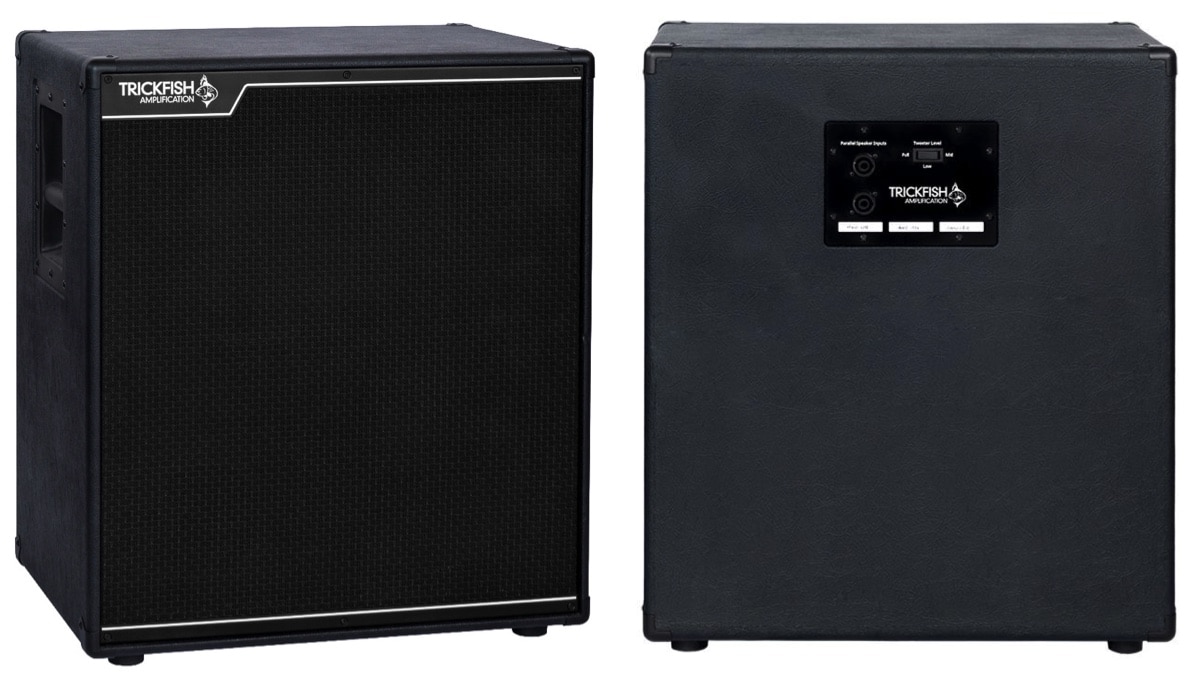
Trickfish Amplification has added the L212 to its L Series cabinet lineup — a 2×12″ with diagonally arranged Lavoce neodymium drivers in the same compact footprint as the L410.
The L212 delivers the tonal character that 12″ drivers are known for: warm and defined through the low end, present in the midrange, and an open and musical top end, with enough output to carry a stage without a second cabinet. At 800 watts AES and 45 lbs., it handles the full output of any Bullhead amp in a cabinet that’s easy to move.
Trickfish president Ryan Owens said, “Players who want the warmth and depth of 12″ drivers at full gigging volume now have a single cabinet that gets them there. The diagonal driver placement was a deliberate choice — it supports better stage coverage without changing the cabinet’s footprint, so you get more coverage without giving anything up.”
The L212 is available now at $1,449 MAP directly from www.trickfishamps.com.
Disclaimer: This pedal was kindly provided by Jad Freer for the purpose of this review. However, this does not influence our opinions or the content of our reviews. We strive to provide honest, unbiased, and accurate assessments to ensure that our readers receive truthful and helpful information.
Jad Freer Audio first caught the attention of the bass world with the highly acclaimed Capo DI, a feature-rich preamp that quickly became a favorite among modern bass players and content creators, including bass players like Chris Chaney or Tim Lefebvre. The Capo earned its reputation through flexibility, deep tone shaping, and studio-grade performance packed into a pedalboard-friendly format.
The new LUCE DI, however, takes a very different approach.
Where the Capo is about control and versatility, the LUCE is about refinement. There are no EQ sections, drive channels, or extensive controls here. Instead, Jad Freer focused on creating a high-end, studio-quality DI designed to enhance your bass tone without fundamentally changing it.
As the company describes it:
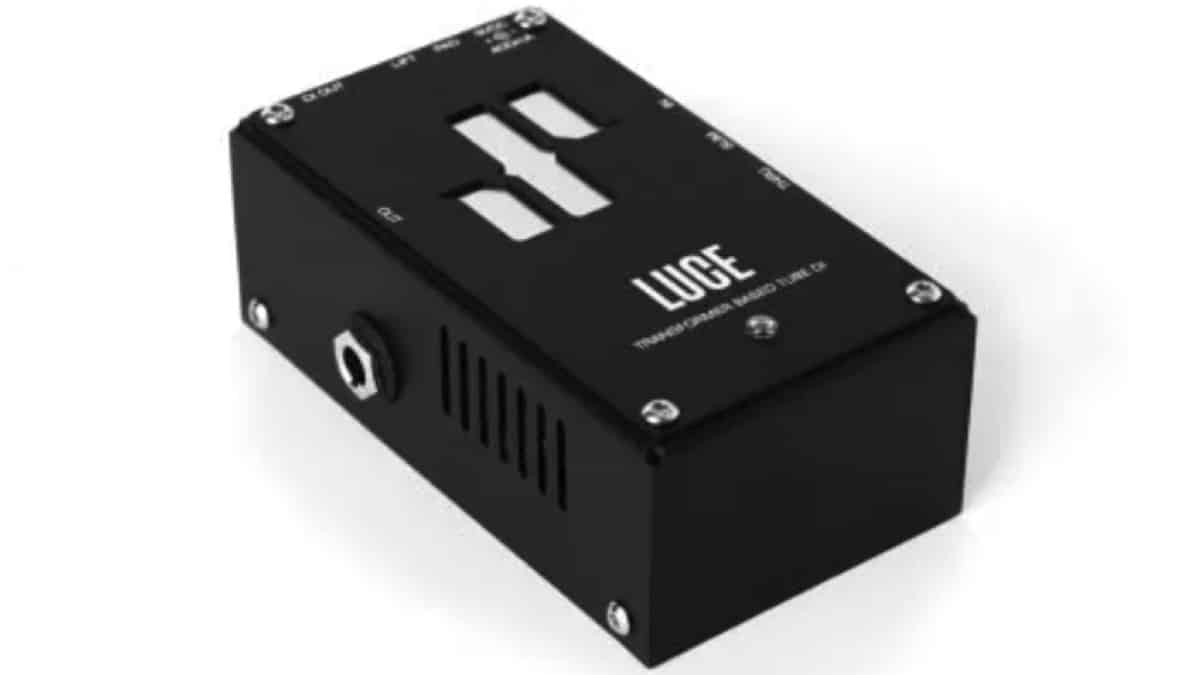
“Luce — light in Italian — is a studio-quality, transformer-based tube DI (Direct Injection) box: a unity gain (1:1) tube preamplifier and active summing unit.”
That may sound technical at first, but the philosophy behind the LUCE is actually quite simple: preserve the integrity of the instrument while adding the subtle warmth, depth, and dimensionality associated with premium analog studio gear.
Classic Studio Design in a Compact Format
At the core of the LUCE is a carefully selected ECC88/6922 tube paired with an OEP/Carnhill transformer, components inspired by the same design traditions found in legendary British recording consoles.
For bass players, this translates into a tone that feels naturally polished rather than heavily processed. The low end becomes slightly tighter and more authoritative, the highs smoother, and the overall signal takes on a subtle sense of depth that is difficult to describe until you experience it firsthand.
Importantly, the LUCE does not impose a strong tonal signature of its own. It is not a distortion pedal, amp simulator, or aggressive tone shaper. Instead, it enhances what is already there.
Players who already have a sound they love will likely appreciate the LUCE the most, as it acts more like a studio-quality finishing stage than a traditional bass preamp.
On Stage and in the Studio
Although the LUCE comes in pedal format, its personality feels deeply rooted in studio workflow.
Live, it provides an exceptionally clean and mix-ready DI signal, helping bass sit naturally in the front-of-house mix with minimal corrective EQ. Notes feel defined, low frequencies remain controlled, and the overall signal has a polished quality that sound engineers will immediately appreciate.
In the studio, however, the LUCE truly shines.
The combination of tube harmonics and transformer coloration gives direct bass tracks a sense of analog richness and musicality before any plugins or additional processing are added. The result is a DI tone that already feels closer to a finished record.
This makes the LUCE especially appealing for session players, producers, and bassists working in home recording environments who want a professional-grade front end without carrying around a full rack of studio equipment.
The Jad Freer LUCE is not designed to impress through flashy controls or dramatic tonal transformations. In fact, its greatest strength is restraint.
Rather than reshaping your sound, it refines it.
For players seeking a pedal that delivers studio-quality warmth, clarity, and feel while preserving the natural voice of their instrument, the LUCE offers a sophisticated and deeply musical solution. It may be compact enough for a pedalboard, but its mindset is unmistakably studio-oriented.
For more information, visit online at jadfreeraudio.com/
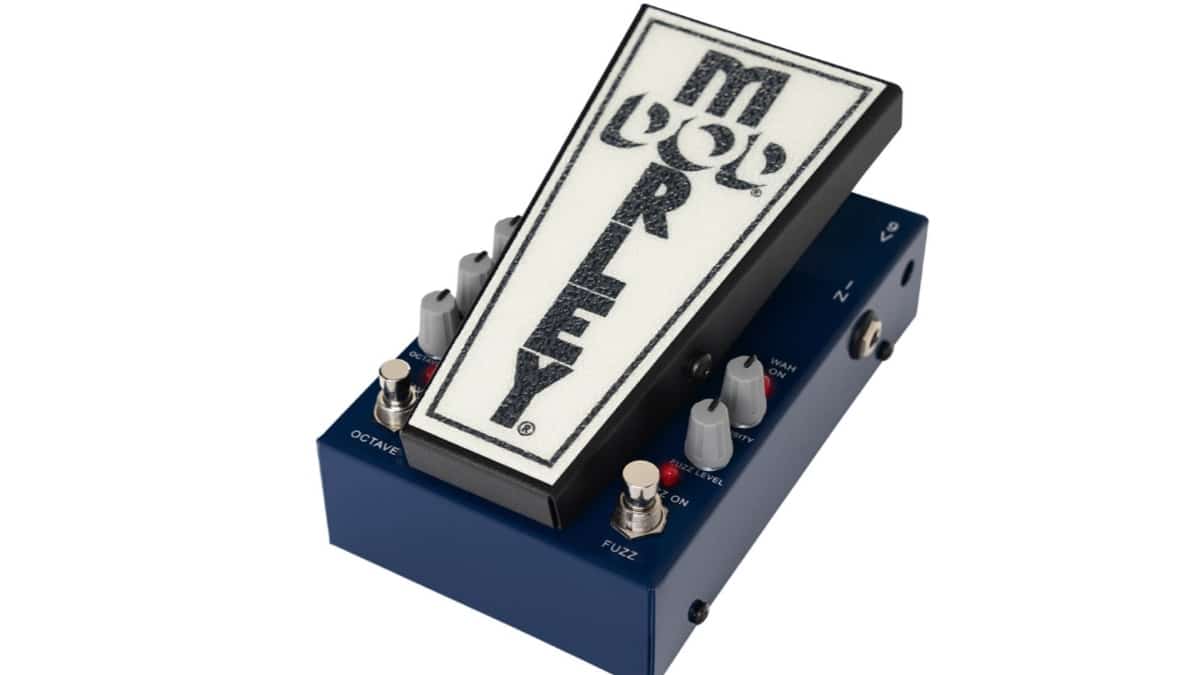
Legendary effects manufacturers DOD and Morley have united to create something truly remarkable: the Wah-ocTo-Fuzz™ pedal. Available now worldwide through local retailers and online, this innovative device answers the call of musicians looking to combine classic sounds by masterfully harmonizing three distinct effects into one unit. The pedal achieves this by blending DOD’s iconic 80’s FX35 Octoplus circuit with Morley’s timeless 70’s wah and fuzz circuits. The result is a pedal that simply leaves players saying, “WTF!”.
Designed to ignite creativity for guitar, bass, and keyboard players alike, the Wah-ocTo-Fuzz™ empowers musicians to use a singular effect or combine one, two, or all three simultaneously. The octave section utilizes the DOD FX35 Octoplus circuit to produce a classic analog octave blend that channels the captivating, glitchy essence of the 1980s. Players can easily sculpt this sound using the Direct Level to control the dry signal output, the Tone Control to adjust the overall brightness, and the Octave Level to dictate the lower octave signal.
The wah section boasts Morley’s classic Electro-Optical design and features convenient switchless operation; users simply step on the glow-in-the-dark treadle grip to instantly engage the wah effect. Finally, the fuzz circuit draws inspiration from the timeless sounds of Morley’s 1970s era, offering an Intensity Level knob to control the gain of the fuzz effect and a Fuzz Level knob to manage your overall signal when the fuzz is activated.
Built for maximum protection, the WTF pedal is housed in a rugged and lightweight Cold-Rolled Steel chassis. It also features a premium Morley buffer circuit designed to protect your tone from any mischief in your signal chain.
The new Wah-ocTo-Fuzz pedal features standard 1/4″ instrument jacks for both its input and output connections. For power, the unit operates using a standard 9VDC 300 mA center negative power supply, utilizing a standard +9V DC tip-negative barrel jack. Alternatively, it supports standard 9V battery operation that is easily accessible via a quick-clip battery door. Physically, the pedal measures 6.86 inches in length, 4.23 inches in width, and 3.88 inches in height, with a total weight of 2.27 lbs. (1.03kg). Finally, the Wah-ocTo-Fuzz is backed by a 1-year warranty.
For more information on the new DOD and Morley Wah-ocTo-Fuzz, please visit www.digitech.com.
Street Price: $249.99 USD

Gear News: Fender Honors James Jamerson with a 1962 Precision Bass

Artist Update With The Revivalists’ Bassist George Gekas

Maestro Ron Carter, Sharing the Spirit – June/July 2026 Issue

New Music: Danielle Nicole, Tug Of War

Right Hand Technique Strategies with Dr. Randy Kertz
Right Hand Technique Strategies with Dr. Randy Kertz

20 April Edition – This Week’s Top 10 Basses on Instagram
April 27 Edition – This Week’s Top 10 Basses on Instagram
May 4 Edition – This Week’s Top 10 Basses on Instagram