
Latest
The Body and Soul of a Modern Walking Bass Line by Rhayn Jooste


 The song/lesson for this month is the standard Body and Soul (Cuerpo y Alma) – music by Johnny Green. It’s inspiration is taken from Esperanza Spalding’s Esperanza album (2008). The key is Db major; however because the piece begins with an Eb minor, it means we are in Dorian mode. The technique you are aiming for is being able to walk a solid modern bass line through a jazz standard. Your goal is to master the basic pattern and riff and then play through the changes to create a dynamic walking bass part, with a twist – this standard is in 5/4. This piece will require a 5 string bass guitar.
Main Riff.
The main riff is a swung bass line that really accentuates the 5/4 feel with Latin tumbao offbeats. The primer should be used to get yourself acquainted with the main riff chord arpeggio shape (here an Eb minor 9) and counting the riff pattern – master that before moving onto the main groove part of the chart. There are some big stretches here, so go slow and get your left hand used to them first. Each bar of the primer adds something extra from the previous to build you up to the full riff – which does have a chromatic passing tone tucked away in it.
Things to note off the original are that Esperanza’s bass lines are rhythmic with lots of triplet and quaver pushes. An idea to steal off the record is Spalding’s subtle use of slides to outline the notes and definitely check out the scat singing with her bass line at 4’40”.
Technical bits.
To begin it’s worth saying that to play 5/4 convincingly in the pocket is going to be the main challenge here. So a few hints: break down the rhythm into smaller more manageable chunks of timing (think in terms of 3 + 2, or 2 + 3); count out loud with the record (away from the bass) to internalise the feel to gain awareness of the down stroke on the first beat (the 1) of each bar – that way you will never get lost rhythmically; most importantly sing the riff and bass line, really get it under your skin and into your head so that when playing it you will always know where you are in the changes.
Learn the road map of the main changes (pretty much straight from the standard). Sign post each one with a root note before walking up, down or around the chords. Know your chord arpeggios with the ability to move them around the fretboard (in other words know the names of the notes on each string – not just the shapes).
That aside this technique will not sound authentic without the right sound, think velvet acoustic – as Esperanza is playing this all on her upright bass. So pluck nearer the fretboard for a more sulcello effect. Turn down the treble slightly and add some more mid range. Another thing is to try some foam under the strings around the bridge (or constant light palm muting if foam is not your thing). Experiment with the right hand plucking position as you don’t want to lose those harmonic over-tones. For further listening check out Ray Brown or even J.S. Bach.
Backing Track.
This is a bass line that grooves and is dynamic in shape. The primer starts on all 5 beats and slowly adds in the syncopation, get used to counting the notes that are held. The track follows the music as written with a one bar break between the sections. The main section is where the chart begins with a bass solo groove for 4 bars. The piano then enters and doubles the riff. This section is where you will have to outline the changes – these are taken from the jazz standard and have been altered slightly. The piano is generally outlining chords in a 3 + 2 counting pattern and also doubles the main riff with the bass. Watch the rhythmic elements and understand how each chord tone is approached and left – (passing tones greatly aid the arrival of the chord tones). There are also hints from the melody see if you can spot them. Most importantly have fun with the groove and be sure to check out the original.
Backing track and track on Soundcloud.
http://soundcloud.com/rhaynj/body-and-soul-lesson-track
Lesson music/tab on Tumblr.
http://rhaynj.tumblr.com
About Rhayn Jooste…
Rhayn is a musician whose interest lies in musical spontaneity and improvisation. He is a commercially aware music graduate with in-depth insight into the processes of Indie music obtained through concerts and festivals.
A multi-instrumentalist, who shares, writes and elucidates music in a fusion of genres. It is the pure joy of utilising sound to create a magical world which others can share that inspires him. Currently playing bass in U.K. based rock group – Sankara.
Visit Ryan online at rhaynjooste.co.uk


Check out our top 10 favorite basses on Instagram this week…
Click to follow Bass Musician on Instagram @bassmusicianmag
FEATURED @kilianduartebass @meridian_guitars @adamovicbasses @marleaux_bassguitars @jcrluthier @sandbergguitars @ibanezuk_official @dingwallguitars @torzalguitars @ariaguitars
Check out our top 10 favorite basses on Instagram this week…
Click to follow Bass Musician on Instagram @bassmusicianmag
FEATURED @bacchusguitars @franz.bassguitars @mendesluthieria @ramabass.ok @meridian_guitars @adamovicbasses @shukerbassguitars @fantabass.it @andys_vintage_guitars @valdesbasses
Check out our top 10 favorite basses on Instagram this week…
Click to follow Bass Musician on Instagram @bassmusicianmag
FEATURED @murraykuun_guitars @ja.guitars @combe_luthier @overloadguitars @kevinhidebass @franz.bassguitars @indra_guitars @petercrowdesign @baboomin_bass @jcrluthier
Check out our top 10 favorite basses on Instagram this week…
Click to follow Bass Musician on Instagram @bassmusicianmag
FEATURED @sandbergguitars @benevolent_basses @rayriendeau @olintobass @wonkorbasses @bite.guitars @adamovicbasses @maruszczyk_instruments @skervesenguitars @ramabass.ok

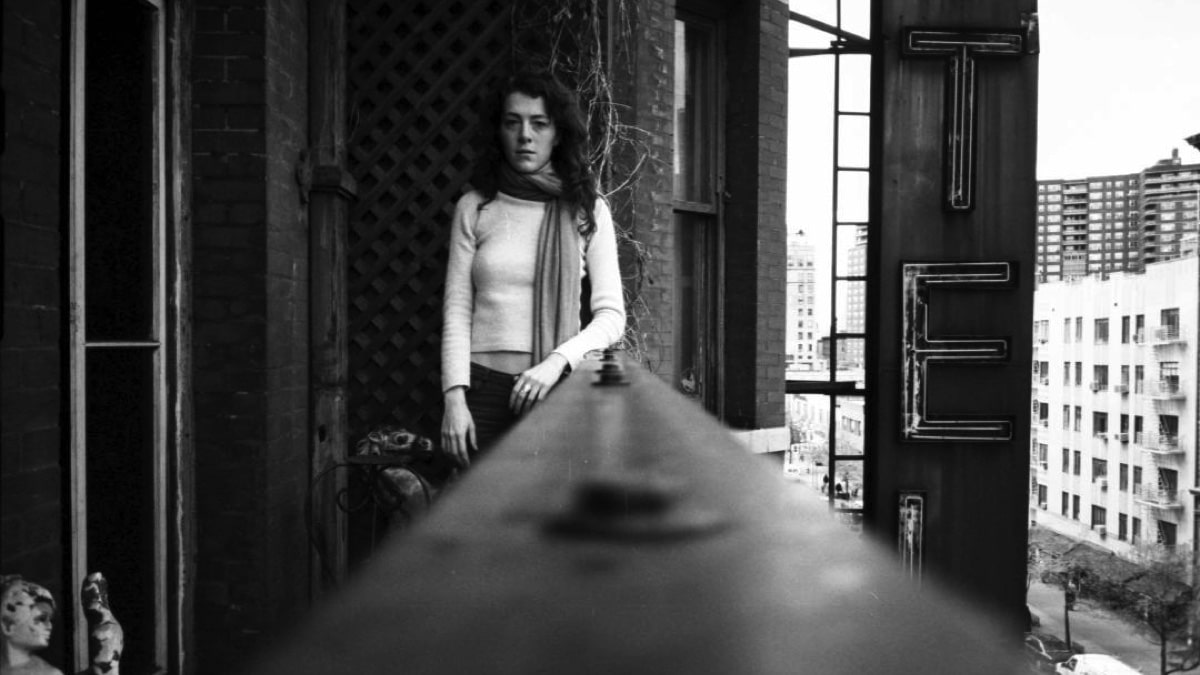
Photo: Self-portrait by Melissa Auf Der Maur
Melissa Auf Der Maur is a Canadian bassist who played with Tinker, Hole, and The Smashing Pumpkins. She released her own work and is a photographer with photos published in Nylon, Bust, and National Geographic. She released her ‘90s Rock Memoir “Even The Good Girls Will Cry” on 17 March 2026.
KB: Did you always want to be a singer-musician growing up?
I’ve played music my whole life. In school, I played trumpet and sang in a children’s choir, so music was always within me. My mother was the first female disc jockey on the Montreal airwaves; her record collection played a huge role in my inspiration and love of music.
KB: When did you start playing bass, and why this instrument?
When I was 19, the early 90s music explosion began to percolate in tiny clubs around the world. I was lucky to be a ticket girl at Montreal’s underground music club. In one year, I saw Hole, Sonic Youth, Smashing Pumpkins, White Zombie, and The Breeders – all had female bass players. That’s when the seed was planted. By the age of 22, I was the bass player of Hole.
KB: Which brands of basses have you used in your career, and which one are you using now?
The first bass that I learned on was a vintage Squier Precision. Hole was sponsored by Fender guitars, so I upgraded to Fender Custom Shop Precisions. That is all I play, but I have a cool vintage 8-string Greco that I use on recordings to thicken up guitar parts.
KB: What equipment do you use or have you used with your basses?
Ampeg SVT amps and cabinets, a couple of Sans-Amp pedals, and that is it.
KB: How did you become a member of Hole, and what is your fondest memory of that time?
Billy Corgan of the Smashing Pumpkins was helping scout a replacement for (RIP) Kristen Pfaff, Hole’s bass player. My band, Tinker, opened for them on the Siamese Dream tour, so Billy had seen me play and could vouch for me. Courtney trusted her talented friend, and that was it. I initially said “no thank you” due to my commitment to my photographic studies and the drama and chaos surrounding the band during the “Live Through This” album release. Courtney took it as a good sign that I said no, so convinced me to reconsider, and soon after, I accepted their invitation, in the name of helping put females in the male-dominated landscape of rock music. My fondest memory is every show we played as a mostly female band, symbolizing what a woman could do in a rock band. Every show had a purpose: get more women to play music.
KB: You are a photographer as well. What makes a great picture? Do you shoot in color or b/w?
I started shooting photographs at age 15. Initially only shot black & white and worked in the art school darkroom. In university, I took a color photography course, and shifted mostly and forever to that, because it was easier to process film on the road when I joined a rock band. I experimented with many cameras, point and shoots, manual, polaroids, medium format, and vintage finds. The trick to a good photograph is to shoot many and all the time – the magic is in the edit and selection process.
KB: Are there artists you would love to collaborate with or wish you had?
??I’ve been lucky to collaborate with some of my favorite musicians in my career. I would still love to collaborate with a new generation heavy electronic artist on an analog bass, heavy electronic drums, and synths collaboration project. Take me out of my usual zone, merging the past and future: my love of 80s dark new wave and new artists exploring that genre. It was very futuristic back then, and we are now, after all, living in the future. I am in the mood to play bass to heavy beats I want to dance to.
KB: What are your 7 favorite bass lines in music across all genres? And why these 7?
“Mountain Song” – Jane’s Addiction (love a rambling, rolling bass line – feels like the ocean waves)
“Black Top – Helmet” (was the first bass line I taught myself)
“Gold Dust Woman” – Hole from “The Crow 2” Soundtrack (it was my first bass line contribution to the band)
“Get Ready” – The Temptations (Motown just feels so good, because of the bass)
“Lucretia My Reflection” – Sisters of Mercy (makes me want to hit the dance floor and play bass simultaneously)
“Be My Druidess” – Type O Negative (full chord bass playing at its best by iconic, demonic, Peter Steele, RIP)
“Romantic Rights” – Death from Above (1979 – unique distorted overdriven tone, combined dance rhythm and melodic intelligence, all in one shot – also! Shout out to a bass & drum only band, which is awesome, and we should have more of, but the bass player needs to be a killer to fill that role.
KB: What are you currently up to?
Releasing my ‘90s Rock Memoir “EVEN THE GOOD GIRLS WILL CRY”. Visceral healing process, it was to get it out of me and write it, but I suspect the real magic will begin by putting it into the world and reflecting with others on what the magic of the ‘90s was all about. Powerful music decade that carried us into what is now a brave new world of digital corporate weirdness – may the past shed a light on our future. That’s my hope for this book release and tour.
Visit online:
Official Website
Facebook
Instagram
YouTube
Spotify

Gear News: Fender Unveils Highly Anticipated Vintera III Series

New Music: Oteil Burbridge & Lamar Williams Jr. New Single, Hush

Interview With Bassist Virginia Franks

Nathan East, Echoes of a Lineage – April/May 2026 Issue

Gear Review: Italia Leather Straps

Mar 2 Edition – This Week’s Top 10 Basses on Instagram
Mar 9 Edition – This Week’s Top 10 Basses on Instagram
Mar 16 Edition – This Week’s Top 10 Basses on Instagram
Mar 23 Edition – This Week’s Top 10 Basses on Instagram